Golden sausage French toast roll-ups hit that sweet-and-savory spot that keeps people reaching for one more. The bread turns crisp on the outside, the sausage stays tucked in and savory, and the cinnamon sugar gives each bite a light crunch before the maple syrup takes over. They eat like something fun, but they’re built from basic breakfast ingredients you probably already know how to work with.
The trick is flattening the bread enough that it rolls without springing back, then cooking the seam side first so the roll-up stays shut in the pan. A quick dip in egg and milk is all it needs; soak it too long and the bread turns fragile instead of crisp. Cook them over medium heat and turn them often so the coating browns evenly without the sugar burning before the center warms through.
Below, I’ve added the one texture cue that keeps these from unraveling, plus a few smart swaps if you want to change the bread, sausage, or seasoning without losing what makes them work.
The seam stayed closed, the cinnamon sugar browned beautifully, and the sausage stayed juicy inside. My kids dipped them in maple syrup and asked for them again the next morning.
Sausage French toast roll-ups are at their best when the bread seals around the sausage and the cinnamon sugar stays crisp.
The Bread Trick That Keeps These Roll-Ups From Splitting
Most roll-up recipes fail before they ever hit the pan. The bread is too thick, too dry, or not flattened enough, so it tears when you wrap it and pops open again while it cooks. White sandwich bread works because it compresses neatly and gives you a flexible sheet that holds the sausage without fighting back.
The other place people lose the shape is in the skillet. If the seam doesn’t go down first, the roll-up can unspool before the egg coating has a chance to set. A hot pan and a little butter give you fast browning, but the key is steady medium heat so the outside turns golden at the same pace the center warms through.
- White sandwich bread — Soft, even bread flattens and rolls without cracking. Thick artisan slices stay springy and make the seam harder to close.
- Breakfast sausage links — Fully cooked links keep this fast and tidy. If you use uncooked sausage, cook it separately all the way through before rolling.
- Butter — Butter gives the pan the best browning and helps the cinnamon sugar cling. A neutral oil works in a pinch, but you lose some of that toasted-bread flavor.
- Whole milk — The milk loosens the egg just enough for a light custard coating. Half-and-half makes them richer; non-dairy milk works if it’s unsweetened and not too thin.
Rolling, Dipping, and Frying Without Losing the Shape
Flattening the Bread
Trim the crusts first, then roll each slice until it’s thin and flexible. You want the bread to look pressed and slightly larger, not shredded or paper-thin. If you skip this part, the bread springs back around the sausage and makes a bulky roll that won’t seal well.
Wrapping the Sausage
Set the sausage at one edge and roll it up tightly like a little cigar. Press the final edge down with your fingers so it sticks before it goes into the egg mixture. Loose rolls open in the pan, especially once the bread softens from the custard.
Coating and Cooking
Whisk the eggs, milk, and vanilla in a shallow bowl, then dip each roll-up quickly on all sides. The bread should look coated, not soaked through. Cook them in butter over medium heat, seam-side down first, and turn every 1 to 2 minutes until each side is deep golden and the sugar smells toasted. If the pan is too hot, the outside darkens before the center warms, and the cinnamon sugar can taste bitter.
Finishing in Cinnamon Sugar
Roll the hot pieces in the sugar-cinnamon mixture while they’re still warm enough to grab the coating. If they cool too much, the sugar slides off instead of sticking. Serve them right away with maple syrup for dipping so the outside stays crisp and the inside keeps that soft French toast texture.
Three Ways to Make These Breakfast Roll-Ups Work for Your Kitchen
Gluten-Free Swap
Use a soft gluten-free sandwich bread that’s meant for toast, not a dense rustic loaf. It still needs to flatten well, so press it gently and work carefully when rolling. The texture will be a little more tender and less springy, but the cinnamon sugar finish still gives you that same breakfast-in-hand feel.
Dairy-Free Version
Swap the milk for unsweetened almond, oat, or soy milk, and cook the roll-ups in a neutral oil or plant-based butter. The custard still sets the same way, though butter gives the best browning if you can use a dairy-free version with a decent fat content. The result is a little lighter, but the sausage and cinnamon sugar still carry the dish.
Swap the Sausage
Use cooked turkey sausage links for a leaner version, or plant-based breakfast links if you want to keep the sweet-and-savory idea without meat. Just keep the filling thin enough that the bread can still wrap around it cleanly. Bigger sausages make the roll-ups split and cook unevenly.
Make Them Ahead for a Crowd
You can assemble the roll-ups a few hours ahead and keep them covered in the fridge before dipping and frying. If you dip them too early, the bread turns soggy and the seam loosens. Cook them close to serving so the sugar coating stays crisp instead of melting into the bread.
Storage and Reheating
- Refrigerator: Store leftovers for up to 3 days. The coating softens a bit, but the rolls still reheat well.
- Freezer: Freeze after cooking and cooling completely. Wrap tightly and reheat from frozen in the oven or air fryer for the best texture.
- Reheating: Warm in a 350°F oven or air fryer until hot and crisp, about 5 to 8 minutes. The mistake to avoid is the microwave, which makes the bread chewy and melts the cinnamon sugar into a sticky layer.
Questions I Get Asked About This Recipe
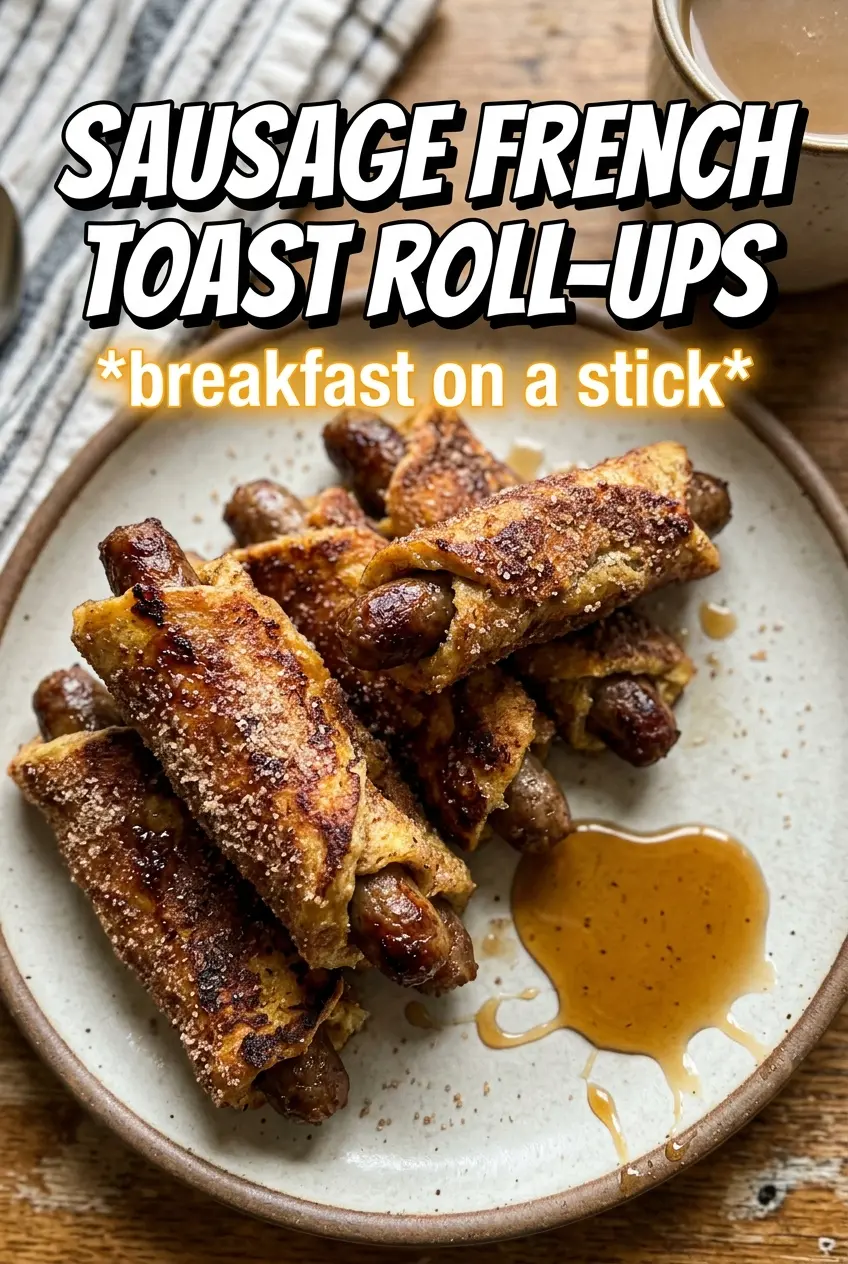
Sausage French Toast Roll-Ups
Ingredients
Equipment
Method
- Flatten each bread slice with a rolling pin until thin, using steady pressure across the whole surface.
- Place a cooked sausage link at the edge of each slice and roll up tightly.
- Beat eggs, milk, and vanilla extract together until smooth and evenly blended.
- Heat butter in a skillet over medium heat.
- Dip each roll-up in the egg mixture on all sides, then place seam-side down into the hot skillet.
- Cook seam-side down first, turning every 1–2 minutes until golden all around.
- Roll the warm roll-ups in cinnamon sugar right after frying so the coating sticks while still warm.
- Serve with maple syrup for dipping.