Flaky puff pastry, savory sausage, sweet caramelized onions, and melty Gruyère turn these French onion sausage rolls into the kind of appetizer people hover around until the tray is gone. The pastry bakes up crisp and shattering on the outside while the filling stays rich and full of oniony depth inside. Sliced crosswise, they look as good as they taste, with that swirled filling peeking through the golden layers.
What makes this version work is balance. The onions need to be cooked until they lose their sharp bite and turn jammy, because raw onion will steam inside the pastry and throw the whole filling off. Dijon goes into the sausage mixture, not just the dip, so the filling has that French onion tang all the way through. Gruyère matters here too; it melts into the sausage and onions without turning greasy.
Below, I’m walking through the part that matters most: getting the onions deeply caramelized without rushing them, then rolling the pastry tight enough that the slices hold their shape in the oven. I’ve also included the swaps that actually work if you need to change the cheese or sausage.
The onions got sweet and jammy instead of watery, and the pastry stayed crisp even under the filling. I served these with Dijon and they disappeared before dinner was even on the table.
Save these French Onion Sausage Rolls for the next brunch spread or game-day snack board.
The Onion Filling Needs to Be Cooked All the Way Down Before It Goes in the Pastry
The biggest mistake with sausage rolls is treating the filling like it all cooks at the same speed. The sausage has to bake, but the onions need to be finished first. If the onions are still wet or halfway cooked, they leak steam into the puff pastry and you end up with soggy bottoms instead of those crisp layers you’re after.
Caramelized onions should look deep golden, soft, and almost spreadable. That takes patience and medium-low heat, not a hot pan. The goal isn’t browned onion bits scattered through the filling; it’s sweet, concentrated onion that blends into the sausage and cheese without making the pastry collapse.
What Each Ingredient Is Actually Doing in This Dish
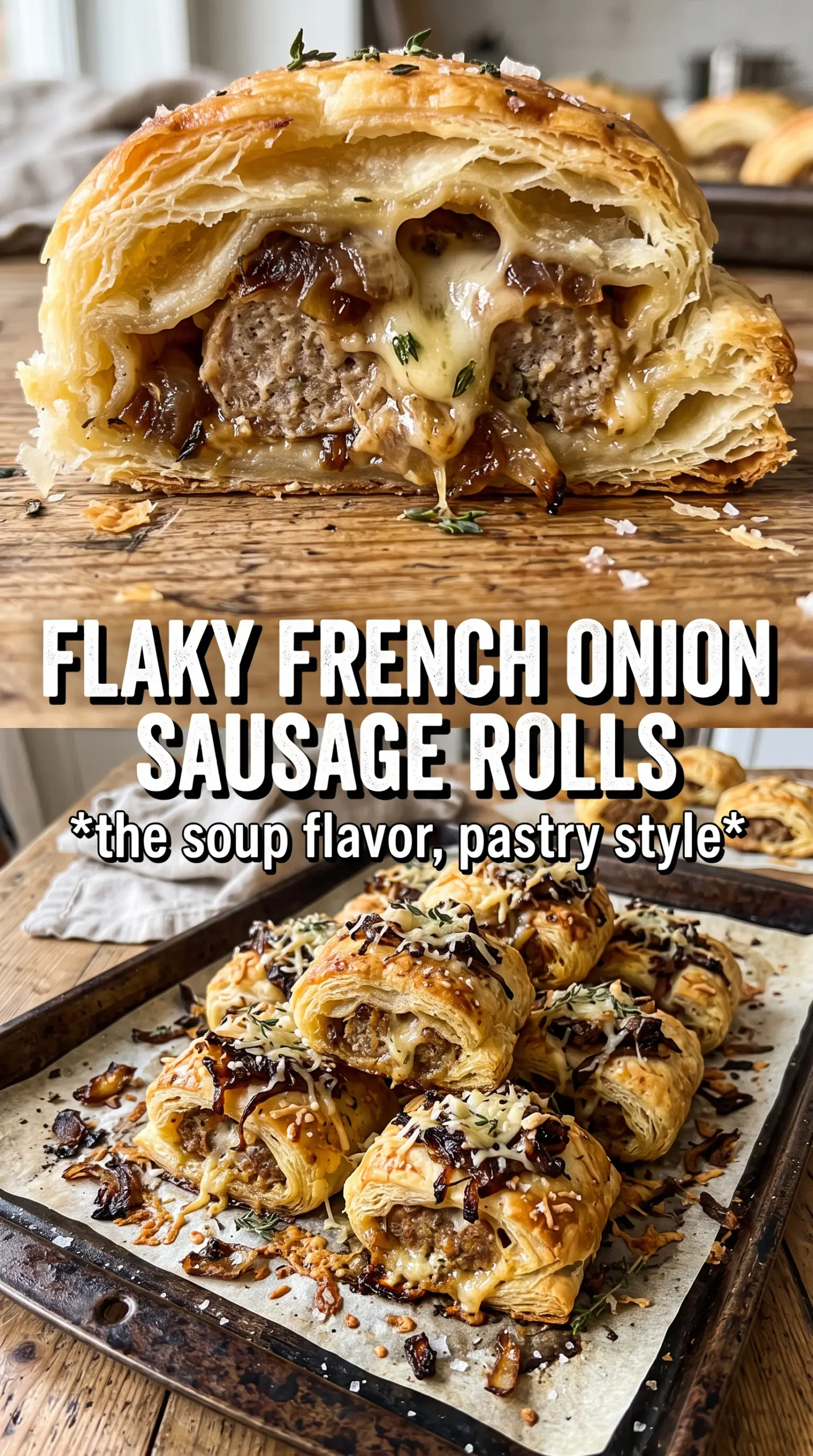
- Puff pastry — This is the shell that gives you the crisp, layered exterior. Keep it cold until the last minute; if it warms up too much, it gets sticky and won’t roll cleanly. Store-bought works perfectly here, and there’s no real payoff in making it from scratch for this recipe.
- Ground pork or breakfast sausage — Pork gives you a clean, savory base, while breakfast sausage brings built-in seasoning and a little extra richness. If you use plain ground pork, the Dijon, thyme, salt, and pepper become essential. If your sausage is heavily seasoned, taste lightly before adding more salt.
- Caramelized onion — This is the French onion part, and it’s not a swap-friendly ingredient. You want a full 20 to 25 minutes of slow cooking until the onion loses its bite and turns deep golden. A faster sauté won’t give the same sweetness or thickness.
- Gruyère — Gruyère melts into the filling without turning greasy and gives you that nutty, savory finish. Swiss cheese can work in a pinch, but it’s milder. Avoid cheeses that release a lot of oil, or the pastry can turn slick inside.
- Dijon mustard — Dijon sharpens the sausage and echoes the classic French onion flavor. Grainy mustard can stand in if that’s what you have, though it will read a little more rustic. The serving mustard is there for brightness, not just garnish.
Rolling and Baking the Log Without Losing the Layers
Cooking the onions until they’re jammy
Slice the onion thinly and cook it slowly in butter until it turns deeply golden and soft enough to mound on a spoon. Stir often near the end so the sugars don’t scorch on the bottom of the pan. If the pan starts looking dry before the onions are finished, a small splash of water will loosen the fond and help the onions keep cooking without burning.
Mixing the sausage so it stays even
Combine the sausage with Dijon, thyme, salt, and pepper before you touch the pastry. That gives you a filling that seasons evenly from edge to edge. Spread it in an even layer, not in clumps, or the roll will bake unevenly and slice messy.
Building the roll with the right amount of pressure
Lay the caramelized onions and Gruyère over the sausage, then roll from the long side into a tight log. Tight matters here, but crushing the filling does not; press just enough to keep the spiral compact. If the pastry starts to warm and tear, chill the log for a few minutes before slicing so the rounds hold their shape.
Baking until the pastry is crisp and the center is cooked through
Place the slices cut-side up so the layers open and brown evenly. Bake until the tops are deeply golden and the sausage is cooked through, not pale and underdone in the middle. If the pastry is browning too quickly before the filling is done, lower the oven rack rather than covering it; covering traps steam and softens the crust.
How to Adapt These French Onion Sausage Rolls for Your Table
Use breakfast sausage for a brunch-leaning version
Breakfast sausage gives the rolls a little more breakfast energy and usually needs less added salt. The result is a richer, slightly sweeter filling that works especially well with Dijon on the side.
Make them gluten-free with a gluten-free puff pastry
A good gluten-free puff pastry can work here, but it usually needs extra chilling and a gentler hand when rolling. Expect slightly less dramatic layers, but the flavor still lands because the filling is doing the heavy lifting.
Swap Gruyère for Swiss or mozzarella in a pinch
Swiss cheese gives you a similar mild nuttiness, though it melts a little softer. Mozzarella will melt, but it loses the French onion character, so use it only if you’re out of everything else and want a mild, stretchy filling.
Make the filling ahead and bake later
You can caramelize the onions and mix the sausage a day ahead, then assemble just before baking. That keeps the pastry cold and helps the rolls hold their shape. Don’t assemble too far ahead or the pastry will absorb moisture from the filling.
Storage and Reheating
- Refrigerator: Store leftovers in an airtight container for up to 3 days. The pastry softens a little, but the flavor holds.
- Freezer: Freeze baked rolls on a sheet pan, then transfer to a freezer bag for up to 2 months. Reheat from frozen for the best texture.
- Reheating: Warm in a 350°F oven or air fryer until the pastry crisps back up and the center is hot. The microwave will make the crust limp, which is the one mistake that ruins these fast.
Answers to the Questions Worth Asking
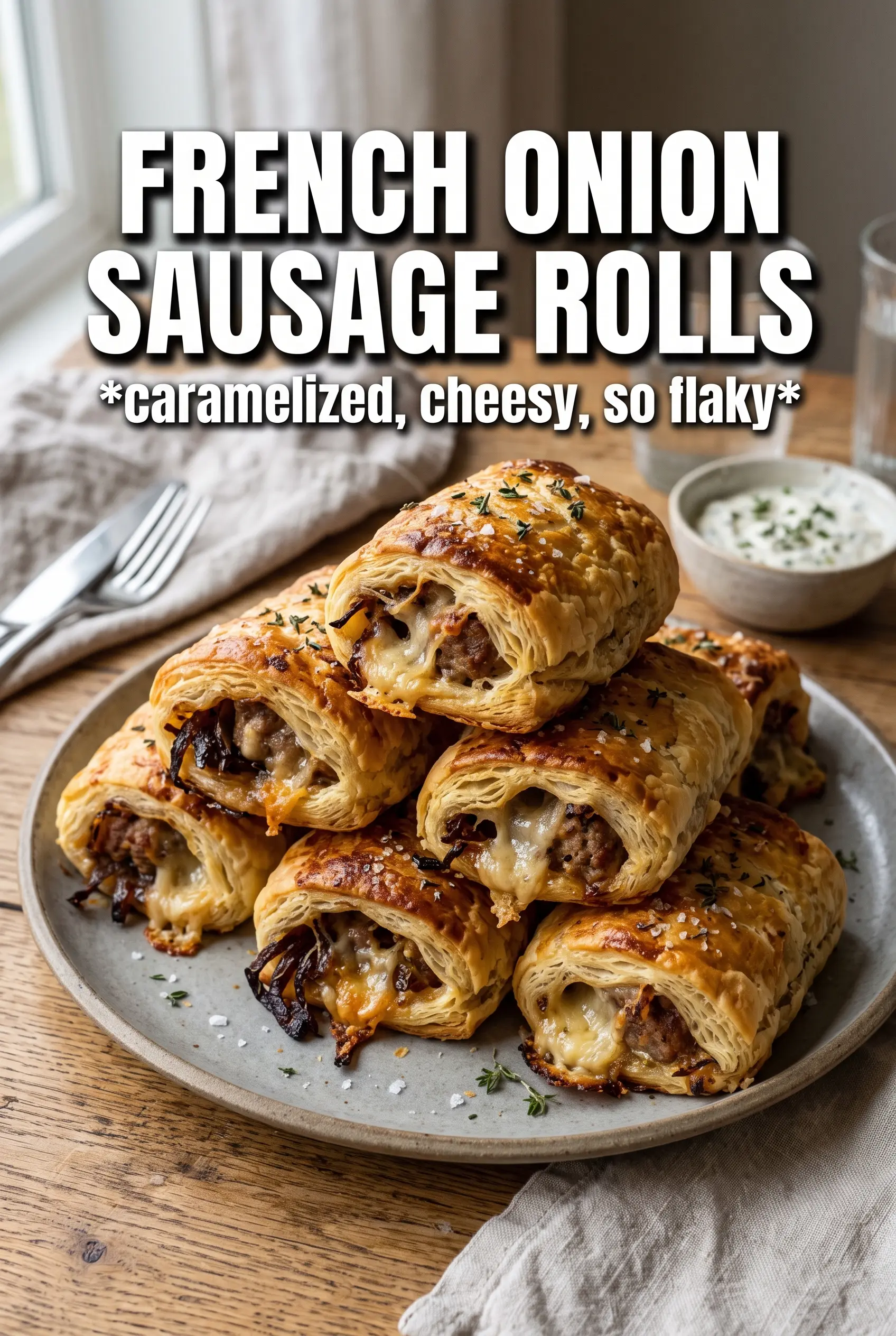
French Onion Sausage Rolls
Ingredients
Equipment
Method
- Preheat your oven to 400°F and line a sheet pan with parchment for easy cleanup and even browning.
- Caramelize thinly sliced onion in butter over medium-low heat for 20–25 minutes until deeply golden, stirring occasionally, then cool slightly before assembling.
- Mix ground pork or breakfast sausage with Dijon mustard, fresh thyme, salt, and black pepper until evenly combined.
- Unroll the puff pastry and spread the sausage mixture across the surface, leaving a small border if needed for sealing.
- Top the sausage with caramelized onions and shredded Gruyère so each slice shows the filling.
- Roll up tightly into a log, then brush with egg wash made from the beaten egg and water.
- Slice the log into 8 even rounds and place them cut-side up on the sheet pan for maximum swirled filling visibility, then bake at 400°F for 25–30 minutes until golden and cooked through.