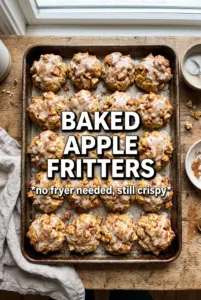
Golden baked apple fritters deliver everything you want from the classic bakery version: crisp edges, a tender middle, and pockets of cinnamon-spiced apple in every bite. The oven gives them a lighter finish than deep-frying, but the texture still lands in the right place when the batter is mixed gently and baked hot enough to set the outside before the centers dry out.
The trick here is keeping the batter thick and the apple pieces small enough to soften in the oven without turning the fritters cakey. A little nutmeg rounds out the cinnamon, and the glaze soaks just enough into the warm fritters to give you that sticky, donut-shop finish without making the crust soggy.
Below, you’ll find the small details that matter most: how to keep the fritters from spreading too much, why warm glaze beats cold glaze here, and the easiest way to swap in apple cider for part of the milk if you want a little more apple flavor.
The fritters baked up with crisp little edges and the apple pieces stayed soft without disappearing. I used apple cider in the glaze like you suggested and it set beautifully instead of running off the sides.
Love the crisp-edged baked apple fritters? Save them to Pinterest for the mornings when you want bakery-style glaze and warm cinnamon apples without frying.
The Reason These Fritters Stay Crisp Instead of Going Cakey
Baked apple fritters can turn into little apple muffins if the batter gets overmixed or too loose. The goal is a batter that looks rough and a little uneven, because that unevenness gives you the nooks that crisp up in the oven. Once the flour is fully hydrated, stop stirring. Every extra pass develops more gluten and pushes the texture away from fritter territory.
There is also a timing issue with the apples. If the dice is too large, the fruit stays firm and throws off the structure. If it is too fine, it melts into the batter and you lose the bite that makes these worth making. Small, even chunks give you soft centers, crisp edges, and those little pockets of apple that still taste like apple.
- Apples — Peel them so the fritters bake evenly and the texture stays tender. A firm, sweet-tart apple like Honeycrisp, Fuji, or Granny Smith holds its shape better than a soft one.
- Whole milk — This adds enough richness to keep the crumb soft without making the batter heavy. You can swap in 2% in a pinch, but the fritters won’t taste as full.
- Butter — Melted butter brings flavor and a little tenderness. Don’t use oil here unless you have to; butter gives the fritters that bakery-style finish.
- Apple cider in the glaze — Replacing some of the milk with cider sharpens the apple flavor and helps the glaze taste less one-note. Use it in place of all or part of the milk if you want a brighter finish.
The 20 Minutes That Matter Most in the Oven
Mix the Dry Ingredients First
Whisk the flour, baking powder, sugar, cinnamon, nutmeg, and salt until the mixture looks even and the spices are fully dispersed. That keeps you from getting one fritter that tastes heavily spiced and another that tastes flat. If the baking powder is clumpy, break it up now or you’ll end up with uneven lift.
Bring the Batter Together Gently
Beat the eggs, milk, vanilla, and melted butter in a separate bowl, then stir them into the dry ingredients just until no dry streaks remain. The batter should look thick and slightly lumpy, not silky smooth. Fold in the apples at the end so they don’t break down and tint the whole batter wet and heavy.
Portion and Flatten Before Baking
Drop heaping 1/4-cup scoops onto the parchment-lined sheet pan, then flatten them slightly with the back of the spoon. That shape helps them bake like fritters instead of domes. If you leave them too tall, the centers take too long to cook and the edges dry out before the middle is set.
Glaze While They’re Still Warm
Whisk the glaze until smooth, then spoon it over the fritters while they’re warm, not blazing hot. Warm fritters absorb just enough glaze to get that shiny finish, while the crust still keeps a little bite. If the glaze seems too thin, let it sit for a minute; powdered sugar thickens as it rests.
Three Ways to Work These Into Your Own Kitchen Routine
Dairy-Free Version
Use unsweetened almond milk or oat milk in both the batter and glaze, and swap the butter for melted coconut oil or a neutral dairy-free butter. The fritters still bake up crisp, but the flavor gets a slightly lighter edge. Oat milk gives the closest result if you want the glaze to stay creamy.
A More Apple-Forward Glaze
Replace all or part of the milk in the glaze with apple cider. The flavor turns brighter and a little tangier, and it echoes the fruit inside without making the fritters taste like cider doughnuts. Use the lesser amount first, then add more only if the glaze still feels too stiff.
Extra Cinnamon Sugar Finish
If you want a more donut-shop style crust, dust the fritters with a little cinnamon sugar right after baking and before glazing. The sugar clings to the warm surface and adds a faint crunch under the icing. It’s a good move when you want a sweeter, more nostalgic finish.
Storage and Reheating
- Refrigerator: Store in an airtight container for up to 3 days. The glaze softens the crust a little, so they lose some crispness after the first day.
- Freezer: Freeze unglazed fritters for up to 2 months. Wrap them well and add the glaze after reheating for the best texture.
- Reheating: Warm in a 350°F oven for 8 to 10 minutes, or until heated through. The mistake to avoid is microwaving them, which turns the edges soft and the glaze sticky in the wrong way.
Answers to the Questions Worth Asking
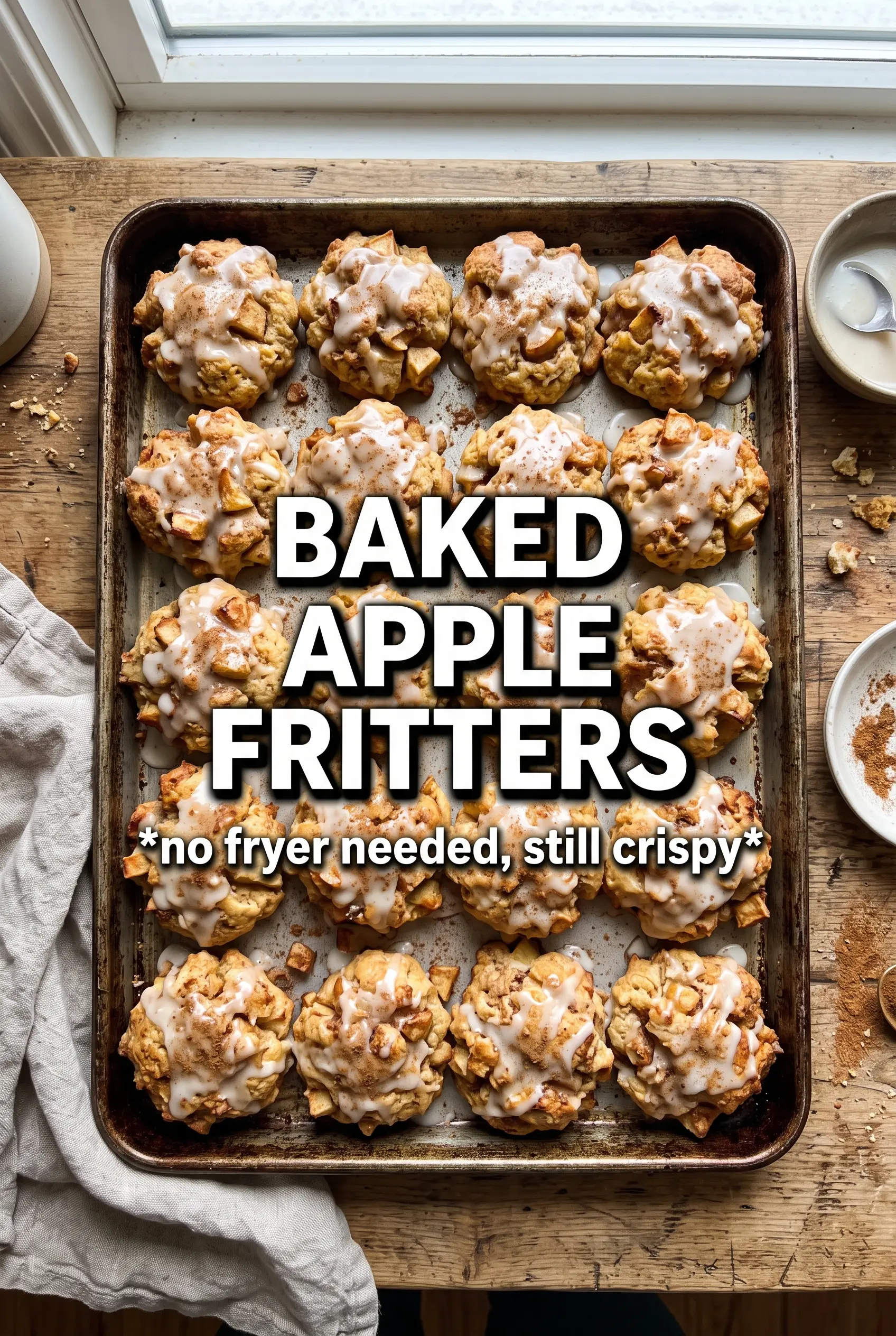
Baked Apple Fritters
Ingredients
Equipment
Method
- Preheat oven to 400°F and line a sheet pan with parchment paper for easy release and crisp bottoms.
- Whisk all-purpose flour, baking powder, sugar, cinnamon, nutmeg, and salt together until evenly combined.
- Beat eggs, whole milk, vanilla extract, and melted butter, then stir into the dry ingredients just until combined.
- Fold diced peeled apple into the batter so the fruit stays chunky and visible.
- Drop heaping 1/4-cup scoops onto the sheet pan, flatten slightly so they bake evenly, and leave space between each fritter.
- Bake at 400°F for 15–18 minutes until golden, with a crisp-looking top and edges.
- Whisk powdered sugar with milk or apple cider, vanilla, and a pinch of cinnamon until smooth and thick.
- Spoon glaze over the warm fritters and let set for 5 minutes so it drizzles and firms up before serving.