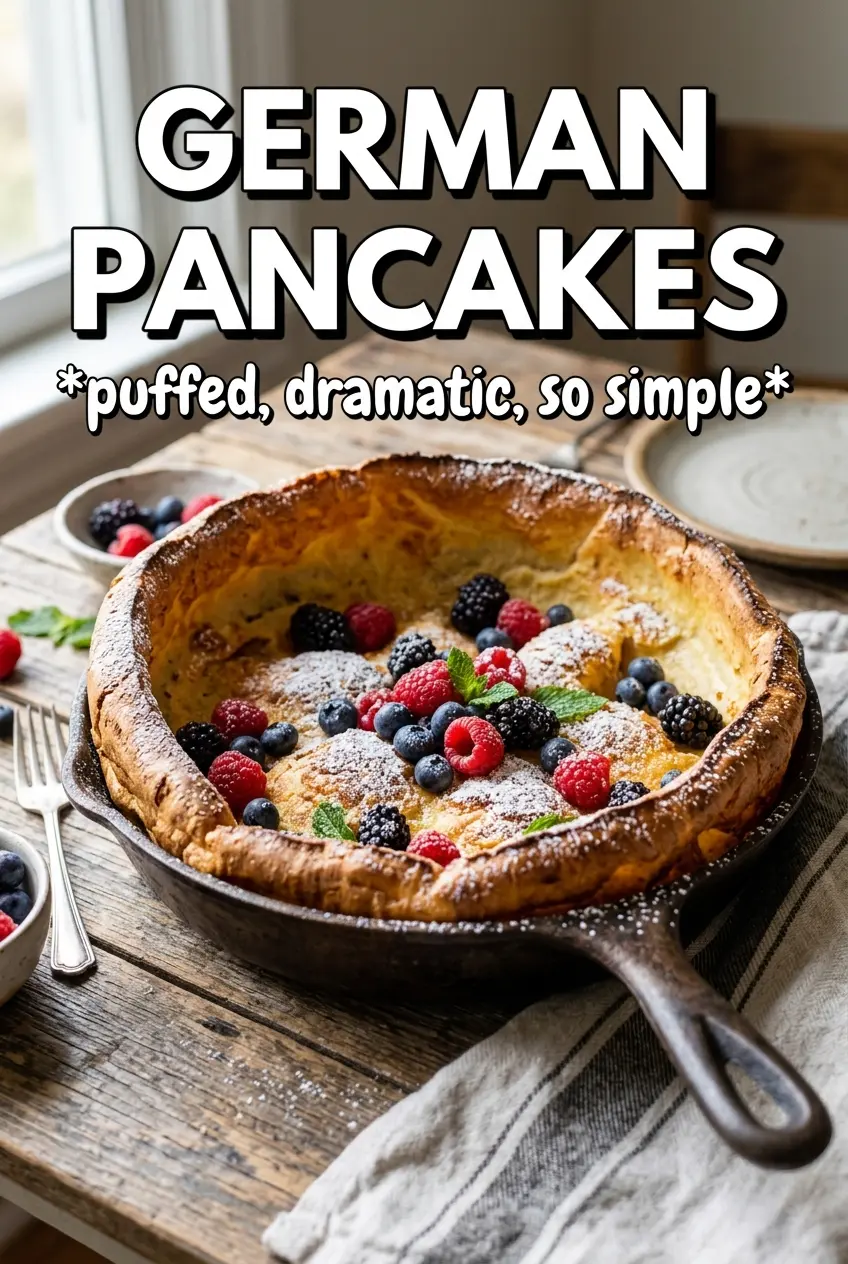
German pancakes come out of the oven with dramatic height, crisp, buttery edges, and a custardy center that falls just a little as soon as you bring the pan to the table. That contrast is the whole appeal. You get a big, puffed pancake with a texture somewhere between popover and crepe, and it only takes a handful of pantry ingredients to pull it off.
The trick is heat. The skillet has to be fully hot before the batter goes in, and the batter itself needs to be smooth and thin enough to rush up the sides of the pan as it bakes. Room-temperature eggs and milk help the batter blend evenly and rise fast, while the butter in the hot skillet gives you those caramelized edges that taste like the best part of a pancake griddle.
Below, I’ll walk through the part that matters most: how to keep the pancake puffed, why the batter should go in right after the butter melts, and what to serve on top so every wedge tastes like it came straight from a brunch spot.
The center stayed custardy and the edges got those crisp, buttery ridges I was hoping for. I followed the hot skillet step and it puffed up like a dream without collapsing before we got it to the table.
Love that dramatic puff and buttery edge? Save these German pancakes for an easy brunch that looks fancy without any extra work.
The Hot Skillet Is What Gives You the Puff
The most common mistake with German pancakes is starting with a skillet that isn’t fully heated. If the pan is only warm, the batter sets too slowly and you lose the tall rise that makes this dish special. A preheated cast iron skillet gives the edges an immediate blast of heat, which is what pushes the batter up the sides and creates those dramatic, irregular folds.
Don’t open the oven early. The batter needs steady, uninterrupted heat to climb and brown. The pancake will look wildly puffed around the edges before the center finishes setting, and that’s the sign you’re on track. When it comes out, it should be deep golden with a soft, custardy middle that settles a little as it cools.
What Each Ingredient Is Actually Doing in This Dish
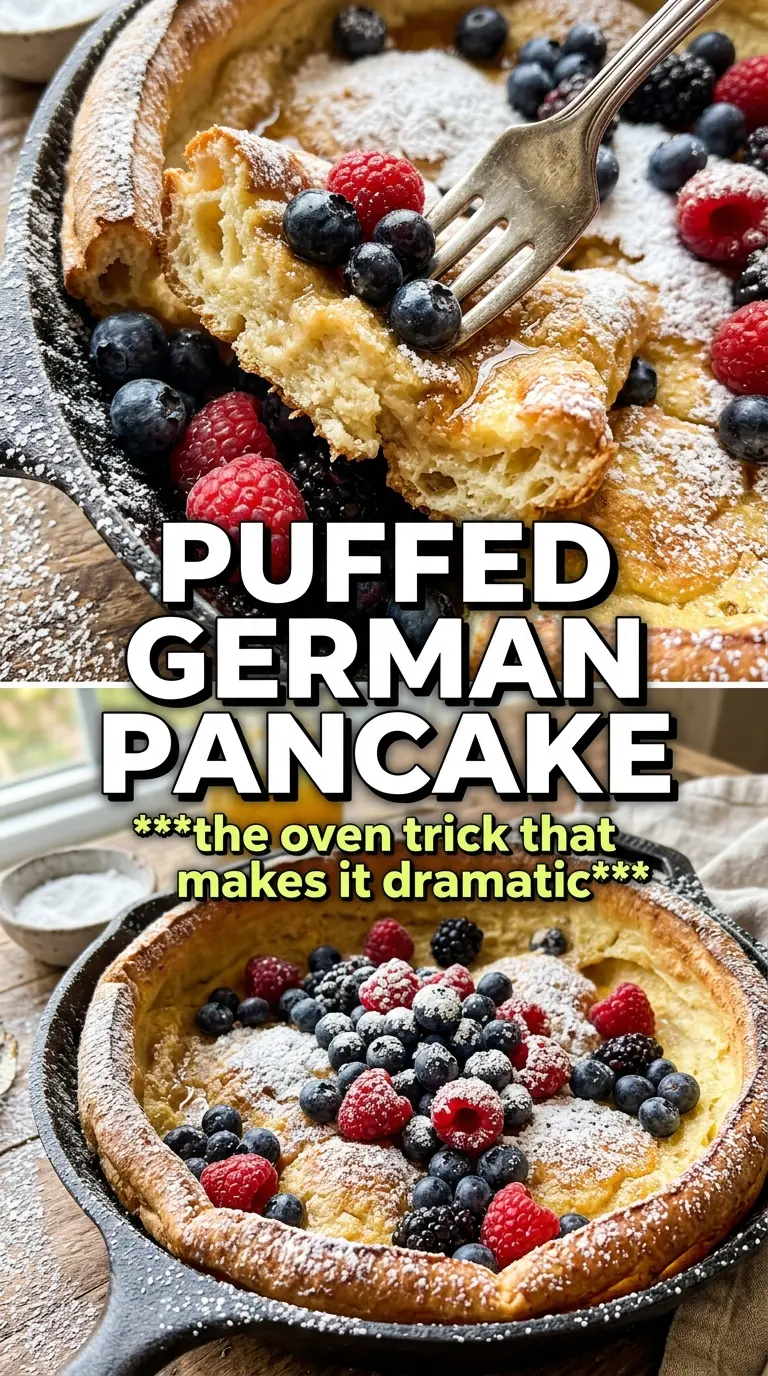
- Eggs — These are the structure and the lift. Room-temperature eggs blend more smoothly and trap air better in the blender, which helps the pancake puff instead of baking up flat.
- Whole milk — This keeps the batter rich enough to bake tender without turning heavy. Lower-fat milk works in a pinch, but the pancake loses some of that custardy middle.
- All-purpose flour — The small amount of flour holds everything together without making the batter cakey. Don’t swap in a dense flour blend unless you’re ready for a less dramatic rise.
- Butter — Melted in the hot pan, it fries the edges as the batter bakes. That’s where the nutty, browned flavor comes from, so use real unsalted butter here.
- Lemon juice and powdered sugar — The lemon cuts the richness and the sugar melts into the hot surface. Together, they turn a simple eggy pancake into something that tastes finished.
The 20 Minutes That Matter Most
Heating the Pan Properly
Set the cast iron skillet in the oven while it heats so the pan gets as hot as the oven itself. That step is what gives the batter its first burst of steam and the signature rise. If you use a cold skillet, the pancake still bakes, but it bakes like a thin eggy cake instead of a puffed Dutch baby.
Blending the Batter Until Smooth
Blend until the batter looks completely even and pourable, with no visible flour lumps. A blender is the fastest way to do this, and it also gives the batter enough aeration to help the rise. If you mix by hand, you’ll usually leave behind small pockets of flour that bake up into little dense spots.
Adding the Butter and Batter Without Delay
When the skillet comes out of the oven, drop in the butter and swirl until every inch is coated. Then pour the batter in immediately. If the pan sits too long after the butter melts, you lose heat and the pancake won’t climb as high.
Baking Until the Edges Go Deep Gold
Bake until the pancake is dramatically puffed with crisp, bronzed edges and a center that still looks tender but set. The top should not look wet, but it shouldn’t be dry and browned all over either. Pull it from the oven when the structure is there, then serve right away before the steam softens the edges.
How to Adapt German Pancakes for Different Mornings
Dairy-Free Version
Use an unsweetened, plain non-dairy milk with some body, like oat milk. The pancake still puffs, but the flavor is a little less rich and the edges won’t brown quite as deeply as they do with whole milk and butter.
Gluten-Free Swap
A 1:1 gluten-free flour blend can work here, especially one that includes xanthan gum. The texture will be a little more tender and less elastic, but the pancake still gets that same dramatic presentation.
Make It Less Sweet
Cut the sugar down to 1 tablespoon if you want a more savory pancake for ham, bacon, or herbs. The rise won’t change, but the finished pancake will taste more like a soft egg bread than a dessert-leaning breakfast.
Storage and Reheating
- Refrigerator: Keep leftovers for up to 2 days. The pancake softens as it sits, so the edges won’t stay crisp.
- Freezer: It freezes, but the texture turns a little rubbery after thawing. If you freeze it, wrap slices tightly and reheat from thawed for the best result.
- Reheating: Warm slices in a 325°F oven until heated through. The microwave makes the custardy center gummy and wipes out the crisp edges faster than anything else.
Answers to the Questions Worth Asking
German Pancakes
Ingredients
Equipment
Method
- Preheat the oven to 425°F and place a 10–12 inch cast iron skillet inside to heat for 10 minutes so the pan is screaming hot on arrival.
- Blend the eggs, milk, flour, sugar, vanilla, and salt for 30 seconds until perfectly smooth and lump-free.
- Carefully remove the hot skillet from the oven and add the butter, swirling until fully melted and the pan is coated.
- Pour the batter immediately into the hot skillet and return it to the oven right away to maximize the puff.
- Bake for 18–22 minutes at 425°F without opening the oven until dramatically puffed and deep golden around the edges.
- Dust the pancake with powdered sugar, then squeeze fresh lemon juice over the hot surface for a bright finish.
- Add fresh berries and serve immediately directly from the pan alongside lemon wedges.