Thick brioche, a smooth ricotta filling, and that crackly powdered sugar finish turn cannoli French toast into the kind of brunch plate people remember. The outside cooks up deeply golden while the center stays creamy and sweet, with mini chocolate chips melting just enough to feel like part of the custard instead of a separate add-in. It eats like a cross between stuffed French toast and a bakery cannoli, which is exactly why it earns a spot on the table fast.
The trick is treating the filling like a real cannoli cream, not just sweetened ricotta. Cream cheese gives it body so it stays inside the bread, and a little cinnamon keeps the filling from tasting flat. Brioche helps too: it’s sturdy enough to hold the filling after dipping, but soft enough to soak up the custard without going soggy.
Below, I’ll walk through the part that matters most — how long to soak the sandwiches without tearing the bread, how to keep the filling from leaking, and a few swaps that still keep the cannoli vibe intact.
The ricotta filling stayed put and the bread got that crisp edge without turning heavy. I followed the 30-second dip and the centers were creamy, not wet, which is exactly what I wanted.
Love the creamy cannoli filling and golden brioche crust? Save this Cannoli French Toast for your next brunch when you want something sweet, stuffed, and a little extra.
The Key to Cannoli French Toast That Stays Creamy, Not Leaky
The biggest mistake with stuffed French toast is overloading the filling and then soaking the bread until it collapses. Cannoli cream needs to be thick enough to hold its shape before it ever hits the skillet. That means the ricotta has to be drained if it looks loose, and the cream cheese needs to be softened enough to blend smoothly so you don’t end up with lumps that tear the bread when you spread it.
The custard soak matters just as much. A quick 30-second dip per side gives brioche enough time to absorb flavor without turning heavy. If the bread sits in the custard too long, the center of the sandwich gets wet before the exterior has a chance to brown, and that’s how you end up with pale, soggy French toast instead of crisp slices with a soft middle.
What Each Ingredient Is Doing in This Cannoli-Inspired Brunch

- Brioche bread — This is the structure. Thick slices hold up to the filling and the custard better than standard sandwich bread, and the slight sweetness fits the cannoli filling. Day-old brioche works well because it absorbs the custard without falling apart.
- Whole milk ricotta — Ricotta gives the filling that classic cannoli texture. If yours is watery, drain it in a fine mesh strainer or cheesecloth for 15 to 30 minutes first. That one step keeps the filling thick and prevents it from running out in the pan.
- Cream cheese — This is what makes the filling pipeable and stable. Ricotta alone can taste a little loose and grainy, but cream cheese smooths it out and helps the sandwich stay sealed. Use it softened so it blends without little hard bits.
- Powdered sugar and vanilla — These sweeten and round out the filling without making it gritty. Powdered sugar disappears into the ricotta much better than granulated sugar, and vanilla gives the filling that bakery-style cannoli note.
- Cinnamon — Just enough to echo a classic cannoli shell without turning the filling into cinnamon toast. It should sit in the background and sharpen the sweetness.
- Mini chocolate chips — Mini chips are better than full-size chips here because they distribute through the filling and don’t puncture the bread. Fold them in at the end so they stay intact.
- Eggs, milk, and a little sugar — This custard is lighter than a lot of French toast batters, which helps the stuffed bread cook through before the outside burns. The sugar encourages browning, but too much would make the coating sticky instead of crisp.
How to Build the Sandwiches So They Brown Before They Burst
Mixing the Cannoli Cream
Beat the ricotta, cream cheese, powdered sugar, vanilla, and cinnamon until the mixture looks smooth and thick, with no streaks of cream cheese left. If the filling still looks loose after mixing, chill it for a few minutes before assembling. Fold in the mini chocolate chips at the end so they stay evenly distributed and don’t break down into the filling.
Assembling and Sealing the Bread
Spread the filling on four slices of bread, keeping it in the center and away from the edges. That border matters because the custard can loosen the seam if filling reaches the crust. Top with the remaining slices and press gently so the sandwich holds together without squeezing the cream out.
The Quick Custard Dip
Whisk the eggs, milk, sugar, and vanilla until the mixture looks completely smooth and the egg whites are fully broken up. Dip each sandwich for about 30 seconds per side, just long enough to coat the bread but not soak it through. If the bread starts to slump in your hand, it’s already taken on too much custard.
Cooking to a Deep Golden Finish
Melt the butter in a skillet over medium heat and wait until it foams, then settles into a steady sizzle. Add the sandwiches and cook until the first side is deeply golden and releases easily from the pan, about 3 to 4 minutes. Flip once and cook the second side until the center feels warm and the filling is hot all the way through.
How to Adapt This for Different Diets and Brunch Situations
Use gluten-free bread without losing the stuffed French toast feel
Choose a sturdy gluten-free brioche or sandwich bread with some structure. Softer slices can split once they hit the custard, so if the loaf feels delicate, toast the slices lightly first. The result will still be creamy and crisp, just a little less plush than classic brioche.
Make it lighter by swapping part of the ricotta
You can replace half the ricotta with extra cream cheese for a richer, denser filling, or use all ricotta for a lighter texture. All ricotta tastes more traditional, but it’s looser, so draining it becomes non-negotiable. More cream cheese gives you a firmer, more cheesecake-like center.
Add orange zest for a more classic cannoli note
A little orange zest brings in the bright citrus edge that classic cannoli filling often has. Use just the zest, not juice, or the filling can loosen and turn watery. It lifts the whole dish without changing the texture.
Storage and Reheating
- Refrigerator: Store leftovers for up to 2 days. The bread softens as it sits, but the flavor stays good.
- Freezer: Freeze the cooked French toast in a single layer, then wrap tightly. It freezes well, though the filling will be a little less creamy after thawing.
- Reheating: Reheat in a 350°F oven or air fryer until the exterior crisps back up. Skip the microwave if you want to keep the bread from turning damp and the filling from getting rubbery.
Answers to the Questions Worth Asking
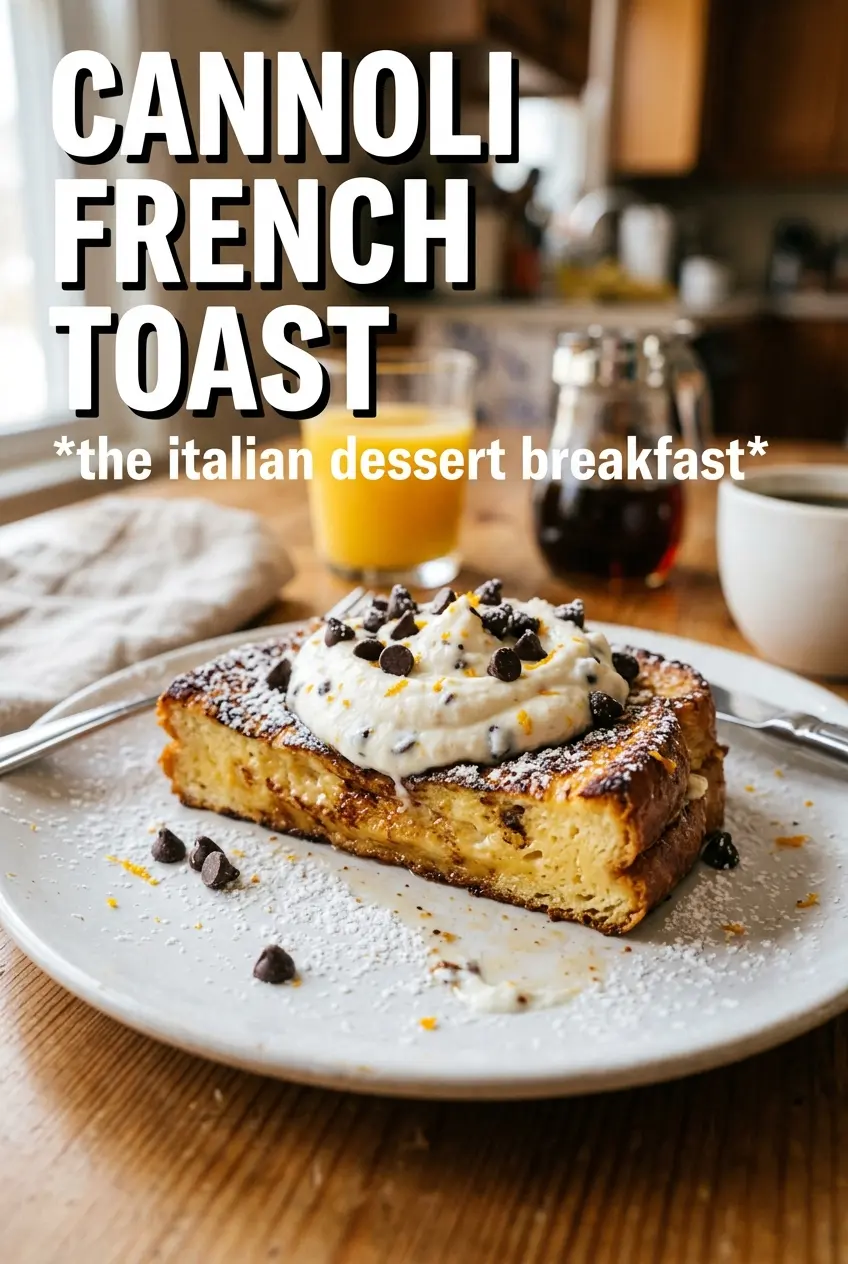
Cannoli French Toast
Ingredients
Equipment
Method
- Beat whole milk ricotta, cream cheese, powdered sugar, vanilla extract, and cinnamon until smooth. Fold in mini chocolate chips so the filling stays rich and speckled.
- Spread cannoli cream on 4 slices of brioche bread and top with the remaining slices to make filled sandwiches. Press lightly so the filling doesn’t leak during dipping.
- Whisk large eggs, whole milk, sugar, and vanilla until fully combined. The mixture should look uniform with no streaks.
- Dip each stuffed sandwich in custard for 30 seconds per side. Let excess custard drip off briefly so the exterior browns instead of steaming.
- Cook in butter in a skillet over medium heat for 3–4 minutes per side until golden. Flip once when the first side is set and browned, aiming for a crisp, toasted surface.
- Dust with powdered sugar, then top with mini chocolate chips or chocolate chips. Drizzle with honey while the French toast is warm for maximum contrast.