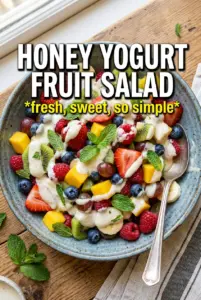
Honey yogurt fruit salad lands in that sweet spot between refreshing and creamy, with just enough richness to make a bowl of fruit feel like a real dish. The dressing clings to every piece without turning soupy, and the lime keeps the whole bowl bright instead of heavy. It’s the kind of simple recipe that disappears fast at breakfast and still works beside eggs, pancakes, or grilled chicken when you want something cool and clean on the table.
The trick is balancing fruit that holds its shape with fruit that gives a little juice. Strawberries, grapes, mango, pineapple, raspberries, and blueberries each behave differently, so the dressing has to be smooth and lightly thickened rather than thin and sugary. Greek yogurt gives the best body here, but vanilla yogurt works too if that’s what you have. The lime zest matters more than it looks like it should; it wakes up the honey and keeps the salad from tasting flat.
Below, I’ve laid out the small details that keep this fruit salad crisp instead of watery, plus a few easy swaps for when your fridge looks a little different.
The dressing coated everything without making the berries mushy, and after 20 minutes in the fridge the flavor was even better. My kids ate the pineapple first and asked for the “yogurt fruit bowl” again the next morning.
Creamy honey yogurt fruit salad is the fresh bowl that still feels special enough for brunch.
The Dressing Has to Coat, Not Drown
A good fruit salad lives or dies on the texture of the dressing. If it’s too thin, it slides to the bottom and leaves the fruit wet at the end of the bowl. If it’s too thick, it clumps and won’t fold through evenly. Greek yogurt gives enough body to cling to the fruit, and a little honey loosens it just enough to move without turning runny.
The other mistake is overmixing. Raspberries break first, then strawberries start to shed juice, and the whole bowl turns pink faster than you expect. Fold gently with a big spoon or spatula until the fruit is coated and stop there. The salad tastes best when the fruit still looks distinct and the dressing is just around the edges.
What Each Ingredient Is Actually Doing in This Bowl
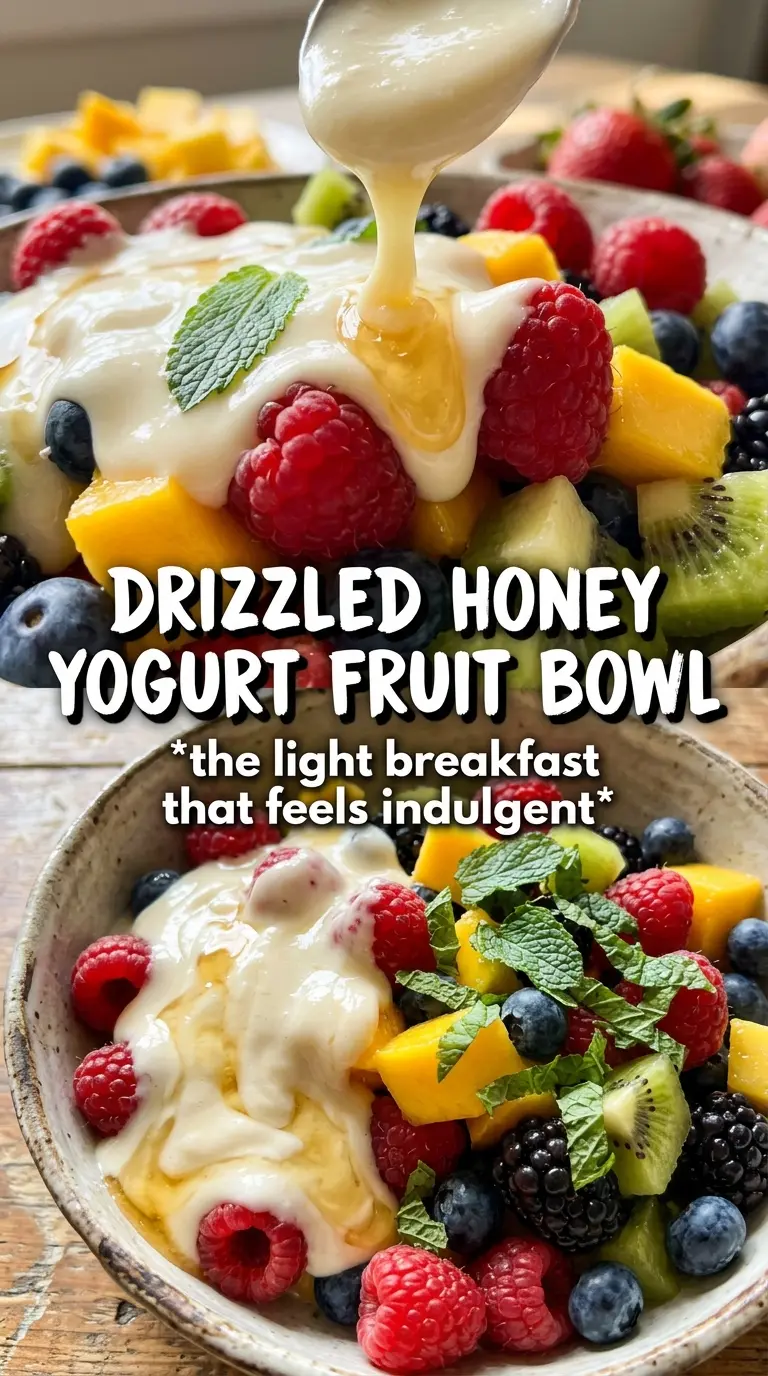
- Greek yogurt gives the dressing its body and tang. Plain yogurt works, but it’s thinner, so the salad will loosen faster. If you only have vanilla yogurt, cut back the honey a little because it already brings sweetness.
- Honey softens the tang of the yogurt and helps the dressing cling to the fruit. Maple syrup can stand in, but the flavor shifts a little deeper and less floral.
- Lime juice and zest keep the salad bright. The juice sharpens the sweetness, and the zest adds the part that tastes fresh instead of just sweet. Don’t skip the zest if you want the bowl to taste lively.
- Mango and pineapple bring enough sweetness and structure to balance the berries. If either one is under-ripe, the salad tastes flat, so use fruit that smells fragrant and gives slightly when pressed.
- Mint is more than garnish here. It gives the finished bowl a cool, clean finish that makes the yogurt taste lighter.
Folding the Fruit Without Turning It Mushy
Whisk the dressing until it’s completely smooth
Start with the yogurt, honey, lime juice, lime zest, and vanilla in a small bowl. Whisk until the honey disappears and the mixture looks glossy and even. If you see streaks of honey or bits of zest clumped together, they’ll never distribute evenly once the fruit goes in. This is the time to taste it, because the dressing should taste a little sweeter and a little tangier than you want the finished bowl to taste.
Build the bowl with the firmest fruit first
Add the grapes, mango, pineapple, strawberries, blueberries, and raspberries to a large bowl. The order matters less than the condition of the fruit, but firm fruit at the bottom helps the softer berries stay intact while you fold. If the fruit is damp from rinsing, dry it first; extra water thins the dressing and pools at the bottom of the bowl.
Fold gently and stop as soon as everything looks coated
Pour the dressing over the fruit and use a spatula or large spoon to lift from the bottom of the bowl. Two or three slow turns are enough. If you keep stirring, the raspberries break down and the dressing turns pink and watery. The salad should look glossy, with the fruit still clearly separate and lightly coated.
Let it chill briefly, not overnight
Fifteen to thirty minutes in the fridge gives the flavors time to settle and the dressing time to cling better. Leave it much longer and the berries start leaking juice, which changes the texture fast. If you need to hold it for a party, keep the fruit and dressing separate until close to serving time.
Ways to Adjust It for What’s in Your Kitchen
Dairy-Free Version
Use a thick coconut yogurt or another unsweetened dairy-free yogurt with some body. Thin plant-based yogurts won’t coat the fruit the same way, so look for one that holds a spoon. The result is a little less tangy and a little more coconut-forward, which works nicely with mango and pineapple.
Lower-Sugar Bowl
Use plain Greek yogurt and start with 1 to 2 tablespoons honey instead of 3. The fruit brings plenty of sweetness on its own, especially if your mango and pineapple are ripe. You’ll get a sharper, fresher salad with less of a dessert feel.
Fruit Swaps That Still Hold Up
Blackberries, kiwi, peaches, or mandarin segments all work if they’re ripe but not soft. Swap one or two fruits at a time rather than changing everything, so the bowl still has a mix of firm and tender textures. Avoid very juicy melon if you’re serving the salad later, because it leaks fast.
Storage and Reheating
- Refrigerator: Best within 24 hours. After that, the berries soften and the dressing thins from the fruit juices.
- Freezer: Don’t freeze it. The yogurt separates and the fruit turns watery once thawed.
- Reheating: No reheating needed. If it sits in the fridge, stir it gently before serving and add a fresh pinch of mint or a little lime zest to wake it back up.
Answers to the Questions Worth Asking
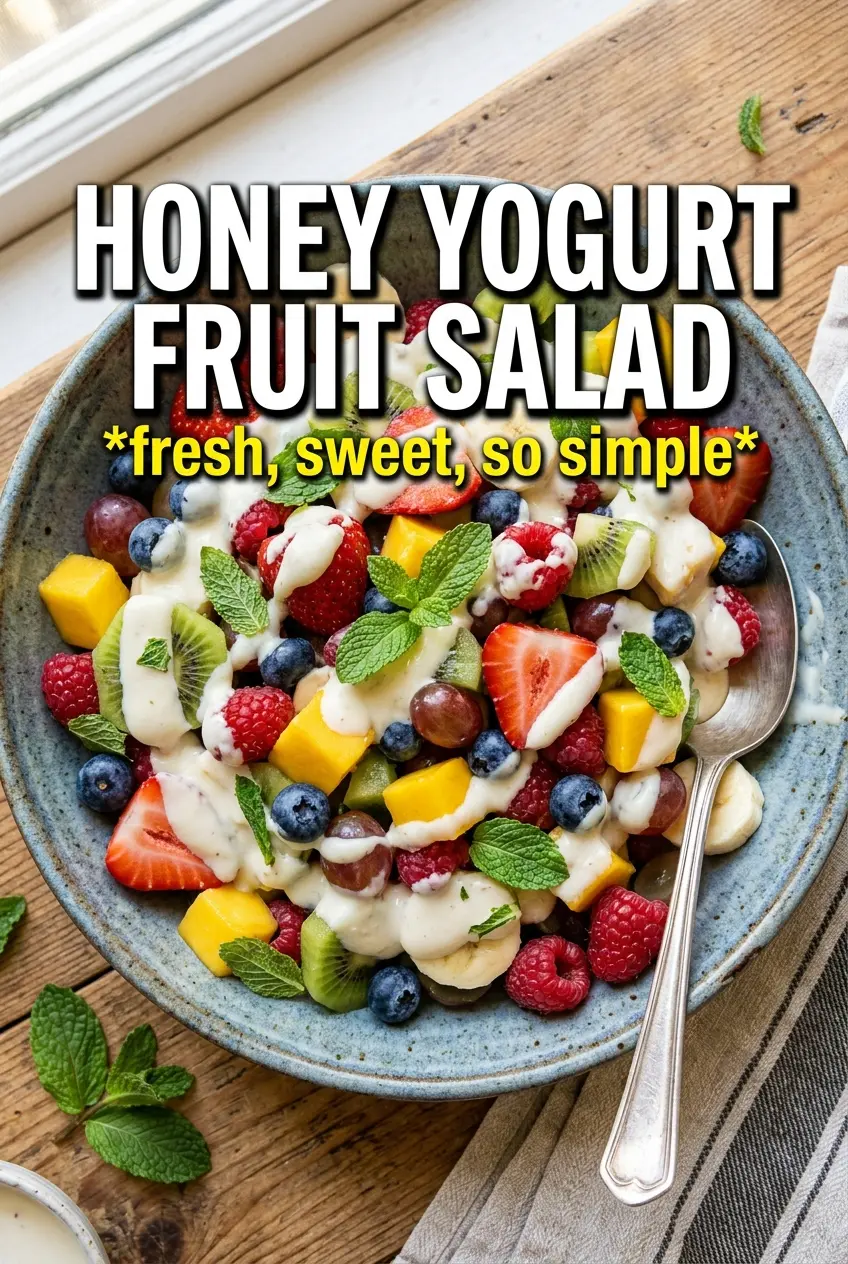
Honey Yogurt Fruit Salad
Ingredients
Method
- Add the strawberries, blueberries, raspberries, grapes, mango, and pineapple to a large serving bowl and stir gently to distribute the colors.
- Whisk the plain Greek yogurt (or vanilla yogurt), honey, lime juice, lime zest, and vanilla extract in a separate bowl until smooth and glossy.
- Pour the dressing over the fruit and fold gently until all pieces look evenly coated.
- Refrigerate for 15–30 minutes if time allows, so the fruit releases juices and the coating thickens slightly.
- Top with fresh mint leaves and serve immediately for the freshest texture.