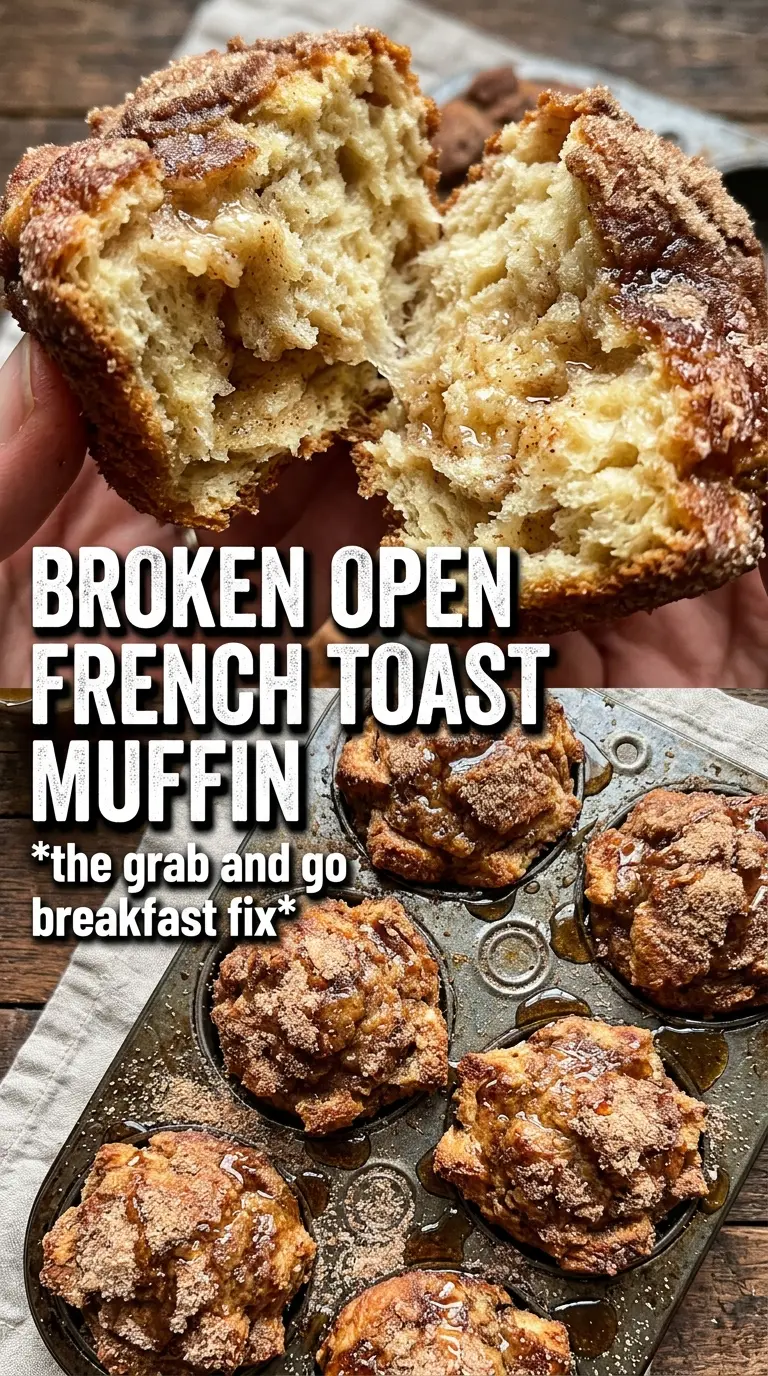
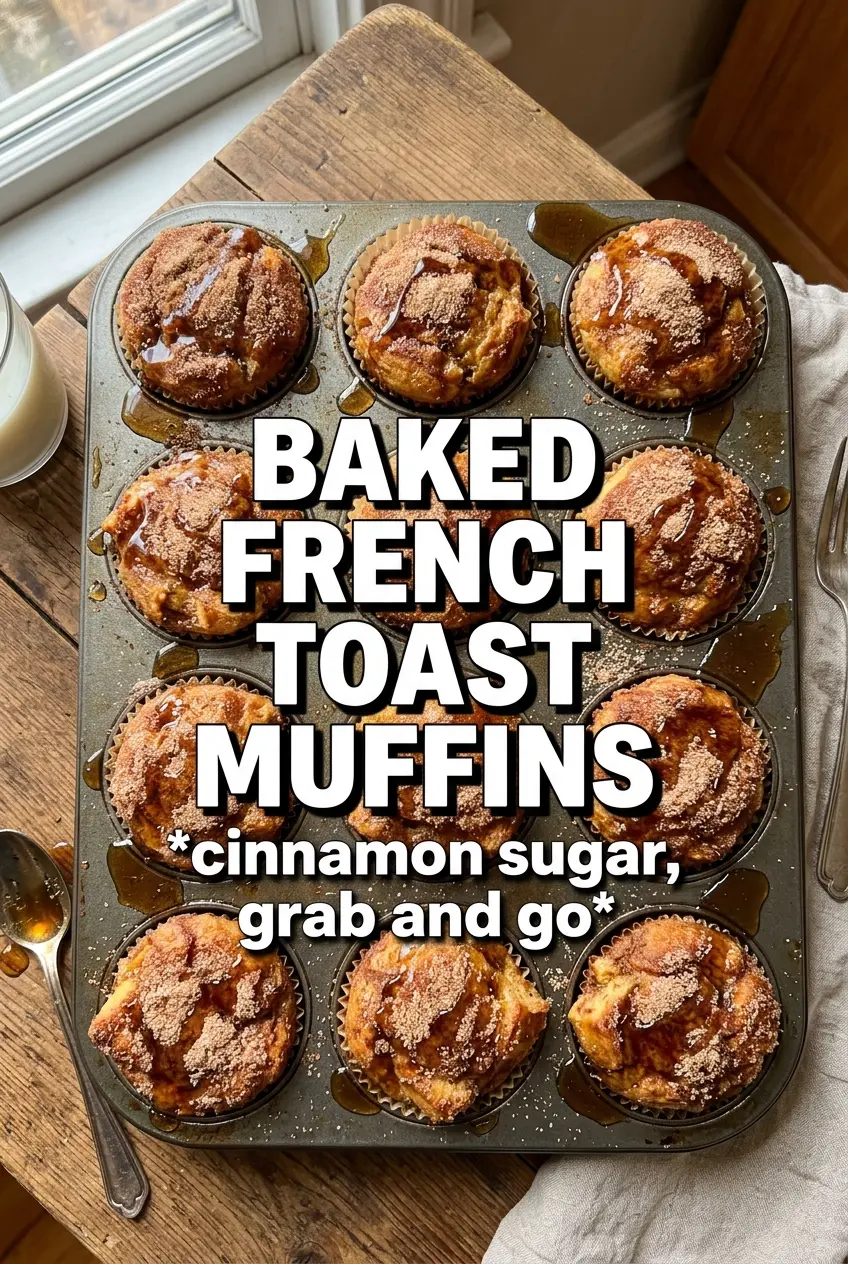
Golden edges, a soft custardy center, and a crackly cinnamon sugar top are what make baked French toast muffins worth putting on repeat. They taste like the best part of a diner-style French toast stack, but they bake into neat little portions that actually work for busy mornings. You get the maple, vanilla, and cinnamon you want, plus enough structure to pick them up and eat them warm without a fork if that’s how the morning is going.
The trick is giving the bread just enough time to soak without turning the whole mixture to mush. Thick-cut bread holds its shape better than standard sandwich bread, and the muffin tin does the rest by helping each portion bake up with crisp edges. The cinnamon sugar topping matters here too — the melted butter helps it bake into a thin, crackly layer instead of disappearing into the custard.
Below, I’ve included the few details that keep these from collapsing or baking up soggy, along with a couple of smart swaps if you want to use what you already have on hand.
The tops came out crisp and cinnamon-sugary, and the centers stayed soft without turning wet. I made them ahead, reheated them in the toaster oven, and they still tasted fresh.
Love the crisp cinnamon sugar tops and soft centers in these baked French toast muffins? Save them to Pinterest for an easy grab-and-go breakfast that still feels special.
The Bread-to-Custard Balance That Keeps Them from Getting Soggy
Most French toast muffins fail for the same reason French toast casseroles fail: too much liquid, not enough structure. Once the bread cubes go into the custard, they should look saturated but still hold their shape. If the mixture sits too long, especially with soft bread, you end up with a dense, eggy bake instead of those tender pockets you want in each muffin.
Pressing the soaked bread into the muffin cups matters because it helps everything bake evenly. You’re not packing it down hard. You’re giving the custard-coated bread enough contact to set into a muffin shape while still leaving air pockets for a light, bready texture. The oven heat finishes the job by crisping the exposed edges first.
- Thick-cut bread — This holds up better than standard sliced bread. Day-old bread works well because it absorbs custard without collapsing. If your bread is very fresh, cube it and toast it briefly before soaking.
- Whole milk — The fat in whole milk gives the custard a softer, richer finish. Two percent works in a pinch, but the centers will be a little less plush.
- Maple syrup — A little goes right into the custard for flavor and a hint of sweetness. Use the real thing if you can, since pancake syrup tastes flatter here.
- Cinnamon sugar topping — The butter helps the sugar caramelize on the surface instead of dissolving into the bread. That’s what gives these muffins their thin, crisp crust.
What Each Ingredient Is Actually Doing in This Recipe
- Primary ingredient (the star) — Quality matters most. Choose the best you can find.
- Cooking medium (oil, butter, or broth) — This carries flavors and prevents dryness.
- Seasonings (salt, pepper, spices, herbs) — Layer flavors so nothing overpowers. Build depth gradually.
- Aromatics (garlic, onion, herbs) — Cook with fat to bloom flavors. Become the foundation.
- Supporting ingredients — Complement the main ingredient without overpowering it.
- Sauce or liquid (if applicable) — Brings flavors together. Balance richness with acid.
- Acid (lemon, vinegar, wine, or other) — Brightens and prevents flat-tasting results.
- Final finish (garnish, glaze, or sauce) — Prevents one-dimensional taste and adds visual appeal.
How to Build the Muffins So the Centers Stay Custardy
Whisking the Custard Smooth
Start by whisking the eggs, milk, maple syrup, vanilla, cinnamon, and salt until the mixture looks uniform and slightly foamy. If the cinnamon clumps in one corner, it ends up unevenly flavored in the baked muffins. The custard should smell like maple and warm spice before the bread ever goes in.
Soaking the Bread Just Long Enough
Add the bread cubes and let them sit for about 5 minutes, pressing them down once or twice so the top pieces catch up with the bottom ones. The bread should be fully moistened but not falling apart. If the bread starts turning to paste when you stir, it’s already gone too far.
Filling the Muffin Tin Evenly
Divide the soaked bread mixture among the 12 cups and press gently so each one holds together. The cups should look full and a little rustic, not neatly flattened. If the mixture is too loose, the muffins won’t rise into defined portions, and the tops can bake unevenly.
Baking to the Set Point
Bake at 375°F for 18 to 20 minutes until the tops are golden and the centers are set but still slightly tender when pressed. Overbaking dries out the middle and turns the texture bready instead of custardy. Let them sit in the pan for a few minutes before lifting them out so the structure firms up.
What to Change When You Want These a Little Different
Dairy-Free Version
Swap the whole milk for an unsweetened oat milk or almond milk. Oat milk gives the closest body, while almond milk makes the muffins a little lighter. Use a dairy-free butter for the topping so the sugar still bakes into that crisp surface.
Gluten-Free French Toast Muffins
Use a sturdy gluten-free sandwich bread that’s already a little dry, not a soft fresh loaf. Gluten-free bread can break down faster in custard, so keep the soak time short and check the muffins a minute or two early.
Make-Ahead Breakfast for Busy Mornings
Bake the muffins, cool them completely, then store them for quick breakfasts during the week. They keep their shape better than a skillet version and reheat cleanly, which is why they work so well for grab-and-go meals.
Storage and Reheating
- Refrigerator: Store in an airtight container for up to 4 days. The tops soften a little in the fridge, but the centers stay pleasantly tender.
- Freezer: These freeze well. Wrap individually and freeze for up to 2 months so they reheat without sticking together.
- Reheating: Warm in a 325°F oven or toaster oven until heated through. The microwave works in a pinch, but it softens the cinnamon sugar crust instead of bringing it back to life.
Answers to the Questions Worth Asking
Baked French Toast Muffins
Ingredients
Equipment
Method
- Preheat the oven to 375°F and grease a 12-cup muffin tin so the muffins release cleanly.
- Whisk together eggs, whole milk, maple syrup, vanilla extract, cinnamon, and salt until smooth and fully combined.
- Add the cubed thick-cut bread to the custard and let it soak for 5 minutes, then press down so the cubes absorb the liquid.
- Divide the soaked bread mixture among the muffin cups and press gently to level the tops.
- Mix sugar and cinnamon with melted butter, then drizzle over the top of each cup so a golden crust forms.
- Bake for 18–20 minutes at 375°F until golden and set, then serve warm with maple syrup drizzled over the top.