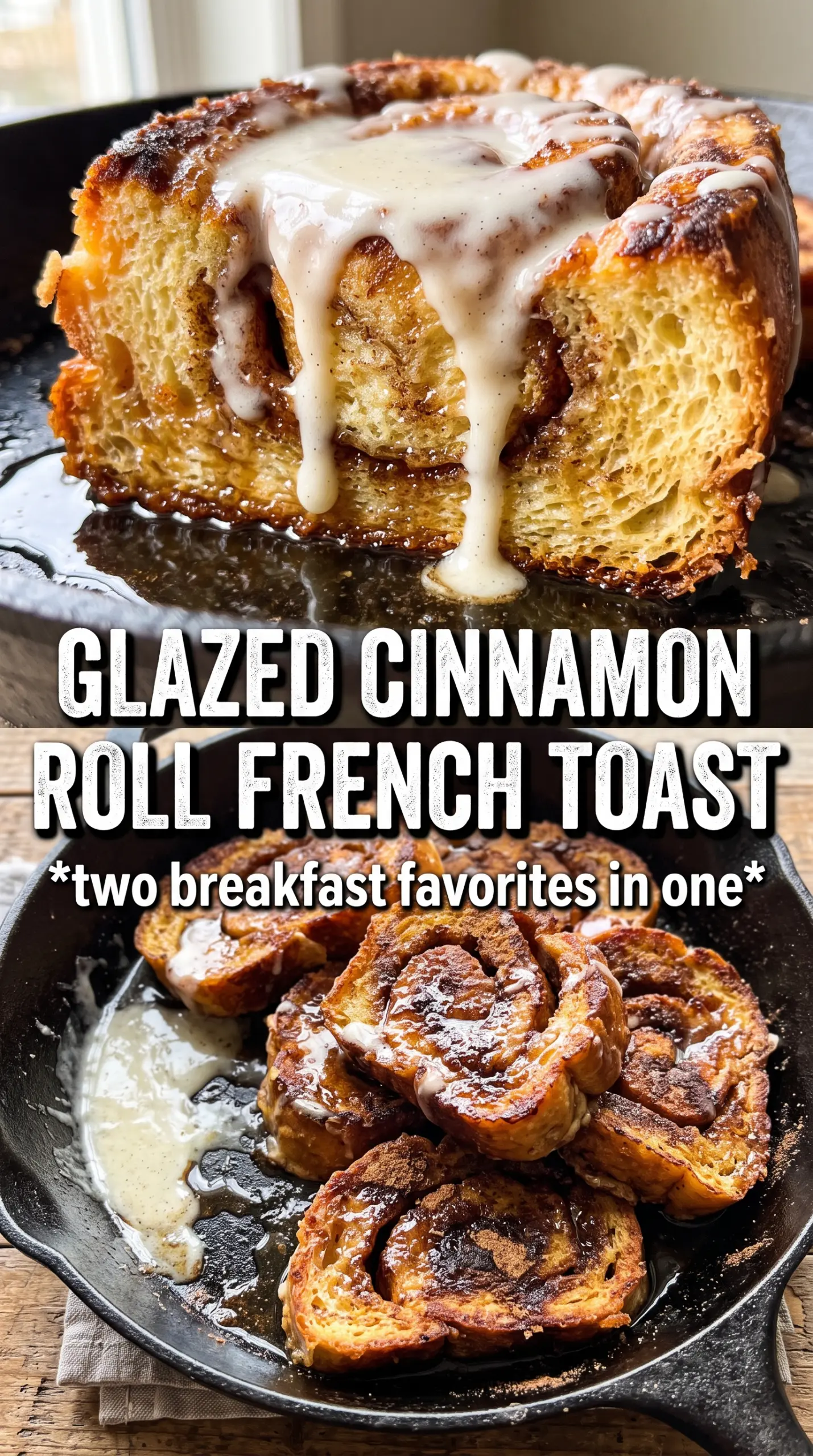
Cinnamon roll French toast hits that sweet spot between breakfast and dessert without losing the one thing people actually want at the table: crisp edges, a soft middle, and a warm glaze that sinks into every swirl. Cutting the rolls into thick rounds changes everything. You get more surface area for caramelization, more custardy edges, and enough structure that the slices hold together instead of turning into a pan of mush.
The trick is a quick dip, not a soak. Cinnamon rolls already start out soft, and the egg mixture only needs enough time to coat the outside and tuck into the ridges. A little vanilla and cinnamon in the custard echoes the filling without making the whole dish taste flat or eggy, and medium heat gives the slices time to brown before the centers overcook. The reserved icing goes on while everything is still hot, so it melts into a creamy glaze instead of sitting on top like frosting from the fridge.
Below you’ll find the exact timing that keeps the slices intact, plus a few ways to adapt the recipe if you want to scale it up or change the finish.
The slices held together better than I expected, and the outside got this caramelized crust while the middle stayed soft. The cream cheese icing melting over the top was the best part.
Pin these caramelized cinnamon roll French toast slices for a fast breakfast that tastes bakery-rich without extra fuss.
The Part Where the Cinnamon Roll Stays Intact
The biggest mistake with cinnamon roll French toast is treating it like regular bread. A cinnamon roll is softer, richer, and already packed with sugar, so it breaks down fast if it sits too long in the custard or cooks over heat that is too high. Cutting each roll into thick rounds gives you a sturdier shape, but the real insurance is a brief dip and a calm skillet.
That quick egg bath does two jobs at once: it protects the outside from drying out and it adds a thin custardy layer that browns instead of burning. If the rolls start to slump in the pan, the custard went in too deep or the skillet was too hot. You want the edges set, the swirl visible, and the surface turning deep golden before you flip.
What Each Ingredient Is Actually Doing in This Dish
- Refrigerated cinnamon rolls — These are the whole reason the recipe works. They bring the cinnamon swirl, the sweet dough, and the icing in one package, which means you get that bakery-style result without building anything from scratch. Large rolls hold up best because they give you thicker slices after cutting.
- Eggs — The eggs create the light custard that helps the outside set and brown. Without enough egg, the rolls just taste warmed through. If you need to scale up, keep the ratio of egg to milk balanced so the coating still clings instead of running off.
- Whole milk — Whole milk keeps the custard rich without making it heavy. You can use 2% in a pinch, but skim milk tastes thin and doesn’t coat as well. If you want an even richer finish, a splash of half-and-half works beautifully.
- Vanilla and cinnamon — Vanilla rounds out the sweetness, and the extra cinnamon reinforces the filling inside the rolls. This isn’t the place for a heavy hand; too much cinnamon can bury the glaze and make the custard taste dusty. Stick close to the measurements and let the rolls do most of the work.
- Butter — Butter gives you the crisp, caramelized exterior you want in French toast. Use enough to coat the pan, but don’t flood it. Too much butter can fry the slices unevenly and leave greasy spots instead of a clean crust.
- Reserved icing — Warm icing over hot slices melts into a glossy glaze that ties the whole dish together. If the icing seems thick, set the packet near the stove while you cook so it loosens slightly before drizzling. Powdered sugar is optional, but it adds a pretty finish and a little extra sweetness on top.
How to Keep the Center Soft and the Outside Caramelized
Cutting the Rolls Into Slices
Slice each cinnamon roll into three thick rounds while the dough is still cold from the can. A serrated knife helps keep the spiral intact, and clean cuts matter because ragged edges fall apart in the pan. You want neat rounds that can soak up custard without collapsing. If the dough sticks to the knife, dust the blade lightly with flour.
Mixing the Custard
Whisk the eggs, milk, vanilla, and cinnamon in a shallow dish until no streaks of egg white remain. The dish should be wide enough for the slices to lie flat, which helps them coat evenly. If the custard looks foamy, let it sit for a few seconds so the bubbles settle; too much foam makes the coating uneven. This mixture should smell like warm vanilla, not heavy spice.
The Short Dip That Protects the Spiral
Dip each slice for 20 to 30 seconds per side, just long enough for the surface to absorb a little custard. The center of the round should still feel sturdy when you lift it out. If it gets soggy before it hits the skillet, it will spread and lose the definition of the swirl. Let the excess drip off for a moment before it goes into the pan.
Cooking to a Deep Golden Finish
Melt the butter over medium heat and add the slices in a single layer without crowding the pan. They need space for the edges to crisp instead of steam. Cook until the underside turns deep golden and releases easily, then flip and finish the second side. If the pan is smoking, the heat is too high and the sugar in the rolls will scorch before the center warms through.
Drizzling the Icing While It’s Hot
Move the French toast to plates as soon as it comes out of the skillet. Drizzle the reserved icing over the top while the slices are still warm so it melts into the ridges instead of sitting in thick ribbons. A light dusting of powdered sugar adds that finished look, but don’t bury the surface. The best version still shows off the caramelized crust underneath.
Three Ways to Change the Finish Without Losing the Point
Dairy-Free Version
Use plant-based butter and a creamy non-dairy milk such as oat milk. The texture stays close to the original, though the custard browns a little less deeply. The icing packet from the cinnamon rolls may still contain dairy, so check that if you need the whole dish to stay dairy-free.
Make It a Little Less Sweet
Skip the powdered sugar and use only a light drizzle of the icing. You still get the cinnamon roll character, but the custard and caramelized edges come through more clearly. This version works well if you’re serving it with salty bacon or sausage on the side.
Extra-Toastier Edges
Let the slices cook a little longer on the first side before flipping, but keep the heat at medium. That extra minute builds a darker crust and more crunch at the edges without drying out the center. If you rush the flip, you lose the caramelization that makes this version stand out.
Storage and Reheating
- Refrigerator: Store leftovers in an airtight container for up to 2 days. The crust softens as it sits, but the flavor stays good.
- Freezer: Freezing isn’t ideal here because the custard and icing change texture after thawing. If you need to freeze them, cool completely, wrap tightly, and reheat from frozen in the oven rather than the microwave.
- Reheating: Warm in a 325°F oven or toaster oven until heated through and the edges re-crisp. The microwave makes the rolls soggy, which is the fastest way to lose that caramelized finish.
Answers to the Questions Worth Asking

Cinnamon Roll French Toast
Ingredients
Equipment
Method
- Slice each cinnamon roll into 3 rounds from the can, keeping the swirl intact.
- Whisk eggs, milk, vanilla extract, and cinnamon together in a shallow dish until smooth.
- Dip each cinnamon roll slice in the egg mixture for 20–30 seconds per side, letting excess drip back into the dish.
- Melt butter in a skillet over medium heat and cook each slice for 2–3 minutes per side until golden and caramelized.
- Drizzle the reserved cream cheese icing over the warm slices so it lightly melts.
- Dust with powdered sugar and serve immediately.