Sticky honey garlic glaze clings to every edge of the sweet potatoes and sausage, turning a simple skillet dinner into something that eats like it took a lot more work than it did. The sweet potatoes go soft in the middle and caramelize at the corners, while the sausage picks up browned edges and a glossy coating that tastes balanced instead of overly sweet.
What makes this version work is the order. The sweet potatoes get a head start so they can actually brown before the sausage goes in, and the sauce is added only at the end so the honey can thicken without burning. A little soy sauce and apple cider vinegar keep the glaze from tasting flat, and smoked paprika brings just enough depth to make the whole pan taste finished.
Below, I’ve broken down the one step people rush most, the ingredient swaps that still keep the skillet on track, and the best way to store the leftovers if you end up with any.
The sweet potatoes got those caramelized edges I never seem to get in a skillet, and the honey garlic sauce thickened up in the last two minutes just like you said. My husband ate his over rice and asked if I could make it again next week.
Save this sausage and sweet potatoes skillet for the night you want a sticky honey garlic glaze and one pan that actually comes together fast.
The Sweet Potato Trick That Keeps This Skillet from Turning Soft
Sweet potatoes are the ingredient most likely to go wrong here. If you crowd the pan or add the sauce too early, they steam before they brown and the whole skillet turns mushy instead of caramelized. The goal is not to cook them until completely tender at the start. It’s to get the edges colored and the centers just starting to soften so they can finish in the glaze without falling apart.
Cast iron helps because it holds heat steady, but the real difference is giving the cubes room and leaving them alone long enough to take on color. Stirring every minute keeps them pale. Stirring occasionally lets them sit on the hot surface and develop those crisp, browned spots that hold up once the honey garlic sauce goes in.
- Sweet potatoes — Dice them small and evenly, about bite-size, so they cook through in the same window as the sausage. Bigger cubes need longer and usually end up with scorched outsides before the middles soften.
- Smoked sausage or kielbasa — This brings salt, fat, and a built-in browned flavor the pan can build on. Chicken sausage works too, but it won’t give you the same rich, savory finish.
- Honey — This is what gives the glaze its sticky shine. Maple syrup can stand in, but the flavor shifts and the sauce tastes a little deeper and less bright.
- Soy sauce and apple cider vinegar — Together they keep the glaze from tasting one-note. If you need a gluten-free version, use tamari instead of soy sauce and keep the rest the same.
- Fresh thyme — It’s a finishing detail, not a background herb. The little bit of woodsy flavor cuts through the sweetness and makes the skillet taste intentional.
What Each Ingredient Is Actually Doing in This Recipe

- Primary ingredient (the star) — Quality matters most. Choose the best you can find.
- Cooking medium (oil, butter, or broth) — This carries flavors and prevents dryness.
- Seasonings (salt, pepper, spices, herbs) — Layer flavors so nothing overpowers. Build depth gradually.
- Aromatics (garlic, onion, herbs) — Cook with fat to bloom flavors. Become the foundation.
- Supporting ingredients — Complement the main ingredient without overpowering it.
- Sauce or liquid (if applicable) — Brings flavors together. Balance richness with acid.
- Acid (lemon, vinegar, wine, or other) — Brightens and prevents flat-tasting results.
- Final finish (garnish, glaze, or sauce) — Prevents one-dimensional taste and adds visual appeal.
Building the Glaze in the Pan Without Burning the Honey
Start with the sweet potatoes
Heat the olive oil over medium-high heat and add the diced sweet potatoes first. Let them sit long enough to pick up color before stirring, then keep cooking until the edges are golden and the centers are just starting to soften. If they’re crowded, they’ll steam and turn dull instead of caramelized, so use a large skillet and keep the layer as even as you can.
Add the sausage and vegetables after the potatoes have color
Once the potatoes are browned, add the sausage, bell pepper, and onion. The sausage only needs enough time to brown and warm through, while the onion and pepper should soften but still keep some bite. If the sausage goes in too early, it releases fat that can slow the browning on the potatoes, which is why the head start matters.
Finish with the honey garlic sauce
Stir together the honey, garlic, soy sauce, and vinegar, then pour it over the skillet and toss immediately so everything gets coated. Let it cook just until the glaze thickens and turns glossy, about 2 minutes. If the heat is too high here, the honey can scorch before it has time to cling to the ingredients, so keep the pan hot but not aggressive.
How to Adapt This Skillet for Different Meals and Diets
Make it gluten-free with one swap
Use tamari instead of soy sauce and check the label on your sausage, since some brands use fillers that contain gluten. The glaze stays sticky and balanced, and you won’t lose any of the savory depth.
Swap the sausage for chicken sausage or turkey kielbasa
This lightens the skillet without changing the method. You’ll get a slightly leaner result, so keep an eye on the pan and add a touch more oil if the sausage doesn’t release enough fat to help the vegetables brown.
Turn it into breakfast with eggs
Spoon the finished skillet into bowls and top it with fried or soft-scrambled eggs. The runny yolk mixes into the honey garlic glaze and turns the whole dish into a hearty breakfast that still feels like dinner.
Storage and Reheating
- Refrigerator: Store in an airtight container for up to 4 days. The sweet potatoes soften a little, but the flavor holds up well.
- Freezer: It freezes, but the texture of the sweet potatoes turns softer after thawing. For the best result, freeze in a flat layer and use within 2 months.
- Reheating: Reheat in a skillet over medium heat with a splash of water to loosen the glaze. The microwave works in a pinch, but it can make the sweet potatoes gummy and the sausage rubbery.
Answers to the Questions Worth Asking
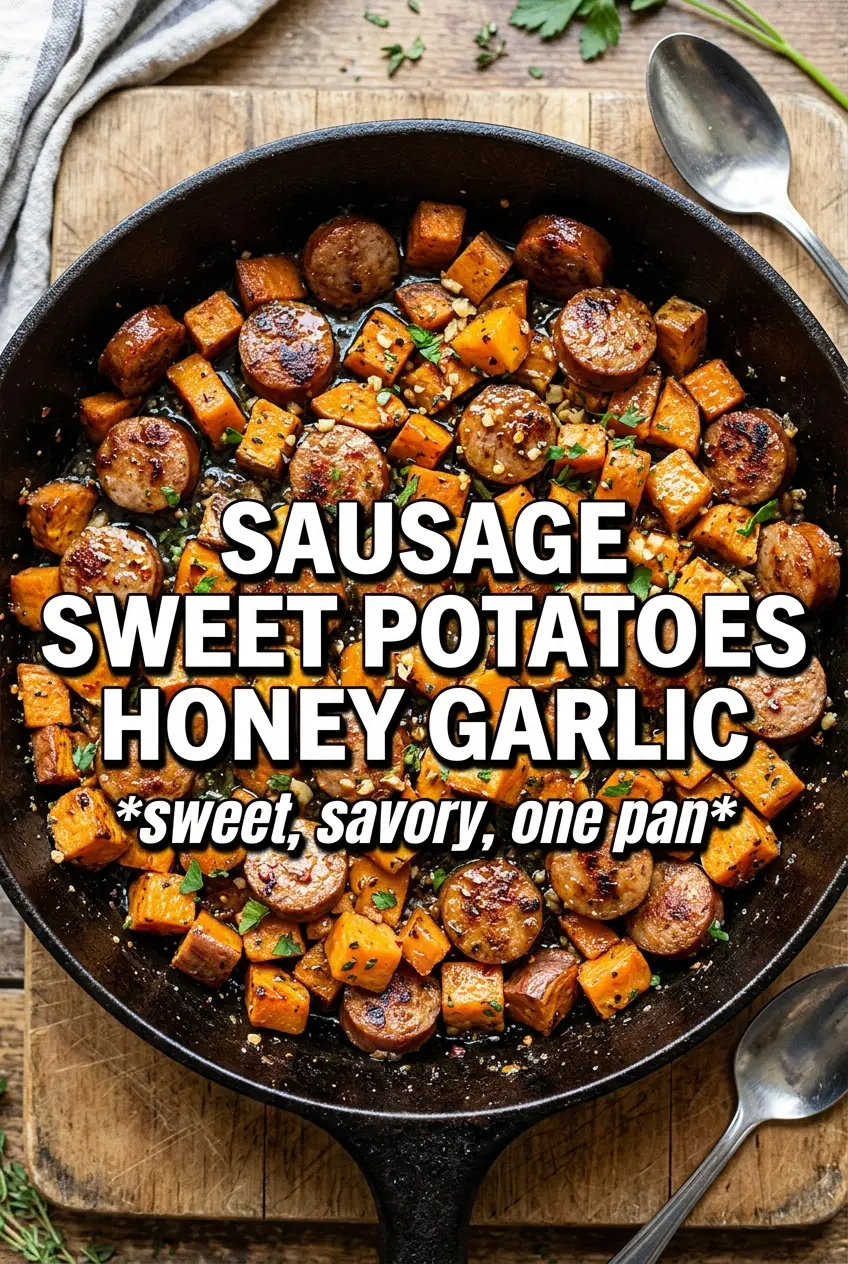
Sausage and Sweet Potatoes with Honey Garlic Sauce
Ingredients
Equipment
Method
- Heat olive oil in a large cast iron skillet over medium-high heat. Add diced sweet potatoes and cook for 10–12 minutes, stirring occasionally, until golden.
- Add sausage slices, bell pepper, and onion to the skillet. Cook for 5 more minutes until the sausage is browned.
- Season everything with salt, black pepper, and smoked paprika. Stir to distribute evenly through the skillet.
- Mix honey, minced garlic, soy sauce, and apple cider vinegar together, then pour over the skillet. Toss everything to coat and cook for 2 more minutes until the glaze thickens and caramelizes, turning glossy and amber.
- Garnish with fresh thyme and serve hot. The glaze should look sticky and lightly clinging to the sausage and sweet potato cubes.