Golden coconut crust turns ordinary French toast into something with a real breakfast payoff: crisp edges, a soft custard center, and toasted coconut that tastes fragrant before you even add syrup. The outside gets crunchy in the skillet instead of soggy, which is what makes this version worth keeping around. It eats like brunch food, but it comes together fast enough for a normal morning.
The trick is pressing the bread into the coconut after the egg soak, not before. That gives the bread time to absorb the custard, then the coconut has enough moisture to cling and brown in the pan. Brioche brings a richer crumb, but Texas toast holds its shape well if you want cleaner slices and a sturdier crust. The coconut milk adds body and a subtle sweetness, and the cinnamon stays quiet in the background so the coconut and vanilla can do most of the talking.
Below you’ll find the timing that keeps the center tender without burning the coconut, plus a few swaps if you need to work with what’s already in your kitchen. The pineapple and coconut cream finish is worth the extra minute — it plays right into the toasted crust and keeps each bite from feeling heavy.
The coconut actually toasted instead of falling off, and the center stayed soft without getting soggy. I used brioche and the pineapple on top made it taste like something from a brunch cafe.
Coconut Crusted French Toast is the kind of brunch plate that disappears fast, especially with that crunchy toasted coconut edge and pineapple on top.
The Trick to Keeping the Coconut Crunchy Instead of Gummy
The biggest mistake with coconut French toast is rushing the pan. Sweetened shredded coconut burns faster than plain bread browns, and if the heat runs too high, the coating turns dark before the center has time to warm through. Medium heat gives you the slow, even toast that makes this recipe work. You want the coconut to turn deep golden and smell nutty, not smell scorched.
The other thing that matters is the soak. Twenty seconds per side is enough for thick bread like brioche or Texas toast. Any longer and the slices can get too fragile, which makes the coconut coating slide around instead of sticking in a neat crust.
What Each Ingredient Is Actually Doing in This Dish
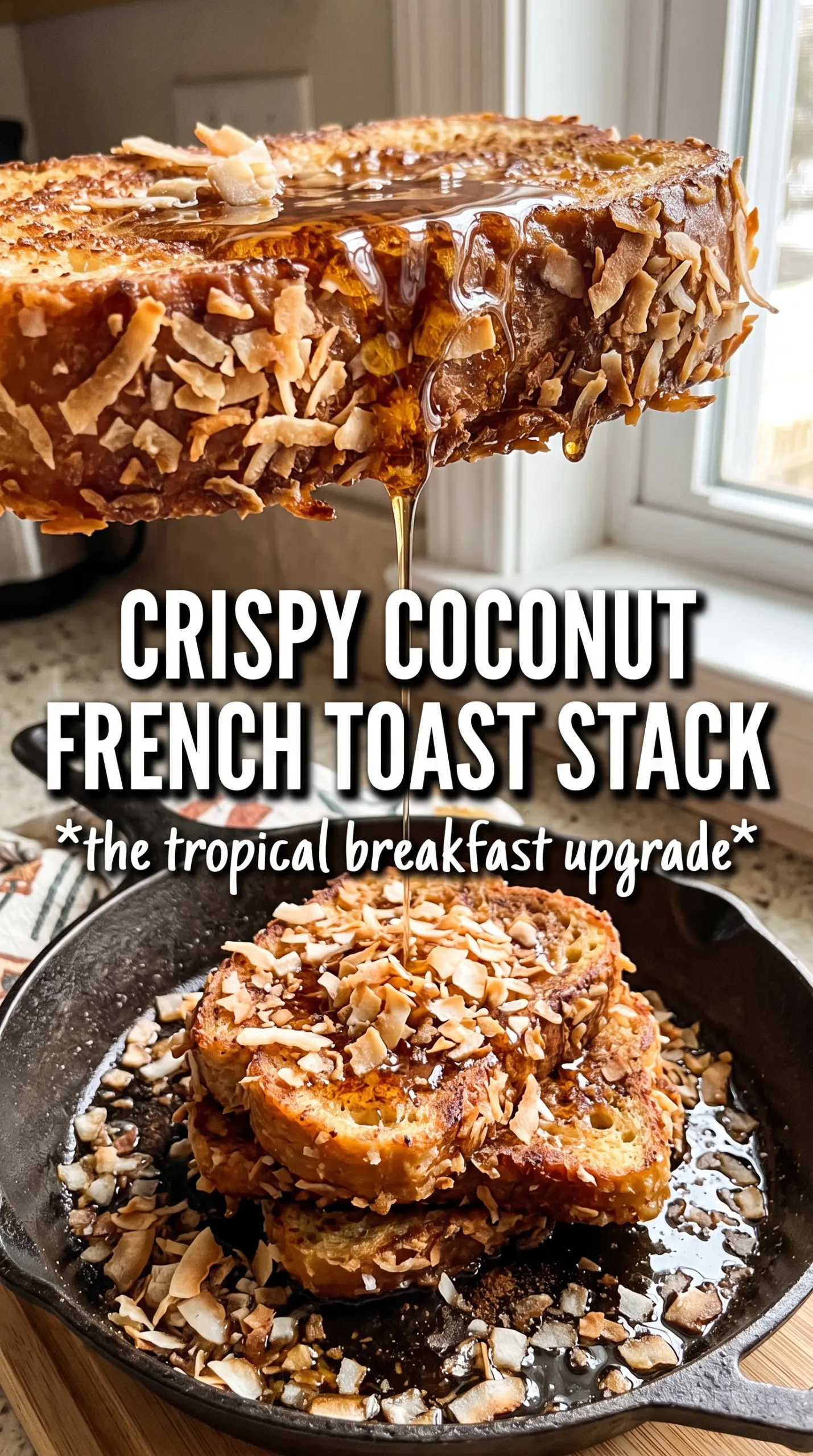
- Brioche or Texas toast — Thick slices matter here because thin sandwich bread can’t hold the custard long enough to build that coating. Brioche gives you a softer, richer center, while Texas toast stays a little firmer and is easier to flip without losing the crust.
- Sweetened shredded coconut — This is the crust, so use the regular sweetened kind, not coconut flakes. The finer texture sticks better and browns evenly in the pan.
- Coconut milk — It adds body and a gentle coconut flavor without thinning the custard too much. Canned coconut milk works best; if you use carton coconut milk, the coating will still work, but the flavor is lighter.
- Eggs — They set the custard and give the coconut something to cling to. If the mixture looks streaky, whisk it longer than you think you need to; uneven eggs leave pale patches on the bread.
- Butter — Butter helps the coconut toast and gives you the best color in the skillet. If the pan starts smoking, the heat is too high and the butter is telling you before the coconut burns.
The 20 Minutes That Actually Matter
Building the Custard
Whisk the eggs, coconut milk, sugar, vanilla, and cinnamon until the mixture looks smooth and uniform. You’re not trying to froth it, just blending out the streaks so every slice gets the same custard. If the sugar sits at the bottom, the first pieces of bread come out underseasoned and the last ones taste too sweet.
Coating the Bread in Coconut
Dip each slice for about 20 seconds per side, then press it into the shredded coconut right away. The bread should feel saturated but still hold its shape when you lift it. If it’s dripping wet, let it sit for a few seconds before the coconut goes on, or the coating will slide off in the skillet.
Toast, Don’t Rush
Melt the butter over medium heat and cook the slices for 3 to 4 minutes per side. The coconut should turn a deep golden color and smell toasted before you flip. If the crust is darkening too fast, lower the heat and give the center more time; the bread should finish with a soft custard middle, not a cold center under a burnt shell.
Serve While the Crust Is Still Crisp
Stack the French toast on plates and finish with pineapple, coconut cream, powdered sugar, and maple syrup. The crust stays crispest when it goes straight from skillet to plate, so don’t let the slices sit in a pile where steam can soften the coconut. A little syrup is enough here; the coconut and pineapple already bring plenty of sweetness.
How to Adapt This for Different Mornings
Dairy-Free Without Losing the Crisp Edge
Use coconut milk in the custard and swap the butter for refined coconut oil or a neutral oil with a high smoke point. Coconut oil keeps the tropical note in place and still helps the crust brown, though butter gives a slightly deeper flavor.
Gluten-Free With the Right Bread
Choose a sturdy gluten-free sandwich bread with enough structure to survive the soak. The crust works best on thicker slices, and you may need an extra few seconds in the pan because gluten-free bread usually browns a little more slowly.
Less Sweet, More Toasted Coconut
Cut the sugar in the custard by half and serve with less maple syrup. You still get the sweet coconut crust, but the finished plate tastes more balanced and lets the pineapple come forward.
Storage and Reheating
- Refrigerator: Store cooked slices for up to 3 days. The coconut will soften a little, but the flavor stays good.
- Freezer: Freeze in a single layer, then wrap tightly and store for up to 2 months. Reheat from frozen or thawed; the crust won’t be as crisp as fresh, but it still works well.
- Reheating: Use a 375°F oven or toaster oven for 8 to 10 minutes. The microwave softens the coconut and makes the bread soggy, which is the main thing to avoid.
Answers to the Questions Worth Asking
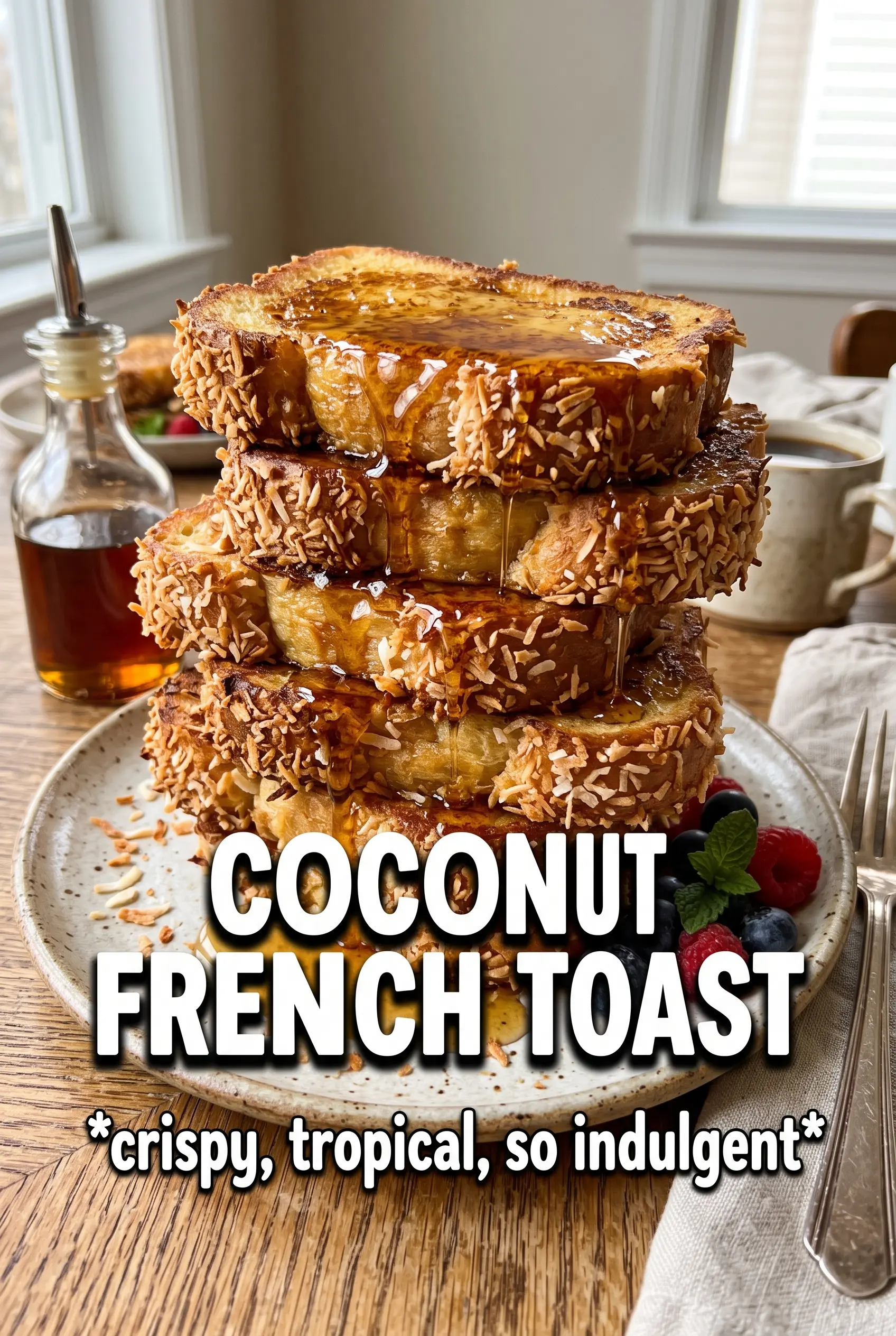
Coconut Crusted French Toast
Ingredients
Equipment
Method
- Spread the sweetened shredded coconut on a shallow plate so it’s in an even layer for easy pressing.
- Whisk the eggs, coconut milk, sugar, vanilla extract, and cinnamon together until smooth.
- Dip each bread slice in the egg mixture for 20 seconds per side so it soaks without turning soggy.
- Press each dipped side into the shredded coconut to coat, then set aside until ready to cook.
- Melt the butter in a cast iron skillet over medium heat.
- Cook the first side of each slice for 3–4 minutes until the coconut crust looks golden and toasted.
- Flip and cook the second side for another 3–4 minutes until both sides are crisp and the coconut is fragrant.
- Serve the French toast hot with pineapple chunks, a dollop of coconut cream (or whipped cream), and a dusting of powdered sugar.
- Finish with maple syrup on top or on the side.