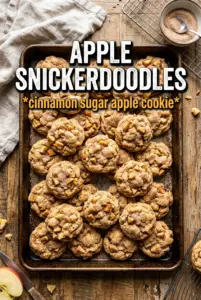
Brown butter snickerdoodles bake up with crisp, cinnamon-sugar edges, a soft center, and that unmistakable nutty depth that makes people pause after the first bite. The classic tang from cream of tartar is still there, but the brown butter shifts everything a little deeper and warmer, so the cookies taste familiar without feeling ordinary.
The key is giving the butter time to go all the way through the browning process and then letting it solidify again before you cream it with the sugar. If you skip that chill time, the dough spreads too fast and the cookies lose that thick, crinkled look. A generous roll in the cinnamon-sugar mixture matters too; it builds the sparkly crust that cracks beautifully in the oven.
Below, I’ll walk through the part that trips most people up with brown butter cookies, plus the small ingredient choices that keep these snickerdoodles soft in the center and rich all the way through.
The brown butter gave these such a deeper caramel note, and the cookies stayed thick with those perfect cracked tops. I chilled the butter for the full hour and they baked up exactly like the photos.
Crinkly brown butter snickerdoodles with a cinnamon-sugar shell are worth keeping on hand for the next cookie craving.
The Butter Has to Brown Before It Can Cookie
Brown butter changes both the flavor and the structure of these cookies, which is why the cooling step matters as much as the browning step. Once the milk solids toast and the butter turns fragrant and amber, the water has cooked off. That means you need to give the butter time to firm back up or the dough will be too loose and the cookies will spread thin instead of baking into soft rounds with craggy tops.
The other thing that keeps these from flattening is the old snickerdoodle trio of cream of tartar, baking soda, and a proper sugar coating. Cream of tartar gives the cookie its gentle tang and helps create that classic lift. Baking soda works with it to build the crackly surface, so both matter if you want a true snickerdoodle texture, not just a cinnamon cookie.
- Browned butter — Let it cool, then chill until solid but still soft enough to beat. If it’s even a little warm, the dough will be greasy and hard to portion.
- Cream of tartar — This gives the cookies their signature snickerdoodle bite. There isn’t a perfect substitute, but if you’re in a pinch, use the same amount of lemon juice or white vinegar with the understanding that the texture won’t be quite as classic.
- Cinnamon — There’s cinnamon in the dough and in the rolling mixture. The dough gets a gentle warmth; the coating gives the bigger, more obvious hit.
- Nutmeg in the rolling mix — Just a pinch, but it adds a bakery-style finish that makes the sugar coating taste a little rounder and deeper.
Getting the Dough Thick Enough to Hold That Crinkle
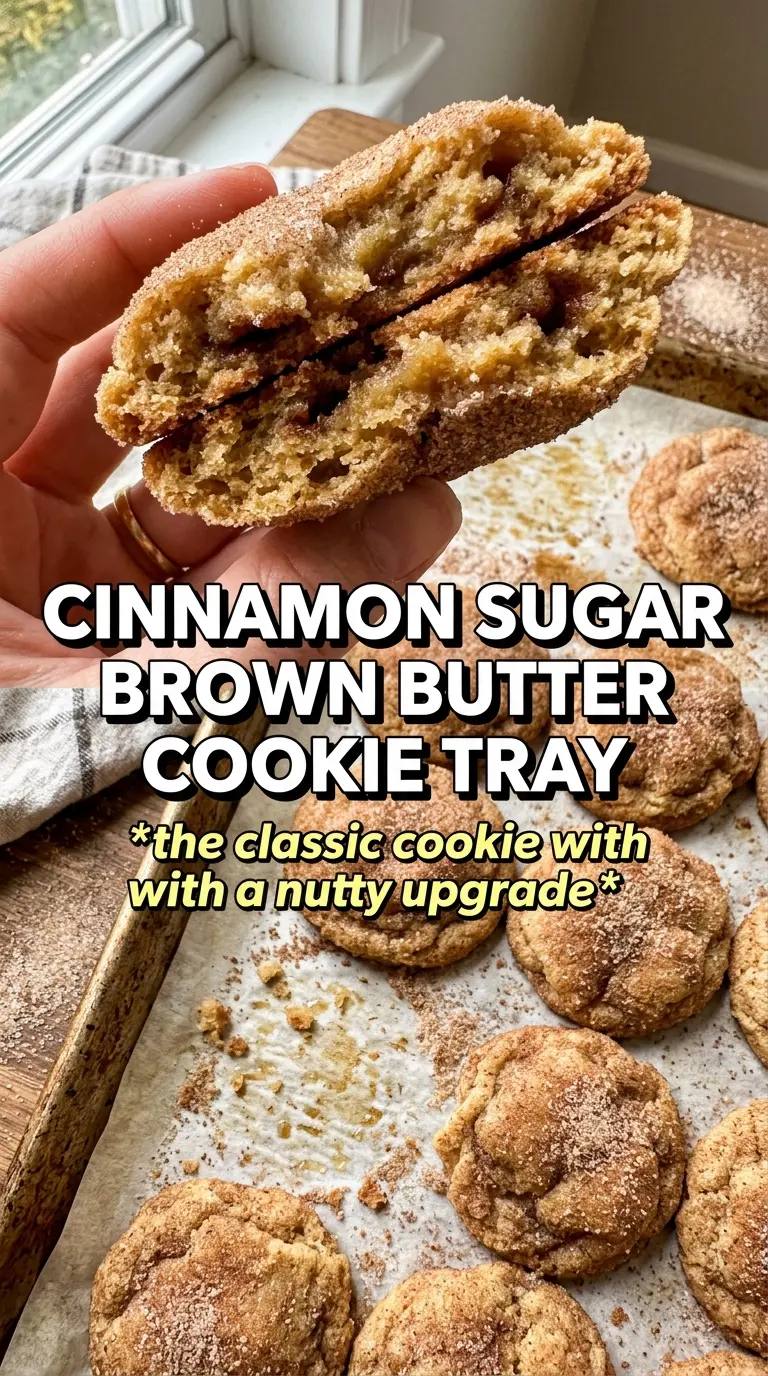
Whisk the dry ingredients first so the cinnamon and leavening are evenly distributed. That keeps the cookies from baking with random pockets of spice or uneven lift. Beat the solidified brown butter with the sugar until it looks creamy and a little fluffy, then add the eggs and vanilla. If the butter is still too firm, it won’t blend properly; if it’s too soft, the dough won’t hold shape.
Once the flour goes in, stop mixing as soon as the last streak disappears. Overmixing tightens the dough and makes the cookies bake up tougher than they should. Scoop the dough into 1 1/2-tablespoon balls and roll them generously in the cinnamon sugar. The thick coating is what gives the baked cookies those sparkly, wrinkled tops.
Three Ways to Work With This Recipe
Make Them Gluten-Free Without Losing the Center
Use a 1:1 gluten-free baking flour that includes xanthan gum. The cookies will be a little more delicate when warm, but they should still bake with soft middles and crisp edges. Skip any blend that behaves like a pastry flour substitute; you need structure here, not tenderness alone.
Swap in Extra Cinnamon for a Stronger Spice Note
If you want a louder cinnamon finish, increase the cinnamon in the rolling mixture by another 1/2 teaspoon. Keep the dough itself the same so the cookies don’t turn harsh or dry. The extra spice on the outside gives you more aroma with no change to the dough texture.
Chill the Scooped Dough for a Thicker Cookie
If you want a puffier cookie with more height, roll the dough first, then chill the coated balls for 20 to 30 minutes before baking. That extra chill helps the butter set and slows the spread, which gives you a fuller center and a little more chew.
Storage and Reheating
- Refrigerator: Store baked cookies in an airtight container for up to 5 days. They stay soft, though the cinnamon sugar coating loses a little of its sparkle after the first day.
- Freezer: These freeze well either baked or as dough balls. Freeze the dough on a tray, then move it to a bag; bake from frozen and add 1 to 2 minutes.
- Reheating: Warm baked cookies in a 300F oven for 3 to 5 minutes. The common mistake is microwaving them until the centers turn rubbery instead of just taking the chill off.
Answers to the Questions Worth Asking
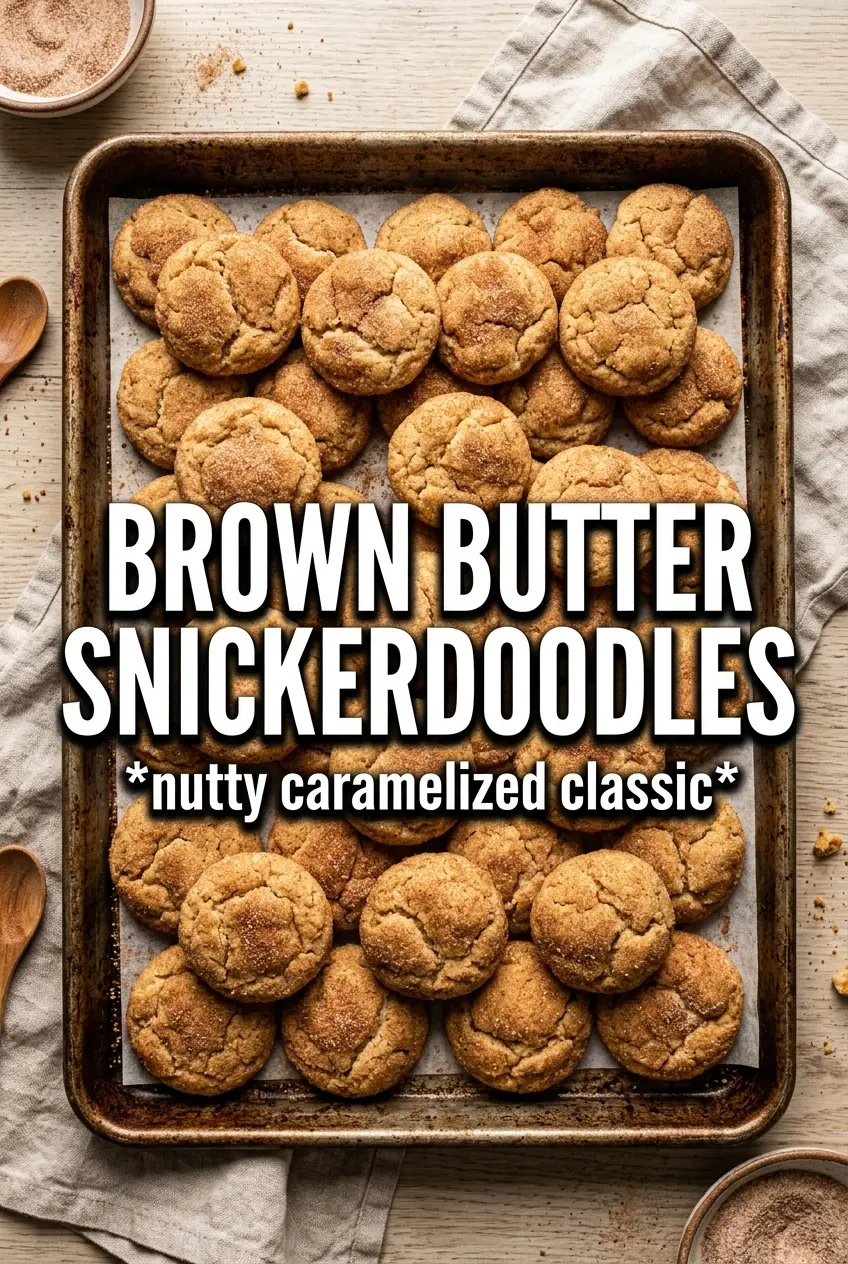
Brown Butter Snickerdoodles
Ingredients
Equipment
Method
- Brown the butter until golden and nutty, then pour it onto parchment and refrigerate until solid, about 1 hour.
- Preheat the oven to 375F and line baking sheets with parchment.
- Whisk the all-purpose flour, cream of tartar, baking soda, cinnamon, and salt until evenly combined.
- Beat the solidified browned butter and granulated sugar until creamy.
- Add the eggs and vanilla extract and beat until smooth.
- Fold in the flour mixture until no dry streaks remain.
- Mix the rolling spices (granulated sugar, cinnamon, and nutmeg) in a shallow bowl.
- Scoop dough into 1-1/2 tablespoon balls, then roll generously in the cinnamon sugar mixture.
- Bake 10-12 minutes at 375F, until the tops are crinkled and the edges are set.
- Cool on the pan for 5 minutes before transferring cookies to cool completely.