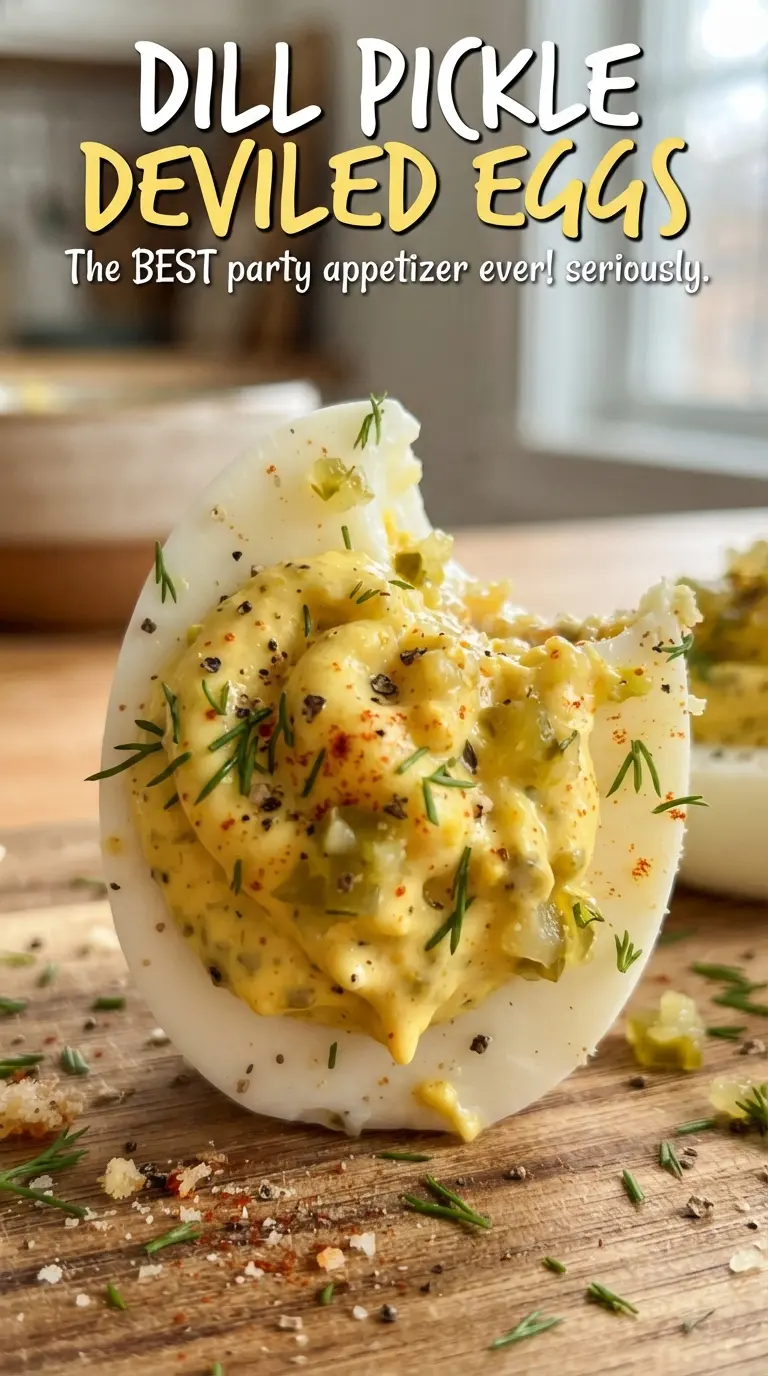
These dill pickle deviled eggs disappear fast because the filling has a sharp, briny bite that cuts straight through the richness of the yolks. The chopped pickles give every bite a little crunch, and the pickle juice keeps the filling bright instead of flat. They taste familiar in the best way, but with enough tang to wake up the whole platter.
The trick is balancing the creamy base with enough pickle juice and Dijon to make the yolks taste seasoned all the way through. If you add too much mayonnaise, the filling turns heavy. If you skip the fresh dill, the pickle flavor still shows up, but it loses that fresh, herbal finish that makes these stand out.
Below, I’m walking through the little details that keep the yolks smooth and the filling easy to pipe, plus a few smart swaps if you want to adjust the tang or make them ahead for a party.
The filling was super smooth and the pickle juice gave it just enough tang without making it runny. I made them an hour ahead and they held up perfectly on the platter.
These dill pickle deviled eggs bring a sharp, creamy filling and that salty pickle garnish right to the front.
The Reason the Filling Stays Creamy Instead of Grainy
The texture of deviled eggs lives or dies in the yolk mixture. If the yolks get mashed while they’re still warm, the filling turns pasty instead of silky. If the mayonnaise goes in too fast, it can loosen the mixture before the yolks have broken down enough, which makes piping messy and uneven.
Pickle juice helps more than flavor here. It loosens the yolks just enough to make the filling pipeable without turning it soupy, and the Dijon gives the mixture a little backbone so the pickle flavor doesn’t taste one-note. The minced pickles go in at the end so they stay chunky and don’t disappear into the filling.
- Eggs — Older eggs usually peel more cleanly than very fresh ones, which matters more here than people expect. If your eggs are stubborn, crack the shell all over and peel them under cool running water.
- Mayonnaise — Use a good, full-fat mayo if you can. It’s the base of the filling, so this is the ingredient where quality changes the final texture the most.
- Dill pickles and pickle juice — Both matter, but in different ways. The pickles bring crunch and little bursts of salt, while the juice carries the tang through the whole filling.
- Fresh dill — Dried dill won’t give the same clean, bright finish. If you must swap it, use half the amount of dried dill, but expect a softer flavor.
- Dijon mustard — This doesn’t make the eggs taste mustardy; it sharpens the filling and keeps the richness from feeling heavy. Yellow mustard works in a pinch, but the flavor will be softer and a little sweeter.
What Each Ingredient Is Actually Doing in This Recipe
- Primary ingredient (the star) — Quality matters most. Choose the best you can find.
- Cooking medium (oil, butter, or broth) — This carries flavors and prevents dryness.
- Seasonings (salt, pepper, spices, herbs) — Layer flavors so nothing overpowers. Build depth gradually.
- Aromatics (garlic, onion, herbs) — Cook with fat to bloom flavors. Become the foundation.
- Supporting ingredients — Complement the main ingredient without overpowering it.
- Sauce or liquid (if applicable) — Brings flavors together. Balance richness with acid.
- Acid (lemon, vinegar, wine, or other) — Brightens and prevents flat-tasting results.
- Final finish (garnish, glaze, or sauce) — Prevents one-dimensional taste and adds visual appeal.
Boiling, Chilling, and Filling Without a Mess
Starting the Eggs in Cold Water
Set the eggs in a pot and cover them with cold water before bringing everything up to a boil. That slower start helps the eggs cook more evenly and reduces the chance of cracked shells. Once the water boils, cover the pot, pull it off the heat, and let the eggs sit for 12 minutes. If you boil them hard the whole time, the whites can turn rubbery and the yolks may get that dull green edge.
Shocking Them So They Peel Cleanly
Move the eggs straight into an ice bath for 10 minutes. That stops the cooking and pulls the whites away from the shell just enough to make peeling easier. If the eggs still cling to the shell, tap them all over and start peeling from the wider end where the air pocket usually sits.
Building the Filling
Mash the yolks with the mayonnaise, pickle juice, Dijon, dill, garlic powder, and salt until the mixture looks smooth before you add the minced pickles. That order matters because the dryish yolks need to break down first; otherwise, the filling stays lumpy. Fold in the pickles at the end so they keep their texture instead of turning the filling watery. If the mixture seems stiff, add another teaspoon of pickle juice rather than more mayo.
Filling and Garnishing the Eggs
Spoon the filling into the egg whites or pipe it with a bag for a cleaner finish. A small open tip gives you enough control to mound the filling without smearing it across the whites. Top each egg with a small pickle slice and a dill frond right before serving so the garnish stays fresh and the pickles don’t weep onto the filling.
How to Change the Tang, the Texture, or the Make-Ahead Plan
For a sharper pickle bite
Add an extra teaspoon of pickle juice and a little more minced pickle. That pushes the filling toward a brighter, more assertive flavor, but stop before it starts to thin out. The goal is tangy, not loose.
For a milder, creamier version
Cut the pickle juice back to 1 tablespoon and use slightly less minced pickle. You’ll get a softer filling that tastes more like classic deviled eggs with a pickle note instead of a full sour punch.
For a dairy-free, naturally gluten-free appetizer
This recipe already fits both of those needs as written, as long as your mayonnaise and mustard are labeled accordingly. The texture and flavor stay the same, so there’s no special adjustment needed.
Storage and Reheating
- Refrigerator: Store covered for up to 2 days. The filling stays tasty, though the garnish is best added fresh.
- Freezer: Don’t freeze deviled eggs. The whites turn watery and rubbery once thawed.
- Reheating: These are served cold, so reheating isn’t needed. If they’ve been chilled hard, let them sit for 10 to 15 minutes before serving so the filling tastes fuller and the texture softens a bit.
Answers to the Questions Worth Asking
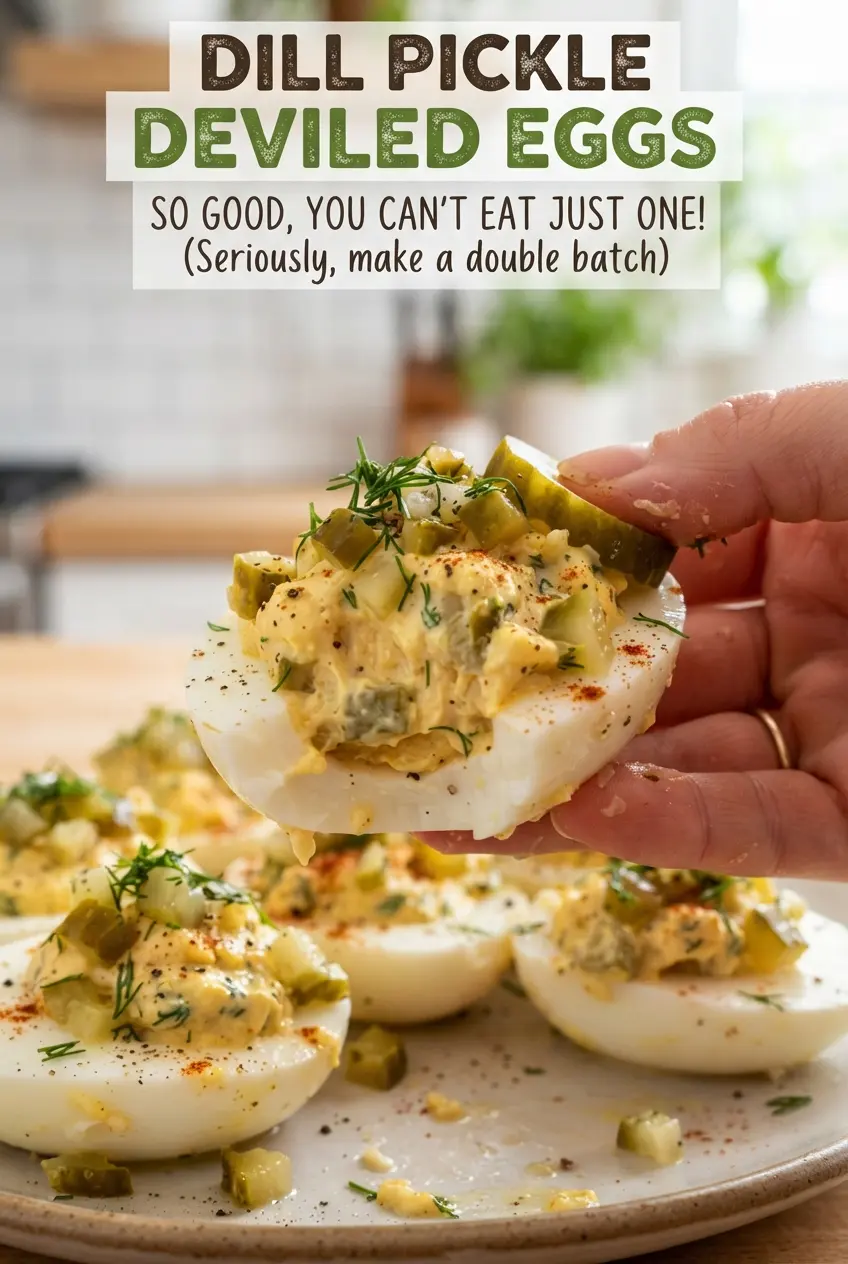
Dill Pickle Deviled Eggs
Ingredients
Equipment
Method
- Place the eggs in a pot, cover with cold water, and bring to a boil. Cover the pot, remove from heat, and let the eggs stand 12 minutes.
- Chill the eggs in an ice bath for 10 minutes. This step helps prevent overcooked yolks and makes peeling easier.
- Peel the eggs and halve them lengthwise. Keep the halves steady so the yolk side faces up.
- Mash the yolks with mayonnaise until smooth. Use a fork or masher to remove any large lumps.
- Add dill pickle juice, Dijon mustard, fresh dill, garlic powder, and salt to the yolks. Mix until the filling looks glossy and evenly combined.
- Fold in the minced dill pickles. Stop mixing when you no longer see dry yolk and the pickles are evenly distributed.
- Spoon or pipe the filling into the egg whites. Fill to the top for a clean, layered look.
- Top each deviled egg with a pickle slice and a dill frond. Arrange evenly on a platter so garnishes face upward.