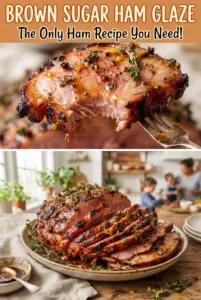
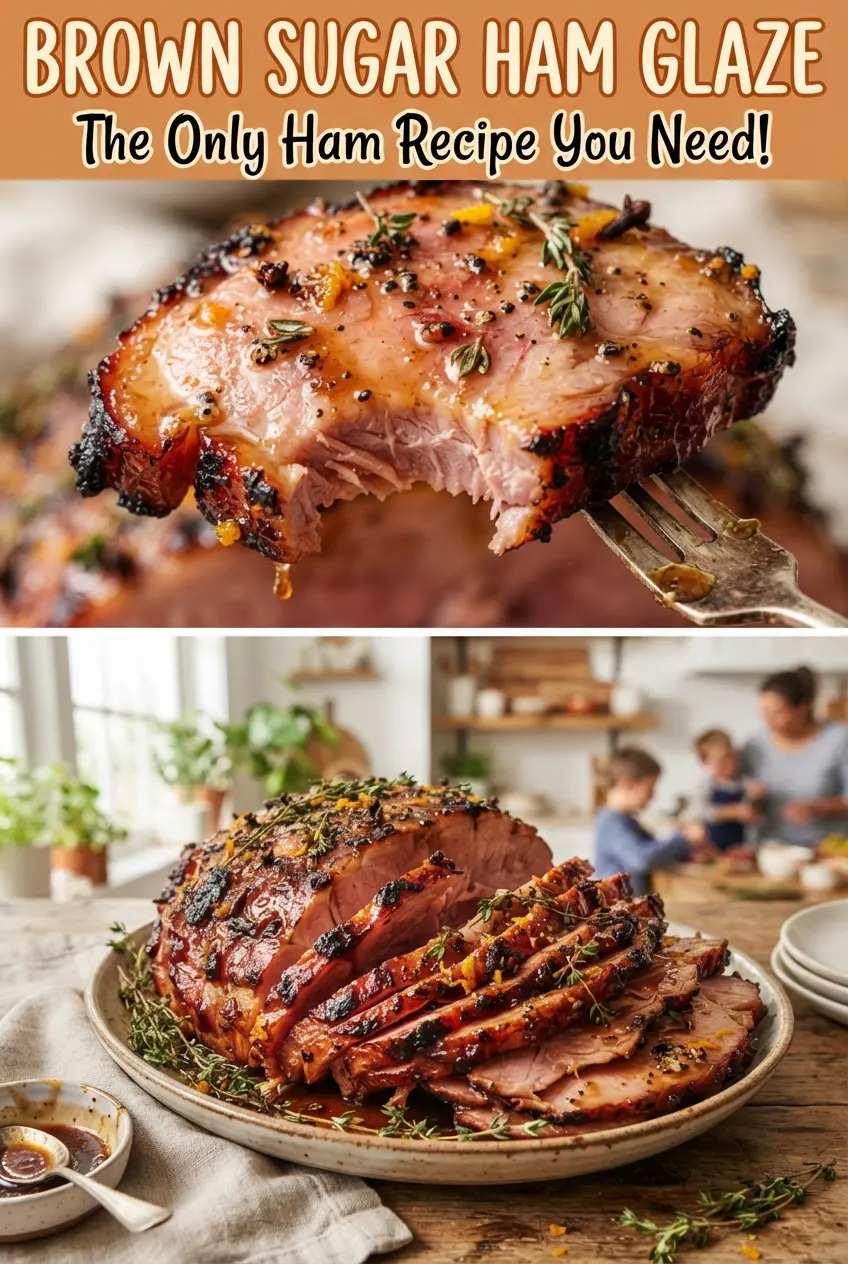
Shiny, sticky, and just tart enough to keep each slice from tasting one-note, this brown sugar ham glaze is the kind of finish that makes a holiday ham look polished without turning it into candy. It brushes on like lacquer, settles into the scored diamonds, and bakes down into a glossy coat that clings to the meat instead of sliding off the pan.
The balance matters here. Brown sugar brings the deep caramel note, honey smooths the texture, and a little pineapple or orange juice keeps the glaze from becoming heavy. Dijon sounds small, but it gives the sweetness a sharper edge, while cider vinegar and warm spices keep the whole thing tasting layered instead of flat. That short simmer is enough to dissolve the sugar and thicken the glaze without cooking it so long that it turns gritty.
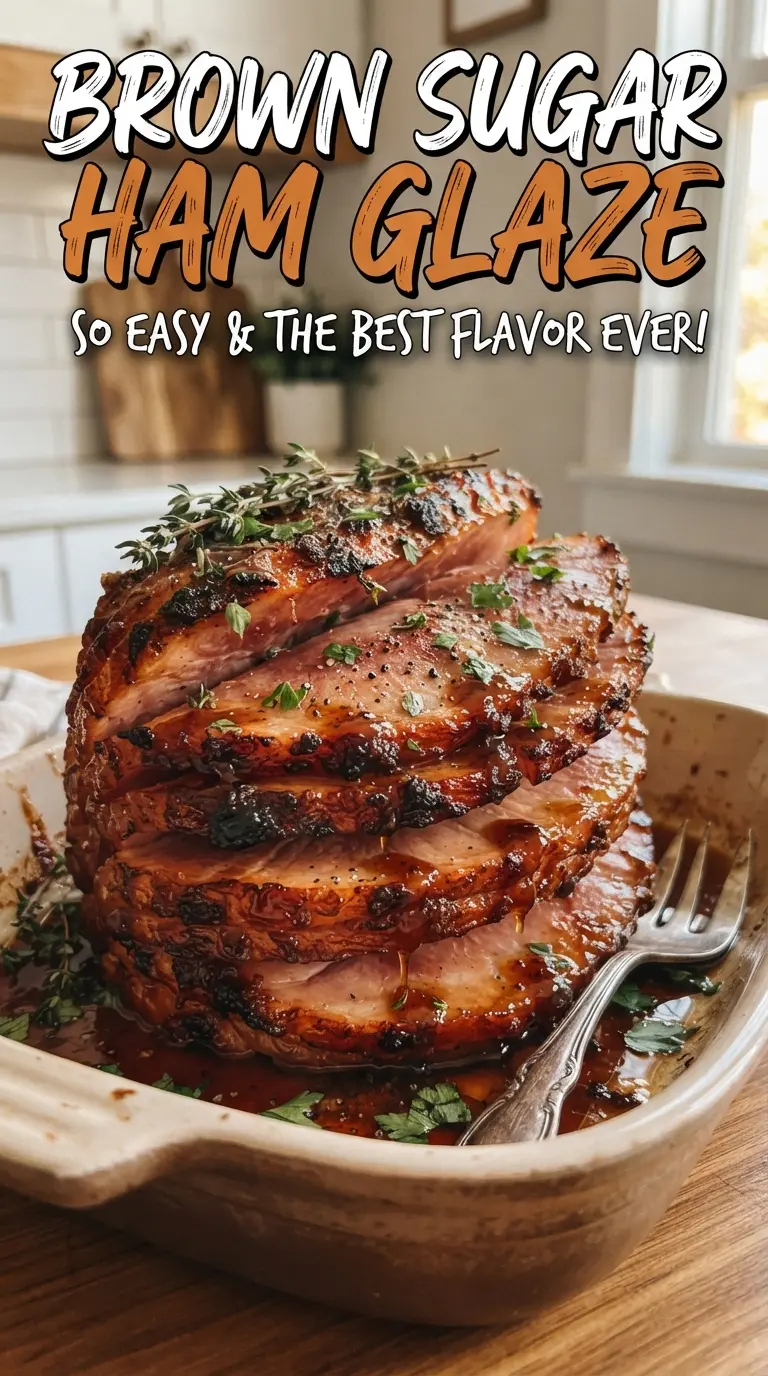
The glaze brushed on smooth and stayed shiny all the way through baking. I used orange juice, and the ham came out with the perfect sweet-tangy balance without pooling in the pan.
Save this brown sugar ham glaze for the ham that needs a glossy, sweet-tangy finish with almost no effort.
The Secret to a Ham Glaze That Stays on the Meat
The biggest mistake with ham glaze is boiling it into syrup before it ever reaches the oven. A glaze that’s cooked too far gets sticky in the pan but won’t cling well to the ham, and a glaze that’s too thin just runs right off. You want it to coat the back of a spoon lightly and still brush on in a smooth layer.
The other piece that matters is timing. Ham is already fully cooked, so the glaze is there to build flavor and shine during the last stretch of baking, not to cook the meat. Brushing it on every 10 minutes gives you those glossy layers that set up into a lacquered crust instead of one thick, sugary shell.
What Each Ingredient Is Doing in This Glaze
- Packed brown sugar — This is the body of the glaze and the reason it caramelizes so beautifully on the ham. Light or dark brown sugar both work; dark brown sugar gives a deeper molasses note, while light brown sugar keeps it a little cleaner tasting.
- Honey — Honey adds shine and helps the glaze stay fluid long enough to brush on cleanly. If you swap in maple syrup, you’ll get a softer, less sticky sweetness, which is nice but a little less classic for ham.
- Pineapple or orange juice — The juice loosens the sugar and adds acidity, which keeps the glaze from tasting heavy. Pineapple brings a sharper, tropical edge, while orange gives a rounder citrus finish. Use the one that fits the rest of your meal.
- Dijon mustard — Dijon is what keeps this glaze from reading as straight candy. It cuts through the sweetness and gives the glaze a little bite. Yellow mustard works in a pinch, but the result will be simpler and less layered.
- Butter — Butter gives the glaze a smoother texture and helps it emulsify slightly so it brushes on evenly. Don’t skip it unless you have to; without it, the glaze can look a bit thinner and less rich.
- Apple cider vinegar — A small amount wakes everything up. It sharpens the sweetness and helps the glaze taste balanced once it hits the heat of the oven.
- Cinnamon and cloves — These warm spices should stay in the background. They’re not there to make the glaze taste like dessert, just to give it that familiar holiday ham aroma that fills the kitchen as it bakes.
Building the Glaze So It’s Glossy, Not Grainy
Start With a Gentle Simmer
Combine everything in a small saucepan and bring it up over medium heat, stirring as the sugar dissolves. The mixture should look smooth and a little foamy, not aggressively boiling. If the heat is too high, the sugar can cook too fast and turn the glaze thick before the flavors have a chance to come together.
Watch for the Shine
After 3 to 4 minutes, the glaze should thicken just enough to coat a spoon and look glossy all the way across the surface. That shine tells you the sugar has dissolved and the butter has fully blended in. If it still looks thin, give it another minute; if it starts to feel sticky around the edges, pull it off the heat before it tightens too much.
Brush It on in Layers
Glaze the ham during the last 30 minutes of baking and repeat every 10 minutes. Each coat should look thin and even, not puddled. If you dump it on all at once, it can slide into the pan and leave the top bare, so work in light passes and let the heat set each layer.
How to Adapt This for Different Hams and Pan Setups
Orange Juice for a Brighter Finish
Orange juice gives the glaze a softer citrus note and a slightly rounder sweetness. It works especially well if the ham is already smoky or heavily seasoned, because the orange keeps the glaze from feeling too sharp.
Pineapple Juice for a Sharper Sweet-Tart Glaze
Pineapple juice brings more acidity and a slightly punchier finish. If you like a ham glaze that cuts through the richness hard, this is the version to use. It also caramelizes beautifully along the edges.
Dairy-Free Without Losing the Texture
Use a plant-based butter in place of the dairy butter and keep the rest the same. You’ll still get a glossy glaze with a smooth brushable texture, though the finish will be a little less rich and a touch lighter on the palate.
Scaling Up for a Bigger Ham
For a very large ham, double the glaze so you have enough for multiple coats and serving at the table. The proportions scale cleanly, and having extra warm glaze on hand makes sliced ham much better when it hits the platter.
Storage and Reheating
- Refrigerator: Store leftover glaze in an airtight container for up to 1 week. It will thicken as it chills.
- Freezer: This glaze freezes well for up to 2 months. Thaw it overnight in the refrigerator before reheating.
- Reheating: Warm it gently in a small saucepan over low heat or in short bursts in the microwave, stirring between intervals. High heat can make the sugar separate or scorch, which is the fastest way to lose that smooth glossy finish.
Questions I Get Asked About This Recipe
Brown Sugar Ham Glaze
Ingredients
Equipment
Method
- Combine brown sugar, honey, pineapple or orange juice, Dijon mustard, butter, apple cider vinegar, cinnamon, and cloves in a saucepan.
- Bring to a simmer over medium heat, stirring until the sugar dissolves, and keep it at a gentle bubbling pace.
- Simmer 3-4 minutes until slightly thickened and glossy, then remove from heat so it stays pourable.
- Brush the warm glaze over a fully cooked ham during the last 30 minutes of baking.
- Repeat brushing every 10 minutes during those final bake intervals for even amber coverage.
- Spoon the remaining warm glaze over sliced ham at the table.