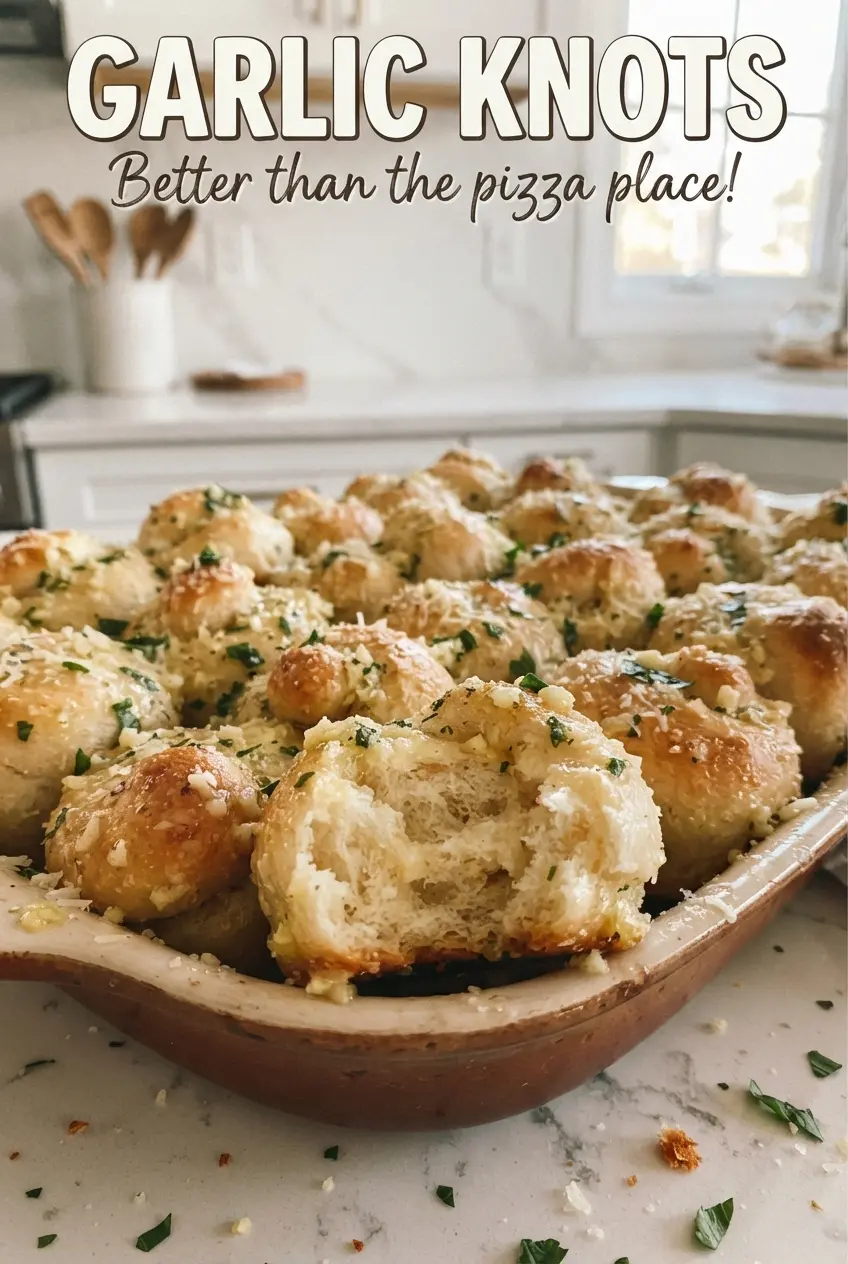
Golden garlic knots have a way of disappearing before they ever reach the table. The outside bakes up lightly crisp and burnished, while the center stays soft and chewy enough to pull apart in warm strands. A good batch should taste like buttery garlic bread in knot form, with enough Parmesan and parsley to keep each bite sharp, savory, and fresh.
What makes this version work is timing. The first brush of butter goes on before baking, which helps the dough take on color and keeps the surface from drying out. The garlic goes into the hot butter after the knots come out of the oven, not before, so it stays fragrant instead of turning bitter. That second brush coats every twist and settles into the seams where the dough is tenderest.
Below, I’ll walk through the small details that matter: how to shape the knots so they bake evenly, why room-temperature dough is easier to work with, and how to keep the garlic butter glossy instead of greasy. If you’ve ever had garlic knots come out pale, dense, or bland, this version fixes the usual trouble spots.
The knots baked up soft in the middle and the garlic butter soaked right into the ridges without making them soggy. I served them with pasta and there wasn’t a single one left.
These garlic knots bake up soft, golden, and perfect for soaking up extra marinara.
The Trick to Garlic Knots That Stay Soft, Not Dense
The biggest mistake with garlic knots is overworking the dough while shaping. Pizza dough wants just enough handling to become a rope and a knot; if you keep tugging at it, the gluten tightens and the knots bake up chewy in the wrong way, with a tight crumb instead of a soft pull-apart center. Room-temperature dough gives you a head start because it stretches without snapping back.
Another common issue is brushing on too much butter before baking. A light coat is enough to encourage browning and add flavor, but if the dough gets drenched, it can slide around on the pan and bake up greasy. The real garlic flavor comes after baking, when the knots are hot enough to drink in the butter but not so hot that the garlic cooks harshly.
What Each Ingredient Is Doing in These Garlic Knots

- Refrigerated pizza dough — This gives you the right chew without mixing and rising from scratch. Room temperature dough is easier to shape and less likely to spring back. If you substitute homemade dough, use a similar sturdy pizza dough rather than a soft dinner roll dough, or the knots will spread.
- Butter — Butter carries the garlic and helps the surface of the knots brown. Melted butter works best here because it brushes on evenly and soaks into the twists. Use real butter, not margarine, if you want the topping to taste clean and rich.
- Garlic — Fresh minced garlic gives the sharp, familiar garlic bread flavor. Adding it to the butter after baking keeps it bright instead of bitter. Jarred garlic will work in a pinch, but it tastes flatter and less punchy.
- Fresh parsley — Parsley cuts through the butter and makes the finished knots taste fresh instead of heavy. Chop it finely so it clings to the surface. Dried parsley won’t give the same lift, but it can fill in if that’s what you have.
- Parmesan — Parmesan adds salt, nuttiness, and a little texture on top. Use finely grated Parmesan so it melts slightly into the butter. The shelf-stable canister version works, but freshly grated cheese gives a better finish.
Shaping, Baking, and Brushing in the Right Order
Cutting and Knotting the Dough
Cut the dough into 16 even pieces so everything bakes at the same pace. Roll each piece into a rope about 7 inches long, then tie it into a loose knot with the ends tucked underneath. If the dough keeps shrinking, let it rest for a minute and try again; that pause relaxes the gluten and makes shaping much easier.
The First Butter Coat
Set the knots on a parchment-lined baking sheet and brush them lightly with melted butter. This first layer helps the knots color evenly and adds a little richness to the crust. Keep the coat thin, because pooling butter can leave pale bottoms and a greasy pan instead of a clean bake.
Baking Until the Edges Turn Deep Gold
Bake at 400°F for 13 to 15 minutes until the knots are puffed and golden brown. The tops should feel set, and the bottoms should be lightly browned, not pale. If they look done on top but still soft at the edges, give them another minute or two; underbaked dough will taste doughy once the garlic butter goes on.
The Garlic Butter Finish
Stir the garlic, parsley, and salt into the remaining butter while the knots are still hot. Brush it over the tops and into the seams right away so the flavor settles into the twists. Finish with Parmesan while the surface is still warm, then serve with marinara before the knots cool and lose that fresh-from-the-oven softness.
How to Adapt These Garlic Knots for Different Needs
Dairy-Free Garlic Knots
Use a plant-based butter that melts cleanly and tastes neutral. You’ll still get the garlic-parsley finish, but the flavor will be a little less rich and the topping won’t cling quite as luxuriously as it does with dairy butter.
Gluten-Free Version
Use a gluten-free pizza dough designed for shaping, not a batter-style crust. It’ll be more delicate and may not knot as neatly, but it can still bake up tender if you handle it gently and don’t overbake it.
Extra-Cheesy Garlic Knots
Add a little mozzarella or provolone inside each rope before knotting for a melty center. The tradeoff is that the knots become more delicate to shape, and a bit of cheese may leak onto the pan, but the payoff is a softer, richer middle.
Storage and Reheating
- Refrigerator: Store in an airtight container for up to 3 days. The knots soften a bit as they sit, but they still hold up well.
- Freezer: Freeze baked knots in a single layer, then transfer to a bag for up to 2 months. Thaw before reheating so the centers warm through evenly.
- Reheating: Warm in a 350°F oven for 5 to 8 minutes. The mistake to avoid is the microwave, which makes the bread rubbery and turns the topping oily.
Questions I Get Asked About This Recipe
Garlic Knots
Ingredients
Equipment
Method
- Preheat the oven to 400F and line a baking sheet with parchment. Set the sheet aside so the knots can go in right away.
- Cut the refrigerated pizza dough into 16 pieces, then roll each piece into a 7-inch rope and tie into a knot. Place the knots on the parchment-lined baking sheet.
- Bake the knots for 13-15 minutes, until golden brown. Keep an eye on the color during the last 2 minutes.
- Stir the garlic, parsley, and salt into the remaining melted butter, then brush over the hot knots. The surface should look glossier as the butter soaks in.
- Sprinkle the Parmesan over the knots and serve immediately with marinara sauce for dipping. Add extra Parmesan if you want a heavier cheesy top.