Creamy horseradish deviled eggs have a sharp little kick that keeps people coming back for a second one before they’ve finished the first. The filling stays smooth and rich, but the horseradish cuts through the yolk and mayo in a way that keeps the bite lively instead of heavy. They look classic on the tray, then surprise you with a clean, almost roast-beef-and-horseradish sandwich kind of flavor in miniature.
What makes this version work is balance. Sour cream loosens the yolks without making them greasy, Dijon adds backbone, and lemon juice keeps the filling from tasting flat. Prepared horseradish is the ingredient you don’t want to wing here; the jarred stuff gives you that punchy heat without turning the filling watery, which can happen if you try to improvise with too much fresh horseradish.
Below, I’ll walk through the trick that keeps the yolks smooth instead of pasty, plus the easiest way to pipe them neatly if you want a cleaner look. There’s also an optional roast beef topping that makes these feel a little more special without adding much work.
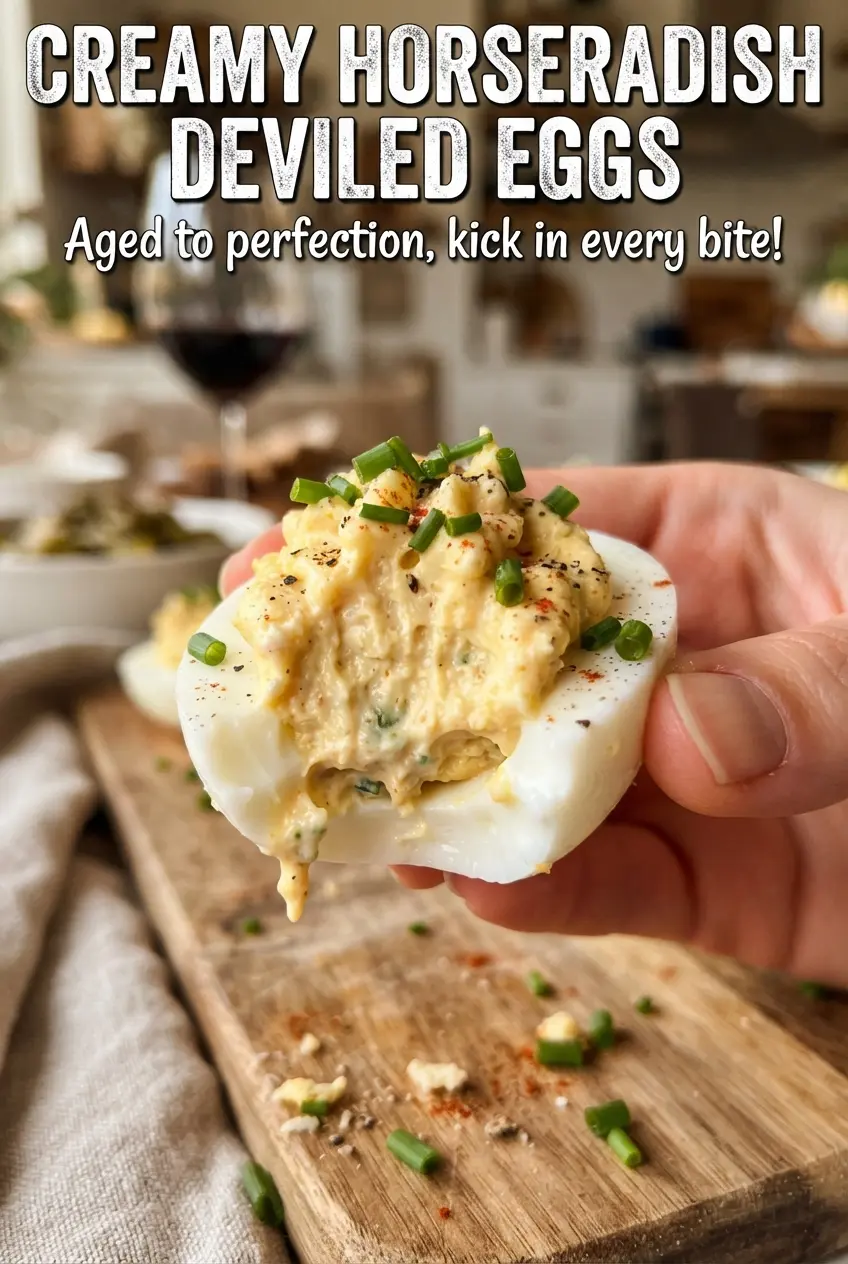
The filling came out unbelievably smooth, and the horseradish had just enough bite without overpowering the eggs. I also liked that the chives and cracked pepper made them look as good as they tasted.
Save these creamy horseradish deviled eggs for the appetizer tray that needs a little bite and a smooth, pipeable filling.
The Trick to a Smooth Filling with Real Horseradish Bite
The mistake with deviled eggs usually happens in the mashing. If the yolks are left a little chunky, the filling feels dry and coarse no matter how much mayo you add. If they’re overmixed with too much mayo, the flavor turns soft and one-note. The sweet spot here is a smooth mash first, then just enough dairy to turn it creamy and spoonable.
Prepared horseradish is strongest when it’s folded in with the yolks rather than stirred in at the very end. That gives the heat time to distribute evenly, so you get a clean burn on the back end instead of random sharp spots. If your batch tastes flat, it usually needs a pinch more salt or another small spoonful of horseradish, not more mayonnaise.
- Eggs — Older eggs usually peel more cleanly, which matters here because torn whites make messy halves. If your eggs are fresh and stubborn, the ice bath helps, but older eggs still give you the cleanest result.
- Prepared horseradish — This is the main flavor. Use the kind from the refrigerated jar, not horseradish sauce, which is often milder and sweeter. Start with the amount listed, then add a little more only after tasting.
- Sour cream — It loosens the filling and gives it a cooler, lighter finish than mayo alone. Greek yogurt can work in a pinch, but it’s tangier and a little firmer, so the texture won’t be as plush.
- Roast beef — Optional, but it makes the eggs taste like a miniature steakhouse bite. Thin slices work best because thick strips can slide off and overpower the filling.
What Each Ingredient Is Actually Doing in This Recipe

- Primary ingredient (the star) — Quality matters most. Choose the best you can find.
- Cooking medium (oil, butter, or broth) — This carries flavors and prevents dryness.
- Seasonings (salt, pepper, spices, herbs) — Layer flavors so nothing overpowers. Build depth gradually.
- Aromatics (garlic, onion, herbs) — Cook with fat to bloom flavors. Become the foundation.
- Supporting ingredients — Complement the main ingredient without overpowering it.
- Sauce or liquid (if applicable) — Brings flavors together. Balance richness with acid.
- Acid (lemon, vinegar, wine, or other) — Brightens and prevents flat-tasting results.
- Final finish (garnish, glaze, or sauce) — Prevents one-dimensional taste and adds visual appeal.
Boiling, Chilling, and Building the Filling Without Overworking It
Start the eggs in cold water
Set the eggs in a pot and cover them with cold water before bringing everything to a boil. That gentler start helps the whites set evenly instead of cracking from a sudden temperature shock. Once the water reaches a boil, cover the pot and pull it off the heat so the eggs finish cooking from retained heat, not a hard rolling boil that makes the yolks chalky.
Use the ice bath to stop the cooking
As soon as the timer is up, move the eggs into an ice bath. This does two jobs at once: it stops the yolks from overcooking and it helps the shells release more cleanly. If the eggs stay hot for too long, you’ll get that gray ring around the yolk, and the texture turns drier than you want for deviled eggs.
Mash the yolks until they look fluffy, not sandy
Break the yolks down before adding everything else. The yolks should look fine and fluffy before the mayonnaise and sour cream go in; that’s what gives you a creamy filling instead of a grainy one. Stir just until the mixture looks smooth and spreadable. If you keep mashing after it’s already combined, the filling can turn dense and paste-like.
Pipe, top, and finish
Spoon the filling into a piping bag or a zip-top bag with the corner snipped off. A neat swirl gives the eggs a cleaner look, but a small spoon works if you’re serving them at home. Add the roast beef curl only after the filling is in place, then finish with chives and cracked pepper so the top stays bright and fresh.
How to Adapt These Deviled Eggs for a Crowd, a Shortcut, or a Lower-Carb Tray
Make-Ahead for Entertaining
You can boil, chill, and peel the eggs a day ahead, then mix the filling a few hours before serving. If you assemble them too far in advance, the yolk filling can dry out a bit and the whites may pick up fridge flavor. For the cleanest finish, pipe and garnish them close to serving time.
Skip the Roast Beef for a Classic Appetizer
Leave off the roast beef and you still get a bright, punchy deviled egg with plenty of character. The eggs are already rich from the yolks, so the garnish is there for contrast, not structure. This is the best route if you want a lighter tray or need to keep the appetizer simple.
Dairy-Free Version
Use all mayonnaise and leave out the sour cream. The filling will be a little richer and slightly denser, but the horseradish still keeps it lively. Add the mayo slowly so the mixture stays pipeable instead of loose.
How to Store Leftovers
- Refrigerator: Store in a covered container for up to 2 days. The filling stays tasty, but the whites soften a little as they sit.
- Freezer: Don’t freeze assembled deviled eggs. The whites turn watery and spongy after thawing.
- Reheating: These are served cold, so don’t reheat them. If they’ve been chilled hard, let them sit at room temperature for 10 to 15 minutes before serving so the filling tastes creamier.
Answers to the Questions Worth Asking
Creamy Horseradish Deviled Eggs
Ingredients
Equipment
Method
- Place the eggs in a pot, cover with cold water, and bring to a boil. Cover the pot and remove from heat, then let the eggs stand 12 minutes to set the yolks.
- Transfer the eggs to an ice bath and chill for 10 minutes, then peel and halve them lengthwise. Keep them cool so the filling stays creamy.
- Mash the yolks with mayonnaise, sour cream, prepared horseradish, Dijon mustard, lemon juice, salt, and black pepper until smooth. Stop when the mixture looks glossy and uniform with no yellow lumps.
- Pipe the filling into the egg whites for a neat, even line in each half. Fill to the top so the ridges hold their shape.
- Top with a small curl of thinly sliced roast beef if using. Place the curl lightly so it sits on the surface of the filling.
- Garnish with fresh chives and cracked pepper. Finish with a few chive sprigs on top for a fresh green cue.