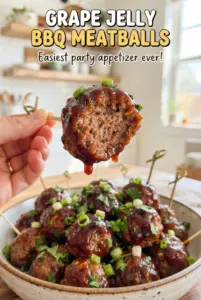
Glossy, sticky grape jelly BBQ meatballs disappear fast because they hit that sweet-smoky-salty balance people keep reaching for with a toothpick. The sauce clings to every meatball instead of pooling at the bottom of the slow cooker, and the finish is rich enough to taste like more effort than it takes.
The trick is in the sauce base. Grape jelly gives the barbecue sauce body and a rounded sweetness, while Worcestershire adds the savory backbone that keeps the whole thing from tasting one-note. A little garlic powder fills in the gaps without making the sauce muddy, and starting with frozen fully cooked meatballs keeps the texture steady while everything warms through slowly.
Below, I’ve included the little details that keep the sauce glossy and the meatballs tender, plus a few swaps that work when you need to adjust for what’s in the pantry.
The sauce coated every meatball and stayed glossy the whole time. I served them straight from the slow cooker with toothpicks, and there wasn’t a single one left after twenty minutes.
These grape jelly BBQ meatballs stay glossy, tender, and party-ready from the first bite to the last.
The Sauce Stays Glossy When You Start With the Right Ratio
Grape jelly meatballs can turn syrupy fast if the sauce is too sweet or too thin. The balance here matters: enough BBQ sauce to bring smoke and tang, enough jelly to give the coating that shiny, clingy finish, and just a little Worcestershire to pull the sweetness back into balance. If the sauce tastes flat before the meatballs go in, it will still taste flat after three hours in the slow cooker.
The other mistake is overcooking on high and forgetting about them. Frozen fully cooked meatballs only need time to heat through and soak up the sauce. Once the sauce looks thick and the meatballs are hot all the way through, switch to warm. That keeps the coating glossy instead of letting it tighten into a sticky glaze that starts to catch on the edges.
What Each Ingredient Is Actually Doing in This Dish
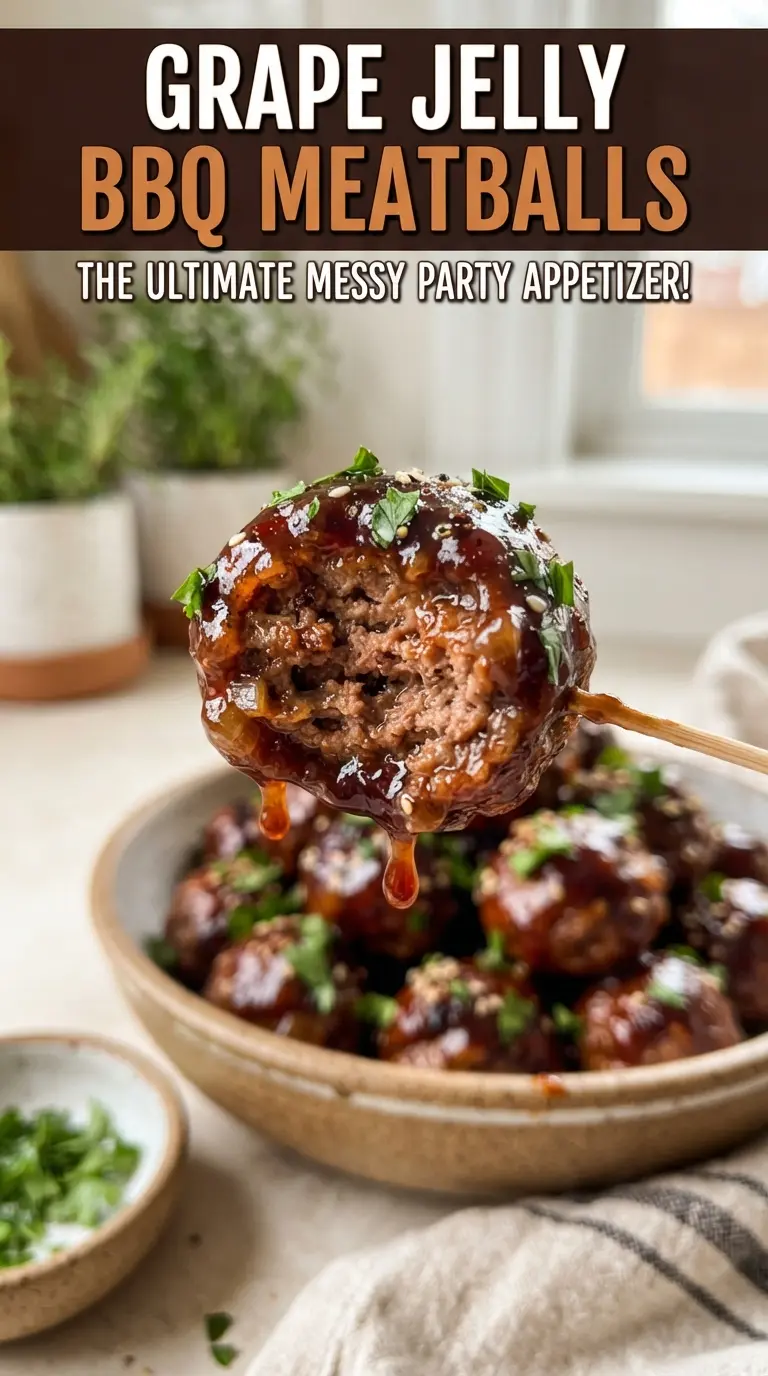
- Frozen fully cooked meatballs — These save the whole recipe. Because they’re already cooked, you’re only warming them and letting them absorb sauce, which keeps the process simple and prevents the meatballs from falling apart. Use beef, turkey, or a blend, but pick a brand that holds its shape well after a long slow-cooker run.
- BBQ sauce — This is the savory base, so use one you already like the taste of. A sweeter sauce gives you a more classic party-style result, while a smokier sauce leans deeper and less candy-like. If your sauce is thick straight from the bottle, that’s fine; the jelly will loosen it before it thickens again.
- Grape jelly — This is the ingredient that gives the dish its signature shine and rounded sweetness. No other fruit spread behaves quite the same, though apricot preserves can work if you want a slightly brighter, less nostalgic flavor. Jelly melts cleanly, which helps the sauce stay smooth instead of chunky.
- Worcestershire sauce — This brings the savory depth that keeps people coming back for another meatball. It doesn’t make the sauce taste “Worcestershire-y”; it just helps the sweet and smoky notes taste fuller. Don’t skip it unless you have to.
- Garlic powder — A small amount goes a long way here. It adds background savoriness without introducing pieces that can burn or go bitter during a long cook. Fresh garlic is not a better swap in this recipe because it can turn sharp and muddy in the slow cooker.
- Parsley — The garnish is not decorative fluff. It gives the finished dish a fresh green note and keeps the bowl from looking brown and heavy on the table. Add it at the end so it stays bright.
The 3 Hours That Matter Most in the Slow Cooker
Building the Sauce First
Whisk the BBQ sauce, grape jelly, Worcestershire, and garlic powder directly in the slow cooker until the jelly is mostly dissolved and the mixture looks smooth. A few small streaks are fine at this stage; they’ll disappear as the heat works through the sauce. If the jelly sits in stubborn clumps now, it usually means the sauce was cold and thick, so give it an extra stir before adding the meatballs.
Coating the Meatballs Evenly
Add the frozen meatballs and stir until every piece is coated. Don’t dump them in and leave them piled up, because the ones on top can dry out before the sauce fully loosens. You want the meatballs nestled in a single glossy layer as much as possible so they heat evenly and pick up flavor on all sides.
Cooking Until the Sauce Clings
Cover and cook on LOW for 3 to 4 hours or HIGH for about 2 hours, stirring once halfway through. The sauce should look glossy and slightly thicker by the end, and the meatballs should be hot in the center with no icy spot left inside. If the sauce looks loose, leave the lid off for the last 10 to 15 minutes so a little steam escapes and the coating tightens.
Finishing for the Table
Stir once more, then garnish with parsley and keep the slow cooker on WARM for serving. This keeps the meatballs spoonable and prevents the sauce from reducing too far. Toothpicks beside the slow cooker are the difference between a neat appetizer and a serving spoon situation no one wants at a party.
What to Change When You Need a Different Version
Dairy-Free and Gluten-Free Meatball Check
This recipe can work for both diets as long as you choose meatballs and BBQ sauce that are certified gluten-free and dairy-free. The sauce ingredients here are naturally flexible, but the meatballs vary a lot by brand, so read the package carefully. The finished texture stays the same, which is why this swap is one of the easiest ways to adapt the dish.
Use Apricot Preserves Instead of Grape Jelly
Apricot preserves give you a brighter, slightly tangier sauce with a little more fruit flavor and a little less old-school sweetness. The result still clings well, but the sauce will be more layered and less classic party-punch style. If the preserves are chunky, whisk them a little longer before adding the meatballs.
Make It Spicier Without Losing the Sweet Glaze
A spoonful of hot sauce or a pinch of red pepper flakes gives the sauce a little heat without breaking the sticky finish. Add it to the sauce before the meatballs so the heat disperses evenly. Too much spice will overpower the grape jelly, so start small and taste once everything is warmed through.
Storage and Reheating
- Refrigerator: Store in an airtight container for up to 4 days. The sauce will thicken as it chills, which is normal.
- Freezer: These freeze well for up to 2 months. Cool completely, then pack with some sauce in a freezer-safe container so the meatballs don’t dry out.
- Reheating: Reheat gently on the stove or in the slow cooker with a splash of water if needed. High heat can tighten the sauce too fast and make it cling to the pan instead of the meatballs.
The Things That Trip People Up With This Dish
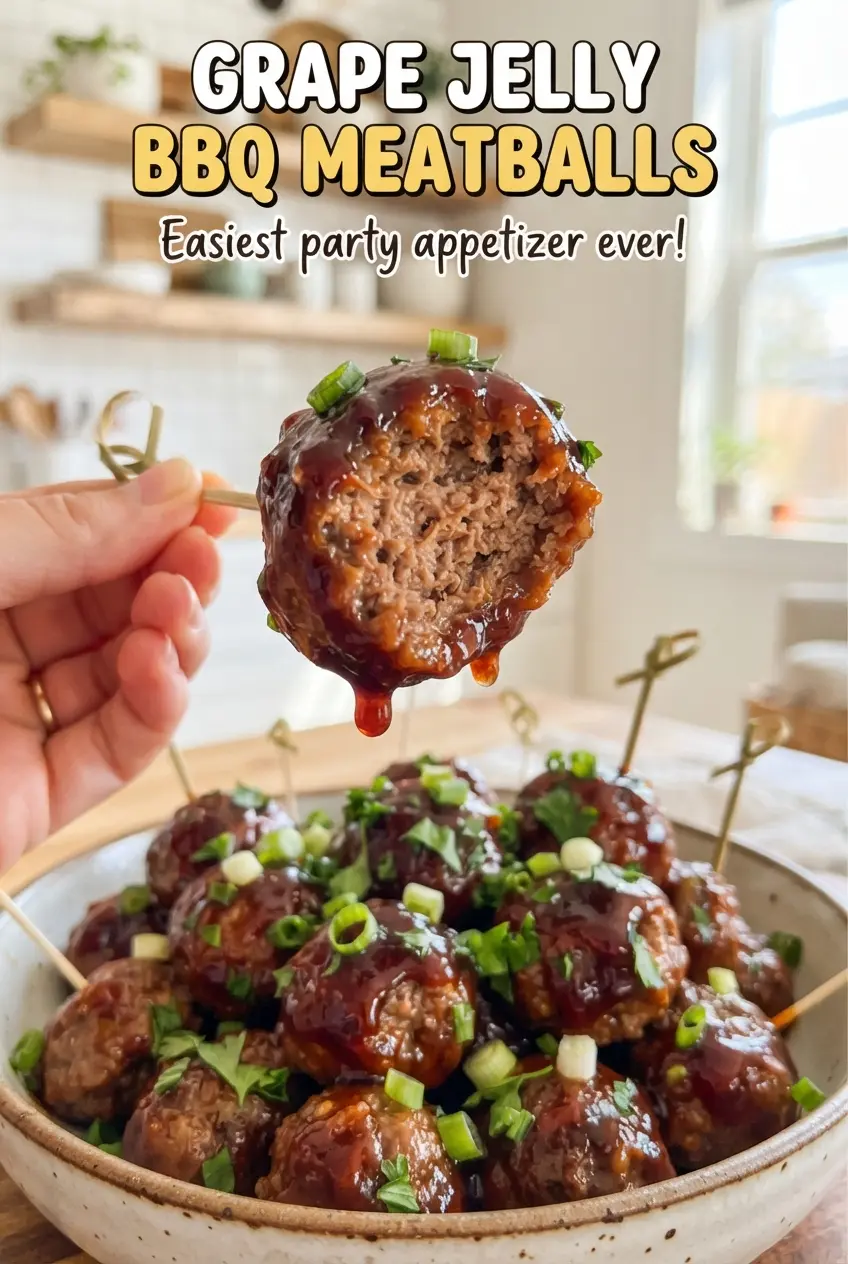
Grape Jelly BBQ Meatballs
Ingredients
Equipment
Method
- Whisk BBQ sauce, grape jelly, Worcestershire sauce, and garlic powder together in a slow cooker until smooth and well combined. The mixture should look uniform and slightly thick before adding the meatballs.
- Add frozen fully cooked meatballs to the slow cooker and stir to coat evenly. Make sure the meatballs are submerged as much as possible in the sauce for consistent coverage.
- Cover and cook on LOW 3-4 hours or HIGH 2 hours, stirring once halfway. Keep the lid on to maintain heat and watch for gentle bubbling of the sauce at the edges.
- Stir until the sauce looks glossy and the meatballs are heated through. The glaze should cling to the meatballs with a sticky sheen when lifted.
- Garnish with chopped fresh parsley and keep the meatballs on WARM until serving. Serve hot with toothpicks so sauce can drip from the meatballs.