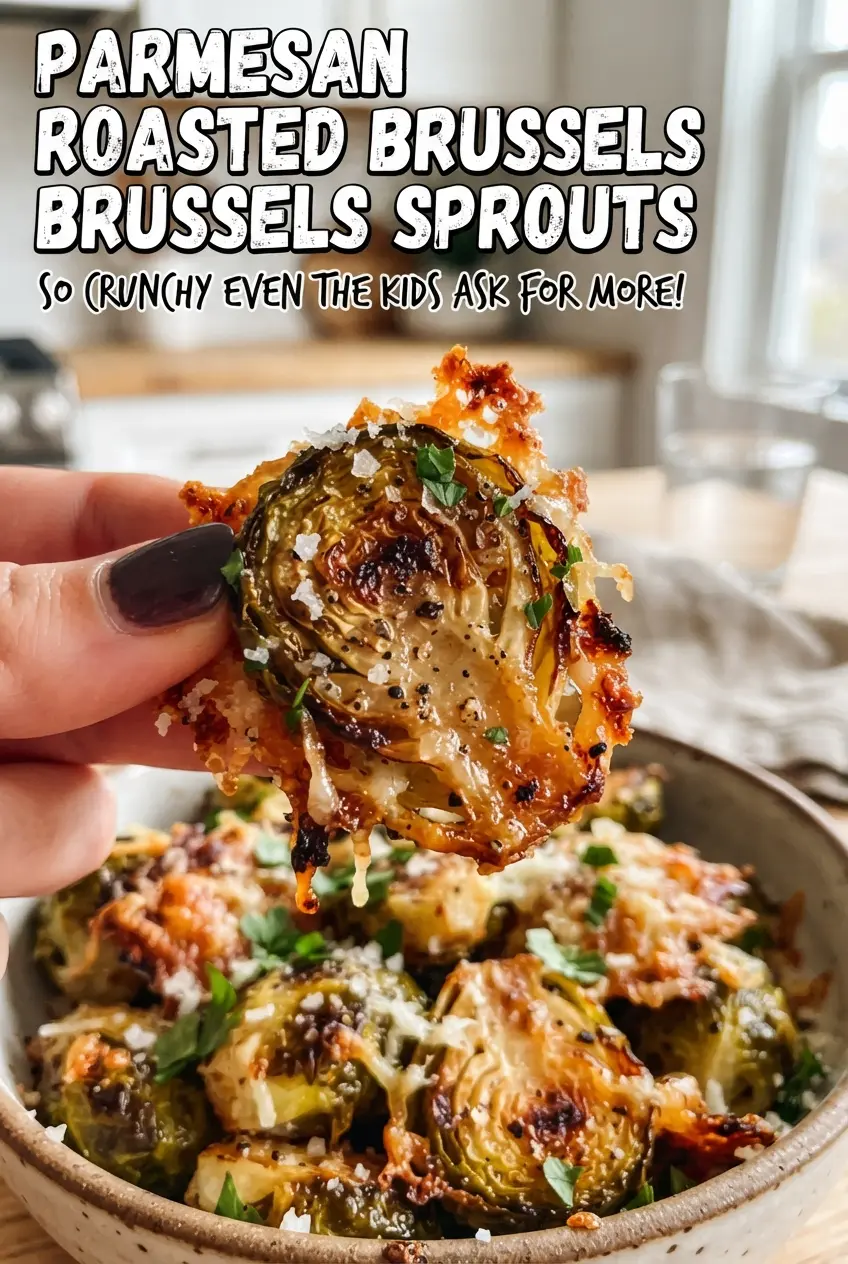
Parmesan roasted Brussels sprouts earn their place on the table when the edges turn crisp and the cheese underneath bakes into a lacy, golden crust. The sprouts stay tender in the center, but the cut sides pick up enough heat to caramelize, and that contrast is what keeps people coming back for another scoop.
The trick is giving the Parmesan direct contact with the hot pan and the cut sides of the sprouts. That’s what builds the crust instead of ending up with loose cheese sprinkled over the top. A hot oven, a single layer, and enough space for the sprouts to brown instead of steam all matter here.
Below, I’ve included the timing cue that tells you when the sprouts are done before they turn mushy, plus a few swaps that still keep the cheese crust intact. A squeeze of lemon at the end wakes up the whole pan and keeps the Parmesan from tasting heavy.
The Parmesan crisped up into one golden sheet under the sprouts, and the lemon at the end kept everything bright instead of greasy. I had to fight my teenager for the last few pieces.
Crispy Parmesan Brussels sprouts with a golden sheet-pan crust are made for your dinner rotation.
The Trick to a Parmesan Crust That Stays Attached
The biggest mistake with roasted Brussels sprouts is treating the cheese like a finishing garnish. Parmesan needs heat and contact to melt into that brittle, savory crust. If you scatter it loosely over the top, it can brown in spots, but it won’t form the same sheet that clings to the sprouts and the pan.
Cut-side down is the move here. The flat surface gives the Parmesan something to bond with, and the hot pan helps it crisp before the sprouts start releasing too much steam. If your pan is crowded, the sprouts will soften and the cheese will go soggy instead of turning lacy at the edges.
- High-heat roasting — 425°F is hot enough to brown the sprouts before they collapse. Lower heat gives you tender vegetables, but not the same deep caramelization.
- Parchment-lined pan — This helps with cleanup, but don’t use too much oil or the cheese can spread into a greasy layer instead of a crisp crust.
- Even spacing — Keep the sprouts in a single layer with room around them. Crowding traps steam, and steam is what turns this from crispy to limp.
What Each Ingredient Is Actually Doing in This Dish
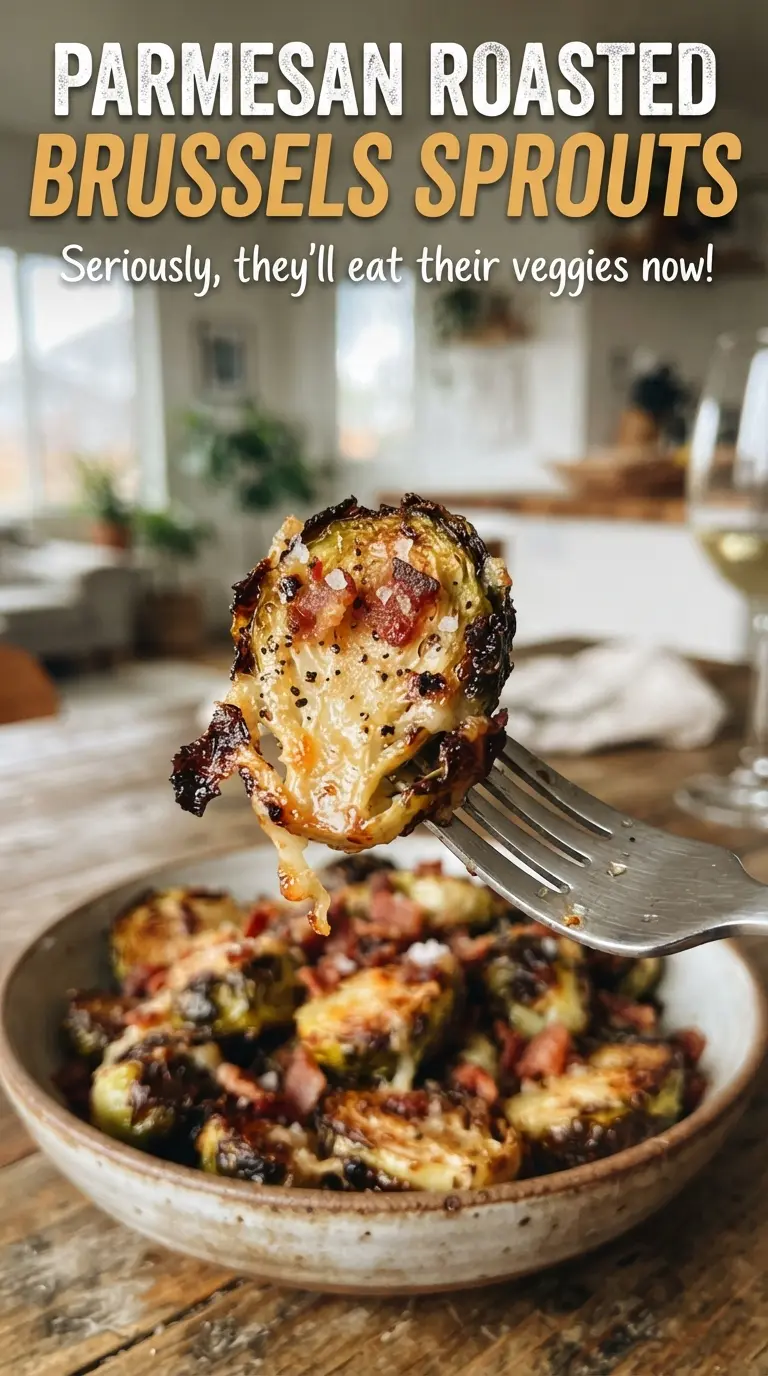
- Brussels sprouts — Look for sprouts that feel firm and heavy for their size. Smaller sprouts tend to cook more evenly and get sweeter at the edges, but halving larger ones works just fine as long as the cut sides face down.
- Olive oil — This coats the sprouts so they roast instead of dry out. You don’t need an expensive bottle here; use a good everyday olive oil and save the fancy finishing oil for the table.
- Garlic — Fresh minced garlic perfumes the pan and bakes into the sprouts. If you use garlic powder instead, the flavor will be flatter and less fragrant, though it will still season the dish.
- Parmesan — This is the ingredient that makes the crust happen. Grated Parmesan melts and browns more evenly than finely shredded cheese, and a wedge you grate yourself usually gives the best result because it melts cleanly without additives getting in the way.
- Lemon juice — Add it at the end, not before roasting. Acid helps cut through the salt and richness, but if it goes in early it can dull the browning and soften the edges you worked for.
Roasting the Sprouts Until They Char, Then Crisp
Coating the Sprouts
Toss the halved sprouts with olive oil, garlic, salt, and pepper until every cut surface looks lightly slicked. You don’t want pools of oil in the bowl; too much excess oil can keep the Parmesan from clinging in one even layer. The garlic should be distributed well, but if a few pieces clump together, that’s not a problem as long as they’re not piled in one spot on the pan.
Building the Cheese Layer
Sprinkle the Parmesan evenly over the parchment, then place the sprouts cut-side down on top of the cheese. This looks backward, but it’s the step that gives you the best crust. If the cheese lands on top of the sprouts instead, it can melt off the sides before it has a chance to crisp underneath.
Watching for the Right Finish
Roast until the sprouts are tender when pierced and the edges are deeply browned, with the cheese turned golden and lacy underneath. The smell changes too: it shifts from raw cabbage to toasted, nutty, and savory. If the cheese is darkening too fast before the sprouts are tender, move the pan up one rack for the last few minutes.
The Lemon Finish
Squeeze the lemon juice over the hot sprouts right before serving. That quick hit of acid loosens the richness just enough and keeps the whole pan tasting bright. Don’t add it early or the sprout edges can soften before they ever crisp.
How to Adapt This for Dairy-Free, Spicier, or Bigger-Batch Cooking
Dairy-Free Version
Skip the Parmesan and roast the sprouts with a little extra olive oil, then finish with lemon and a pinch of flaky salt. You’ll lose the crunchy cheese crust, but the sprouts still get deeply browned and flavorful. A spoonful of toasted breadcrumbs can add texture if you want some crunch back.
Add a Little Heat
A pinch of red pepper flakes tossed in with the garlic gives the sprouts a gentle burn without hiding the Parmesan. If you want more heat, add the flakes after roasting so they stay sharp instead of toasting into bitterness.
Using Frozen Brussels Sprouts
Frozen sprouts can work in a pinch, but they won’t crisp as aggressively because they release more water. Roast them straight from frozen, give them extra time, and expect more tender results than shattery edges. This is the version to use when texture matters less than getting dinner on the table.
Scaling for a Crowd
Use two sheet pans instead of piling everything onto one. If the sprouts are stacked, they’ll steam before the cheese can crisp, and the whole batch loses that roasted edge. Rotate the pans halfway through for even browning.
Storage and Reheating
- Refrigerator: Store leftovers in an airtight container for up to 3 days. The sprouts soften a bit, and the Parmesan crust loses some crunch.
- Freezer: I don’t recommend freezing these. The texture turns watery after thawing, and the cheese crust won’t recover well.
- Reheating: Reheat on a sheet pan in a 400°F oven for 8 to 10 minutes so the edges crisp back up. The microwave will warm them, but it also turns the sprouts soft and the cheese leathery.
Answers to the Questions Worth Asking
Parmesan Roasted Brussels Sprouts
Ingredients
Equipment
Method
- Preheat oven to 425F and line a sheet pan with parchment for even roasting and easy cleanup.
- Toss Brussels sprouts with olive oil, garlic, salt, and black pepper until evenly coated and glossy.
- Sprinkle grated Parmesan evenly over the pan and place Brussels sprouts cut-side down on top of the cheese so the crust browns where the flat side touches.
- Roast for 20-25 minutes until the Brussels sprouts are tender and the Parmesan forms a golden crust with charred, crispy edges.
- Squeeze lemon juice over the top and serve hot for bright, zesty finish.