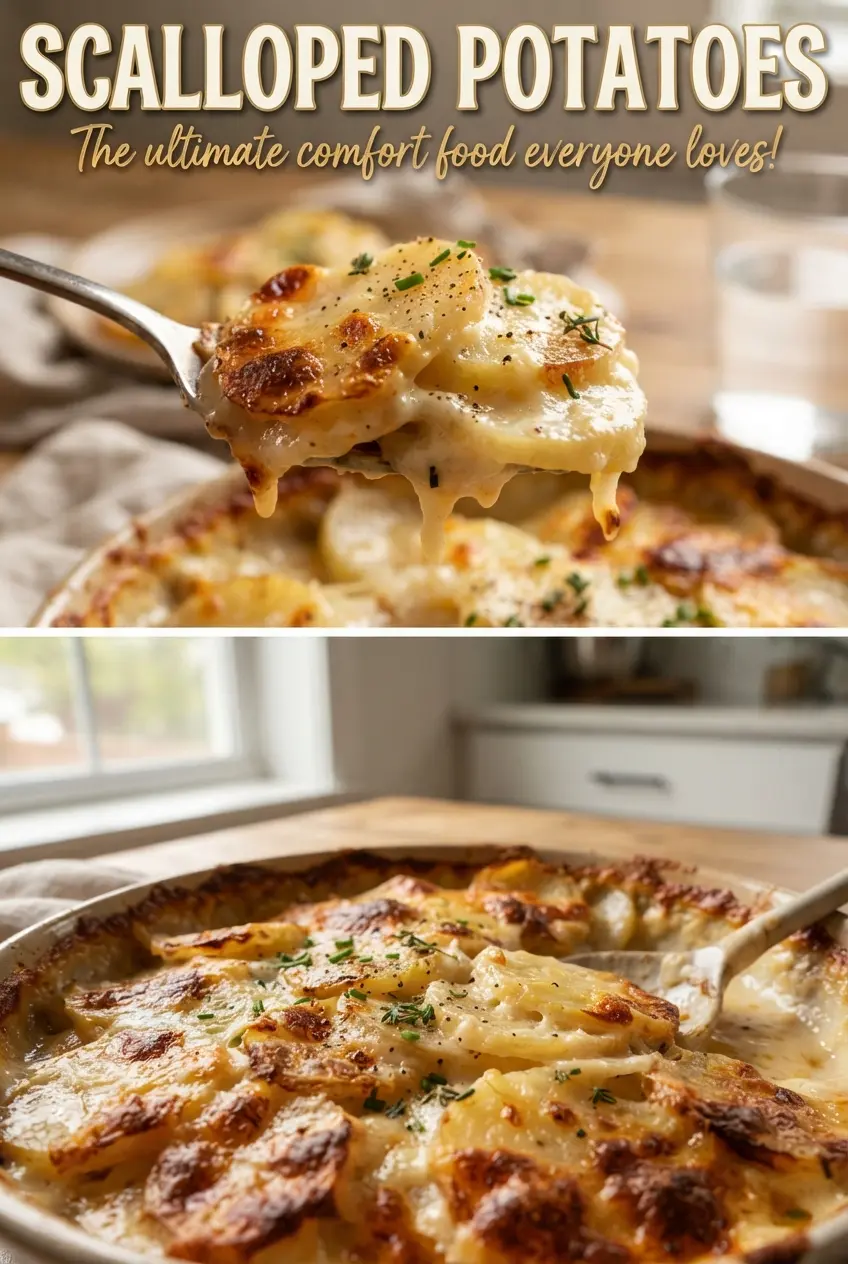
Scalloped potatoes turn humble sliced potatoes into a dish that lands soft, creamy, and deeply comforting, with a browned top that gives way to tender layers underneath. The best version isn’t muddy or gluey. It holds its shape on the spoon, the sauce clings to every slice, and the edges around the pan get just enough color to taste rich instead of heavy.
What makes this version work is the way the sauce is built before it ever touches the potatoes. A quick flour-and-butter base thickens the milk and cream so the dish bakes into layers instead of settling into a thin puddle. Russet potatoes are the right choice here because their starch helps the sauce thicken as the casserole bakes, and slicing them evenly keeps the top from overcooking while the middle catches up. The onion gets tucked between the layers, so it softens in the steam and flavors the whole pan without taking over.
Below, I’ve included the one rest period you shouldn’t skip and a few useful swaps if you need to stretch the dish, lighten it up, or work with what you already have.
The sauce thickened beautifully and the potatoes were tender all the way through without turning mushy. I let it rest the full 15 minutes and it sliced clean instead of running all over the plate.
Save these creamy scalloped potatoes for the holiday table or any dinner that needs a golden, make-ahead side.
The Secret to Scalloped Potatoes That Slice Instead of Collapse
The difference between scalloped potatoes that hold together and a pan that turns soupy usually comes down to two things: how thick the sauce is before baking, and whether the potatoes are cut evenly. A thin sauce looks fine when it goes into the oven, but the potatoes release moisture as they cook, and that extra liquid can push the whole dish into runny territory. This recipe starts with a proper roux, then simmers the milk and cream until it coats a spoon. That gives the potatoes something substantial to absorb.
Russets are sturdy enough to stand up to the long bake, but only if you slice them consistently. If some pieces are thin and others are thick, the thin ones disappear before the center is tender. A mandoline helps, but a sharp knife works if you keep the slices close to 1/8 inch. The final rest matters too. Straight from the oven, the sauce is still moving. Give it 15 minutes and it settles into those clean, creamy layers.
What Each Ingredient Is Doing in This Dish

- Russet potatoes — These are the backbone of the dish. Their starch helps thicken the sauce as the potatoes bake, which is why the casserole sets up instead of staying watery. Yukon Golds work in a pinch, but the texture will be a little silkier and less sturdy.
- Onion — Thin slices melt into the layers and add sweetness without needing to be sautéed first. If you cut them too thick, they stay firm while the potatoes turn tender, and that throws off the bite.
- Butter, flour, milk, and cream — This is the sauce base, and each part matters. Butter and flour build the roux, milk gives the sauce body, and cream brings richness that stands up to the long bake. Whole milk matters here; lower-fat milk won’t give the same velvety finish.
- Garlic and thyme — Garlic needs only a brief cook in the butter so it softens without browning. Thyme cuts through the richness and keeps the dish tasting balanced instead of heavy.
- Parmesan — This goes on at the end so it browns without getting grainy in the sauce. It adds a salty, nutty top layer that gives the finished dish a little edge.
Building the Layers So the Middle Cooks Before the Top Burns
Start the sauce before the potatoes go in
Melt the butter, cook the garlic just until fragrant, then whisk in the flour and let it cook for a full minute. That minute matters because raw flour tastes flat and pasty. When you add the milk and cream gradually, whisk constantly so the sauce stays smooth. Let it simmer until it lightly coats a spoon; if it looks thin in the pot, it will bake thin in the dish.
Layer with purpose
Arrange the potatoes and onion in three even layers, and pour sauce over each one instead of dumping it all on top at the end. That helps the sauce reach the bottom layers and keeps the dish from baking unevenly. Press the layers down gently with a spoon so the sauce settles between the slices. If the potatoes are packed too loosely, the top dries out before the center is tender.
Cover first, then brown at the end
Bake covered for the first hour so the potatoes steam and soften without drying out. Once they’re mostly tender, uncover the dish, add the Parmesan, and finish uncovered until the top turns golden and the edges bubble. If you brown it too early, the top can overcook while the center stays firm. A fork should slide through the potatoes with only a little resistance when it’s done.
Let it rest before serving
Pull the dish from the oven and leave it alone for 15 minutes. The sauce thickens as it cools, and that short wait is what gives you neat servings instead of a loose pan of sauce and potatoes. This is the part people skip when they’re hungry, and it’s the part that makes the biggest difference on the plate.
How to Adapt These Scalloped Potatoes Without Losing the Creamy Texture
Make them gluten-free with a cornstarch slurry
Replace the flour with 2 tablespoons cornstarch whisked into a little cold milk before it goes into the pan. The sauce will thicken a little differently, but it still bakes into a creamy layer. Don’t add the cornstarch directly to the hot butter or it will clump.
Use half-and-half instead of cream for a lighter pan
You can swap the heavy cream for more whole milk or half-and-half if you want a lighter result. The sauce won’t taste as rich, and it may set up a little less firmly, but it still works well. Keep the sauce on the thicker side before baking so the potatoes have enough body to absorb.
Add ham or cooked bacon for a heartier side dish
A layer of diced ham or crumbled cooked bacon fits cleanly between the potatoes and turns this into a more substantial side. Since those meats add salt, ease up slightly on the seasoning in the sauce. The result is richer and a little more savory, with less of the pure potato focus.
Swap in Yukon Golds for a softer, silkier texture
Yukon Gold potatoes make a creamier, more buttery dish, but they don’t absorb quite as much sauce as russets. The texture is softer and a little less structured. If you use them, slice them evenly and check for doneness at the early end of the bake.
Storage and Reheating
- Refrigerator: Store covered for up to 4 days. The sauce will thicken as it chills, and the potatoes will firm up.
- Freezer: It can be frozen, but the texture softens a little after thawing. Wrap tightly, freeze in portions if possible, and thaw in the refrigerator before reheating.
- Reheating: Reheat covered in a 325F oven until hot through, then uncover for a few minutes if you want to refresh the top. The biggest mistake is blasting it in the microwave, which can make the potatoes tough and the sauce separate.
Answers to the Questions Worth Asking
Scalloped Potatoes
Ingredients
Equipment
Method
- Preheat oven to 375F and butter a 9x13-inch baking dish with a thin, even coating for easy release.
- Melt butter, then cook minced garlic for 30 seconds until fragrant and lightly softened.
- Whisk in all-purpose flour and cook for 1 minute to remove the raw flour taste and create a thickener.
- Gradually whisk in whole milk and heavy cream, then simmer until slightly thickened, stirring often so it turns smooth and coats the back of a spoon.
- Season the sauce with salt, black pepper, and fresh thyme leaves, then stir until the flavors are evenly distributed.
- Layer potatoes and onion in the baking dish in three layers, then pour sauce over each layer so the slices cook evenly.
- Cover with foil and bake for 1 hour, keeping the layers moist for tender, sliceable potatoes.
- Uncover, sprinkle with grated Parmesan, and bake for 25-30 minutes until the top is golden and the potatoes are fork-tender.
- Rest the scalloped potatoes for 15 minutes before serving so the sauce thickens slightly and the layers set.