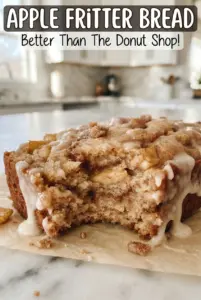
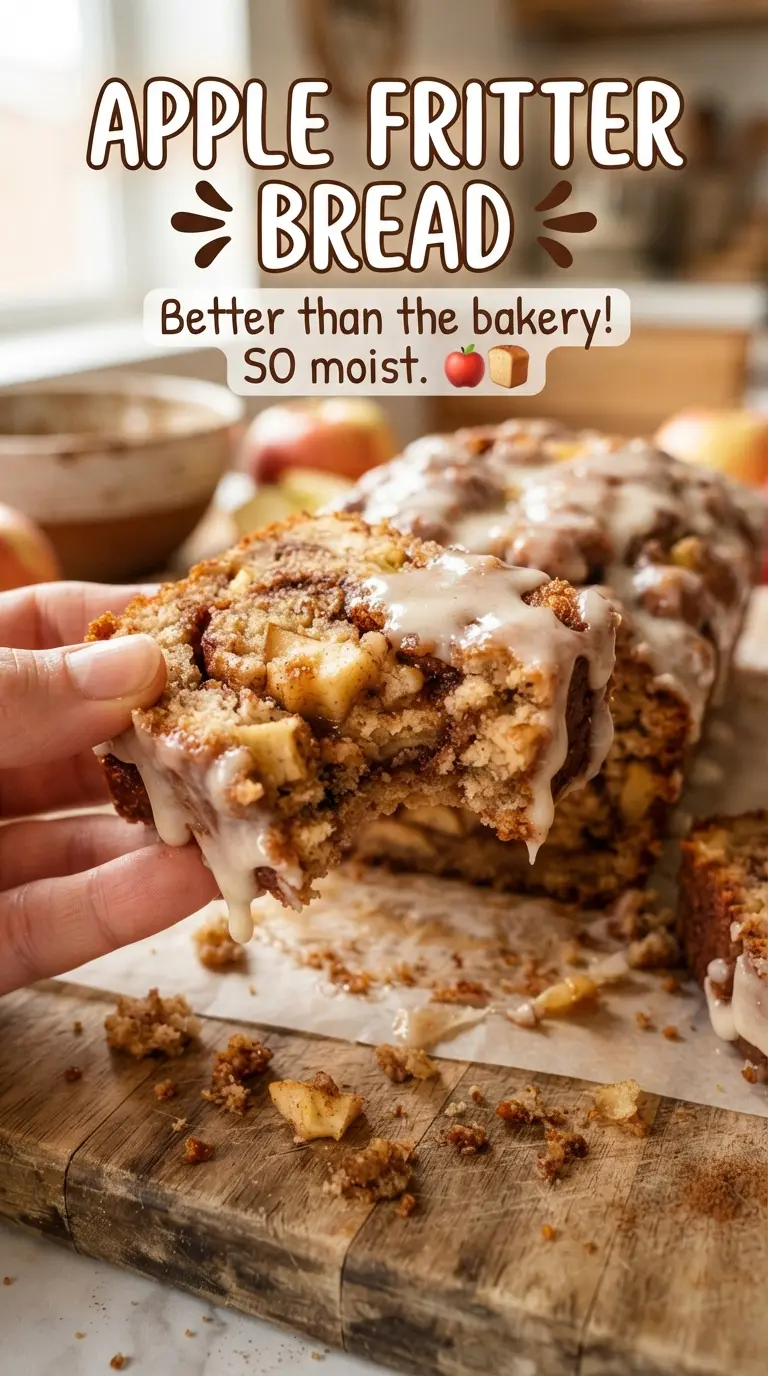
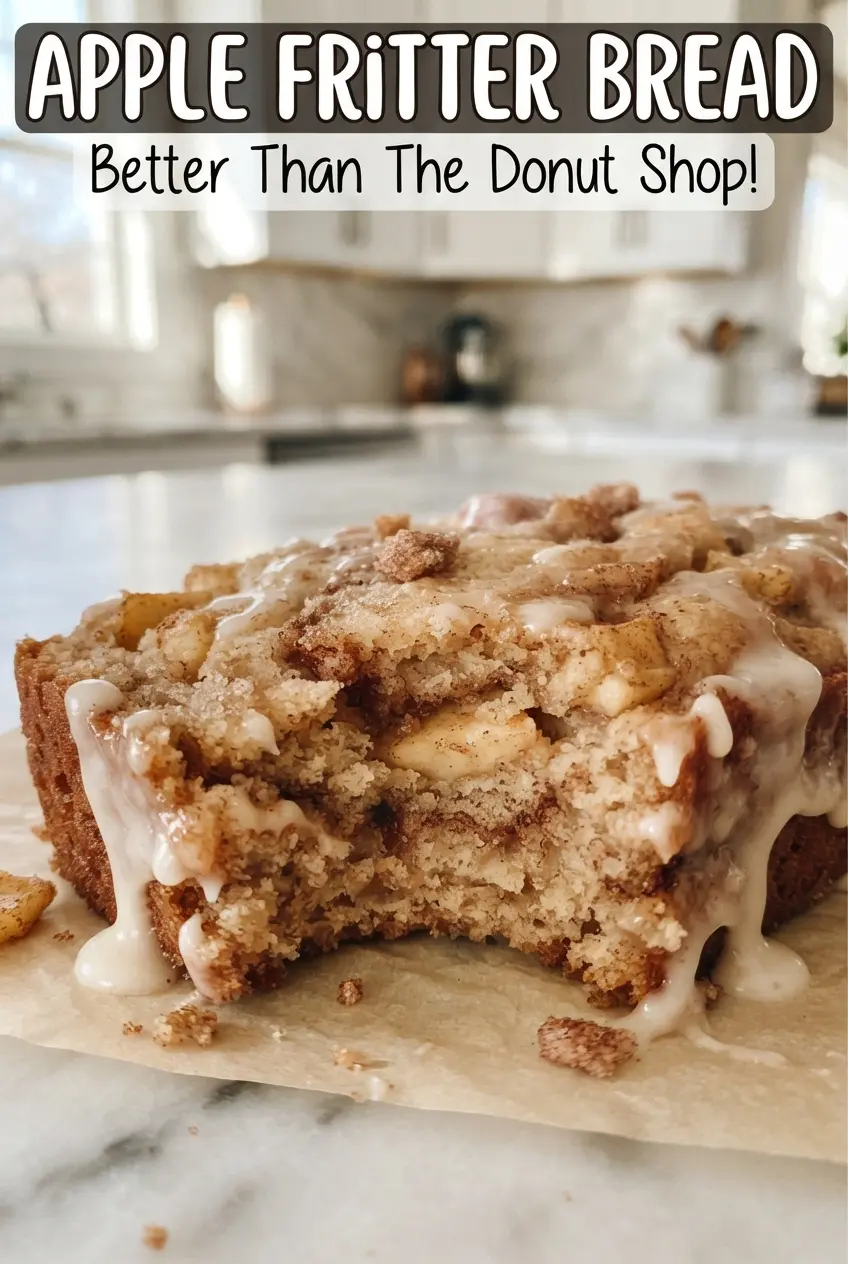
Apple fritter bread bakes into a soft, tender loaf with the same cinnamon-sugar pull and juicy apple pockets you want from a good fritter, but without standing over hot oil. The top turns lightly crackled and the glaze sinks into the warm loaf just enough to leave a sweet finish instead of a heavy one. Each slice holds together cleanly, yet still gives you those sticky swirls and soft apple bits that keep this from feeling like plain quick bread.
What makes this version work is the layering. The apples get tossed in cinnamon sugar first, which draws out just enough juice to flavor the bread without turning it soggy. Then the batter is layered with more cinnamon sugar and swirled only lightly. If you overmix the swirl, you lose the ribbons; if you underbake it, the center stays gummy around the apple pieces. The loaf pan gives you the right depth for that contrast between the browned edges and the soft middle.
Below, you’ll find the part that matters most: how to keep the loaf moist without making it dense, plus a few swaps for different apples and a simple way to tell when the center is set.
The swirl stayed separate instead of disappearing into the batter, and the glaze soaked into the warm loaf just enough without making it wet. I used Honeycrisp apples and the slices held their shape all the way through.
Apple Fritter Bread has those cinnamon apple layers and that glossy glaze — save it for the days when you want bakery-style flavor without frying a thing.
The Trick to Keeping the Apple Layers from Sinking
The apple pieces need a little help staying where you put them. Tossing them with cinnamon sugar first does two things at once: it seasons the fruit and helps it cling to the batter instead of sliding to the bottom. That matters because the loaf is thick enough that heavy fruit can settle before the center sets, especially if the apples are cut too large.
The other thing that keeps this loaf balanced is the layering order. Half the batter goes in first so it can act like a cushion, then the apples and cinnamon sugar, then the rest of the batter and the remaining filling. A quick, shallow swirl at the end is enough to marble the layers without stirring them together into one uniform loaf.
- Apples — Use a firm baking apple so the pieces stay distinct. Granny Smith gives you more tartness and structure, while Honeycrisp or Fuji bring a sweeter, softer bite. If your apples are very juicy, chop them a little smaller so they distribute evenly without flooding one section of the pan.
- Brown sugar and cinnamon — This is the filling and the topping in one mixture. The brown sugar melts into the loaf as it bakes, which is where the fritter-like ribbon comes from. Don’t swap in all white sugar here or you lose that deeper caramel note.
- Butter — Softened butter creams with the sugar and traps air, which gives the loaf a lighter crumb. Melted butter won’t give the same structure. If you only have salted butter, use it and reduce the added salt slightly.
- Milk — Whole milk gives the best texture, but any milk works here. The key is adding it alternately with the dry ingredients so the batter stays smooth instead of overworked. That keeps the loaf tender instead of tight.
What Each Ingredient Is Actually Doing in This Recipe
- Primary ingredient (the star) — Quality matters most. Choose the best you can find.
- Cooking medium (oil, butter, or broth) — This carries flavors and prevents dryness.
- Seasonings (salt, pepper, spices, herbs) — Layer flavors so nothing overpowers. Build depth gradually.
- Aromatics (garlic, onion, herbs) — Cook with fat to bloom flavors. Become the foundation.
- Supporting ingredients — Complement the main ingredient without overpowering it.
- Sauce or liquid (if applicable) — Brings flavors together. Balance richness with acid.
- Acid (lemon, vinegar, wine, or other) — Brightens and prevents flat-tasting results.
- Final finish (garnish, glaze, or sauce) — Prevents one-dimensional taste and adds visual appeal.
Building the Batter Without Overmixing It
Creaming the Base
Beat the butter and sugar until the mixture looks pale and fluffy, not just combined. That change in color tells you the butter has trapped enough air to lift the loaf as it bakes. If you stop too early, the bread turns heavy and a little dense around the edges. Add the eggs one at a time so the batter stays smooth, then stir in the vanilla.
Bringing in the Flour and Milk
Add the dry ingredients and milk in alternating additions, starting and ending with the flour mixture. That keeps the batter from curdling or turning gluey, which is what happens when all the liquid hits the creamed butter at once. Mix only until the last streaks of flour disappear. A few small lumps are better than a tough loaf.
Layering and Swirling the Loaf
Spread half the batter into the prepared pan, then scatter on half the apples and half the cinnamon sugar. Repeat the layers, then run a knife through the batter just once or twice with a light hand. You want visible ribbons, not a fully mixed batter. Bake until the top is set and a toothpick in the center comes out with a few moist crumbs, not wet batter.
Glazing at the Right Moment
Let the loaf rest for about 15 minutes before adding the glaze. If it’s too hot, the glaze disappears into the top instead of sitting in that shiny layer people expect from apple fritter bread. Whisk the powdered sugar with just enough milk to drizzle, then spoon it over the warm loaf so it pools slightly and sets with a thin crust.
How to Adapt This for Different Apples and Different Needs
Use tart apples for a sharper finish
Granny Smith gives the loaf a brighter flavor and keeps the fruit pieces firm. The tartness balances the glaze and the sweet cinnamon sugar, which is useful if you like a less dessert-heavy finish.
Make it dairy-free
Use a plant-based butter that behaves like regular butter when softened, plus an unsweetened non-dairy milk. The texture stays close, though the crumb can be a touch less rich than the original because dairy butter adds flavor as well as fat.
Turn it into muffins instead of a loaf
Divide the batter into lined muffin cups and bake until the centers spring back. You’ll get more of the sugary edge from the pan and less of the tall swirled slice, but the apple-cinnamon flavor comes through just as well.
Storage and Reheating
- Refrigerator: Store covered for up to 4 days. The glaze softens a bit, but the loaf stays moist.
- Freezer: Freeze slices tightly wrapped and sealed for up to 2 months. Thaw at room temperature so the glaze doesn’t get sticky from condensation.
- Reheating: Warm slices briefly in the microwave or in a low oven. Too much heat dries out the crumb and makes the glaze disappear, so use just enough to take the chill off.
Answers to the Questions Worth Asking
Apple Fritter Bread
Ingredients
Equipment
Method
- Preheat the oven to 350F, then grease and line a 9x5-inch loaf pan.
- Mix the brown sugar and ground cinnamon, then toss the chopped apples with 2 tablespoons of the mixture.
- Beat the softened butter and granulated sugar until fluffy, then beat in the eggs and vanilla extract.
- Whisk the all-purpose flour, baking powder, and salt, then add them to the batter alternately with the milk.
- Spread half the batter in the loaf pan, top with half the apples and half the remaining cinnamon sugar, then repeat the layers.
- Swirl gently with a knife to create ribbons of cinnamon sugar through the loaf.
- Bake at 350F for 50-55 minutes, until a toothpick comes out clean.
- Cool the loaf for 15 minutes, then whisk powdered sugar with 2-3 tablespoons milk and drizzle over the top.