Crispy bacon, sweet onion, and cabbage that softens into buttery ribbons with caramelized edges — that’s what keeps this Southern fried cabbage on repeat. The pan ends up layered with smoky drippings, a little sweetness from the onion, and enough black pepper to keep every bite awake. It’s simple food, but the kind that disappears fast because the texture stays interesting from the first forkful to the last.
The trick here is giving the cabbage enough time in the skillet to pick up color without turning limp and watery. Bacon starts the whole dish with flavor, but the real payoff comes from the onions cooking in those drippings before the cabbage goes in. A small splash of apple cider vinegar at the end cuts through the richness and keeps the whole pan from tasting heavy.
Below, you’ll find the timing that gives you tender cabbage with browned edges, plus a few practical swaps if you need to stretch what’s in the fridge. If you’ve ever had fried cabbage that tasted flat or steamed instead of seasoned, this version fixes both problems.
The cabbage got those caramelized edges instead of turning mushy, and the vinegar at the end kept the bacon from taking over. I served it with pork chops and my husband asked why I’d never made it this way before.
Save this Southern Fried Cabbage for the nights when you want smoky bacon, tender cabbage, and a skillet full of Southern comfort.
The Reason This Cabbage Gets Brown Instead of Watery
Southern fried cabbage fails when the pan is too crowded or the heat is too timid. Cabbage carries plenty of moisture, and if it sits in a soggy heap, it steams before it browns. That’s how you end up with soft cabbage that tastes fine but never gets the deep, savory edges that make this dish worth repeating.
The bacon drippings are doing more than adding flavor. They coat the skillet, help the onion soften without sticking, and give the cabbage a head start on browning. The butter adds a rounder finish, but the real turning point is stirring occasionally instead of constantly. Let the cabbage sit in contact with the pan long enough to pick up color.
- Use a large skillet so the cabbage has room to touch the heat.
- Cook the bacon until crisp, then leave the drippings in the pan. That’s the base of the whole dish.
- Add the vinegar at the end, not the beginning. Early vinegar can slow browning.
- Don’t cover the pan. Steam is the enemy here.
What Each Ingredient Is Actually Doing in This Skillet
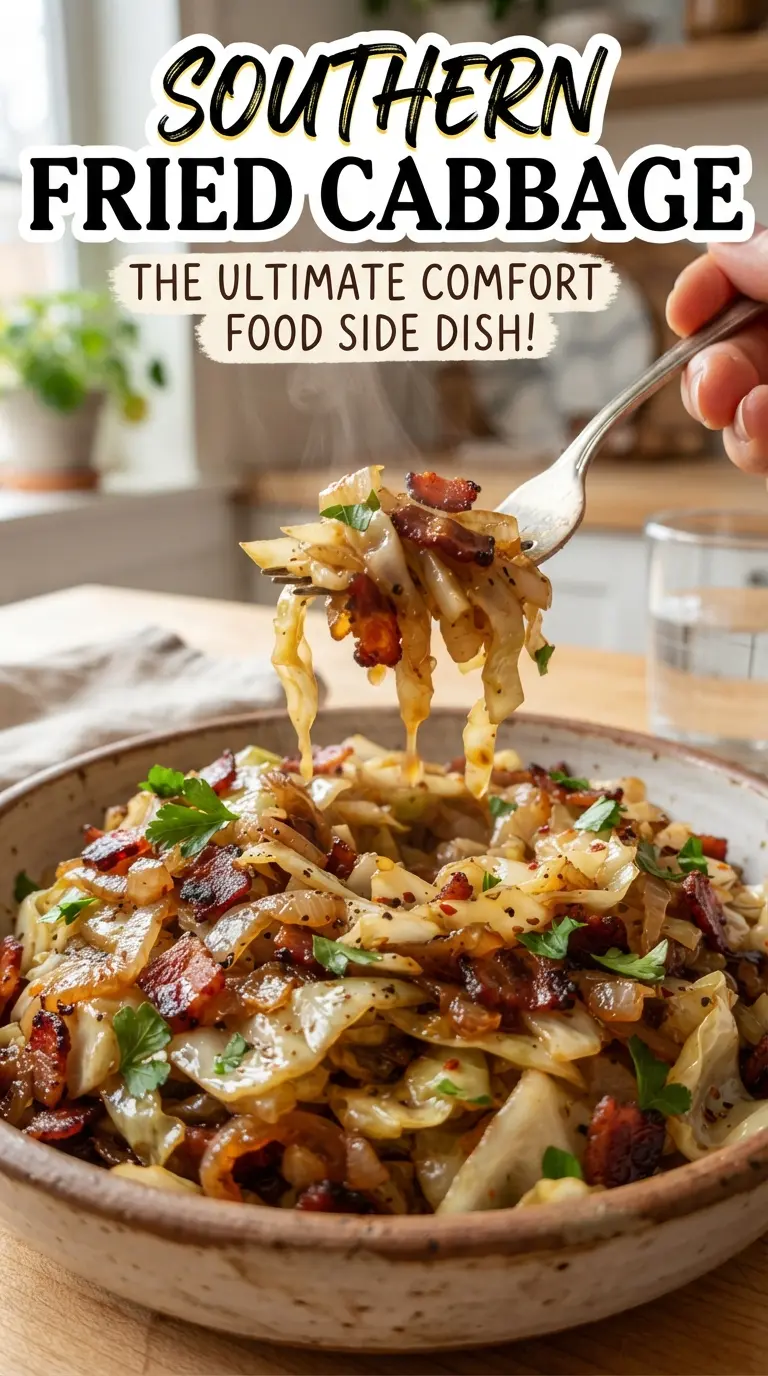
The bacon brings salt, smoke, and enough rendered fat to season the whole pan. If you use thick-cut bacon, you’ll get bigger pieces and a little more chew; regular bacon crisps faster and spreads the flavor more evenly. If you need to swap it, smoked turkey bacon will work in a pinch, but you’ll want to add a little extra butter because it won’t render the same way.
Yellow onion matters here because it turns sweet as it softens in the drippings. Green cabbage is the right choice because it stays sturdy and sweet after cooking; savoy cabbage will work, but it softens faster and won’t give you the same slight bite. Apple cider vinegar is the ingredient that keeps the dish from tasting one-note, and a teaspoon is enough to brighten the whole skillet without making it taste sharp.
- Butter — rounds out the bacon drippings and helps the cabbage gloss over as it finishes. If you use only bacon fat, the dish tastes a little harsher.
- Sugar — doesn’t make the cabbage sweet; it encourages a deeper caramelized edge and balances the vinegar at the end.
- Red pepper flakes — add a low background heat. You can leave them out, but the dish loses some lift.
- Garlic — goes in after the onion so it doesn’t burn. Thirty seconds is enough; any longer and it turns bitter.
How to Build the Flavor Without Overcooking the Cabbage
Cooking the Bacon to the Right Point
Start the bacon in a cold skillet and let the fat render over medium heat. You want crisp pieces with some deep color, not brittle shards that taste burned. Pull the bacon out once it’s crisp, but keep the drippings in the pan; that fat is what seasons the onion and cabbage. If there’s an excessive amount of grease, spoon off a little, but leave enough to coat the bottom.
Softening the Onion Before the Cabbage Goes In
Add the sliced onion to the hot drippings and cook until it turns soft and translucent with a few golden edges. That usually takes about 5 minutes, and it’s worth the time because raw onion can make the finished dish taste sharp. Stir in the garlic for just 30 seconds, long enough to smell it bloom. If it browns too fast, the pan is too hot and the garlic will turn bitter before the cabbage ever gets a chance.
Letting the Cabbage Caramelize, Not Steam
Add the cabbage, butter, salt, pepper, red pepper flakes, and sugar, then stir to coat everything in the fat. Cook for 12 to 15 minutes, stirring occasionally, until the cabbage is tender and the edges have turned golden. If liquid pools in the bottom, keep cooking uncovered; that moisture needs to cook off before the cabbage can brown. When the pan smells sweet and savory at the same time, you’re close.
The Final Splash That Pulls It Together
Stir in the apple cider vinegar and the reserved bacon right at the end. The vinegar wakes up the bacon drippings and keeps the dish from tasting flat after all that cooking. Taste before adding anything else, because the bacon and drippings already bring plenty of salt. Serve it warm while the edges are still slightly crisp.
How to Adapt This for What’s in the Kitchen
Make It Dairy-Free Without Losing the Richness
Skip the butter and use an extra tablespoon of bacon drippings or olive oil. You’ll lose a little of the mellow finish, but the cabbage will still brown well and the bacon will carry the dish. If you want a little more depth, add a pinch more black pepper at the end.
A Vegetarian Version That Still Tastes Savory
Use olive oil or butter, then add sliced mushrooms and a pinch of smoked paprika to replace the bacon’s depth. The texture changes, but you still get a skillet with browned edges and a savory finish. Add the vinegar at the end the same way, because it keeps the dish lively.
How to Make It Spicier Without Masking the Cabbage
Increase the red pepper flakes to 1/2 teaspoon or add a dash of hot sauce right before serving. That gives heat without changing the way the cabbage browns. If you add too much too early, the spice can turn harsh as the dish reduces.
Storage and Reheating
- Refrigerator: Store leftovers in an airtight container for up to 4 days. The cabbage softens a bit more as it sits, but the flavor holds well.
- Freezer: It freezes, but the texture gets softer after thawing. If you do freeze it, cool it fully first and use it within 2 months.
- Reheating: Warm it in a skillet over medium-low heat so the cabbage can dry out a little and the bacon stays flavorful. The biggest mistake is microwaving it too long, which turns the cabbage mushy and flattens the seasoning.
Answers to the Questions Worth Asking
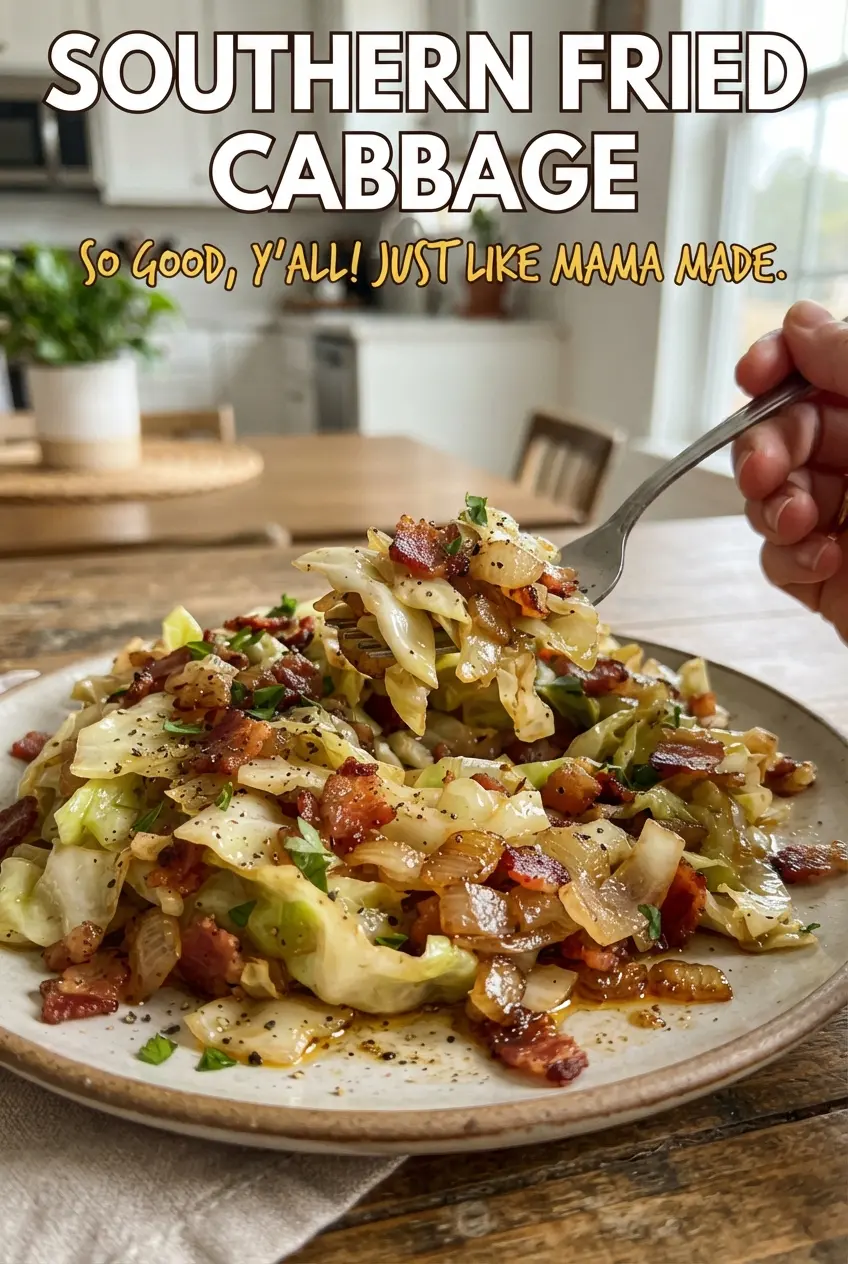
Southern Fried Cabbage
Ingredients
Equipment
Method
- Cook the chopped bacon in a large cast iron skillet over medium heat for 8 minutes until crisp, then remove it and leave the drippings in the pan.
- Keep the heat at medium so the drippings stay active and glossy for the next step.
- Add the sliced onion to the skillet and cook for 5 minutes, stirring, until softened.
- Stir in the minced garlic and cook for 30 seconds, just until fragrant.
- Add the chopped cabbage, butter, salt, black pepper, red pepper flakes, and sugar to the skillet and stir to coat.
- Cook for 12-15 minutes, stirring occasionally, until the cabbage is tender and caramelized at the edges, with browned spots visible on the leaves.
- Stir in the apple cider vinegar and cook for 30 seconds to distribute the flavor.
- Add back the crispy bacon and serve warm, with crispy bits evenly scattered over the caramelized cabbage.