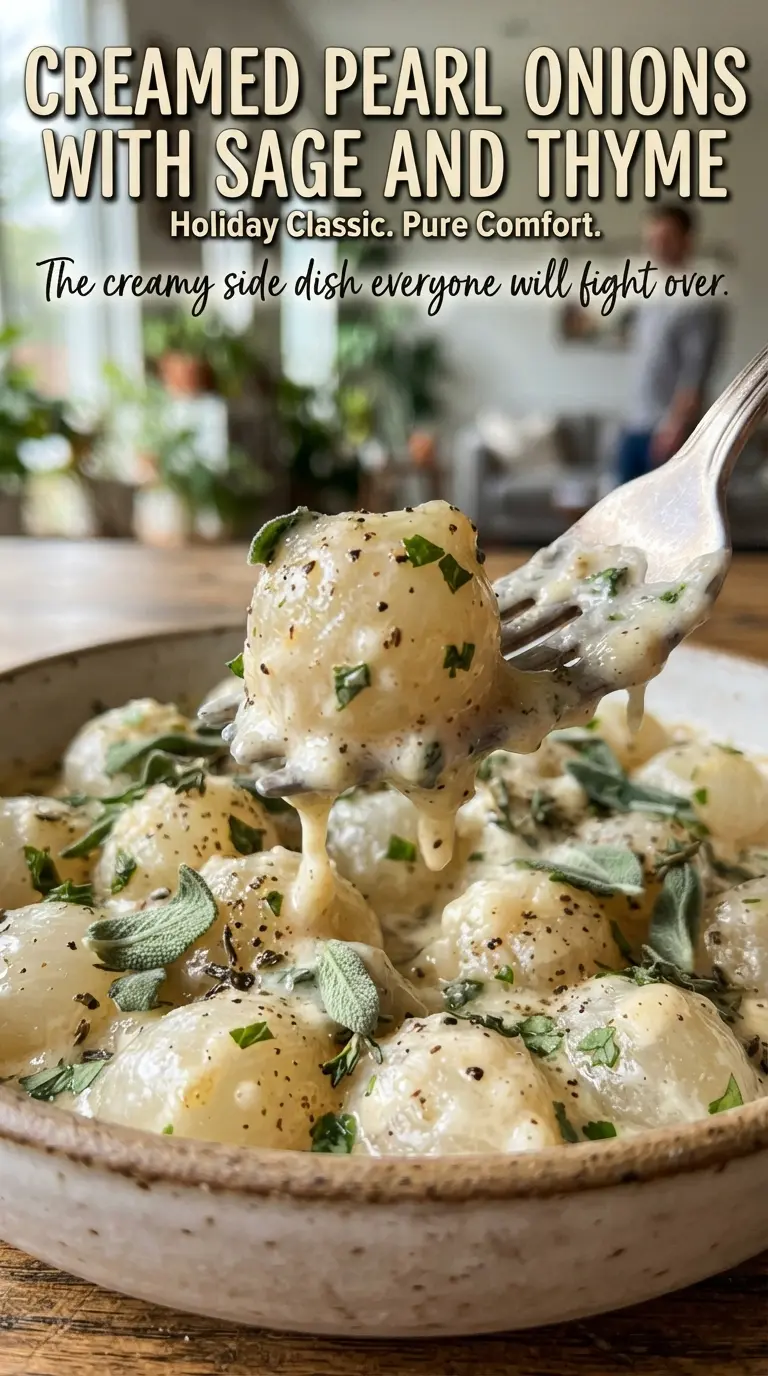
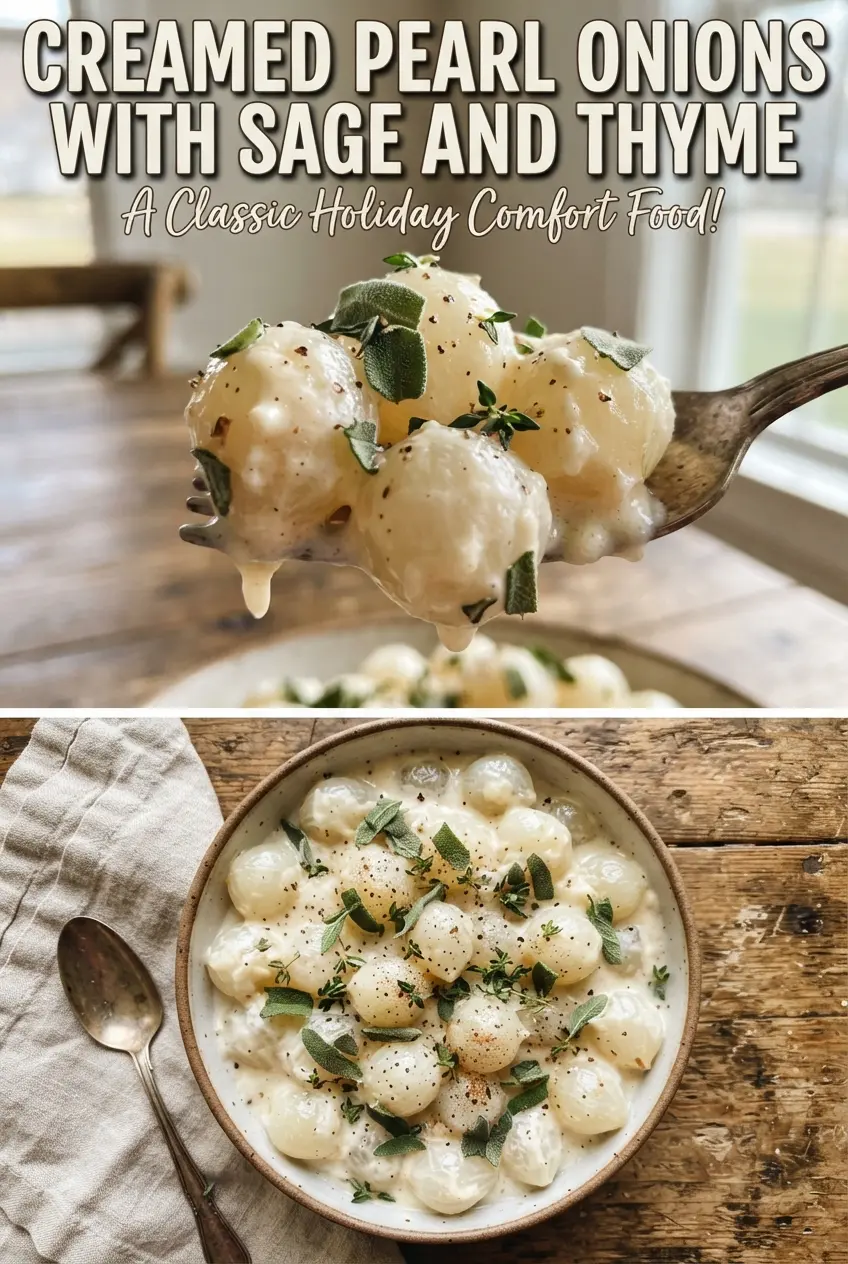
Sweet pearl onions wrapped in a velvety cream sauce make the kind of side dish that quietly steals the whole plate. The onions stay tender but still hold their shape, the sauce clings in a glossy layer, and the sage brings just enough earthy edge to keep every bite from feeling heavy. A few crisp fried leaves on top finish it with texture, so the first spoonful tastes rich and the last one still has something interesting going on.
Frozen pearl onions are the smart shortcut here because they’re already peeled and stay consistently tender once thawed, which saves a lot of fiddly work. The real key is giving them time in the butter before the flour goes in; that little bit of browning adds a deeper onion flavor and keeps the sauce from tasting flat. A small amount of Parmesan helps the cream thicken and gives it a savory backbone without turning the dish into a cheese sauce.
Below, I’ll walk through the part that matters most: how to keep the sauce smooth, how to get the onions lightly golden, and what to do if you want to make this ahead for a holiday table or a simple Sunday roast.
The onions turned glossy and tender, and the sauce thickened right when you said it would. I fried the sage leaves for the garnish and they made the whole dish taste restaurant-level.
Save these creamy pearl onions with crispy sage for the holiday table or any roast dinner that needs a rich, savory side.
The Trick to Keeping Pearl Onions Tender Instead of Mushy
Pearl onions can go from pleasantly tender to soft and collapsed faster than people expect, especially in a cream sauce that keeps simmering after the pan comes off the heat. The move that protects them is starting with thawed onions and giving them a real turn in the butter before the flour goes in. That brief sauté does two jobs at once: it drives off extra surface moisture and gives the onions a little color, which adds flavor that plain simmering never will.
The other thing that matters is heat control once the cream and broth are in the pan. A hard boil will tighten the sauce too fast and beat up the onions, so a low simmer is the right pace here. You’re looking for a sauce that thickens enough to coat the onions in a glossy layer while they stay whole and intact.
- Thawed frozen pearl onions — These are the easiest route and the best one for consistent texture. If they’re still icy in the center, they’ll release water into the pan and thin the sauce, so let them thaw fully before they hit the skillet.
- Butter — This is where the flavor starts. It helps the onions brown and carries the sage aroma through the whole dish. Use real butter here; a neutral oil won’t give you the same round, rich base.
- Fresh sage and thyme — Dried herbs won’t give the same clean, bright finish. Sage is the louder herb, so keep the chopped amount measured and use whole leaves for garnish if you want that crisp, fragrant topping.
- Heavy cream — This is the ingredient that gives the sauce body without needing to reduce it to the point where the onions overcook. Half-and-half can work in a pinch, but the sauce will be thinner and less luxurious.
- Parmesan — It adds salt, depth, and a little extra silkiness. Finely grated Parmesan melts in smoothly; a coarse shred can leave tiny grains in the sauce.
What Each Ingredient Is Actually Doing in This Recipe
- Primary ingredient (the star) — Quality matters most. Choose the best you can find.
- Cooking medium (oil, butter, or broth) — This carries flavors and prevents dryness.
- Seasonings (salt, pepper, spices, herbs) — Layer flavors so nothing overpowers. Build depth gradually.
- Aromatics (garlic, onion, herbs) — Cook with fat to bloom flavors. Become the foundation.
- Supporting ingredients — Complement the main ingredient without overpowering it.
- Sauce or liquid (if applicable) — Brings flavors together. Balance richness with acid.
- Acid (lemon, vinegar, wine, or other) — Brightens and prevents flat-tasting results.
- Final finish (garnish, glaze, or sauce) — Prevents one-dimensional taste and adds visual appeal.
Building the Sauce Without Curdling It
Start by melting the butter in a large skillet and frying the whole sage leaves for about 30 seconds. They should darken slightly and crisp up fast; if they go from fragrant to brown in a flash, pull them out immediately because they’ll keep cooking on the paper towel. Set them aside, then add the pearl onions to the same pan and cook until they pick up light golden spots.
Cooking the Onions First
Let the onions sit against the hot pan long enough to color before stirring again. If you move them constantly, they steam instead of browning, and you lose the sweet edge that makes the sauce taste more developed. Once they’re lightly golden, stir in the chopped sage, thyme, and flour so the herbs bloom in the butter and the flour loses its raw taste.
Turning the Pan Drippings Into Sauce
Whisk in the broth first, then the cream. That order helps the flour disperse cleanly instead of clumping at the bottom of the skillet. Keep the heat at a gentle simmer, not a boil, and stir occasionally until the sauce thickens and the onions become tender all the way through. If the sauce looks too loose, give it another minute; if it starts to look pasty, it has gone too far and needs a splash more broth.
Finishing With Parmesan and Spice
Take the pan off the heat before stirring in the Parmesan, salt, white pepper, and nutmeg. Cheese added over high heat can turn grainy, which is the fastest way to ruin an otherwise smooth sauce. The nutmeg should stay in the background, just enough to round out the cream without announcing itself. Spoon the onions into a warm serving dish and top with the crispy sage leaves right before serving so they stay crisp.
How to Adapt This for Different Tables and Different Main Dishes
Dairy-Free Version With a Softer Finish
Swap the butter for a dairy-free cooking fat and use full-fat unsweetened coconut cream or a rich oat-based cream in place of the heavy cream. The sauce will still be velvety, but it won’t have quite the same savory depth as the original, so the Parmesan also needs to be replaced with a dairy-free hard cheese or skipped entirely with a little extra salt.
Gluten-Free Thickening That Still Stays Smooth
Replace the all-purpose flour with a gluten-free 1:1 flour blend. It thickens in nearly the same way and keeps the sauce creamy instead of grainy. Avoid adding cornstarch straight into the pan at this stage unless you’ve made a slurry first, or you’ll get uneven pockets of thickness.
Making It Ahead for a Holiday Meal
Cook the onions and sauce until just thickened, then cool and refrigerate. When you reheat, do it slowly over low heat with a splash of broth or cream, because the sauce tightens as it sits. If you try to blast it back to life on high heat, the cream can separate and the onions can turn too soft.
What to Do If You Want a Lighter Side Dish
Cut the cream back slightly and replace part of it with extra broth. You’ll lose some richness, but the onions and herbs will taste brighter and the sauce will sit a little lighter on the plate. This version works well next to roasted poultry or a rich main course.
Storage and Reheating
- Refrigerator: Store in an airtight container for up to 3 days. The sauce will thicken and the onions will soften a little more as they sit.
- Freezer: Not ideal. Cream sauces often separate after freezing, and the onions can turn waterlogged when thawed.
- Reheating: Warm gently in a skillet over low heat with a splash of broth or cream, stirring often. Don’t boil it, or the sauce can break and the Parmesan can turn grainy.
Answers to the Questions Worth Asking
Creamed Pearl Onions with Sage and Thyme
Ingredients
Equipment
Method
- Melt the butter in a large skillet and fry a few whole sage leaves for 30 seconds until crisp, then set them aside.
- Add the pearl onions and cook for 8-10 minutes until lightly golden.
- Stir in the chopped sage, thyme, and all-purpose flour, then cook for 1 minute.
- Whisk in the chicken broth and heavy cream, then simmer for 6-8 minutes until thick and the onions are tender.
- Stir in the grated Parmesan, salt, white pepper, and nutmeg until evenly combined.
- Top with the crispy sage leaves and serve warm.