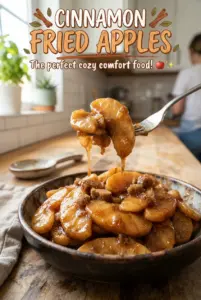
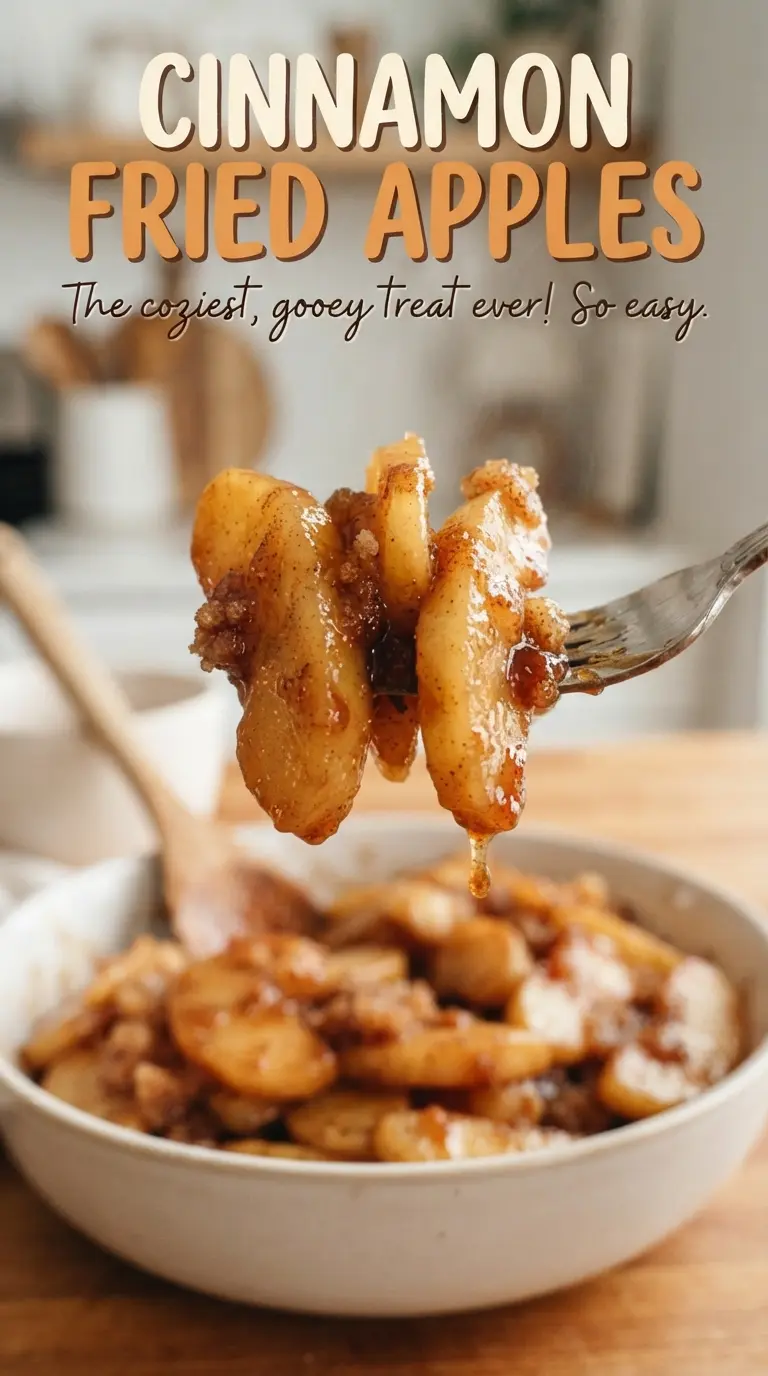
Cinnamon fried apples land in that perfect middle space between cozy and practical: tender but not mushy, glossy instead of watery, sweet with just enough tart bite to keep you going back for another spoonful. When they’re done right, the syrup clings to every slice and the apples still have shape, which is what keeps this side dish from turning into apple sauce in disguise.
The trick is keeping the heat steady and adding the cornstarch slurry only after the apples have softened. That gives the fruit time to release some juice first, then turns the pan liquid into a light, shiny syrup instead of a thin puddle. Honeycrisp gives you a sweeter finish, while Granny Smith holds its structure and brings more tang; both work, but the apple you choose changes the final balance in a real way.
The apples stayed tender but didn’t fall apart, and the cinnamon syrup thickened up in the last few minutes just like you said. I served them over pork chops and my husband asked if I could make them again the next night.
Cinnamon fried apples turn glossy, tender, and spoonable fast — pin this for the nights you need a warm Southern side with almost no work.
The Secret to Apples That Stay Tender Instead of Turning Mushy
The biggest mistake with fried apples is rushing the cook and cranking the heat high enough to brown the outside before the centers soften. Apples need a covered stretch over medium heat so they can steam in the butter and sugar mixture first. That’s how you get slices that still look like apples when they hit the plate.
The cornstarch goes in later for a reason. If you add it too soon, before the fruit has released its own juices, the sauce can go past glossy and land on the gluey side. Wait until the apples are just tender, then use the slurry to tighten the syrup into that lacquered finish that coats a spoon.
What Each Ingredient Is Actually Doing in This Dish
- Firm apples — Honeycrisp gives sweetness and a juicier bite; Granny Smith stays firmer and keeps the dish from leaning too sweet. Soft apples break down too fast here, so use a variety that holds its shape after 10 to 15 minutes of heat.
- Butter — This carries the cinnamon and browns the apples gently while keeping the pan from looking dry. Salted or unsalted both work; if you use salted butter, the pinch of salt can stay small.
- Brown sugar — This is what turns the pan juices into that caramel-like syrup. Light or dark brown sugar both work, but dark brown sugar gives a deeper molasses note and a darker sauce.
- Cinnamon and nutmeg — Cinnamon is the headline, while nutmeg adds warmth in the background. Freshly ground nutmeg is stronger, so use it lightly or it will take over.
- Cornstarch — This thickens the sauce without making it heavy. Whisk it with cold water first so it disperses cleanly; dry cornstarch dropped straight into the skillet will clump.
- Vanilla — Stir it in at the end so its aroma stays bright. If it goes in too early, some of that fragrance cooks off before the apples are even ready.
How to Build the Sauce Without Clouding the Finish
Let the Apples Start Softening First
Melt the butter in a large skillet over medium heat, then add the apples, brown sugar, cinnamon, nutmeg, and salt. Stir until every slice looks coated and the sugar starts to melt into the butter. Cover the pan and cook until the apples are just tender, not collapsing; you want them to bend when nudged, not shred at the edges. If the heat is too high, the sugars can stick before the apples release enough moisture, which leaves you with unevenly cooked slices and a gritty bottom of the pan.
Thicken the Pan Juices at the End
Whisk the cornstarch with the water until the mixture looks completely smooth, then pour it into the skillet and stir it through. Let it simmer for 2 to 3 minutes, just until the sauce turns glossy and lightly coats the apples. If it still looks thin, give it another minute; if it turns paste-like, the heat was too aggressive or the slurry sat too long before use. The goal is a loose syrup that clings, not a tight pudding.
Finish With Vanilla and Serve Warm
Stir in the vanilla off the heat or right at the end of the simmer so it keeps its soft, round aroma. Serve the apples warm while the sauce is still fluid and shiny. As it cools, the syrup tightens, so don’t judge the final texture by what it looks like the second it leaves the stove.
How to Adapt These Fried Apples for Different Meals
Dairy-Free Fried Apples
Swap the butter for a dairy-free butter substitute with a similar fat content. The apples will still soften and the syrup will still thicken, but the finished sauce may taste a little less rich and a little more straightforwardly sweet.
Granny Smith for a Brighter, Less Sweet Pan Sauce
Use all Granny Smith apples if you want a sharper flavor and firmer texture. They hold up better during the covered cook, and the extra tartness balances the brown sugar so the dish works especially well next to pork or sausage.
Lower-Sugar Version
Reduce the brown sugar to 1/4 cup if your apples are very sweet, but don’t cut it out completely. Sugar helps draw out the juices and build the syrup, so removing too much leaves the dish thin and less cohesive.
Using This as a Dessert Topping
Cook the apples until just a touch softer and keep the sauce a little looser by using slightly less cornstarch. That gives you a spoonable topping for ice cream, pancakes, biscuits, or pound cake instead of a side dish with a tighter glaze.
Storage and Reheating
- Refrigerator: Store in an airtight container for up to 4 days. The sauce will thicken as it chills, and the apples will soften a bit more.
- Freezer: Freezing works, but the texture gets softer after thawing, so it’s better for topping yogurt, oats, or pancakes than for serving as a neat side dish. Freeze in a sealed container for up to 2 months.
- Reheating: Warm gently in a skillet over low heat with a splash of water to loosen the syrup. Microwaving at high power can make the apples break down fast and can turn the sauce uneven.
Answers to the Questions Worth Asking
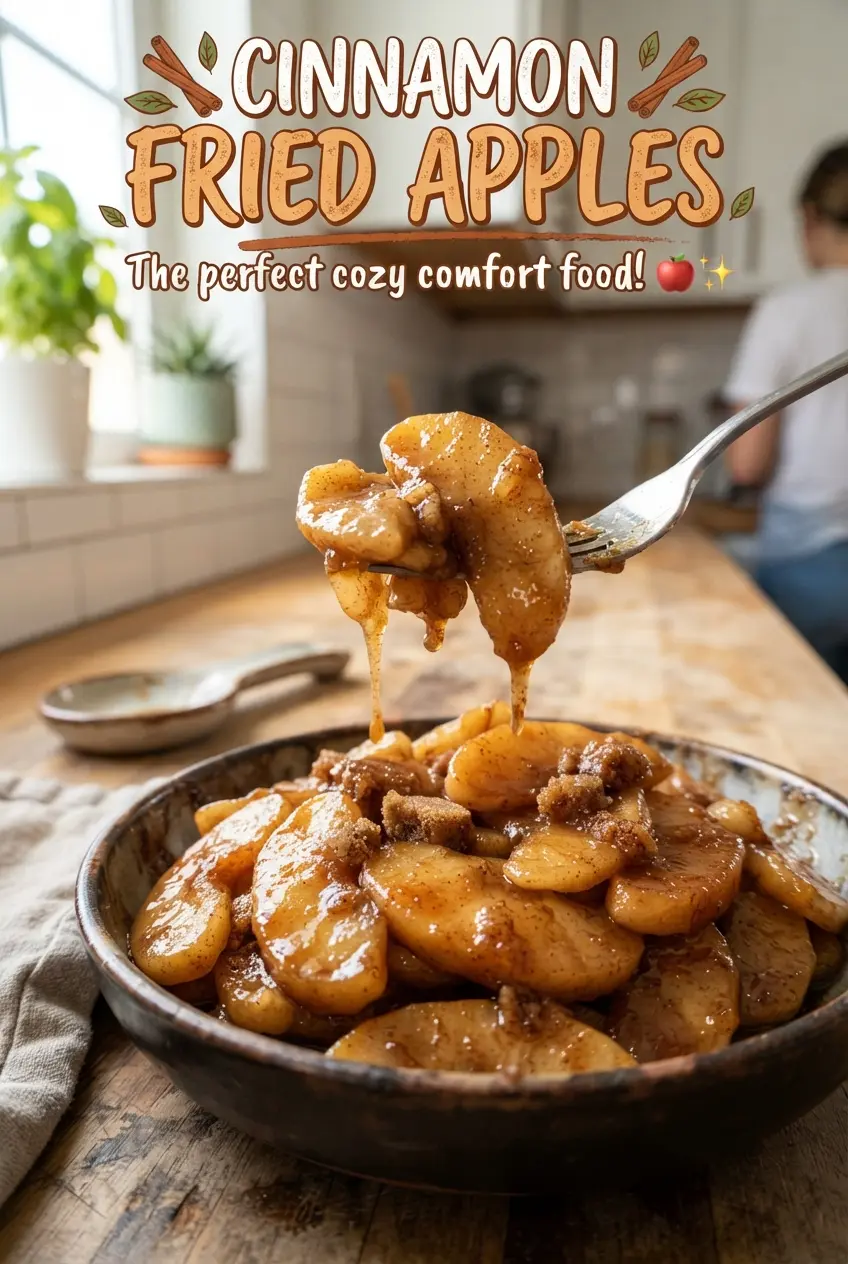
Cinnamon Fried Apples
Ingredients
Equipment
Method
- Melt the butter in a large cast iron skillet over medium heat until it turns glossy and lightly foamy, 1-2 minutes (visual cue: butter looks melted and fluid).
- Add the firm apples, brown sugar, ground cinnamon, nutmeg, and salt; stir to coat so every slice is evenly dusted (visual cue: sugar clings to apples).
- Cover the skillet and cook at medium heat for 8-10 minutes, stirring occasionally, until the apples are just tender (visual cue: edges soften but slices still hold shape).
- Whisk the cornstarch with the water, then pour it into the skillet while stirring (visual cue: slurry disappears into the liquid).
- Simmer for 2-3 minutes until the sauce thickens and turns glossy (visual cue: syrup coats the spoon and looks shiny).
- Stir in the vanilla extract and serve warm (visual cue: fragrant steam rises and the sauce clings to the apples).