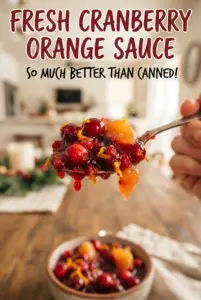
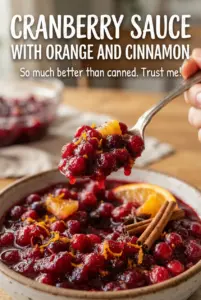
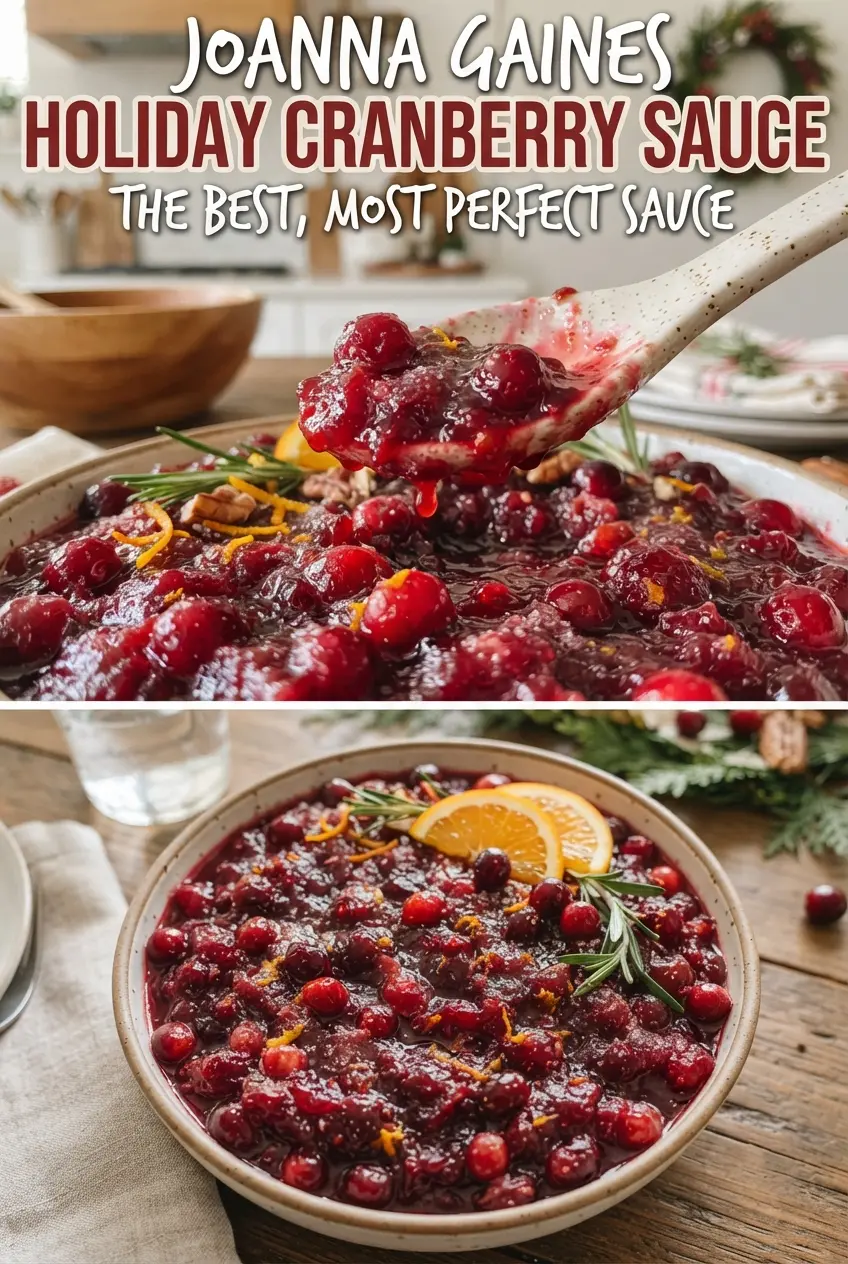
Chunky cranberry sauce with orange zest and toasted pecans is the kind of side that quietly steals attention from the main course. The berries burst into a glossy, jewel-toned sauce, the citrus keeps it bright, and the pecans add a little crunch right at the end so every spoonful feels fresh. It’s the sort of recipe people go back for because it tastes homemade in a way the canned stuff never can.
This version gets its balance from using both white sugar and brown sugar. The white sugar keeps the tart cranberries in check, while the brown sugar adds a deeper, molasses note that plays nicely with the cinnamon and ginger. Boiling the juices and spices first helps the sugar dissolve completely, which means the cranberries cook evenly instead of tasting sharp and under-sweet. Stirring in the orange zest after the pan comes off the heat keeps the citrus aroma bright instead of cooked down.
Below, you’ll find the small details that matter here, including when to add the pecans so they stay crisp and how to adjust the sauce if you like it looser or thicker.
The sauce thickened up beautifully and the orange zest made it taste fresh instead of heavy. I stirred in the pecans right before serving and they stayed crunchy even after sitting out on the table.
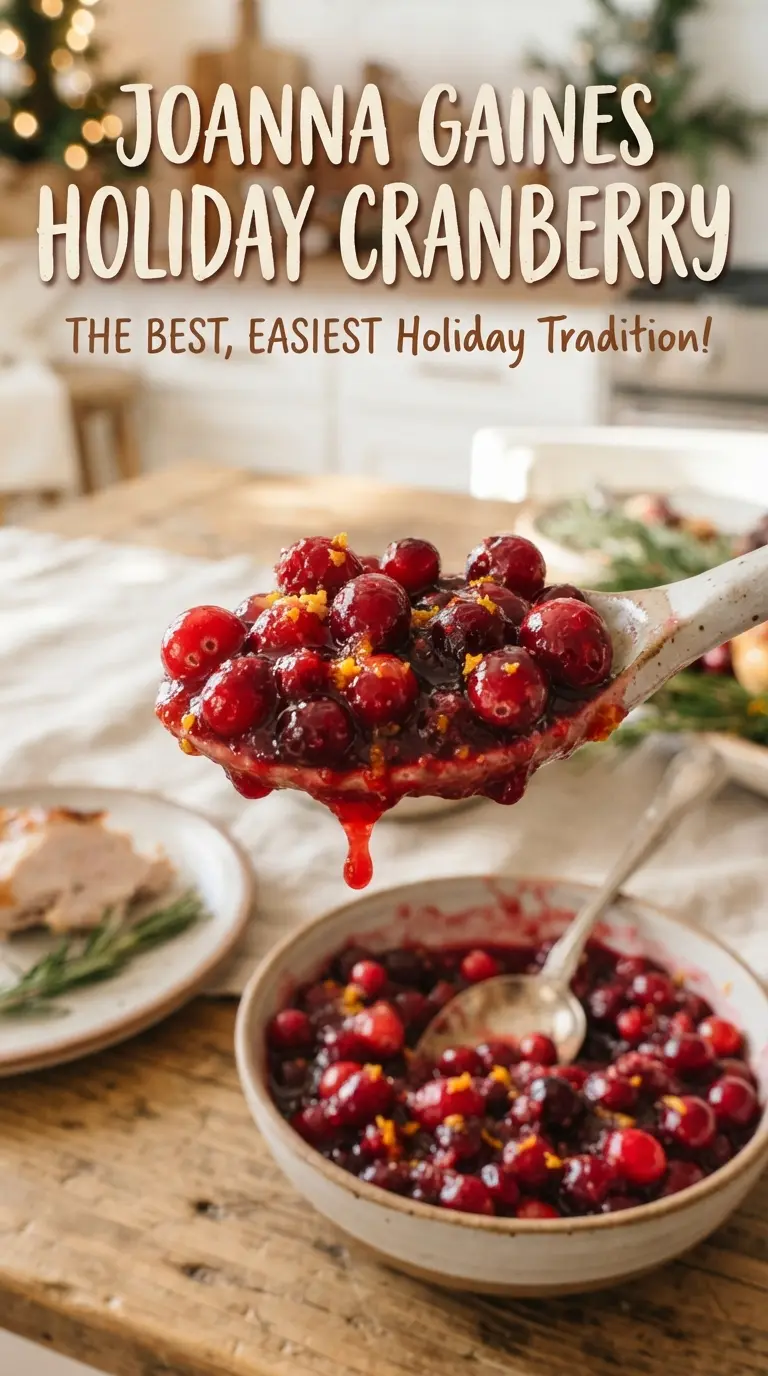
Joanna Gaines Holiday Cranberry Sauce brings bright citrus, warm spice, and crunchy pecans together in one bowl. Save it for the holiday table when you want a make-ahead sauce that still tastes fresh.
The Trick to Cranberry Sauce That Tastes Bright, Not Flat
The biggest mistake with cranberry sauce is cooking the berries in liquid that never really gets enough heat at the start. If the sugar doesn’t dissolve first, you can end up with a grainy sauce and berries that taste harsh even after they burst. Bringing the orange juice, both sugars, cinnamon, ginger, and salt to a full boil before the cranberries go in gives the sauce a head start. That first boil matters more than people think.
Another thing that changes the result is when you stop cooking. Cranberries thicken as they cool, so the sauce should look a little looser in the pan than you want it on the table. If it looks jammy and tight while it’s still hot, it will set up almost too firmly in the fridge. Pull it from the heat when most berries have popped and the liquid coats the spoon with a glossy sheen.
- Fresh cranberries — Fresh berries hold their shape better than dried ones and give you that mix of burst fruit and whole pieces. Frozen cranberries also work; don’t thaw them first, just add them straight to the pot and expect an extra minute or two of simmering.
- Orange juice and zest — The juice adds sweetness and enough acidity to keep the sauce lively, while the zest gives a stronger orange aroma than juice alone can carry. Use a real orange for the zest; bottled juice won’t give you the same brightness.
- Brown sugar plus white sugar — White sugar keeps the cranberry flavor clean, and brown sugar adds a deeper note that makes the sauce taste a little more rounded. If you only have one, use all white sugar for a sharper finish or all brown sugar for a warmer, less tart sauce.
- Pecans — Toasted pecans belong here because they bring a buttery crunch that cuts through the soft fruit. Stir them in just before serving so they don’t soften in the fridge.
What Each Ingredient Is Actually Doing in This Recipe
- Primary ingredient (the star) — Quality matters most. Choose the best you can find.
- Cooking medium (oil, butter, or broth) — This carries flavors and prevents dryness.
- Seasonings (salt, pepper, spices, herbs) — Layer flavors so nothing overpowers. Build depth gradually.
- Aromatics (garlic, onion, herbs) — Cook with fat to bloom flavors. Become the foundation.
- Supporting ingredients — Complement the main ingredient without overpowering it.
- Sauce or liquid (if applicable) — Brings flavors together. Balance richness with acid.
- Acid (lemon, vinegar, wine, or other) — Brightens and prevents flat-tasting results.
- Final finish (garnish, glaze, or sauce) — Prevents one-dimensional taste and adds visual appeal.
How to Build the Sauce So It Stays Chunky and Glossy
Start With the Sweetened Liquid
Put the orange juice, both sugars, cinnamon, ginger, and salt into the saucepan and bring it all the way to a boil. You want the sugar fully dissolved before the cranberries go in, because undissolved sugar can leave the sauce gritty and uneven. Once the liquid looks clear and bubbling around the edges and across the center, you’re ready for the fruit.
Cook Until the Berries Burst on Their Own
Stir in the cranberries and lower the heat to a steady simmer. They should begin to pop in the pot after a few minutes, and the sauce will thicken as more of them break down. If the pot boils too hard, the liquid can reduce too quickly and the berries at the bottom may split before the rest soften, so keep the heat at a gentle simmer once the cranberries are in.
Finish for Freshness, Then Let It Cool
Take the pan off the heat and stir in the orange zest right away. That keeps the citrus oil fragrant instead of cooked off. Let the sauce cool before you chill it, because it thickens as it rests and the flavor settles into the fruit. Stir in the toasted pecans just before serving so they keep their crunch.
How to Adapt This for a Bigger Crowd or a Different Diet
Dairy-Free and Naturally Gluten-Free
This recipe already fits both diets as written, which is part of why it works so well on a holiday table. Just check your orange juice and spices if you’re buying packaged versions, then keep the method the same. The texture and flavor stay unchanged.
Cranberry Sauce Without Nuts
Leave out the pecans if you need a nut-free version, and add them only to the serving bowl for everyone else at the table. The sauce itself stays bright and chunky without them. You lose the toasted crunch, but the fruit still carries the dish.
Less Sweet, More Tart
Cut the white sugar back by 2 tablespoons if you prefer a sharper cranberry flavor. The sauce will taste brighter and a little less jammy, which works well next to rich roasts or stuffing. Don’t reduce the sugar too far, though, or the berries can taste harsh instead of balanced.
Storage and Reheating
- Refrigerator: Store covered for up to 5 days. It will thicken more as it chills, and the pecans will soften slightly over time.
- Freezer: The cranberry base freezes well for up to 2 months, but freeze it before adding pecans if possible. Thaw overnight in the fridge, then stir in fresh toasted nuts before serving.
- Reheating: Warm it gently on the stove over low heat or serve it cold straight from the fridge. If it seems too thick after chilling, stir in a spoonful of orange juice rather than boiling it hard, which can make the texture loose and dull the flavor.
Answers to the Questions Worth Asking
Joanna Gaines Holiday Cranberry Sauce
Ingredients
Equipment
Method
- Combine the sugar, brown sugar, orange juice, ground cinnamon, ground ginger, and salt in a saucepan over medium-high heat; bring to a boil, stirring until the sugars dissolve. Keep it at a steady boil and watch for bubbling at the edges.
- Add the fresh cranberries and simmer for 10-12 minutes until the berries burst and the sauce thickens. The mixture should look glossy and slightly jammy as you stir.
- Remove the saucepan from the heat and stir in the orange zest. Visually, the sauce will turn brighter and fragrant as the zest disperses.
- Cool the sauce, then chill until serving. The surface should thicken and hold its shape when spooned.
- Just before serving, stir in the toasted and chopped pecans. Look for the pecans staying distinct and crunchy rather than softened.