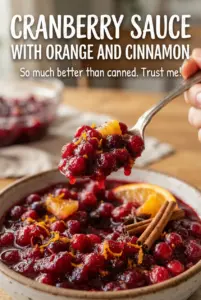
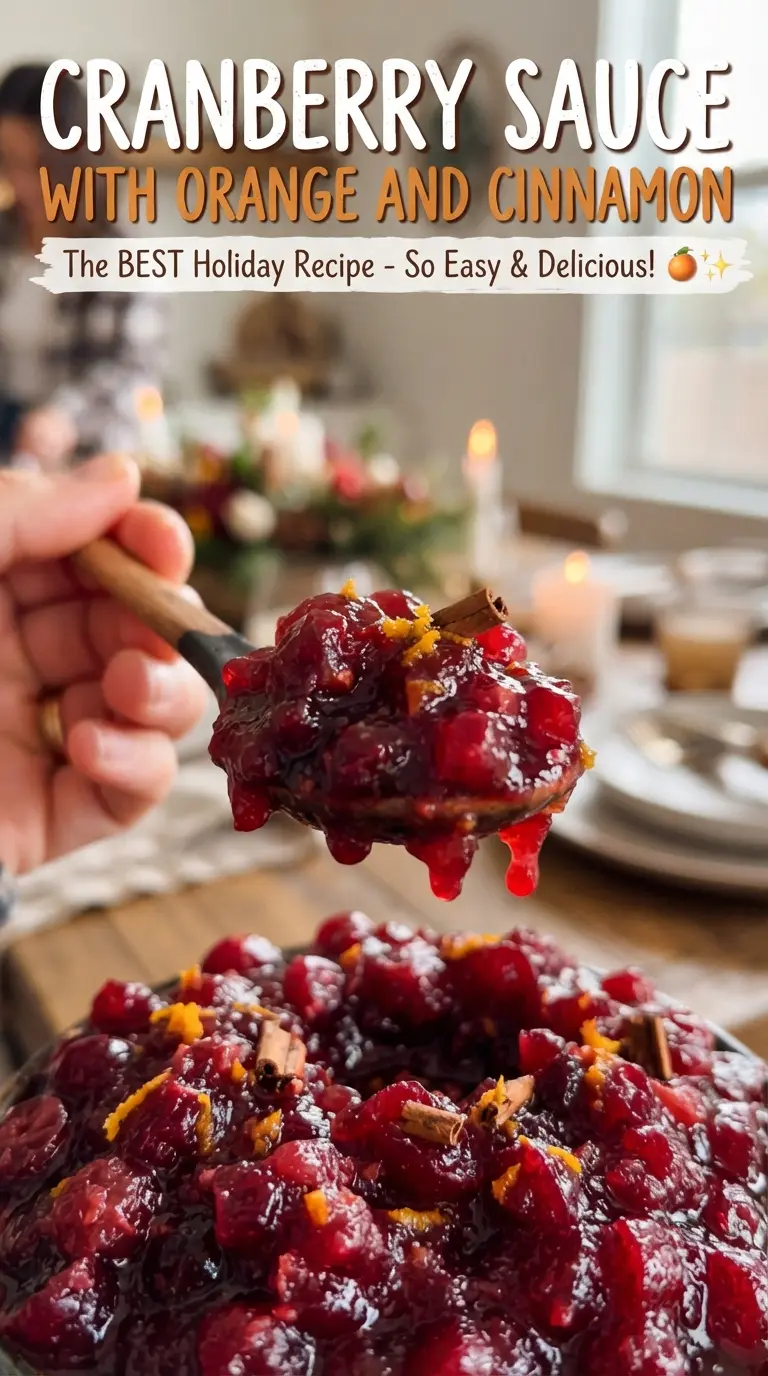
Thick, glossy cranberry sauce with orange and cinnamon has a way of stealing the attention from everything else on the table. The berries burst just enough to leave some texture, the citrus keeps it bright, and the cinnamon rounds out the sharp cranberry bite without turning it heavy. This version lands in that sweet spot between fresh and spiced, which is why it earns a place alongside roast turkey, pork, or a simple holiday cheese board.
The trick is building the flavor in the liquid before the cranberries go in. Orange juice, water, cinnamon sticks, ground cinnamon, and a pinch of salt all simmer together first, so the sauce tastes layered instead of just sweet. The zest goes in at the end, after the heat comes off, which keeps the orange aroma lively instead of cooked off. That last step matters more than people think.
If you’ve only ever had cranberry sauce from a can, this one will feel like a different dish entirely. Below, I’ve included the small timing details that keep it thick but not jammy, plus a few ways to adjust the sweetness or make it ahead without losing that fresh citrus finish.
The sauce thickened up beautifully and the orange flavor came through without overpowering the cranberries. I made it the day before Thanksgiving and it set up perfectly in the fridge.
Save this cranberry sauce with orange and cinnamon for the moment you want a bright, make-ahead side that sets up thick and glossy.
The Part That Keeps Cranberry Sauce from Tasting Flat
The biggest mistake with cranberry sauce is treating the berries like they’re the whole story. They’re tart and bright, but on their own they can taste one-note if the liquid underneath doesn’t pull some weight. Here, the orange juice, cinnamon sticks, and pinch of salt create a base that tastes warm and rounded before the cranberries ever hit the pan.
That first boil matters. It dissolves the sugar, wakes up the spices, and gives the cranberries a hot bath the second they go in, which helps them burst evenly instead of sitting in lukewarm syrup. If your sauce ever turns thin or pale, it’s usually because the pan never came fully to a boil before the fruit was added. Let it bubble, then simmer until the berries collapse and the liquid looks slightly syrupy.
- Fresh cranberries — Fresh berries hold their shape until they burst, which gives the sauce that mix of whole berries and jammy pieces. Frozen cranberries also work; add them straight from the freezer without thawing.
- Orange juice and zest — The juice sweetens and softens the cranberry sharpness, while the zest brings the orange aroma back at the end. Bottled juice works in a pinch, but fresh orange juice tastes cleaner here.
- Cinnamon sticks and ground cinnamon — The sticks infuse the sauce as it simmers, and the ground cinnamon gives you immediate spice in the liquid. Don’t skip the sticks if you want a deeper, quieter warmth instead of a cinnamon-sugar flavor.
- Sugar — This doesn’t just sweeten; it helps the sauce take on that glossy, spoonable texture. You can reduce it slightly if you like a sharper sauce, but cutting it too much makes the cranberries taste harsh.
- Water — The water keeps the syrup from becoming too concentrated before the berries release their own juices. If you swap in all orange juice, the sauce can turn thicker and sweeter, but it also risks tasting heavy.
What Each Ingredient Is Actually Doing in This Recipe
- Primary ingredient (the star) — Quality matters most. Choose the best you can find.
- Cooking medium (oil, butter, or broth) — This carries flavors and prevents dryness.
- Seasonings (salt, pepper, spices, herbs) — Layer flavors so nothing overpowers. Build depth gradually.
- Aromatics (garlic, onion, herbs) — Cook with fat to bloom flavors. Become the foundation.
- Supporting ingredients — Complement the main ingredient without overpowering it.
- Sauce or liquid (if applicable) — Brings flavors together. Balance richness with acid.
- Acid (lemon, vinegar, wine, or other) — Brightens and prevents flat-tasting results.
- Final finish (garnish, glaze, or sauce) — Prevents one-dimensional taste and adds visual appeal.
How to Cook It Until the Berries Burst and the Sauce Glosses Over
Build the Spiced Syrup First
Combine the sugar, orange juice, water, cinnamon sticks, ground cinnamon, and salt in the saucepan and bring it to a real boil. You want the sugar fully dissolved and the liquid looking clear and active, not just steaming at the edges. If you add the cranberries too early, the sauce can taste grainy because the sugar never fully melts into the base.
Cook Until the Cranberries Pop
Stir in the cranberries and keep the heat at a steady simmer. Within a few minutes, you’ll hear little pops as the skins split. Cook for 10 to 12 minutes total, stirring now and then, until most of the berries have burst and the sauce looks thick but still loose enough to spoon; it will tighten as it cools, so don’t cook it down to a paste in the pan.
Finish with the Orange Zest
Take the pan off the heat before adding the zest. That keeps the orange oils bright instead of cooked away, and it gives the sauce a fresher top note than if the zest simmered the whole time. Leave the cinnamon sticks in while it cools if you want the spice to deepen, then pull them out before chilling.
Chill Before You Judge the Texture
Cranberry sauce is misleading when it’s hot. It always looks thinner than it will be once cold, so don’t keep cooking just to chase thickness. Pour it into a bowl, let it cool, and refrigerate it until set; that’s when you’ll get the thick, glossy texture that slices cleanly on the plate.
Three Ways to Adjust the Sweetness, Spice, or Make-Ahead Plan
Less Sweet, More Tart
Cut the sugar to 1/2 cup if you like cranberry sauce with more edge and less dessert-like sweetness. The sauce will still thicken, but it will taste sharper and a little brighter, which works well next to rich dishes like roast turkey or ham.
Dairy-Free and Naturally Gluten-Free
This recipe already fits both dairy-free and gluten-free cooking as written. The only thing to watch is your orange juice if you’re using a blended or flavored brand; stick with plain juice so the sauce stays clean and uncomplicated.
Cranberry Sauce with a Deeper Spice Note
Add a strip of orange peel or a small pinch of ground cloves if you want the sauce to lean more warmly spiced. Go easy with cloves; they take over fast and can drown out the cranberry and orange balance.
Storage and Reheating
- Refrigerator: Store in a covered container for up to 10 days. It will set up more firmly as it chills, so expect a thicker texture the next day.
- Freezer: It freezes well for up to 2 months. Cool it completely, pack it in an airtight container, and leave a little headspace because it may expand slightly as it freezes.
- Reheating: Serve it cold or let it come to room temperature. If you want it warm, reheat gently over low heat or in short microwave bursts; high heat can make it loose and dull the citrus.
Answers to the Questions Worth Asking
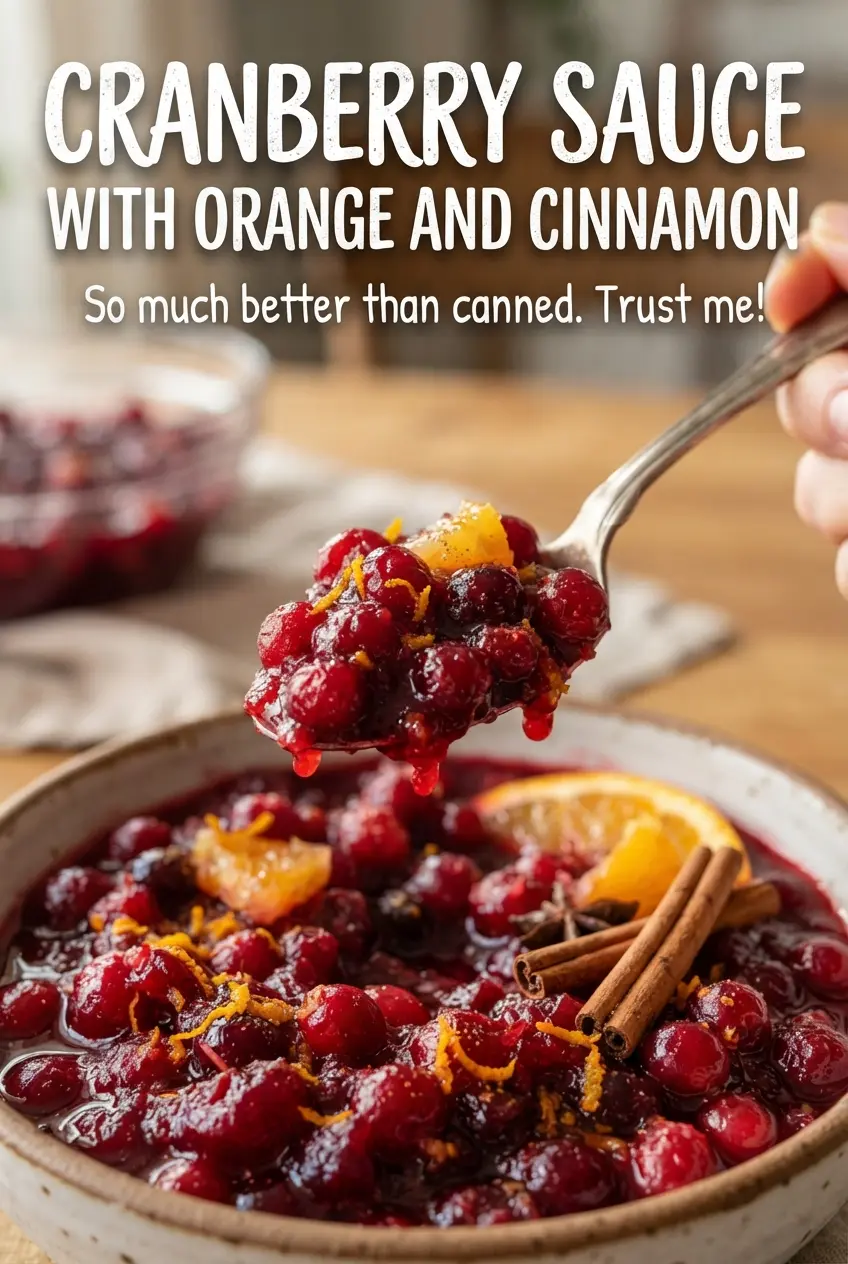
Cranberry Sauce with Orange and Cinnamon
Ingredients
Equipment
Method
- Combine sugar, orange juice, water, cinnamon sticks, ground cinnamon, and salt in a saucepan and bring to a boil (medium-high heat). You should see steady bubbling across the surface within 2–3 minutes.
- Add fresh cranberries and reduce to a gentle simmer. Simmer for 10–12 minutes, stirring occasionally, until the berries burst and the sauce thickens slightly.
- Remove from heat and stir in orange zest. The sauce will look glossy and more fragrant right after mixing.
- Leave the cinnamon sticks in the sauce as it cools, then remove them once cooled. The flavor will intensify as it sets.
- Chill before serving. Cover and refrigerate until cold and thick, at least 1–2 hours.