Glossy, crisp-skinned roast chicken with sweet-tart cranberries tucked into the pan is the kind of dinner that looks like you worked harder than you did. The skin turns deep golden and lacquered from the maple-Dijon glaze, while the fruit breaks down just enough to turn the roasting juices into a bright, spoonable sauce. It’s the kind of roast that gets carved at the table and makes everyone keep reaching for “just one more” piece of skin.
What makes this version work is the timing. The chicken roasts first on its own so the skin has time to dry out and start browning before the glaze goes on. If you brush maple syrup on too early, it can burn before the meat is cooked through. Adding the cranberries later keeps them from collapsing completely, so you get a sauce with some texture instead of a jammy puddle.
Below, I’ll walk you through the point where the glaze goes on, why the orange and garlic matter inside the cavity, and how to keep the pan sauce from tasting flat. The little details matter here, and they’re the difference between a decent roast chicken and one you’ll want to make again.
The glaze turned out shiny and the cranberries popped just enough to thicken the pan sauce without making it sweet. I roasted mine a few extra minutes to get the skin even crispier, and the orange-garlic inside the chicken kept everything tasting balanced.
Save this cranberry maple roast chicken for a roast that finishes with glossy skin and a tart-sweet pan sauce.
The glaze waits until the skin has started to crisp
The biggest mistake with a maple-glazed roast chicken is putting the sweet part on too soon. Maple syrup browns fast, and if it goes into the oven from the start, you’ll get dark patches before the chicken has finished cooking. This recipe fixes that by letting the bird roast plain first, which gives the skin time to dry and the fat time to render before the glaze enters the picture.
The second thing that matters is the pan setup. The red onion and cranberries aren’t just garnish; they sit in the hot roasting juices and catch the drippings so the glaze doesn’t pool and burn on the bottom of the pan. If your chicken skin is pale at the halfway point, give it the full first roast before glazing. That initial head start is what keeps the final finish crisp instead of sticky.
What each ingredient is actually doing in this roast
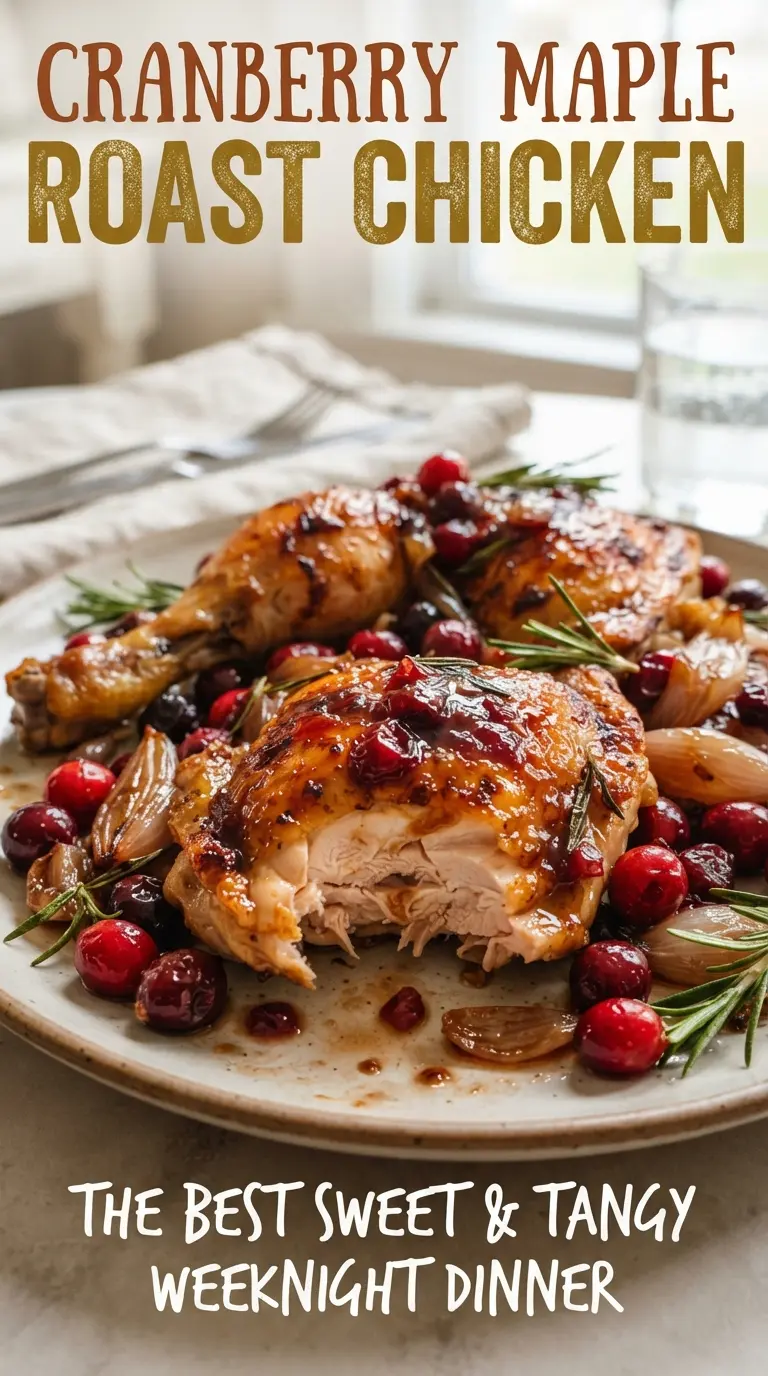
- Whole chicken — A 5-pound bird cooks in the right window for this method: long enough to brown, short enough to stay juicy. Patting it dry is not optional here, because moisture on the skin turns to steam and blocks browning.
- Butter and rosemary — Softened butter under and over the skin helps the chicken brown and keeps the meat from drying out. Fresh rosemary perfumes the fat; dried rosemary works in a pinch, but crush it first so it doesn’t read woody.
- Orange and garlic — They season the chicken from the inside as it roasts, which keeps the pan sauce from tasting one-note. Halving the garlic crosswise exposes more surface area, so the cloves mellow and sweeten instead of staying sharp.
- Maple syrup and Dijon — This is the glaze that gives you shine and balance. Maple brings the lacquer; Dijon keeps it from tasting flat. If you swap the mustard for plain yellow mustard, the glaze gets harsher and loses depth.
- Cranberries and chicken broth — Cranberries cut the richness and burst into the pan juices, while broth gives you enough liquid to build sauce around the bird. Fresh cranberries work best because they hold their shape until the end; frozen ones can work straight from the freezer, but expect a looser, softer sauce.
Building the roast in two stages keeps the skin crisp
Season and butter the bird
Rub the chicken all over with salt and pepper, then work the rosemary butter under the skin and over the surface. Under the skin is where the flavor pays off, because it seasons the meat directly and helps the breast stay moist. If the skin tears, don’t panic; just smooth it back into place so the butter stays in contact with the meat.
Start the roast with no glaze
Set the chicken in the pan with the onion wedges around it and tuck the orange and garlic into the cavity. Roast it at 425°F for 50 minutes before touching the glaze. That first stretch is what builds color and renders the fat, and if your oven runs hot, start checking for deep golden skin around the 45-minute mark.
Brush, add cranberries, and finish to temperature
Whisk the maple syrup and Dijon together, brush on half, then scatter the cranberries into the pan with the broth. The berries should look glossy and start to split as they cook; that’s the signal that the sauce is happening. Brush on the rest of the glaze during the final roast, and pull the chicken when the thigh hits 165°F instead of guessing by color alone.
Rest before carving
Let the chicken sit for 15 minutes before carving. That pause keeps the juices from running straight onto the cutting board and gives the glaze time to settle into the skin. Spoon the pan sauce over the sliced meat right before serving so the skin stays crisp at the table.
How to adapt this for different tables and different pan sizes
Make it dairy-free
Swap the butter for a good dairy-free butter substitute or a mix of olive oil and a little extra rosemary. Olive oil gives you less of the rich, browned-butter note, but the chicken still roasts well and the skin can crisp nicely if you keep the bird dry.
Use dried cranberries when that’s what you have
Dried cranberries won’t break down the same way, so add them only for the last 10 minutes and use a little extra broth. You’ll get sweeter, chewier bites rather than a true pan sauce, which is fine if you want less tartness.
Cook a smaller bird or split breasts
A smaller chicken will finish sooner, so start checking temperature earlier and glaze it once the skin has taken on color. Bone-in breasts can work too, but they don’t give you the same built-in pan sauce, so keep an eye on them and pull them as soon as they hit temperature to avoid dry meat.
Storage and Reheating
- Refrigerator: Store leftovers in an airtight container for up to 4 days. The skin softens, but the meat stays flavorful.
- Freezer: The carved chicken and sauce freeze well for up to 2 months. Freeze in portions with some pan sauce so the meat doesn’t dry out when reheated.
- Reheating: Reheat covered in a 325°F oven with a spoonful of broth or sauce until warmed through. The common mistake is blasting it in the microwave, which makes the chicken rubbery and turns the glaze tacky instead of glossy.
Answers to the questions worth asking
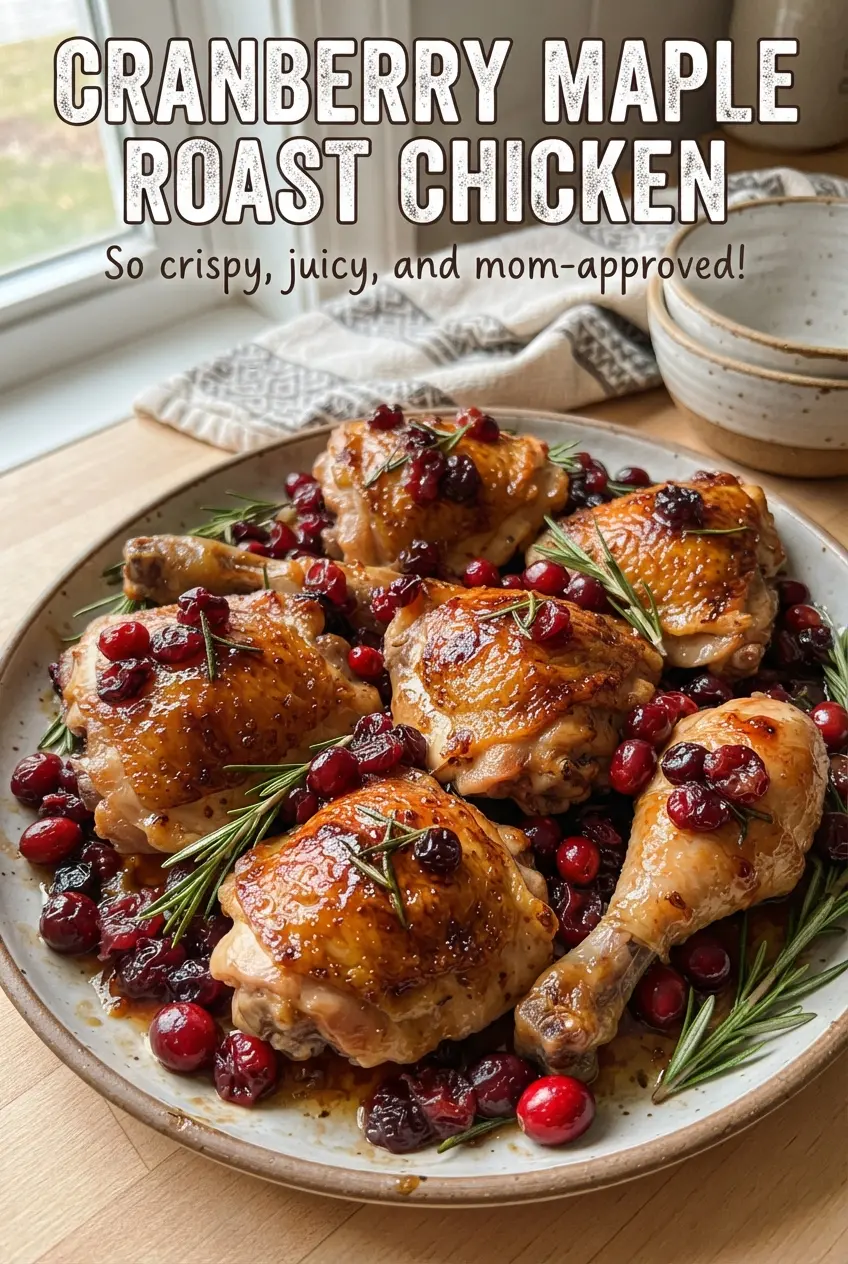
Cranberry Maple Roast Chicken
Ingredients
Equipment
Method
- Preheat the oven to 425°F and place a roasting pan inside to warm slightly if you have one.
- Pat the whole chicken dry, then season inside and out with salt and black pepper.
- Mix softened butter with chopped fresh rosemary, then rub it under and over the skin so the chicken is evenly coated.
- Stuff the cavity with orange halves and halved garlic, then set the chicken in a roasting pan with red onion wedges around it.
- Roast for 50 minutes, until the skin is starting to turn golden.
- Whisk maple syrup and Dijon mustard, then brush half of the glaze over the chicken.
- Add fresh cranberries to the pan with chicken broth, then return to the oven.
- Roast for 25-30 minutes more, brushing with the remaining glaze, until the thigh reaches 165°F and the skin looks lacquered.
- Rest the chicken for 15 minutes before carving to let the juices settle.
- Carve the chicken and spoon the cranberry pan sauce over the top for glossy coverage.