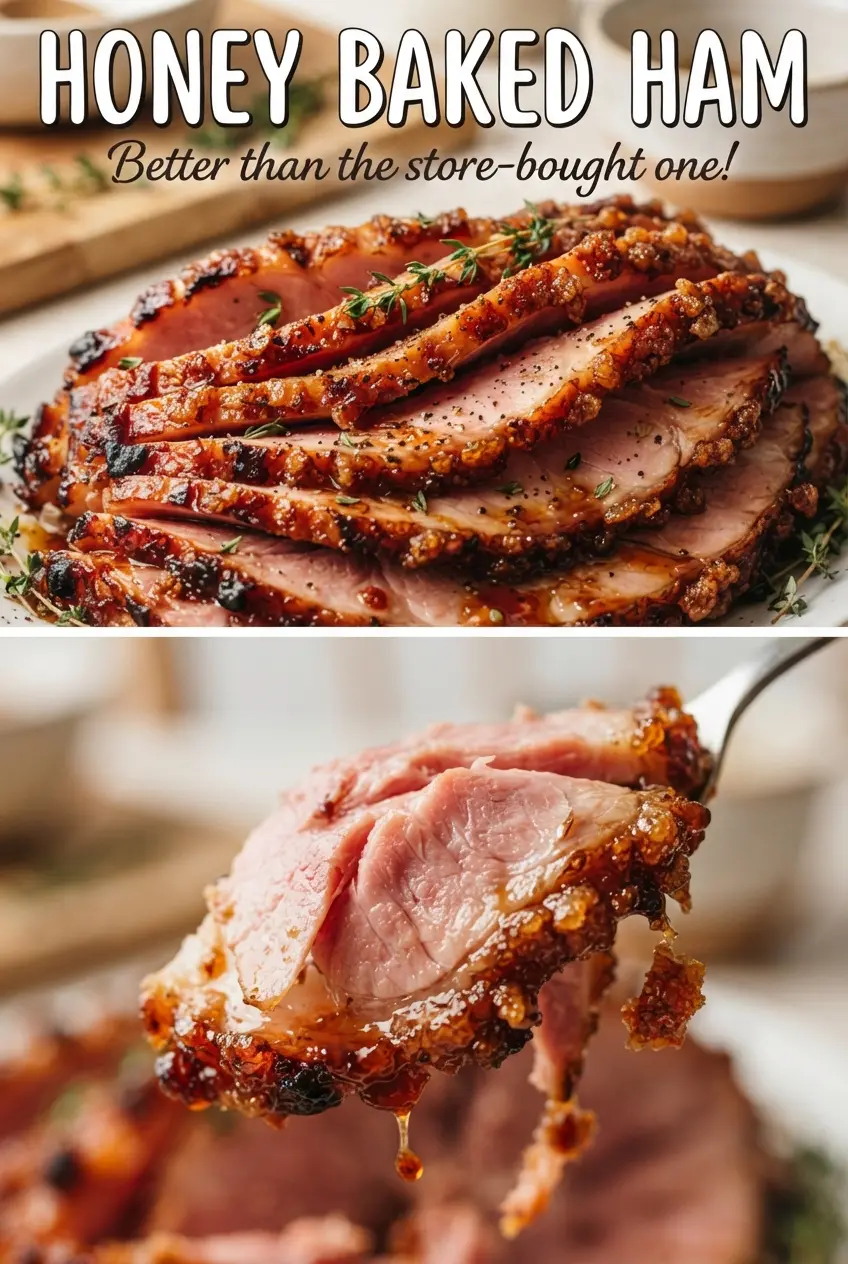
Honey baked ham comes out with a crackly, caramelized crust and slices that stay juicy all the way through. The outside turns sticky and deeply browned while the spiral cuts catch every bit of the honey, butter, and warm spice coating. It looks like a centerpiece, but the method is straightforward once you understand the two things that matter most: keeping the ham covered long enough to heat through, then giving the glaze a short, hot finish so it sets instead of sliding off.
This version leans on both honey butter and a spiced sugar crust, which gives you that glossy, bakery-style finish without needing a complicated glaze reduction. The butter helps the honey spread evenly, while the sugar mixture clings to the cut edges and caramelizes under high heat. The key is timing. If you glaze too early, the sugars can scorch before the ham is hot inside. If you glaze too late, the crust never gets that shattering edge.
Below, I’ll walk through the exact moment to uncover the ham, how to build the crust in layers, and the small detail that keeps the slices from drying out while the top turns crisp.
The crust turned out crackly and caramelized without burning, and the ham stayed juicy even after the second and third glazing. My family kept slicing off “just one more piece” until the platter was empty.
Love the crackly honey-spiced crust on this baked ham? Save it to Pinterest for a holiday main that glazes up beautifully every time.
The Reason the Sugar Crust Stays Crisp Instead of Sliding Off
The biggest mistake with glazed ham is treating the whole thing like a single sauce job. If you brush on all the honey and sugar too early, the coating melts, runs into the pan, and never really becomes a crust. The ham needs time under foil first so the center warms through gently. After that, the glaze has a short, hot window to caramelize on the surface where it belongs.
Spiral-sliced ham helps here because all those cuts give the honey butter and spiced sugar places to settle. That said, the cuts also mean the ham can dry out if you overbake it. Pull it when the internal temperature reaches 140F and let it rest. The carryover heat finishes the job while the juices settle back into the slices.
What Each Ingredient Is Doing in This Ham
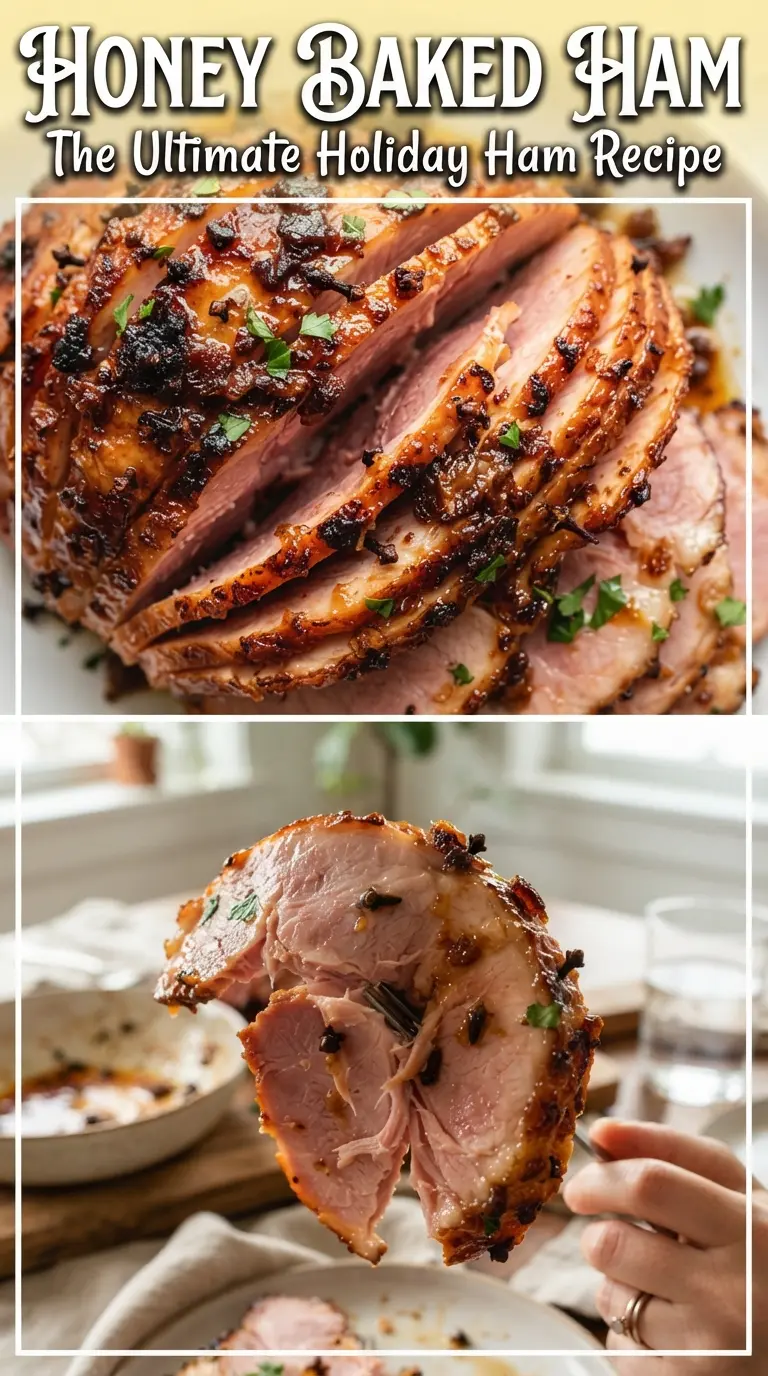
- Bone-in spiral-sliced ham — This is the right base for a ham that serves neatly and stays juicy. Bone-in hams bring better flavor and a little more protection against drying out than boneless versions. Spiral slicing lets the glaze slip into the layers, which is what gives you that classic honey baked look and taste.
- Honey and butter — This pair creates the glossy coating that helps the sugar stick. Honey alone can be too thin; butter gives it body and helps it brush on in an even layer. If you need a swap, use maple syrup in place of honey, but expect a darker, less floral finish.
- Granulated sugar and brown sugar — The granulated sugar drives the crisp crust, while the brown sugar adds depth and a slightly softer caramel note. Don’t replace both with just one type unless you have to, because the blend is what gives the topping its balance.
- Cinnamon, cloves, ginger, nutmeg, allspice, and paprika — These spices keep the crust from tasting flat or one-dimensional. The warm spices echo the sweetness, and the paprika adds color and a tiny bit of savory balance. Freshly opened spices matter here more than fancy ones do; stale spices lose the edge that makes the crust taste finished.
How to Heat, Glaze, and Build the Crust in Layers
Covering the Ham First
Set the ham cut-side down in a roasting pan and cover it tightly with foil. That covering traps steam and protects the exposed slices while the center warms to temperature. If the foil is loose, the edges dry out before the inside is hot enough, so press it down around the pan well. Bake at 325F until the ham reaches about 120F inside, which gives you a head start before the glaze goes on.
Mixing the Glaze Components
Melt the honey and butter together just until the butter disappears, then mix the sugars and spices in a separate bowl. Keeping them separate makes the glaze easier to apply in even layers, instead of dumping a wet paste all over the ham at once. The sugar mixture should look sandy and fragrant, not clumped. If it gets wet too soon, it won’t cling as well to the slices.
Building the Crust Under High Heat
Remove the foil, brush the ham generously with the honey butter, then pat the spiced sugar over the top and into the slices. Raise the oven to 400F so the sugar can caramelize fast before the ham overcooks. Repeat the brushing and sugaring two more times. If the coating starts to darken too quickly, pull the ham out for a minute between coats rather than lowering the heat too much.
Finishing and Resting
Bake until the crust is deep golden, crackly, and set, and the ham reaches 140F. That final temperature matters because the ham is already fully cooked; you’re warming and glazing it, not cooking it from raw. Let it rest for 15 minutes before slicing. Resting keeps the juices in the meat instead of spilling onto the board the second you cut in.
How to Adapt This for Smaller Crowds, Different Sweeteners, or Extra Spice
Use a boneless ham when that’s what you have
Boneless ham will still work, but it won’t have the same deep flavor or dramatic slices from a bone-in roast. Keep the glaze the same and watch the temperature closely, since boneless pieces tend to heat a little faster and dry out sooner at the edges.
Make it dairy-free
Swap the butter for a plant-based butter that melts cleanly. You’ll still get a glossy coating, though the flavor will be a little less rich and the glaze may set with a slightly lighter sheen.
Lean into a sharper, more aromatic crust
Add an extra pinch of cloves and allspice if you want the ham to taste more like a holiday centerpiece than a simple glazed roast. Go light, though. Those spices take over fast, and too much can turn the crust medicinal instead of warm.
Storage and Reheating
- Refrigerator: Store leftovers for up to 4 days. The crust softens a bit in the fridge, but the flavor stays excellent.
- Freezer: Freeze sliced ham tightly wrapped for up to 2 months. Freeze in smaller portions so you can thaw only what you need.
- Reheating: Warm covered in a 300F oven with a splash of water or pan juices until just heated through. High heat dries out the slices and burns the sugar crust, which is the easiest mistake to make with leftovers.
Answers to the Questions Worth Asking
Honey Baked Ham
Ingredients
Equipment
Method
- Preheat the oven to 325F, place the ham cut-side down in a roasting pan, and cover tightly with foil to trap moisture.
- Bake at 325F for 12-14 minutes per pound, until the center reaches 120F when checked in the thickest part.
- Melt the honey and butter together until smooth and pourable.
- In a separate bowl, mix the granulated sugar and brown sugar with the cinnamon, cloves, ginger, nutmeg, allspice, and paprika until evenly combined.
- Remove the foil, brush the ham generously with the honey-butter, and pat on a layer of the spiced sugar.
- Raise the oven to 400F and bake for 5 minutes, until the sugar begins to set and look glossy.
- Brush again with honey-butter, pat on another layer of spiced sugar, and bake 5 minutes at 400F.
- Brush one more time with honey-butter, pat on the remaining spiced sugar, and bake until the crust is deep golden and crackly and the ham reaches 140F.
- Rest the ham for 15 minutes before serving so the juices settle and the crust stays crackly.