Juicy grilled chicken starts with a marinade that actually seasons the meat all the way through, not one that just coats the outside and leaves the center bland. This one hits the balance I keep coming back to: salty, tangy, garlicky, and just sweet enough to help the chicken brown without burning on the grill. The result is chicken that comes off tender with clear grill marks and enough flavor to stand on its own.
The trick is in the balance of acid, salt, and fat. Lemon juice and soy sauce do the heavy lifting for flavor, olive oil carries everything across the surface, and Dijon helps the marinade cling instead of sliding off the chicken. Brown sugar isn’t there to make it sweet; it helps the grill finish with a deeper color and rounds out the sharp edges from the lemon and mustard.
Below, I’ll walk through the part that matters most: how long to marinate, why the grill needs to be hot but not scorching, and what changes when you’re using breasts, thighs, or bone-in pieces. There’s also a storage note for meal prep and a few swaps that still keep the chicken juicy.
The marinade gave the chicken such a clean, balanced flavor, and after 6 hours it grilled up juicy with those nice caramelized edges instead of drying out.
Save this grilled chicken marinade for juicy, well-seasoned chicken with caramelized grill marks every time.
The Reason This Marinade Stays Juicy on the Grill
Chicken dries out when the surface gets too aggressive before the inside has time to catch up. A good marinade slows that down by adding salt for seasoning, oil for protection, and a little sugar to encourage browning instead of a harsh, scorched exterior. The biggest mistake people make is using too much acid for too long; lemon juice is useful here, but if you leave chicken in a super acidic mix for days, the outside turns soft and a little stringy.
This formula stays in the sweet spot. Soy sauce seasons fast, Worcestershire adds depth, Dijon helps everything emulsify, and the garlic and dried herbs hold up to heat without turning muddy. If you’re grilling breasts, the marinade gives you a buffer against overcooking. If you’re grilling thighs or bone-in pieces, it helps the skin-side and surface pick up color without drying out before the center is done.
What Each Ingredient Is Doing in the Bowl
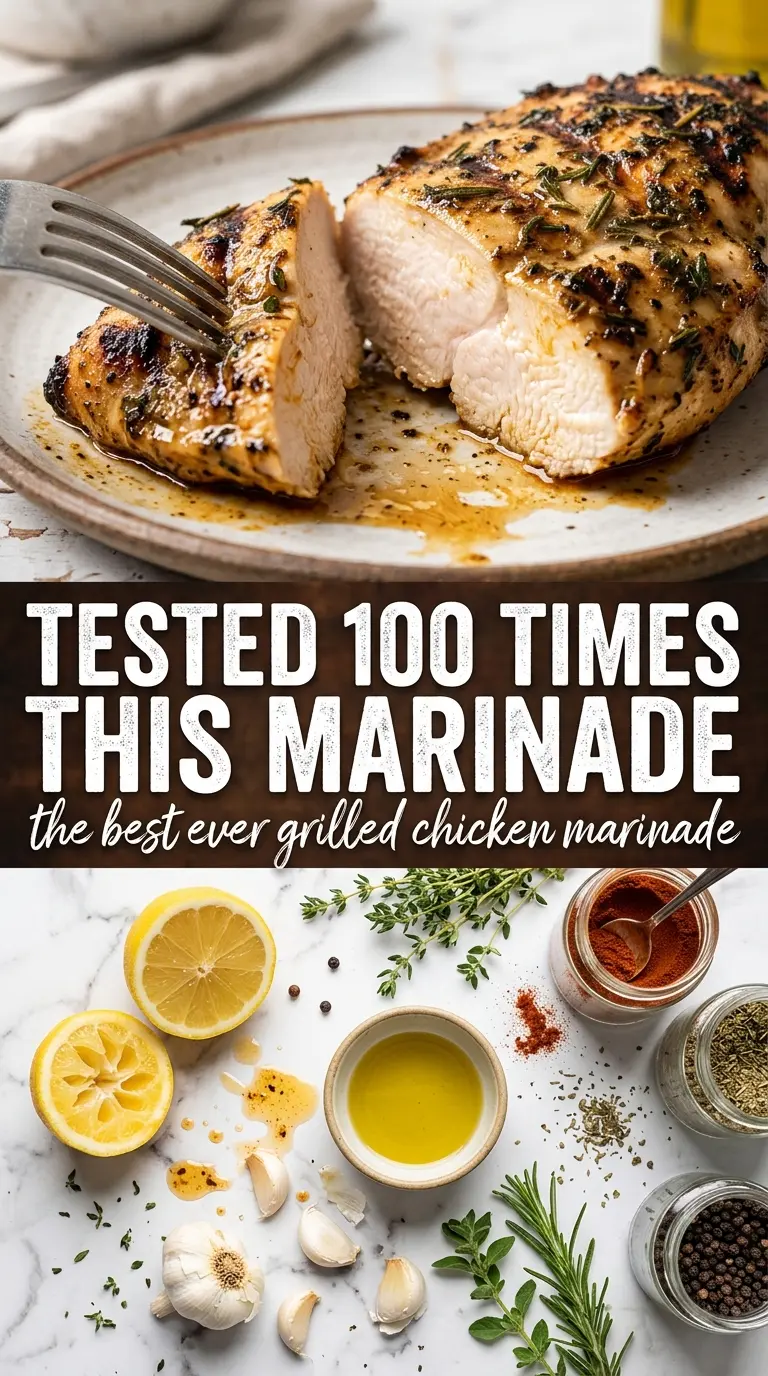
- Chicken — Any cut works, but the timing changes. Boneless breasts need the full marinating window to stay juicy, while thighs are more forgiving and handle longer marinating better. If you’re using skin-on pieces, pat the skin dry before grilling so you still get browning.
- Olive oil — This keeps the marinade from tasting sharp and helps the surface of the chicken cook evenly on the grill. A basic bottle is fine here; save the fancy finishing oil for serving.
- Soy sauce — This is the main salt source, which means it seasons deeper than table salt alone. Use low-sodium if that’s what you keep on hand, but don’t replace it with plain salt water and expect the same savory backbone.
- Lemon juice — Adds brightness and helps wake up the rest of the marinade. Fresh juice tastes cleaner than bottled, especially in a short marinade like this, where every ingredient stays noticeable.
- Worcestershire sauce — This gives the marinade a darker, more rounded savory note that plain vinegar can’t match. It’s one of the ingredients that makes people say the chicken tastes like something from a good grill joint.
- Dijon mustard — Dijon helps the marinade cling to the chicken instead of pooling in the bag. Yellow mustard will work in a pinch, but Dijon gives a smoother, less harsh finish.
- Brown sugar — Just enough to encourage browning and soften the edges of the lemon and soy. Too much sugar can burn on a hot grill, so keep the measure tight.
- Garlic and dried herbs — Garlic brings the immediate punch, while thyme, oregano, or Italian seasoning keep the chicken from tasting flat. Mince the garlic finely so it spreads evenly; big chunks tend to scorch.
How to Grill It So the Marinade Works, Not Burns
Whisk the marinade until it looks unified
Start by whisking the oil, soy sauce, lemon juice, Worcestershire, Dijon, brown sugar, garlic, pepper, and herbs until the sugar is dissolved and the mixture looks glossy. If the oil and acid separate in the bowl, the flavor still works, but it won’t coat the chicken evenly. The goal is a loose emulsion that clings long enough to season every surface.
Give the chicken enough time, but not too much
Put the chicken in a zip-top bag or shallow dish and coat it well, then refrigerate it for at least 4 hours and up to 24. Less than 4 hours leaves the flavor mostly on the outside. More than 24 hours, especially with thin boneless pieces, can make the texture a little mushy from the lemon juice.
Use medium-high heat and a clean grate
Preheat the grill before the chicken goes on. If the grates are cold, the marinade sticks and tears; if the grill is blasting too hot, the sugar can burn before the chicken finishes. You want a steady sizzle the moment the chicken hits the grate and enough heat to leave defined marks without blackening the surface.
Cook to temperature, then rest before slicing
Grill until the thickest part reaches 165°F, flipping as needed depending on the cut. Boneless pieces cook faster than bone-in pieces, so use a thermometer instead of guessing by color. Let the chicken rest for 5 to 10 minutes after grilling; if you cut it right away, the juices run out and the first bite tastes drier than it should.
For boneless chicken breasts
Breasts are the cut most likely to dry out, so keep them on the thinner side or pound them to an even thickness before marinating. They cook fast, and the even thickness helps them finish at the same time instead of leaving one side overdone while the other is still catching up. This version is the most useful if you’re cooking for meal prep.
For thighs or drumsticks
Thighs and drumsticks are more forgiving and stay juicy even if the grill runs a little hot. They can take the full 24-hour marinate if needed, and the extra fat in the meat helps carry the savory side of the marinade. Expect a deeper, richer result than with breasts.
Gluten-free version
Use tamari or a certified gluten-free soy sauce and check the Worcestershire label, since some brands include gluten. The flavor stays close to the original, with the same salty-savory balance and the same caramelized finish on the grill.
Dairy-free and lower-sugar adjustments
This recipe is already dairy-free. If you want to cut the sugar, reduce the brown sugar slightly instead of removing it completely, because that small amount helps browning and rounds out the lemon. Pulling it out entirely won’t ruin the marinade, but the grill marks won’t be as deep or balanced.
Storage and Reheating
- Refrigerator: Store cooked chicken in an airtight container for up to 4 days. The flavor holds up well, though the exterior softens a little after chilling.
- Freezer: Cooked chicken freezes well for up to 2 months. Slice it first, wrap it tightly, and thaw it in the refrigerator so it reheats evenly.
- Reheating: Reheat gently in a covered skillet with a splash of water or broth, or warm it in a 300°F oven until just heated through. High heat dries out grilled chicken fast, especially lean breasts, so stop as soon as the center is warm.
Questions I Get Asked About This Recipe
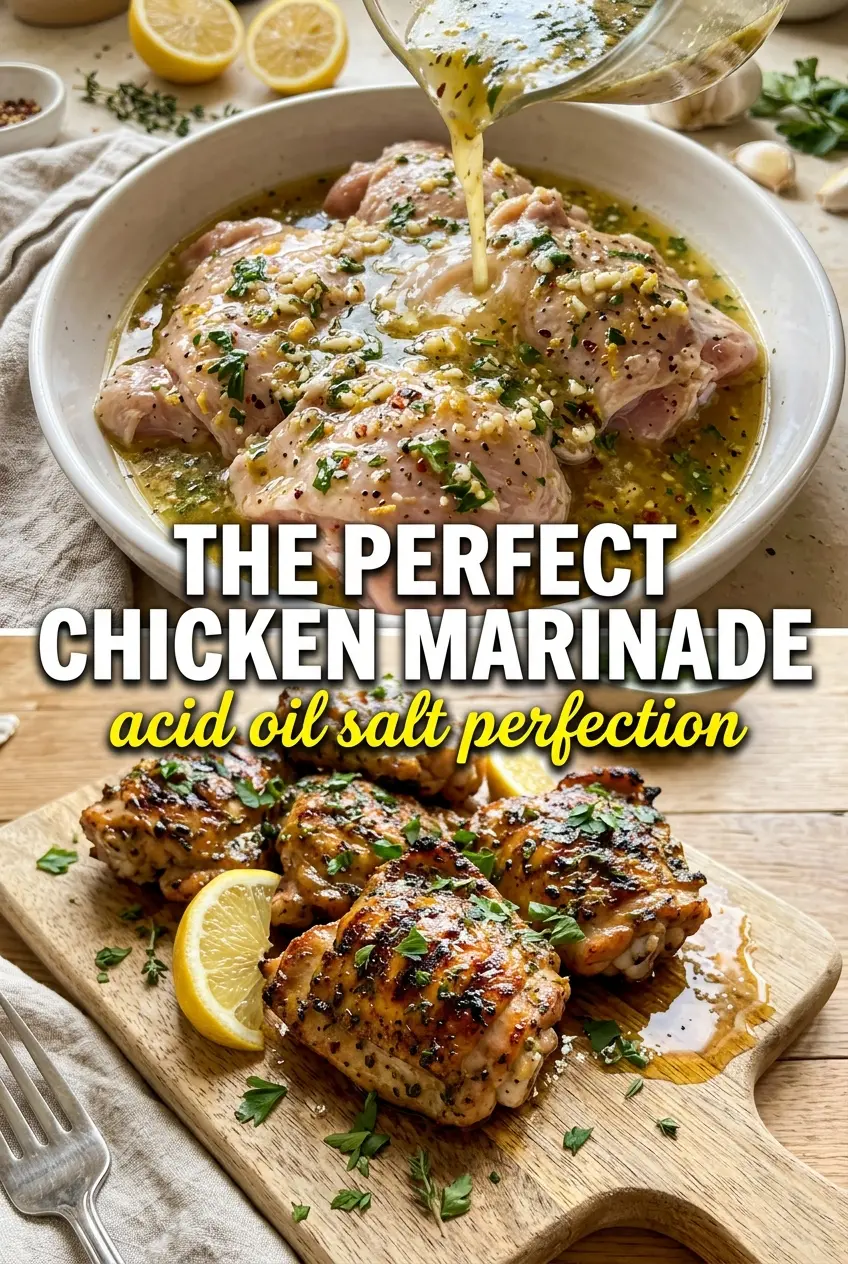
The Best Ever Grilled Chicken Marinade
Ingredients
Equipment
Method
- Whisk together olive oil, soy sauce, lemon juice, Worcestershire sauce, Dijon mustard, minced garlic, brown sugar, black pepper, and dried herbs until the mixture looks evenly combined.
- Add the chicken to a large zip-top bag and pour the marinade over it, squeezing out excess air so the surface is coated.
- Refrigerate the chicken for 4–24 hours so the flavors penetrate and the meat stays tender.
- Preheat the grill to medium-high heat, aiming for a steady temperature that produces clear grill marks when the chicken hits the grates.
- Grill the chicken until it reaches an internal temperature of 165°F; timing varies by cut, and flip as needed for even browning.
- After grilling, let the chicken rest for 5–10 minutes before serving to keep the juices from running out.