Crispy-skinned grilled salmon with tender, just-flaky flesh earns its place in the regular rotation because it looks like you worked harder than you did. The outside picks up a clean smoky edge, the inside stays moist, and the whole thing finishes in the time it takes most sides to come together.
The trick is treating salmon gently at the start and decisively on the grill. Drying the fillets well, oiling the grates, and leaving the fish alone skin-side down are what keep it from sticking and tearing. A short 15-minute rest with lemon, garlic, and oil seasons the surface without turning the flesh mushy, which can happen if acidic marinades sit too long.
Below you’ll find the exact cues I use for flipping, a few smart swaps if you want to change the seasoning, and the doneness details that keep grilled salmon from going dry.
The skin released cleanly after about 7 minutes, and the salmon stayed moist all the way through. I used the lemon and dill finish exactly as written and it tasted like a restaurant dinner off my backyard grill.
Save this grilled salmon guide for the nights when you want crisp skin, juicy centers, and a fast lemon-dill finish.
The Reason Salmon Sticks to the Grill Before It Browns
Most grilled salmon problems start before the fish ever touches the grate. Wet skin, a grill that isn’t hot enough, or moving the fillet too soon all lead to tearing. Salmon will release on its own once the skin has crisped and the proteins have set, which is why the first side needs patience more than fiddling.
- Dry skin matters. Moisture is the enemy of browning. Pat the fillets dry with paper towels so the skin can sear instead of steam.
- Hot, oiled grates matter. Use medium-high heat and brush the grates with oil right before the salmon goes on. That thin film is what keeps the skin intact.
- Leave it alone first. The salmon needs 6 to 8 minutes skin-side down without lifting. If it still clings when you try to turn it, give it another minute.
- Resting the fish briefly helps the seasoning. Fifteen minutes is enough for the garlic, lemon, and oil to season the surface without starting to cure the salmon.
What Each Ingredient Is Actually Doing in This Grilled Salmon
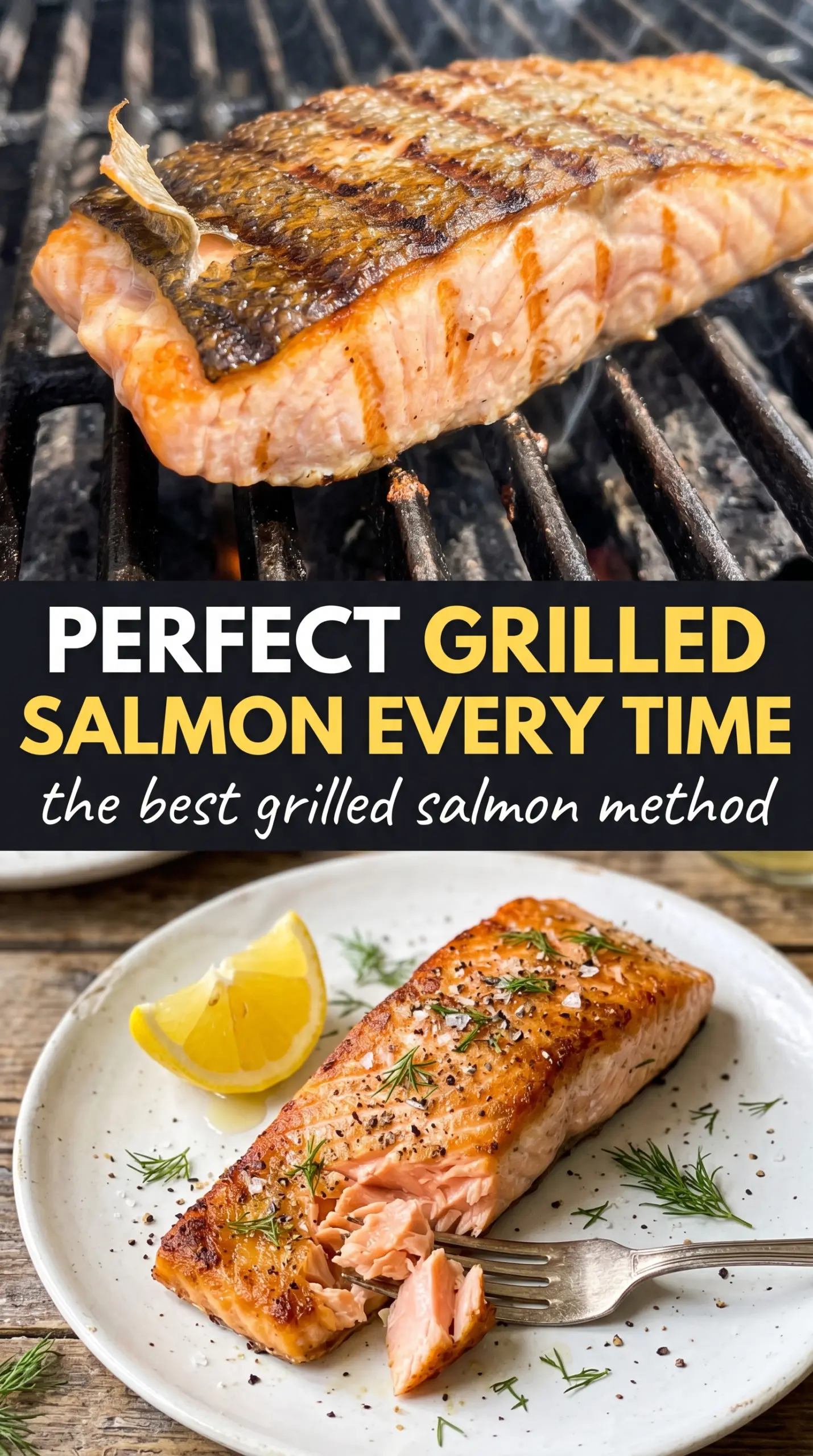
- Skin-on salmon fillets — The skin protects the flesh from direct heat and helps the fish hold together on the grill. Skinless fillets can work, but they’re much easier to overcook and more likely to fall apart when you flip them.
- Olive oil — It carries the seasoning, helps the surface brown, and keeps the fish from sticking. A neutral oil works if that’s what you have, but olive oil gives the fish a better finish.
- Lemon juice — It brightens the fish and cuts through the richness. Keep the marinating time short so the acid doesn’t start changing the texture of the salmon before it cooks.
- Garlic — Mince it finely so it clings to the oil and seasons the surface instead of falling into the grill. Large pieces tend to burn before the fish is done.
- Fresh dill and lemon wedges — These go on at the end, not during cooking. Dill brings a clean herbal note that fits grilled salmon better than heavier herbs.
Getting the Heat Right So the Salmon Releases Cleanly
Prep the fillets for direct heat
Pat the salmon dry, then brush on the olive oil, lemon juice, and garlic mixture. Season the fillets generously with salt and pepper and let them sit for 15 minutes while the grill heats. If the salmon starts to look opaque around the edges before it hits the grill, the marinade sat too long and the acid is already working on the surface.
Oil the grill and start skin-side down
Preheat the grill to medium-high and oil the grates well. Place the salmon skin-side down and leave it there without moving it for 6 to 8 minutes. That first side does most of the work; if you try to flip early, the skin tears and you lose the crust that keeps the fish steady.
Flip only when the salmon lets go
Slide a thin spatula under one fillet and lift gently. If the fish resists, give it another minute before checking again. Once it releases, flip carefully and grill 2 to 3 minutes more, just until the center is nearly opaque and the thickest part reaches 145°F for medium. Pull it off before it looks completely firm, because carryover heat finishes the job fast.
Finish with the bright stuff
Move the salmon to a platter and top with fresh dill and lemon wedges. That final hit of acid and herbs matters because grilled salmon can taste flat without it. Let the fish rest a minute or two before serving so the juices settle instead of running onto the plate.
How to Adapt This Grilled Salmon Without Losing the Good Part
Dairy-Free and Naturally Gluten-Free
This recipe already fits both needs as written. Just keep an eye on any seasoning blends you add later, since some premade rubs sneak in sugar or fillers that can burn on the grill.
No Grill, Use a Cast-Iron Skillet
A hot cast-iron skillet on the stove gives you a similar crust when the weather won’t cooperate. Start skin-side down and press the fillets lightly for the first 20 seconds so the skin stays flat and makes full contact with the pan.
Swap Dill for Parsley or Chives
Parsley gives you a cleaner, milder finish, while chives add a gentle onion note. Both work if dill isn’t your thing, but neither has dill’s sharp, grassy lift against the richness of the salmon.
For a Mild Smoky Finish
Add a small pinch of smoked paprika to the oil mixture before brushing it on. Keep it light; too much can overpower the salmon and make the surface taste dusty instead of smoky.
Storage and Reheating
- Refrigerator: Store leftovers in an airtight container for up to 3 days. The skin softens, but the salmon still works well cold or gently reheated.
- Freezer: Cooked salmon freezes okay for up to 2 months, wrapped tightly and sealed well. Thaw overnight in the refrigerator before reheating so it doesn’t dry out.
- Reheating: Warm it low and slow in a 275°F oven, covered loosely with foil, until just heated through. High heat is what turns leftover salmon dry and chalky.
Answers to the Questions Worth Asking
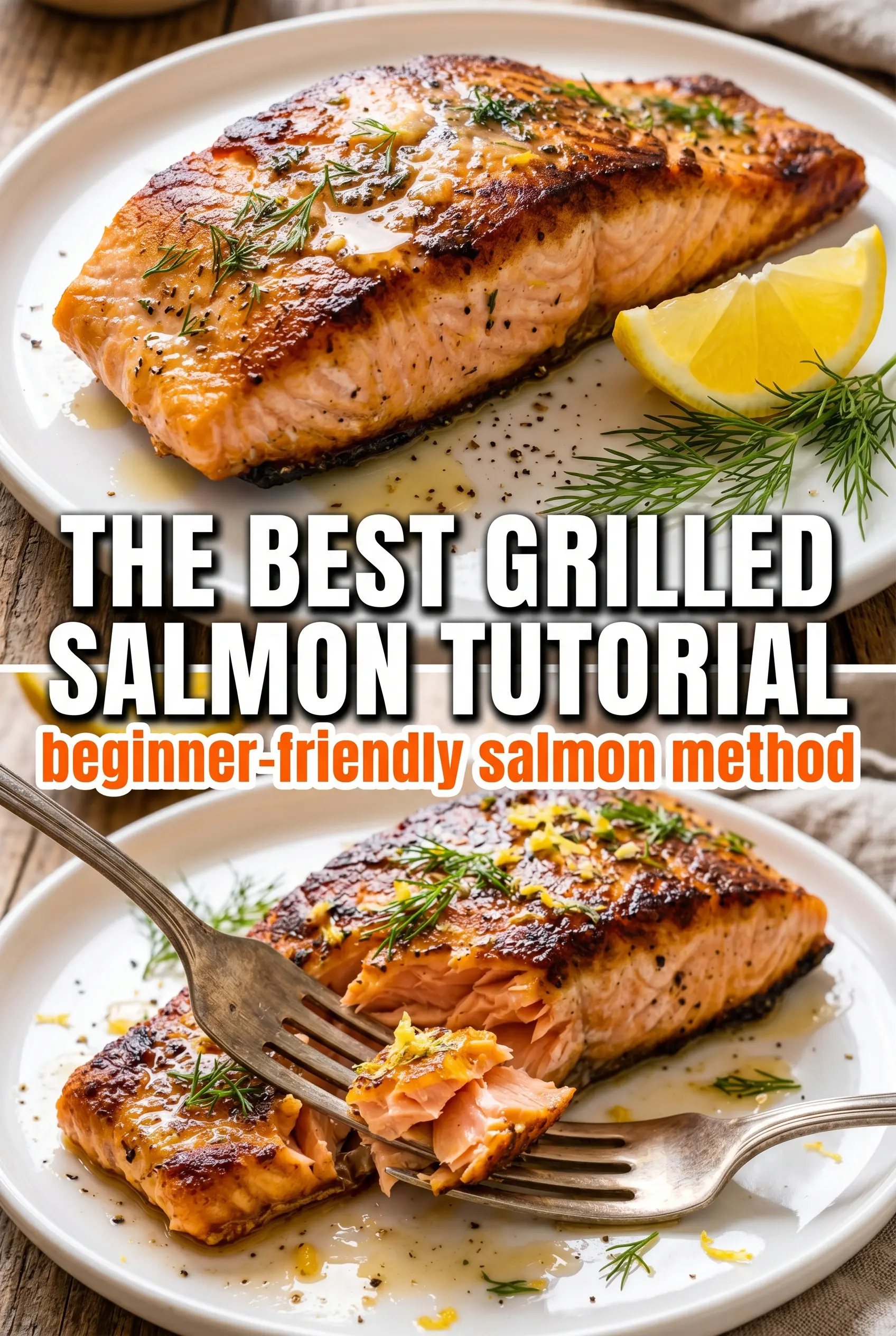
How To Make The Best Grilled Salmon
Ingredients
Method
- Pat the salmon dry, then brush it with olive oil, lemon juice, and minced garlic so it’s evenly coated with a thin layer. Use a quick, light hand so the seasoning clings to the skin.
- Season the salmon generously with salt and pepper until you can see an even speckling across the top and skin. Let it sit for 15 minutes at room temperature for flavor to absorb.
- Preheat the grill to medium-high and oil the grates well right before cooking to reduce sticking. Wait until the heat looks steady across the grill surface.
- Place the salmon skin-side down and grill for 6-8 minutes without moving, until the skin looks browned and releases cleanly. Keep the lid closed to hold the temperature.
- Carefully flip the salmon and grill for 2-3 minutes more until the center reaches 145°F for medium doneness. The flesh should turn opaque while staying tender in the middle.
- Serve immediately with fresh dill and lemon wedges on the side for bright, fresh flavor. Add dill after grilling so it stays aromatic.