Steaming ramen over a campfire turns a cheap packet meal into something that tastes like you planned ahead, even when you didn’t. The noodles stay springy, the broth gets savory fast, and the eggs cook right in the pot so there’s no extra pan to wash at the campsite.
The trick is holding the seasoning packets until the end. Instant ramen can go from pleasantly chewy to mushy fast, and the fire adds another layer of unpredictability, so the timing matters more than usual. Frozen vegetables are a smart swap here because they thaw quickly in the boiling water and help cool the pot just enough to keep the eggs from shredding the minute they hit the surface.
Below, you’ll find the small camp-cooking details that make this work: how to keep the broth from reducing too far, when to crack the eggs, and what to do if your fire is burning hotter than expected.
The eggs poached right in the broth and the noodles stayed bouncy, not mushy. I added a splash of soy sauce at the end and the whole pot tasted way better than plain instant ramen.
Save this campfire ramen for the nights when you need a fast, budget-friendly meal with springy noodles, poached eggs, and almost no cleanup.
The Part Most Camp Ramen Gets Wrong: Timing the Eggs
Instant ramen is forgiving indoors, but over a campfire the difference between silky eggs and stringy whites comes down to a minute or two. If the pot is at a hard rolling boil when you crack them in, the whites can scatter before they set. Drop the heat to a lively simmer first, then crack the eggs close to the water’s surface so they settle into the broth instead of breaking apart on impact.
The other mistake is cooking the noodles too long while you wait for the eggs. They keep softening after you kill the heat, especially in a covered pot, so pull the pot as soon as the noodles are tender and the whites are opaque. That little bit of carryover cooking is enough to finish the eggs without turning the noodles gummy.
What the Ramen Packets Are Doing Here
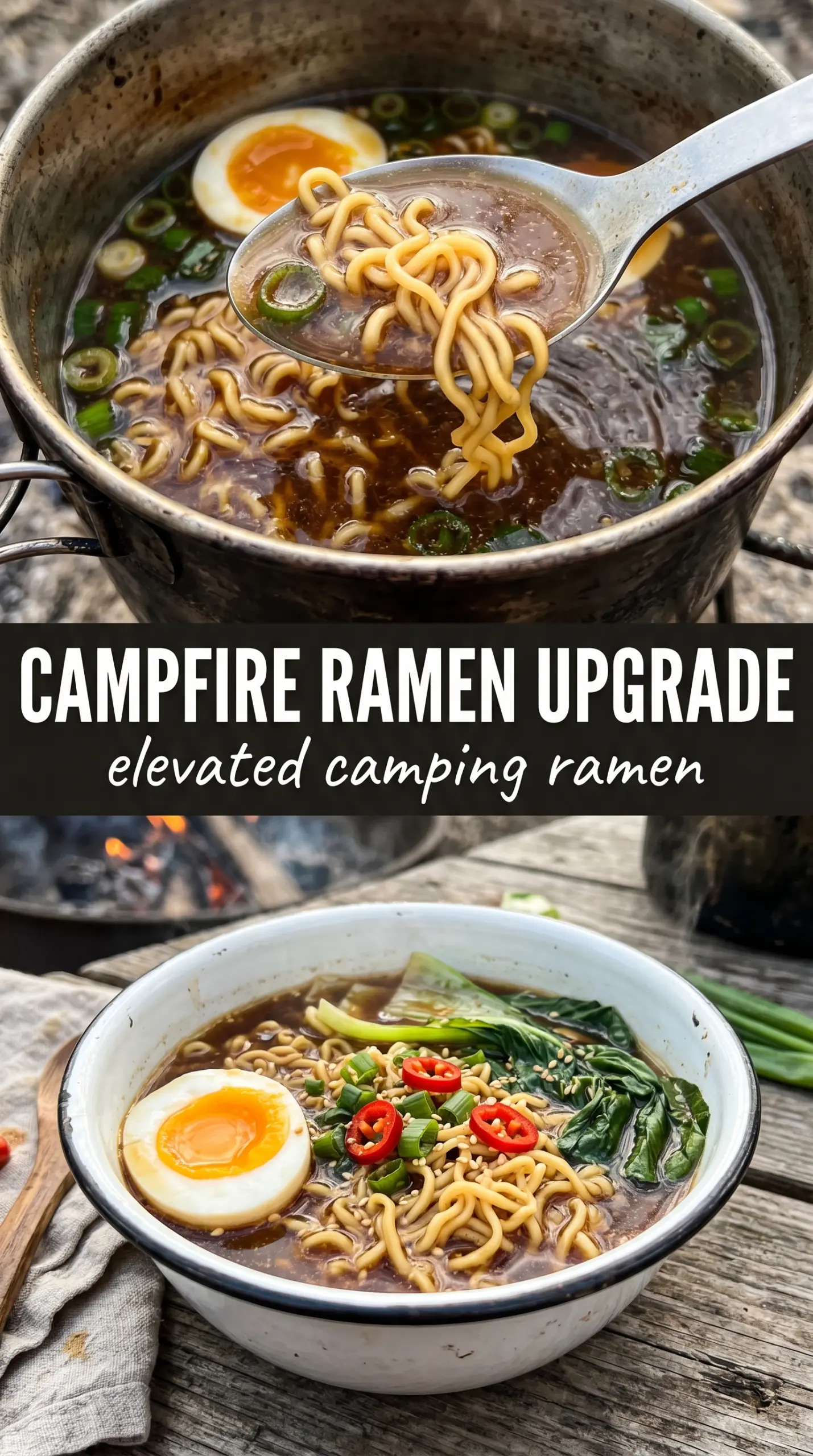
- Instant ramen noodles — These are the backbone of the dish because they cook quickly and hold up well over uneven camp heat. Toss the seasoning packets aside until the end; if they go in early, the broth can get too salty before the noodles finish cooking.
- Frozen mixed vegetables — Frozen vegetables work better than fresh here because they’re already cut and they chill the boil just enough to help the eggs poach gently. Fresh vegetables can work too, but choose ones that cook fast, like shredded carrots or thin-sliced mushrooms.
- Eggs — The eggs turn this from snack food into a real meal. Crack them one at a time into a small bowl first if you want more control, especially if your pot is crowded or the fire is running hot.
- Soy sauce and hot sauce — The ramen packets give you salt and seasoning, but soy sauce adds a deeper savory edge at the end. Hot sauce is optional, but a few dashes wake up the broth after it’s been sitting over the fire.
Keeping the Pot Moving Without Turning the Noodles to Mush
Boiling the Water Over the Fire
Start with a full boil before anything else goes in. Campfire heat can swing fast, so once the water is boiling, keep the pot centered over the hottest part of the fire but not buried in flames. If the boil drops too far, the noodles slack off and absorb more water before they’re tender.
Cooking the Noodles and Vegetables Together
Add the noodles and frozen vegetables at the same time and stir once or twice to keep the ramen from clumping. Three minutes is the sweet spot here, though thin firewood or a strong flame can push it faster, so watch the noodle texture instead of the clock alone. The noodles should still have a little bite when the eggs go in, because they’ll finish in the broth.
Poaching the Eggs in the Broth
Crack the eggs directly into the simmering pot and leave them alone for the first minute. Stirring too early breaks the whites into wisps, which is the fastest way to lose the soft poached look. When the whites are set and the yolks are still slightly soft, pull the pot off the heat and season it.
Finishing the Bowl
Add the seasoning packets only after the eggs are cooked so the broth stays balanced. Stir gently, then taste before adding soy sauce, since the packets already carry a lot of salt. Finish with green onions and a splash of hot sauce if you want a sharper edge.
How to Adapt This Campfire Ramen for Different Tastes
Make it vegetarian without losing body
Skip the ramen seasoning packets if they contain animal-based flavoring and use a vegetarian ramen or mushroom bouillon instead. The eggs still give the bowl plenty of richness, and the vegetables help round out the broth so it doesn’t taste flat.
Make it gluten-free with the right noodles
Use gluten-free ramen-style noodles and check the seasoning packet carefully, since many contain wheat. The texture will be a little softer than classic instant ramen, so shorten the cook time and pull them as soon as they’re tender.
Add more protein without extra gear
Stir in shredded rotisserie chicken or leftover grilled meat near the end, just long enough to warm through. Add it too early and it can dry out or make the broth cloudy.
Lean the bowl spicier and brighter
A spoonful of chili crisp, extra hot sauce, or a squeeze of lime at the end changes the whole bowl without changing the cooking method. Acid and heat are strongest when they go in last, after the broth is off the fire.
Storage and Reheating
- Refrigerator: Store leftovers in a covered container for up to 2 days. The noodles will soften as they sit, and the eggs will firm up.
- Freezer: This doesn’t freeze well. The noodles turn soft and the eggs lose their texture after thawing.
- Reheating: Warm gently over low heat with a splash of water to loosen the broth. Don’t boil it hard or the noodles will break apart and the eggs will overcook.
Answers to the Questions Worth Asking
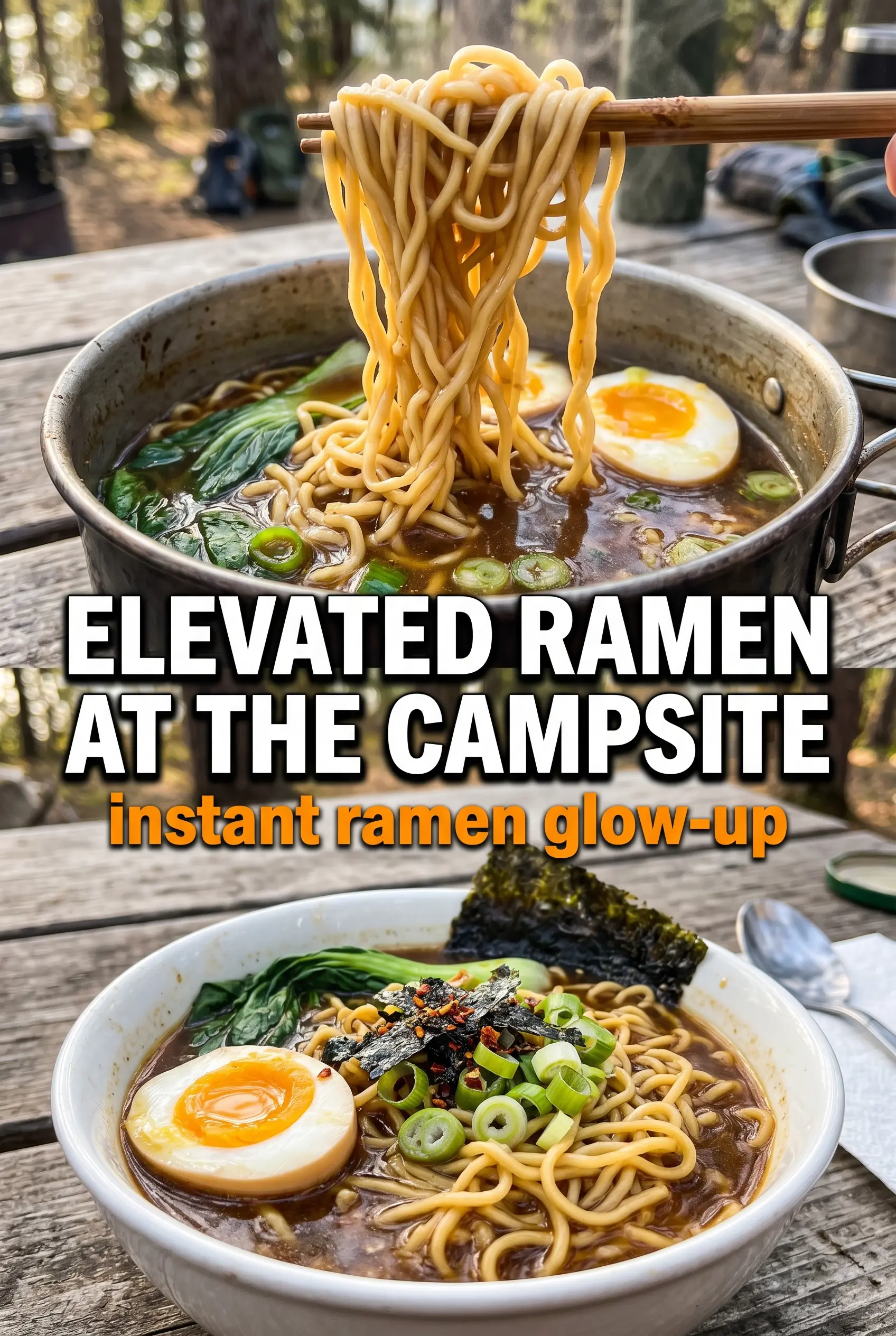
Ramen While Camping
Ingredients
Equipment
Method
- Bring 6 cups water to a boil in a pot over the campfire, watching for rolling bubbles before continuing.
- Add the 4 packages instant ramen noodles (reserve seasoning packets) and 1 cup frozen mixed vegetables, stirring so everything is in the water evenly.
- Cook for 3 minutes at a steady simmer, until the noodles begin to soften and the vegetables are warmed through.
- Crack 4 eggs directly into the pot, spacing them apart so they can poach without breaking too much.
- Continue cooking for 3-4 minutes at a gentle simmer, until the eggs are poached and the noodles are tender, with occasional stirs to prevent sticking.
- Add the ramen seasoning packets and stir to combine, keeping the broth hot and evenly seasoned.
- Divide the ramen into bowls and top with green onions, then add soy sauce to taste and hot sauce if desired.