Grilled campfire pizza gives you the kind of crust a regular oven can’t quite fake: smoky, blistered, crisp at the edges, and sturdy enough to hold bubbling cheese without going soft in the middle. The dough cooks directly on the grate first, which is the part that makes this work. Once the underside has enough structure, you can flip it, add the toppings, and let the cheese melt without turning the crust into a floppy mess.
The trick is keeping the heat steady and the dough thin. Too much heat and the outside scorches before the center sets. Too little and you lose the char that makes grilled pizza worth the extra step. A light brush of oil on the first side keeps the dough from sticking and helps it release cleanly when it’s time to flip.
Below, I’ve laid out the exact timing that keeps the crust crisp, plus a few topping ideas and storage notes for the rare chance you have leftovers.
The crust got those perfect grill marks and held up under the cheese without getting soggy. I covered it with foil for the last few minutes and the mozzarella melted all the way through just like a pizzeria pie.
Save this grilled campfire pizza for the nights when you want smoky crust, melted cheese, and dinner cooked right over the fire.
The Part Most People Get Wrong When Grilling Pizza
The crust needs to go on the grate first, bare and oiled, before any sauce or cheese touches it. That first side has to build enough structure to release cleanly, or the dough will tear when you try to flip it. If the dough is sticking, it usually means the grate wasn’t hot enough or the dough was too soft and thick in the center.
Thin dough cooks fast over fire, which is the whole point, but it also leaves almost no room for hesitation. Have your toppings ready before the dough goes on the grill. Once you flip it, you’re working fast so the grilled side doesn’t dry out while the cheese waits around.
- Medium heat matters more than a roaring fire — you want active heat, not flames licking the dough. Live fire can char the outside before the center firms up.
- Oil is part of the release — brush the dough lightly, not heavily. Too much oil can make the crust fry instead of blister.
- Covering at the end finishes the melt — a lid or foil traps heat so the cheese melts before the bottom overcooks.
What Each Ingredient Is Actually Doing in This Pizza

- Pizza dough — Store-bought dough works well here as long as it’s relaxed and easy to stretch. Homemade dough is fine too, but let it come to room temperature so it doesn’t keep snapping back when you shape it.
- Olive oil — This helps the first side release from the grate and adds the start of that crisp, almost fried edge. A light brush is enough; too much will drip and flare on the fire.
- Mozzarella — Low-moisture shredded mozzarella melts evenly and stays put. Fresh mozzarella can work, but it brings more water, so pat it dry first or the center can turn wet.
- Sauce — Use a thick pizza sauce, not a thin marinara. A loose sauce bleeds into the dough and softens the crust before the cheese has time to set.
- Toppings — Pre-cooked sausage, thin vegetables, and pepperoni all do well because they finish in a few minutes. Raw, watery vegetables need a head start or they’ll steam the pizza instead of topping it.
- Parmesan and basil — Add these after grilling. Parmesan gives a salty finish, and basil keeps its bright flavor only if it isn’t scorched over the fire.
Building the Pizza So the Bottom Stays Crisp
Stretching the Dough Evenly
Divide the dough into four pieces and stretch each one into a thin round with a slightly thicker rim. The center should be even enough that it cooks at the same pace as the edges; a thick middle stays doughy while the rim goes crisp. If the dough keeps shrinking, let it rest for a few minutes and try again instead of forcing it.
Grilling the First Side
Place the oiled dough oil-side down on the grate over medium heat and leave it alone until the underside chars and crisps, usually 2 to 3 minutes. You’re looking for lift at the edges and dark grill marks underneath. If it sticks, don’t yank it; give it another 20 to 30 seconds and it usually releases once the crust firms up.
Flipping and Topping Fast
Flip the crust, then move quickly with the sauce, cheese, and toppings on the grilled side. Spread the sauce in a thin layer so the center doesn’t get heavy and soggy. Work in a calm rhythm here, because once the dough is flipped, the heat is already doing its job and waiting too long is what dries the surface out.
Melting Under Cover
Cover the grill with a lid or tent the pizza loosely with foil and cook until the cheese is melted and the bottom is crisp, about 3 to 5 minutes. The cover traps enough heat to finish the top without burning the crust below. If the cheese melts before the bottom firms up, the heat is too low; if the bottom scorches first, move it to a cooler part of the grate.
How to Adapt This Grilled Pizza for Different Toppings and Diets
Dairy-Free Grilled Pizza
Use your favorite meltable dairy-free cheese and keep the layer a little thinner than usual. Some plant-based cheeses brown faster than they melt, so covering the grill for just the last few minutes helps them soften without scorching the crust.
Vegetarian Toppings That Don’t Water Down the Crust
Use vegetables that have been sliced thin or pre-cooked first, like mushrooms, peppers, onions, or zucchini. Raw tomatoes and watery vegetables can work, but only in a small amount, or they’ll soften the center before the bottom finishes crisping.
Gluten-Free Dough Swap
A gluten-free pizza dough can work on the grill, but it usually needs gentler handling and a little extra oil to release cleanly. Stretch it on parchment if the dough is delicate, then slide it onto the grate and watch it closely because gluten-free crusts can go from set to brittle fast.
Make It Smoker-Friendly with Hearty Toppings
Pepperoni, cooked sausage, olives, and roasted peppers hold up best over live fire. Heavier toppings bring a deeper, more savory bite and give you a pizza that tastes like it belongs outdoors instead of just being taken outside.
Storage and Reheating
- Refrigerator: Store leftovers in an airtight container for up to 3 days. The crust softens a bit in the fridge, but it still reheats well.
- Freezer: Freeze baked slices wrapped tightly for up to 2 months. Reheat from frozen for best texture instead of thawing first.
- Reheating: Warm slices in a hot skillet, oven, or toaster oven until the cheese melts and the bottom crisps back up. The biggest mistake is using the microwave, which turns the crust chewy and leaves the cheese unevenly heated.
Answers to the Questions Worth Asking
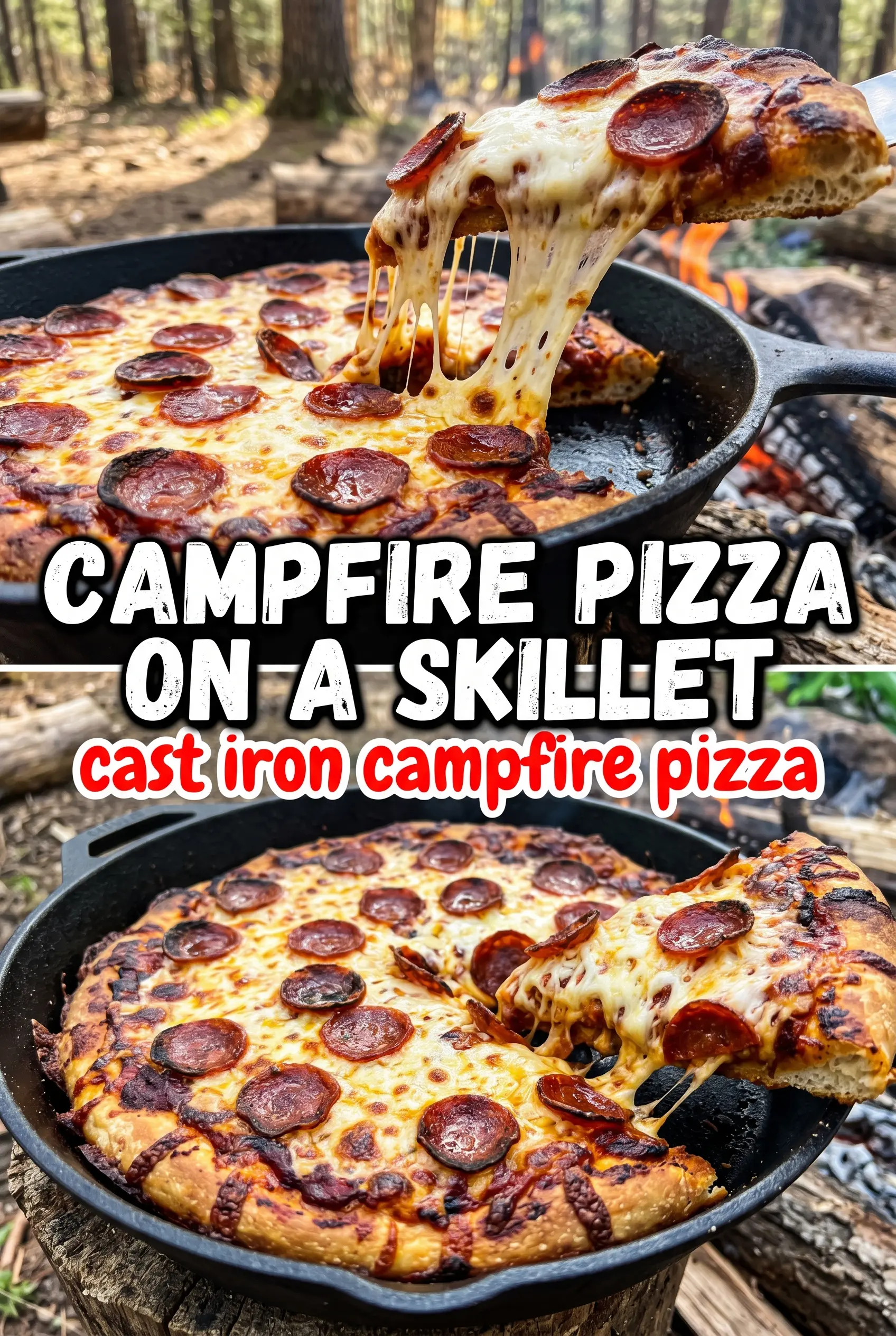
Grilled Campfire Pizza
Ingredients
Equipment
Method
- Divide the pizza dough into 4 portions and stretch each portion into a thin round, aiming for even thickness so it grills uniformly.
- Brush one side of each dough round with olive oil to help it crisp and form charred spots.
- Place the dough oil-side down on a campfire grate over medium heat and cook for 2-3 minutes, until the bottom is charred and crispy.
- Flip each dough quickly and immediately add the sauce, mozzarella, and toppings to the grilled side while the surface is hot.
- Cover with a lid or foil and cook for 3-5 minutes until the cheese melts and the bottom is crispy.
- Remove from the grill, top with grated Parmesan cheese and fresh basil, then slice and serve.