Chicken marinades earn a permanent spot in my kitchen when they do more than add surface flavor. The best ones keep lean chicken juicy, give the outside a clean savory crust, and work whether I’m grilling for dinner or prepping a few portions for the week. This collection leans on fresh citrus, herbs, garlic, ginger, and just enough salt to wake everything up without turning the chicken heavy.
What makes these marinades worth using is the balance. Citrus brightens, yogurt tenderizes, soy sauce or tamari brings depth, and oil carries the herbs and spices across the meat. With lean cuts especially, that balance matters because chicken breast dries out fast if the marinade is all acid and no fat, or bland if it’s all fat and no salt.
Below, you’ll find the part that matters most: how to mix a marinade that actually improves the chicken instead of just wetting it. I’ve also included the swaps I reach for when I want dairy-free, extra-herby, or meal-prep friendly results.
I used the lemon-herb version on chicken thighs and the marinade clung beautifully. The chicken grilled up juicy with a nice edge of char, and the yogurt made it feel tender without tasting heavy.
Save these healthy chicken marinades for juicy grilled chicken with fresh herbs, citrus, and meal-prep friendly flavor.
The Part Most Marinades Get Wrong: Balance, Not Just Boldness
A marinade can look lively in the bowl and still do almost nothing on the plate. The common mistake is leaning too hard on acid, which can make chicken surface-tough and oddly flat once it cooks. What you want is enough citrus to brighten, enough salt to season through, and enough fat or dairy to carry the herbs and spices across the meat.
That balance matters most with lean chicken breasts and tenders, since they dry out quickly. Thighs are more forgiving, but even they benefit from a marinade that coats evenly and doesn’t pool at the bottom of the bag. If the mixture tastes sharp and thin before the chicken goes in, it usually needs more body, not more vinegar or lemon.
What Each Marinade Ingredient Is Actually Doing

- Fresh citrus — Lemon, lime, and orange all work, but they do different jobs. Lemon and lime bring sharper brightness; orange adds a softer sweetness that plays nicely with garlic and herbs. If you use bottled juice, the flavor turns dull fast, so fresh really matters here.
- Greek yogurt — This is the easiest way to get tender, juicy chicken without a heavy marinade. It clings to the meat and helps the spices stay in place during cooking. If you need a dairy-free version, olive oil works, but you lose some of that gentle tenderizing effect.
- Low-sodium soy sauce or tamari — This brings salt and savory depth in one ingredient. Tamari is the cleaner swap for gluten-free cooking, and low-sodium versions keep the chicken from tasting overly salty after marinating. Regular soy sauce works too, but reduce any extra salt you might add.
- Fresh herbs — Basil, cilantro, parsley, and rosemary each change the personality of the marinade. Soft herbs give a fresh, green finish; rosemary gives a woodsy note that stands up well to grilling. Dried herbs can work in a pinch, but they won’t taste as bright.
- Garlic and ginger — These give the marinade its backbone. Fresh is best because both ingredients lose a lot of punch once they’re dried out or pre-minced. Grate the ginger finely and mince the garlic so they spread evenly instead of scorching in one spot on the grill.
- Lean chicken cuts — Breasts, tenders, and thighs all work, but the timing changes. Thin cuts need less marinating time, while thighs can sit longer and take on more flavor. Over-marinating lean breast meat in a very acidic mixture is where the texture starts to go chalky.
How to Marinate and Grill Chicken Without Drying It Out
Mixing the Marinade Until It Tastes Layered
Stir the citrus, yogurt or oil, soy sauce or tamari, garlic, ginger, herbs, and spices in a bowl or zip-top bag until the mixture looks smooth and well blended. The goal is an emulsion that coats the chicken instead of separating into a watery puddle and a layer of oil. Taste the marinade before adding the chicken; it should be bright, salty, and a little punchy because the chicken will dilute it some.
Letting the Chicken Sit Long Enough, But Not Too Long
Add the chicken and turn it so every surface is coated. Thin cuts like tenders or cutlets usually need less time, while thighs can marinate longer without trouble. If the marinade is heavy on lemon or lime, don’t leave delicate chicken breasts in it all day or the outside can turn soft and almost cured before it cooks.
Grilling for Color Before the Inside Overcooks
Set the grill to medium-high and let the excess marinade drip off before the chicken goes on. You want audible sizzle and quick browning, not a wet slap against the grates. If the heat is too low, the chicken steams and sticks; if it’s too high, the outside darkens before the center reaches temperature. Pull it when the thickest part is cooked through and the juices run clear.
Serving It Like a Complete Meal
Let the chicken rest for a few minutes, then slice it and serve with fresh vegetables and a grain like rice, quinoa, or farro. Resting matters because the juices settle back into the meat instead of spilling onto the cutting board. If you slice too soon, even perfectly cooked chicken can eat dry.
How to Adapt This for Different Diets and Dinner Plans
Dairy-Free Marinade
Swap the Greek yogurt for olive oil and add a little extra citrus zest for brightness. You’ll lose some of the creamy tenderizing effect, but the marinade will still coat well and give the chicken a clean, herbal finish.
Gluten-Free Version
Use tamari instead of soy sauce and check that your spices are pure. The flavor stays the same, but the dish becomes fully gluten-free without any extra effort.
Meal-Prep Friendly Batch
Mix the marinade in one jar and portion it over chicken in separate bags or containers. This keeps the chicken evenly coated and saves time later in the week, especially if you’re using the same base with different herbs or citrus.
Storage and Reheating
- Refrigerator: Cooked chicken keeps well for 3 to 4 days in an airtight container. The herbs may darken a little, but the flavor holds up nicely.
- Freezer: Marinated raw chicken freezes well for up to 2 months. Freeze it in the marinade, then thaw it in the refrigerator so the meat stays coated as it defrosts.
- Reheating: Warm gently in a skillet over low heat or in the oven at a low temperature. High heat dries out lean chicken fast, so the mistake to avoid is blasting it in the microwave until the edges turn tough.
Answers to the Questions Worth Asking
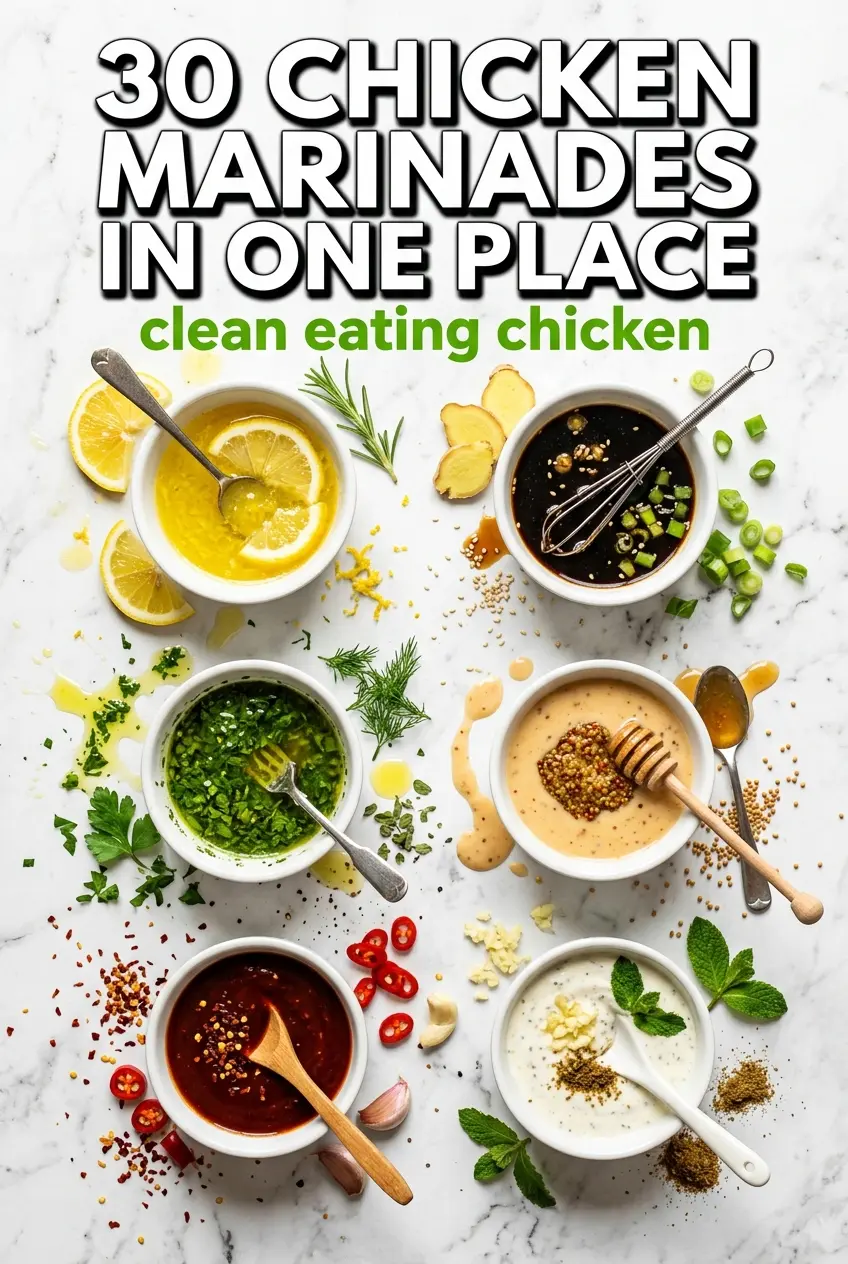
Healthy Chicken Marinade Recipes Collection
Ingredients
Method
- Select one healthy marinade option from the collection (citrus-and-herb, yogurt-herb, or minimal-oil citrus). Choose flavors you’ll want to repeat for easy meal prep.
- Combine fresh citrus, fresh herbs, low-sodium soy sauce or tamari, Greek yogurt or olive oil, and garlic and ginger in a bowl or zip-top bag. Stir until the herbs are evenly distributed and the mixture looks cohesive.
- Add the lean chicken cuts to the marinade and coat thoroughly. Refrigerate for 4-6 hours for best flavor, or up to overnight for deeper citrus-herb notes.
- Preheat the grill to medium-high heat (about 375-450°F / 190-230°C). Grill the chicken for 15-30 minutes total, turning as needed, until cooked through and no longer pink in the center.
- Plate the grilled chicken with fresh vegetables for serving and include spices and seasonings to taste if you want extra surface flavor. Serve immediately while the chicken is hot and the vegetables stay crisp.
- Keep leftover marinades in the refrigerator for up to 1 week in a sealed container. Discard any marinade that touched raw chicken before storing or using again.