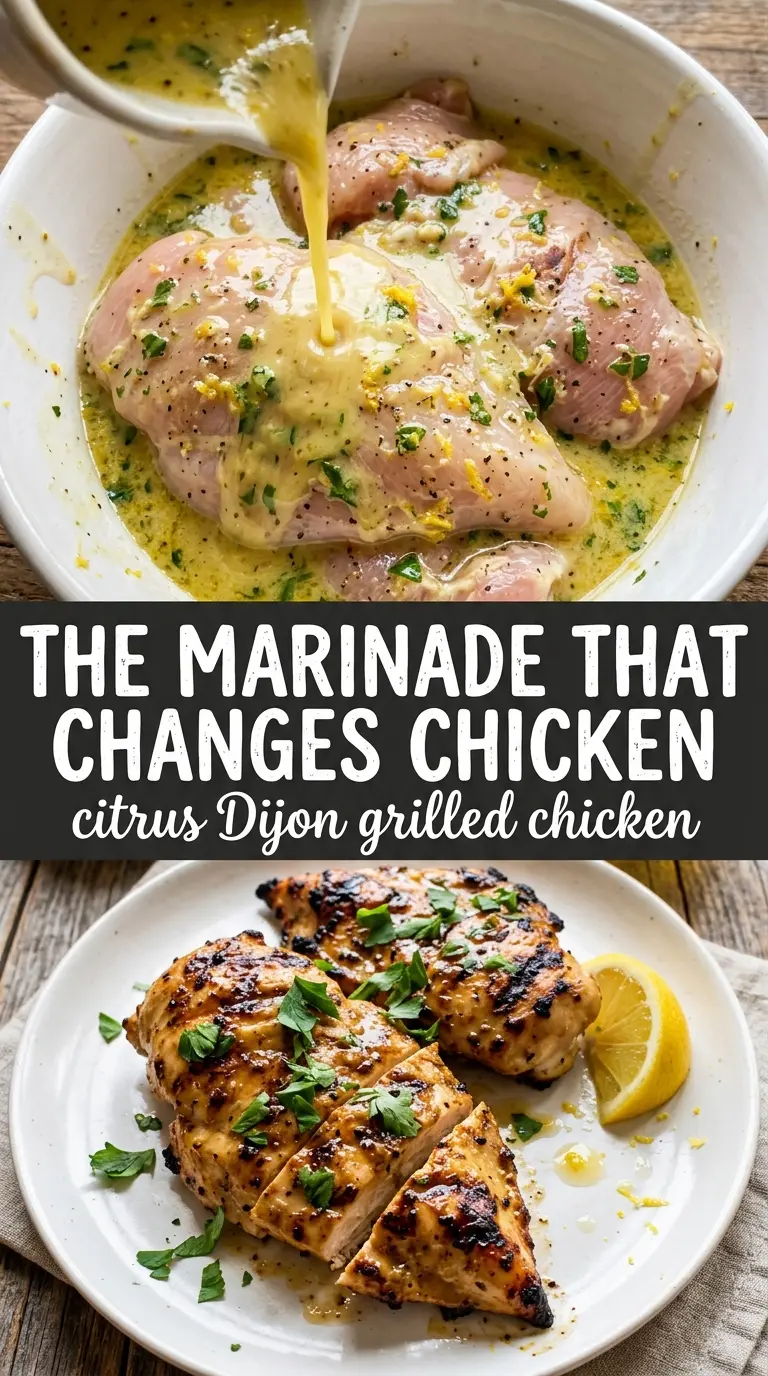
Tender grilled chicken with bright citrus and Dijon flavor earns its place in the rotation fast. The marinade gives the meat a sharp, savory edge, while the orange and lemon keep it lively instead of heavy. After the grill, the chicken comes off with browned, glossy edges and a juicy center that tastes like it took a lot more effort than it did.
What makes this version work is balance. Dijon acts as both flavor and emulsion, helping the oil and citrus stay blended long enough to coat the chicken evenly. Honey softens the acidity just enough to round it out, and thyme brings that French-American note that makes the whole dish feel a little more polished than a standard grilled chicken marinade.
The notes below cover the one marinade mistake that leads to bland chicken, plus the small timing and grilling details that keep the meat juicy instead of dry. There are also a few easy ways to adapt it for whatever cut of chicken you have on hand.
The chicken picked up so much flavor in just a few hours, and the Dijon-citrus marinade caramelized beautifully on the grill without burning.
Keep this citrus Dijon grilled chicken marinade handy for juicy, golden chicken with bright lemon-orange flavor and almost no cleanup.
The Reason This Marinade Sticks Instead of Sliding Off
The biggest failure with citrus marinades is thinness. If the mix is mostly juice, it runs right off the chicken and leaves you with flavor on the surface and nothing deeper. Here, the olive oil and Dijon do the heavy lifting. They help the marinade cling, coat evenly, and stay in contact with the meat long enough to matter.
Another common mistake is over-marinating citrus chicken until the outside starts to get a little chalky. Two to eight hours is the sweet spot. Long enough for the acid to work, not so long that the texture turns soft in an unhelpful way. If you’re using delicate cuts like thin breasts or tenders, stay closer to the shorter end.
What Each Ingredient Is Actually Doing in This Chicken
- Dijon mustard — This is the backbone of the marinade. It gives sharpness, helps emulsify the oil and juice, and leaves a subtle savoriness that plain mustard or yellow mustard won’t match.
- Orange juice and lemon juice — Orange brings sweetness and roundness; lemon keeps the finish bright. Fresh juice tastes cleaner here, and bottled juice can work in a pinch, but it won’t have the same clean edge.
- Olive oil — Oil keeps the marinade from tasting sharp and helps the chicken brown on the grill. A basic olive oil is fine; save the fancy finishing oil for the table.
- Honey — Just enough to soften the citrus and encourage browning. Leave it out and the marinade tastes harsher; add too much and the chicken can darken too quickly.
- Garlic and thyme — Garlic gives the marinade depth, while thyme nudges it toward that French-style herb note. Dried thyme works well because it disperses evenly and holds up to grilling.
- Chicken cut — Thighs stay juicier and are more forgiving on the grill, while breasts cook faster and need more attention. Bone-in pieces take longer but pick up more flavor on the surface.
Getting the Marinade, Grill, and Rest Time in the Right Order
Build the Marinade Until It Looks Fully Unified
Whisk the oil, Dijon, juices, garlic, honey, thyme, salt, and pepper until the mixture looks glossy and slightly thickened. If you see oil pooling at the top, keep whisking for another 20 to 30 seconds. That emulsion helps the marinade coat the chicken instead of separating in the bag. If you want the flavor to cling evenly, this is where it starts.
Marinate Without Pushing the Timing Too Far
Place the chicken in a zip-top bag or shallow dish and pour the marinade over it, turning the pieces so every surface gets coated. Refrigerate for at least 2 hours and up to 8. The chicken should smell bright and herbal, not aggressively sour. If you leave it much longer than that, the citrus can start to work against the texture instead of helping it.
Grill for Color, Then Finish by Temperature
Preheat the grill to medium-high and oil the grates lightly so the chicken releases cleanly. Grill until the outside has good color and the internal temperature reaches 165°F, but don’t chase the clock too closely because thickness changes everything. If the surface is browning too fast, move the chicken to a cooler part of the grill and let it finish more gently. That’s how you keep the outside from scorching before the center is done.
Let the Juices Settle Before You Slice
Rest the chicken for 5 minutes before serving. That short pause keeps the juices inside the meat instead of spilling onto the cutting board. Slice too early and the chicken will look drier than it really is. A brief rest gives you cleaner slices and a better bite.
How to Adapt This for Different Cuts and Different Kitchens
Use chicken thighs for the juiciest result
Boneless thighs are the easiest swap if you want more forgiveness on the grill. They stay juicy longer than breasts and pick up the citrus-Dijon flavor beautifully. Expect a slightly richer bite and a little more grill time than thin breast cutlets.
Make it dairy-free and gluten-free without changing the method
This marinade is already naturally dairy-free and gluten-free as written, which makes it easy for mixed-diet dinners. Just check your Dijon label if you are cooking for someone with celiac disease, since a few brands use vinegar blends or additives that aren’t ideal for everyone. The method stays the same.
Swap in lime for a sharper citrus finish
If you want a brighter, slightly more tropical edge, replace the lemon with lime juice. The marinade will taste a little less soft and a little more assertive. That’s a good move for grilled chicken served with rice, beans, or a fresh herb salad.
Bake it when the grill isn’t happening
Bake the marinated chicken at 425°F on a lined sheet pan until it reaches 165°F in the thickest part. You won’t get the same smoky char, but the glaze-like edges still develop nicely, especially if you finish under the broiler for a minute or two. Watch closely at the end because the honey can move from browned to too dark fast.
Storage and Reheating
- Refrigerator: Store cooked chicken in an airtight container for up to 4 days. It stays moist best when sliced only after it cools.
- Freezer: Freeze cooked chicken for up to 2 months. Wrap portions well so the citrus notes don’t pick up freezer flavor.
- Reheating: Warm gently in a covered skillet over low heat with a splash of water or chicken broth. High heat dries out grilled chicken fast, especially breast meat, so keep the heat low and stop as soon as it’s heated through.
Questions I Get Asked About This Recipe

Citrus Dijon Grilled Chicken Marinade
Ingredients
Equipment
Method
- In a bowl, whisk together olive oil, Dijon mustard, orange juice, lemon juice, garlic, honey, dried thyme, salt, and pepper until smooth and fully combined.
- Place the chicken in a large zip-top bag and pour the marinade over the chicken, squeezing out excess air so the chicken is coated.
- Refrigerate the bag for 2-8 hours so the flavors penetrate the chicken.
- Preheat the grill to medium-high heat.
- Grill the chicken until the internal temperature reaches 165°F, timing varies by cut and thickness.
- Transfer to a plate and let the chicken rest for 5 minutes before serving so juices redistribute.