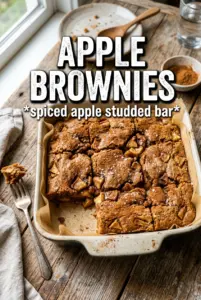
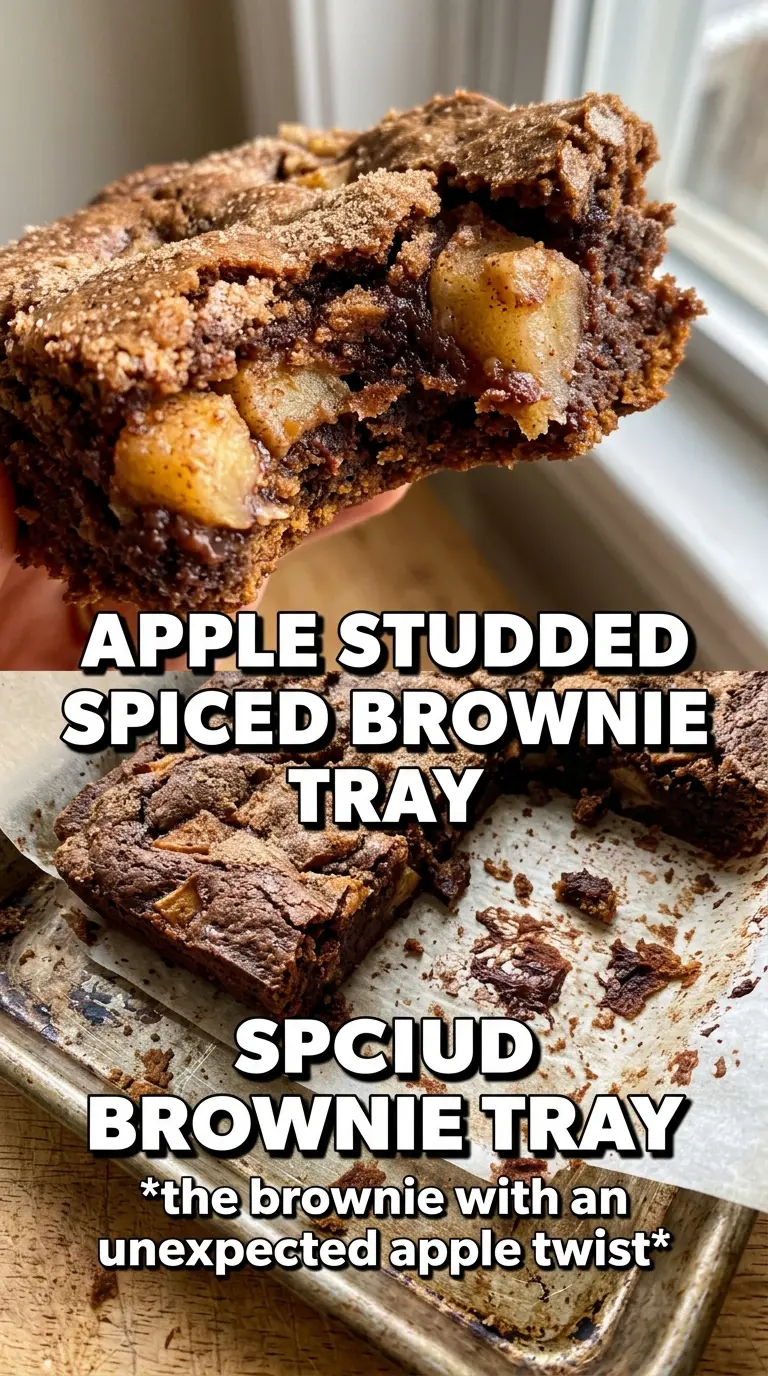
Dense, chewy, and packed with soft apple pieces, these apple brownies land somewhere between a blondie and a spice cake, but with the kind of fudgy bite that keeps you coming back for one more square. The edges bake up set and lightly caramelized, while the center stays tender with little bursts of cinnamon apple in every slice. A drizzle of caramel on top turns them from a simple bar cookie into the kind of dessert people notice fast.
What makes this version work is the balance of butter, brown sugar, and just enough flour to hold everything together without turning cakey. The apples are diced small so they soften inside the batter instead of sinking or leaving wet pockets behind. Cinnamon, nutmeg, and allspice give the bars that warm bakery smell, and the walnuts or pecans add a little crunch if you want it.
Below, I’ve included the one timing cue that keeps these bars from overbaking, plus a few smart swaps if you need to work with what’s already in the pantry.
The bars came out dense and chewy instead of cakey, and the caramel on top soaked into the apples just enough to make every bite taste like fall baking done right.
Save these apple brownies for the nights when you want a chewy apple dessert with a caramel finish and almost no fuss.
The Reason Apple Brownies Stay Fudgy Instead of Turning Cakey
The biggest mistake with apple bars is treating them like a cake batter. Once you add the flour, stop stirring as soon as it disappears. Overmixing builds too much structure, and that’s how you lose the dense, chewy middle that makes these worth baking in the first place. The apples bring moisture on their own, so the batter only needs enough mixing to hold together.
Size matters here too. Finely diced apples soften quickly and spread evenly through the pan. Big chunks can leave the bars uneven and wet in spots, while too-small shreds can disappear completely. A 9×13 pan gives the batter enough room to bake through without trapping steam, which helps the top set while the center stays tender.
- Apples — Use a firm baking apple if you can. Granny Smith, Honeycrisp, or Pink Lady hold their shape and keep the bars from turning mushy. If your apples are very juicy, pat the dice dry after peeling and cutting.
- Brown sugar — This is what gives the bars their moist, almost caramel-like chew. Light or dark brown sugar both work; dark brown sugar will give you a deeper molasses note.
- Butter — Melted butter helps create that dense, brownie-style crumb. Don’t swap in oil if you want the same texture, because oil makes the bars softer but less structured.
- Spices — Cinnamon does most of the work, but the nutmeg and allspice are what make the flavor taste rounded instead of one-note. If you only have cinnamon, the bars will still work, just with a simpler finish.
- Nuts — Walnuts or pecans are optional, but they add a good break in the soft texture. Toast them first if you want a deeper, nuttier flavor.
What Each Ingredient Is Actually Doing in This Recipe
- Primary ingredient (the star) — Quality matters most. Choose the best you can find.
- Cooking medium (oil, butter, or broth) — This carries flavors and prevents dryness.
- Seasonings (salt, pepper, spices, herbs) — Layer flavors so nothing overpowers. Build depth gradually.
- Aromatics (garlic, onion, herbs) — Cook with fat to bloom flavors. Become the foundation.
- Supporting ingredients — Complement the main ingredient without overpowering it.
- Sauce or liquid (if applicable) — Brings flavors together. Balance richness with acid.
- Acid (lemon, vinegar, wine, or other) — Brightens and prevents flat-tasting results.
- Final finish (garnish, glaze, or sauce) — Prevents one-dimensional taste and adds visual appeal.
Mixing the Batter Without Overworking It
Dry Ingredients First
Whisk the flour, baking powder, cinnamon, nutmeg, allspice, and salt together before they touch the wet ingredients. That keeps the spices evenly distributed so you don’t bite into one pocket that tastes heavy on cinnamon and another that tastes plain. The baking powder is modest here; it lifts just enough to keep the bars from feeling leaden without making them fluffy.
Building the Brown Sugar Base
Stir the melted butter with both sugars until the mixture looks glossy and the sugar starts to dissolve into the fat. Add the eggs and vanilla next, and mix until the batter is smooth and a little thickened. If the butter is scorching hot, it can start cooking the eggs on contact, so let it cool for a minute or two before you combine everything.
Fold, Don’t Beat
Add the dry ingredients and stir only until the last streak of flour disappears. Then fold in the diced apples and nuts gently. The batter will look thick, and that’s what you want; if it starts to look loose or glossy from overmixing, the final bars will bake up tougher and more cake-like.
Knowing When They’re Done
Spread the batter evenly in the pan and bake until the top is set and the center gives just a little when pressed. A toothpick should come out with a few moist crumbs, not raw batter. If the toothpick is completely clean, the bars are probably a little overbaked already, and the texture will be drier once they cool.
What to Change When You Want a Different Kind of Apple Bar
Gluten-Free Apple Brownies
Use a 1:1 gluten-free baking flour that includes xanthan gum. The bars will stay close to the original texture, though they may be just a little more delicate when warm, so let them cool fully before slicing.
Nut-Free Version
Leave out the walnuts or pecans entirely. The bars still bake up chewy and rich, and you won’t lose anything important in the texture; the nuts are there for contrast, not structure.
Dairy-Free Swap
Replace the butter with a solid plant-based butter stick. Choose one that’s meant for baking, not a soft tub spread, or the bars can turn greasy and lose that brownie-like bite.
Extra-Caramel Finish
Drizzle the caramel while the bars are just barely warm, not piping hot. Warm bars help the sauce cling and settle into the top without disappearing completely into the crumb.
Storage and Reheating
- Refrigerator: Store in an airtight container for up to 4 days. The bars firm up a little in the fridge, which actually helps the chewy texture.
- Freezer: They freeze well. Wrap individual squares tightly and freeze for up to 2 months, then thaw at room temperature before serving.
- Reheating: Warm a bar in the microwave for 10 to 15 seconds if you want the caramel topping to soften again. Don’t overheat it or the apples can turn watery and the edges go rubbery.
Questions I Get Asked About This Recipe
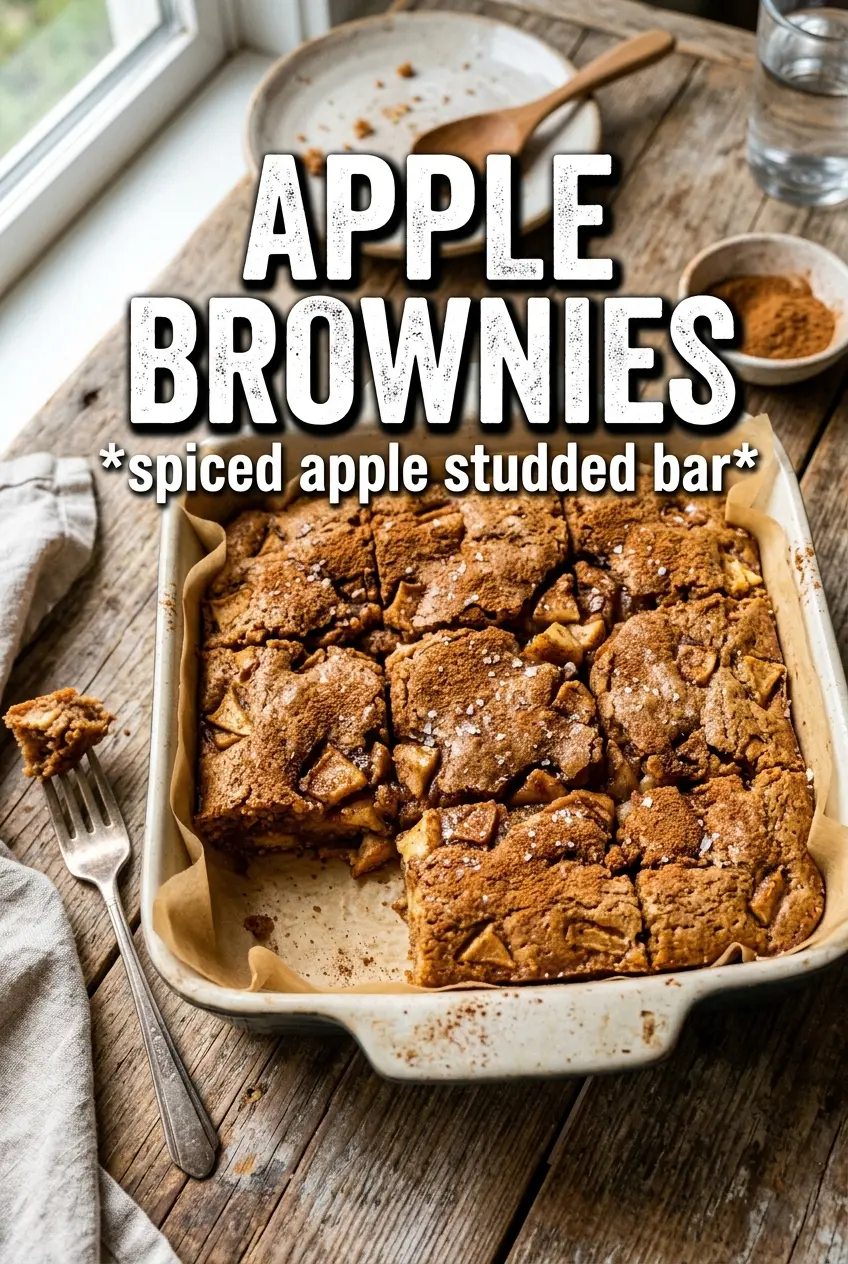
Apple Brownies
Ingredients
Equipment
Method
- Preheat oven to 350F and grease a 9x13 baking pan so the batter releases cleanly.
- Prepare your oven-safe workspace with the pan ready before mixing to keep the batter from waiting.
- Whisk all-purpose flour, baking powder, cinnamon, nutmeg, allspice, and salt until evenly combined and no spice pockets remain.
- Whisk melted unsalted butter and both sugars until smooth and glossy, then whisk in eggs and vanilla extract until fully incorporated.
- Fold the flour mixture into the wet mixture just until combined to keep the crumb tender.
- Fold in diced apples and walnuts or pecans (if using) so the fruit is distributed throughout the batter.
- Spread the batter evenly in the prepared pan for even baking.
- Bake at 350F for 30-35 minutes until a toothpick comes out with just a few moist crumbs and the top looks set and golden-brown.
- Cool in the pan until the bars are firm enough to slice, then drizzle with caramel sauce before cutting into squares.