
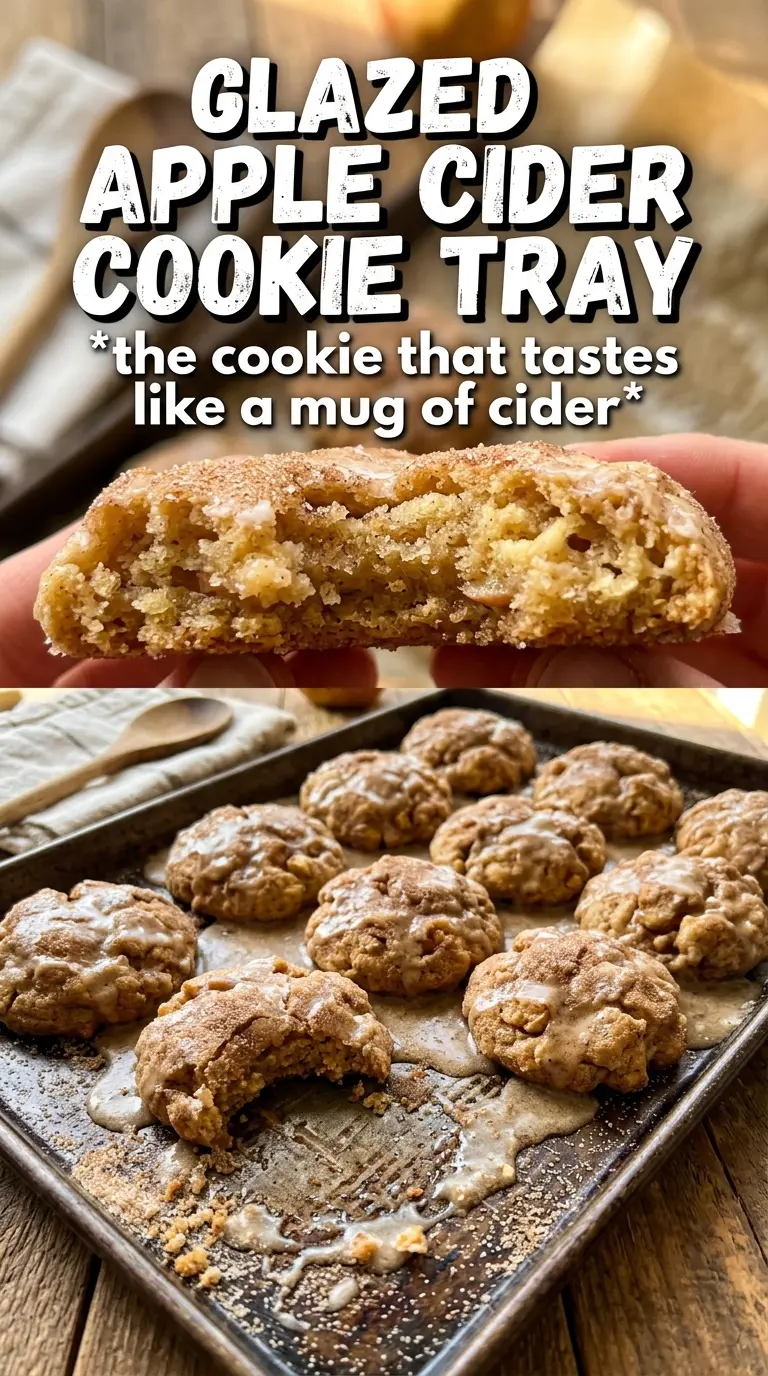
These apple cider cookies bake up soft in the center with lightly crisp edges and a cinnamon sugar shell that crackles when you bite through it. The flavor lands squarely on apple, but not in a watery or one-note way. Reducing the cider first concentrates it into something deeper and rounder, so the apple taste holds up against the butter, brown sugar, and spices instead of disappearing into the dough.
The trick is in that reduction. Raw cider brings too much liquid and not enough character, while cooked-down cider adds both concentrated flavor and a little extra body to the dough. The spice blend matters too: cinnamon leads, but ginger, nutmeg, and allspice keep the cookie from tasting flat. You get a cookie that feels familiar and cozy, but with enough real apple flavor to justify making it again.
Below, I’ve included the part that makes the biggest difference, plus a few smart swaps and storage notes so the cookies stay soft for days. If you’ve ever had apple cookies that tasted more like spice than fruit, this version fixes that.
The reduced cider made these taste like actual apples, not just spice cookies, and the cinnamon sugar coating stayed crisp even the next day. Mine baked up soft and chewy with those lightly crinkled tops just like the photo.
Save these apple cider cookies for the days when you want soft, chewy cookies with a real cider flavor and that cinnamon sugar crunch on top.
The cider reduction is what keeps these cookies tasting like apples
If you skip the reduction, the dough gets watered down and the cider tastes thin after baking. Reducing the apple cider to a syrupy 1/4 cup concentrates the fruit flavor and keeps the cookie dough from spreading too much. It also gives the finished cookie a little more chew in the center, which is part of what makes these feel bakery-style instead of flat and cakey.
The other place people go wrong is treating the spice mix like an afterthought. Cinnamon gives you the obvious warmth, but ginger, nutmeg, and allspice make the flavor read as apple cider instead of just sugar cookies with cinnamon. The balance matters more than a heavy hand here.
- Reduced apple cider — This is the flavor anchor. Reduce it until it looks thicker and slightly glossy, then cool it before adding it to the dough so it doesn’t melt the butter.
- Brown sugar — It adds moisture and a soft chew. Dark brown sugar will give you a deeper molasses note; light brown sugar keeps the apple flavor a little cleaner.
- Butter — Softened butter creams with the sugars to create the tender texture. Cold butter won’t trap enough air, and melted butter will make the cookies spread.
- Cinnamon sugar coating — This is what gives the outside that crackly finish. Roll the dough balls generously so the coating forms a thin crust in the oven.
What Each Ingredient Is Actually Doing in This Recipe
- Primary ingredient (the star) — Quality matters most. Choose the best you can find.
- Cooking medium (oil, butter, or broth) — This carries flavors and prevents dryness.
- Seasonings (salt, pepper, spices, herbs) — Layer flavors so nothing overpowers. Build depth gradually.
- Aromatics (garlic, onion, herbs) — Cook with fat to bloom flavors. Become the foundation.
- Supporting ingredients — Complement the main ingredient without overpowering it.
- Sauce or liquid (if applicable) — Brings flavors together. Balance richness with acid.
- Acid (lemon, vinegar, wine, or other) — Brightens and prevents flat-tasting results.
- Final finish (garnish, glaze, or sauce) — Prevents one-dimensional taste and adds visual appeal.
Building the dough so the cookies stay soft, not puffy or dry
Reducing the cider first
Pour the cider into a small saucepan and cook it over medium heat until it shrinks down to about 1/4 cup and looks syrupy. It should coat the back of a spoon and smell concentrated, not boiled down to nothing. Let it cool completely before it goes into the dough, or it will soften the butter and throw off the texture.
Creaming the butter and sugars
Beat the butter with both sugars until the mixture looks fluffy and a shade lighter. This step builds the structure that keeps the cookies from turning dense. If the butter is too cold, the mixture stays grainy; if it’s too warm, the dough bakes out flat.
Mixing the dry ingredients just enough
Whisk the flour, baking soda, salt, and spices together before adding them to the wet mixture. That keeps the leavening and spices evenly distributed, which matters in a small cookie like this. Once the flour goes in, stop as soon as the last streak disappears so the cookies stay tender.
Rolling and baking for the right finish
Scoop the dough into 1 1/2 tablespoon balls and roll them in cinnamon sugar until coated all over. Bake just until the edges are set and the centers still look a little soft and puffed. They’ll finish on the hot pan during the five-minute rest, which is how you get that soft middle without underbaking the centers.
Three smart ways to adapt these apple cider cookies
Make them dairy-free
Use a plant-based butter stick with a similar fat content to regular butter. The cookies will still spread a little and stay chewy, though the flavor loses some of the richness that butter brings. Avoid soft tub spreads, which add too much water and can make the cookies bake up thin.
For a stronger apple flavor
Reduce the cider a little farther, but keep an eye on it so it doesn’t turn bitter or scorch. You can also add a teaspoon of finely grated apple to the dough, but only if you blot it dry first, since extra moisture changes the texture fast.
For gluten-free cookies
Use a 1:1 gluten-free baking flour that already includes xanthan gum. The cookies will be a touch more delicate, but the cider reduction and cinnamon sugar coating still give you good texture and flavor. If the dough feels soft, chill it for 20 minutes before scooping.
Storage and Reheating
- Refrigerator: Store in an airtight container for up to 5 days. The cinnamon sugar coating softens a little, but the cookies stay chewy.
- Freezer: Freeze baked cookies for up to 2 months, or freeze dough balls before rolling in sugar for fresher baking later.
- Reheating: Warm baked cookies in a 300F oven for 3 to 4 minutes. The common mistake is microwaving too long, which makes the centers tough and the coating sticky.