Fresh fish cured in lime and orange juice turns firm, bright, and clean-tasting in a way that feels almost impossible until you’ve made it yourself. The acid tightens the flesh just enough to give you that tender, flaky bite, while red onion, jalapeño, cilantro, and tomato bring the kind of sharp, herbal crunch that keeps every spoonful lively. Served cold with tostadas, it’s the sort of appetizer that disappears fast because it tastes light without feeling skimpy.
What makes this version work is the balance. Lime does the curing, but orange softens the edges so the ceviche doesn’t taste one-note or aggressively sour. The fish needs to be diced evenly so it cures at the same rate, and the bowl has to be non-reactive so the citrus stays clean and fresh. I also like to add the avocado at the very end so it holds its shape instead of melting into the mixture.
Below, you’ll find the small details that matter: how to tell when the fish is cured enough, which fish hold up best, and what to change if you want a milder, spicier, or dairy-free serving style. Those little choices are what separate a watery ceviche from one that tastes crisp, balanced, and worth making again.
The fish cured evenly in 30 minutes and stayed tender, not tough. The lime and orange together gave it a fresh bite without that harsh all-lime edge, and the avocado held up beautifully when I folded it in at the end.
Save this authentic Mexican ceviche for the next time you want something cold, bright, and crisp with tostadas on the side.
The Curing Window That Keeps the Fish Tender, Not Rubbery
The biggest mistake with ceviche is treating the citrus like a timer you can walk away from. Thin dice on fresh white fish usually needs only about 30 minutes to turn opaque and firm on the outside while staying tender in the center. Leave it much longer and the texture starts to go chalky, especially with lean fish like sea bass or snapper.
Stir once or twice during the cure so the top pieces don’t lag behind the rest. If the pieces are cut unevenly, the small ones will over-curdle before the larger ones are ready. Aim for uniform cubes and a bowl wide enough that the citrus can move around the fish instead of pooling in one corner.
What the Citrus, Onion, and Avocado Are Each Doing Here
- Fresh white fish — Sea bass, snapper, and halibut all hold their shape well and give you that clean, flaky bite. Buy the freshest fish you can find, because curing doesn’t improve quality; it only changes texture. If you need a swap, use another firm, sushi-grade white fish with a mild flavor.
- Lime juice — This is the real curing agent, and fresh-squeezed juice matters here. Bottled lime juice often tastes flat or bitter, which throws off the final balance. You need enough juice to fully submerge the fish so every piece cures evenly.
- Orange juice — This softens the sharpness of the lime and gives the ceviche a rounder finish. Don’t skip it unless you want a much more aggressive citrus bite. If you don’t have orange, a little mandarin or grapefruit juice can work, but the flavor will shift.
- Red onion and jalapeño — The onion brings crunch and bite, while jalapeño gives heat without muddying the color. Slice the onion thin so it folds into the fish instead of overpowering it. If you want less heat, remove the jalapeño seeds and ribs before mincing.
- Avocado — Add it at the end so it stays in soft cubes instead of breaking down into the dressing. A ripe avocado adds creaminess that balances the citrus and salt. If your avocado is slightly firm, it’ll hold up even better.
How to Cure, Fold, and Serve It Before the Fish Starts to Tighten Too Much
Starting with a Non-Reactive Bowl
Use glass, ceramic, or stainless steel so the citrus stays bright and the fish doesn’t pick up any metallic taste. Add the fish first, then pour the lime and orange juice over it until the pieces are fully submerged. If any pieces are peeking above the surface, they won’t cure evenly, so press them down gently with a spoon before covering the bowl.
Watching for the Right Texture
Refrigerate for about 30 minutes, stirring once or twice, until the fish turns opaque and the edges look slightly firm. The center should still feel tender, not hard. If you wait until every piece looks completely firm all the way through, you’ve gone past the sweet spot and the ceviche will eat tight instead of fresh.
Adding the Vegetables at the End
Once the fish is cured, drain off a little excess citrus if the bowl looks too soupy, then fold in the onion, jalapeño, cilantro, tomato, and avocado. Stir gently so the avocado keeps its shape and the fish doesn’t flake apart. Season with salt and pepper last, then taste before serving; the salt wakes everything up, and a small extra squeeze of lime can sharpen the whole bowl if the citrus has mellowed.
Serving It Cold and Crisp
Chill the serving bowls if you can. Ceviche loses its snap fast at room temperature, and cold bowls help keep the fish firm and refreshing. Spoon it into small glasses or bowls and serve right away with tostadas or tortilla chips so the texture stays lively.
How to Adapt This for a Milder Bowl, a Spicier One, or a No-Fuss Make-Ahead
Milder Ceviche for Less Heat
Skip the jalapeño seeds and ribs, or use just one pepper instead of two. You’ll keep the fresh green flavor without the sharp burn, which lets the citrus and fish stay in front. This is the version I’d serve to a crowd when I don’t know how much heat people want.
A Brighter, More Citrus-Forward Version
Use a little extra lime and cut back slightly on the orange if you want a sharper ceviche with more snap. The texture will cure a touch faster, so start checking around the 20-minute mark. This version tastes firmer and more traditional, but it can edge toward harsh if the fish sits too long.
Gluten-Free Serving Style
The ceviche itself is naturally gluten-free, so the only thing to watch is what you serve with it. Use plain tostadas made without wheat ingredients or keep it in lettuce cups for a lighter presentation. The fish and vegetables don’t need anything extra to work.
Storage and Reheating
- Refrigerator: Ceviche is best the day it’s made, but leftovers will keep for up to 1 day. The fish tightens and the avocado softens as it sits, so the texture won’t stay as crisp.
- Freezer: Don’t freeze it. The citrus-cured fish and fresh vegetables turn watery and mushy after thawing.
- Reheating: Don’t reheat ceviche. Serve it cold straight from the fridge, and if the mixture seems flat after chilling, brighten it with a squeeze of fresh lime instead of using heat.
Answers to the Questions Worth Asking
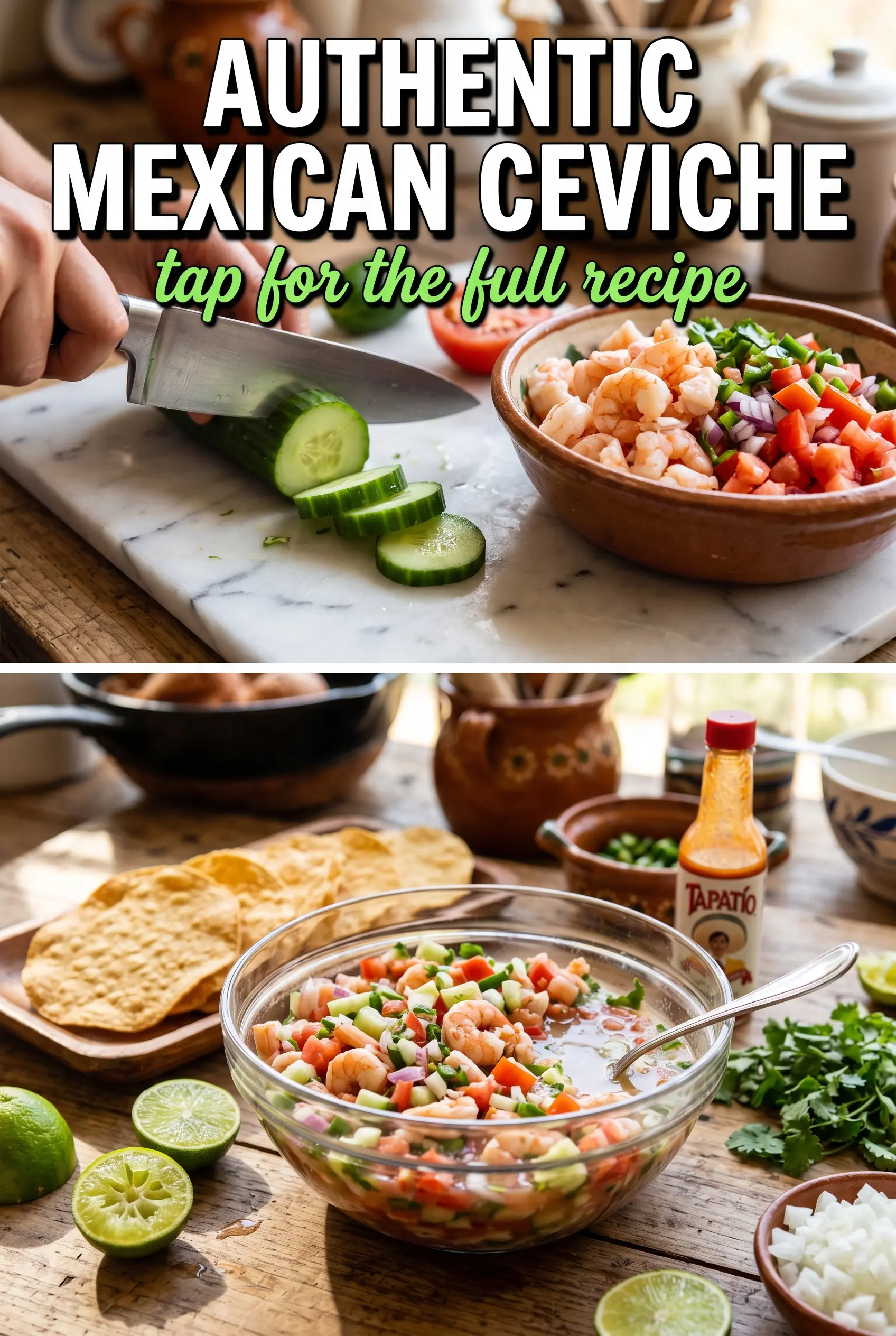
Authentic Mexican Ceviche
Ingredients
Equipment
Method
- Place the diced fish in a non-reactive bowl and pour in the lime juice and orange juice, making sure the fish is fully submerged.
- Cover the bowl and refrigerate for 30 minutes, stirring occasionally, until the fish turns opaque (cured by the citric acid).
- Add the sliced red onion, minced jalapeños, chopped cilantro, diced tomato, and diced avocado to the cured fish.
- Season with salt and black pepper and gently toss until evenly combined.
- Taste and adjust with a little more lime juice if needed for brightness.
- Serve immediately in chilled glass bowls or small martini glasses with tostadas or tortilla chips on the side.