Golden delicata squash changes a standard Caesar into a salad with a little more personality. The squash roasts into crisp-edged, caramelized half-moons that act like croutons, but with a softer center and a sweet-savory bite that plays beautifully against creamy dressing, salty Parmesan, and crunchy pepitas. You still get the cold, crisp romaine and the sharp Caesar backbone, but now every forkful has contrast instead of just crunch.
The trick is treating the squash like a roasted topping, not a soft vegetable side. A little maple syrup helps the edges brown, smoked paprika adds quiet depth, and the oven needs to be hot enough that the slices caramelize before they slump. I also like massaging the kale with a spoonful of dressing first; it takes the edge off the leaves so they don’t fight the romaine.
Below you’ll find the small details that matter here: how to get the squash crisp, why the kale gets a head start, and the best way to keep the salad from turning heavy before it hits the table.
The delicata stayed crisp at the edges even after tossing, and the maple-paprika coating gave the salad this roasted, almost smoky bite that made it feel like more than a side.
Like this autumn Caesar salad? Save it to Pinterest for the nights when you want crisp greens, roasted squash croutons, and a fast side that eats like lunch.
The One Thing That Keeps the Squash Crisp Instead of Soggy
Delicata squash only works as a Caesar topping if it roasts fast enough to caramelize before it collapses. Cut too thick, and the slices steam; crowd them on the pan, and the moisture has nowhere to go. You want a single layer with space around each piece so the edges can take on color and the centers stay just tender.
The maple syrup is doing a little more than sweetening. It encourages browning and gives the squash a glazed finish, but only if the oven is hot enough to set the surface quickly. Flip the pieces halfway through roasting so both sides get those deep golden spots that make them taste almost like the best part of a roasted sweet potato fry.
- Delicata squash — The skin is tender enough to eat, which saves prep and gives you neat, sturdy slices. Other winter squash will work, but most need peeling and won’t hold the same half-moon shape.
- Caesar dressing — Use one you actually like, because it’s carrying the whole salad. If your dressing is thick, loosen it with a teaspoon or two of lemon juice so it coats instead of clumping.
- Lacinato kale — This holds up better than tender greens and benefits from a quick massage with dressing. Curly kale works too, but it needs a little more rubbing to lose its rough edges.
- Pepitas — They bring the kind of toasted crunch that keeps the salad from feeling soft once the squash goes on. If yours are raw, toast them in a dry skillet for a few minutes until they smell nutty.
What Each Ingredient Is Actually Doing in This Recipe
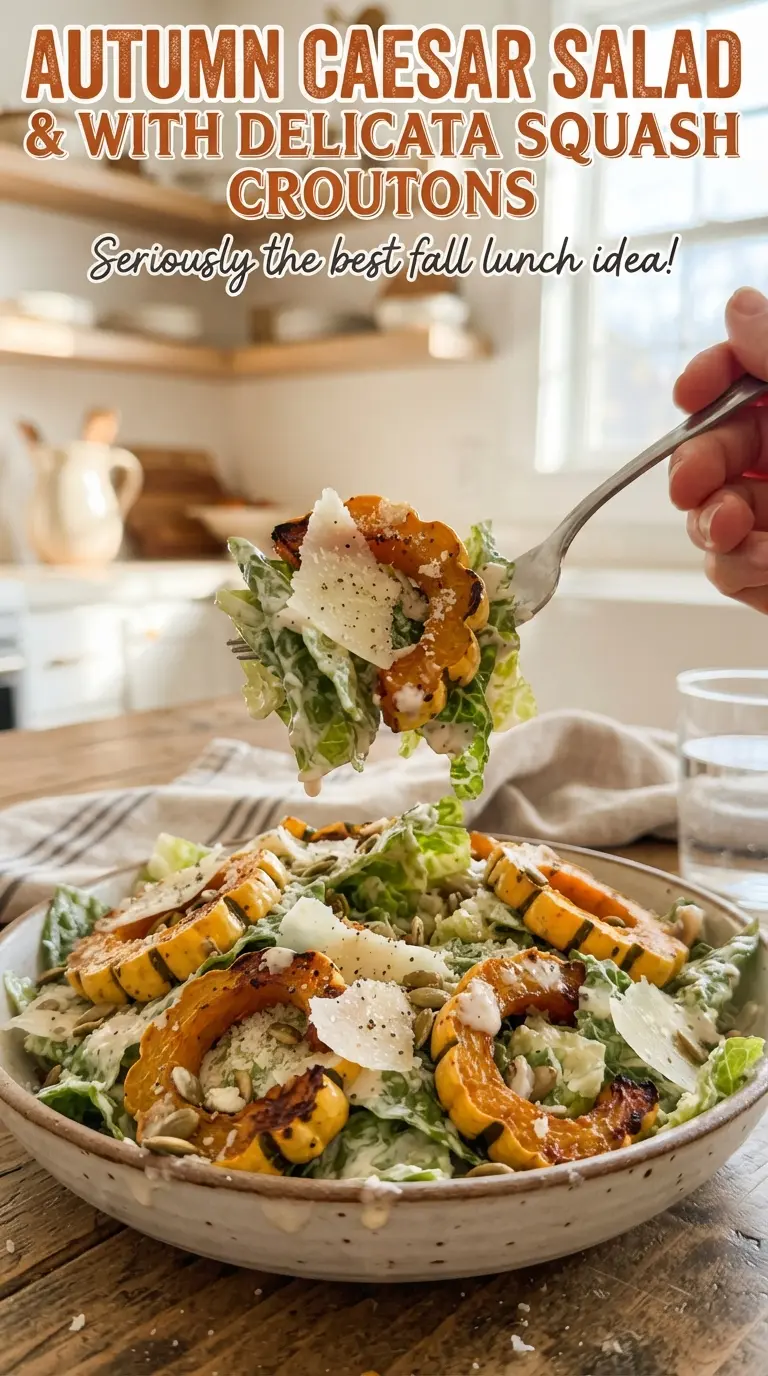
- Primary ingredient (the star) — Quality matters most. Choose the best you can find.
- Cooking medium (oil, butter, or broth) — This carries flavors and prevents dryness.
- Seasonings (salt, pepper, spices, herbs) — Layer flavors so nothing overpowers. Build depth gradually.
- Aromatics (garlic, onion, herbs) — Cook with fat to bloom flavors. Become the foundation.
- Supporting ingredients — Complement the main ingredient without overpowering it.
- Sauce or liquid (if applicable) — Brings flavors together. Balance richness with acid.
- Acid (lemon, vinegar, wine, or other) — Brightens and prevents flat-tasting results.
- Final finish (garnish, glaze, or sauce) — Prevents one-dimensional taste and adds visual appeal.
Roasting the Squash, Softening the Greens, and Bringing It All Together
Coating the Squash Evenly
Toss the sliced delicata with olive oil, maple syrup, smoked paprika, and salt until every piece looks lightly glazed. If the seasoning pools in the bowl, the squash won’t brown evenly, so spread it out immediately after tossing. The paprika should look more like a whisper than a crust; too much and it can taste dusty after roasting.
Roasting Until the Edges Crisp
Roast at 425°F for 22 to 25 minutes, flipping halfway through. You’re looking for golden edges and a little collapse at the center, not blistered dark spots all over the place. If the slices are pale after 25 minutes, the pan was too crowded or the oven ran cool, so give them a few more minutes rather than pulling them early.
Massaging the Kale First
Put the chopped kale in a bowl with a spoonful of Caesar dressing and work it with your hands for about a minute. The leaves should darken, soften, and lose that stiff, raw bite. If you skip this step, the kale can taste sharp against the creamy dressing and the salad ends up feeling disjointed instead of balanced.
Finishing the Salad at the Last Minute
Toss the romaine and softened kale with the remaining dressing, then top with the warm squash, Parmesan, and pepitas. Add the lemon wedges at the table or squeeze them over the top right before serving; that bright acid wakes everything up and keeps the dressing from tasting heavy. Hold the squash back until the very end so it keeps its edges intact instead of softening in the bowl.
How to Adapt This Salad for Different Tables
Make It Dairy-Free Without Losing the Caesar Feel
Use a dairy-free Caesar dressing and swap the Parmesan for a salted dairy-free Parmesan alternative or a handful of extra pepitas. The salad will be a little less sharp and savory, so a squeeze of lemon matters even more to keep the flavors bright.
Turn It Into a Vegetarian Main
This is already vegetarian if your Caesar dressing doesn’t contain anchovies, but it can still eat like a full meal with more heft. Add chickpeas or white beans for protein, or serve it with grilled bread so the roasted squash and dressing have something starchy to cling to.
Swap the Squash When Delicata Isn’t Available
Butternut or acorn squash can fill in, but cut them smaller and keep an eye on the pan because they need longer and can turn soft before they brown. You’ll lose the edible skin and the neat half-moon look, but the roasted sweetness still works with Caesar.
Storage and Reheating
- Refrigerator: Store the components separately for up to 3 days. The greens will soften once dressed, and the squash loses some crispness, but both still taste good.
- Freezer: Don’t freeze the finished salad. The lettuce turns limp and the squash texture goes watery after thawing.
- Reheating: Rewarm the squash on a sheet pan in a 375°F oven for a few minutes if you want to revive the edges. Assemble the salad cold and add the squash after reheating; microwaving it will soften it instead of crisping it.
Questions I Get Asked About This Salad
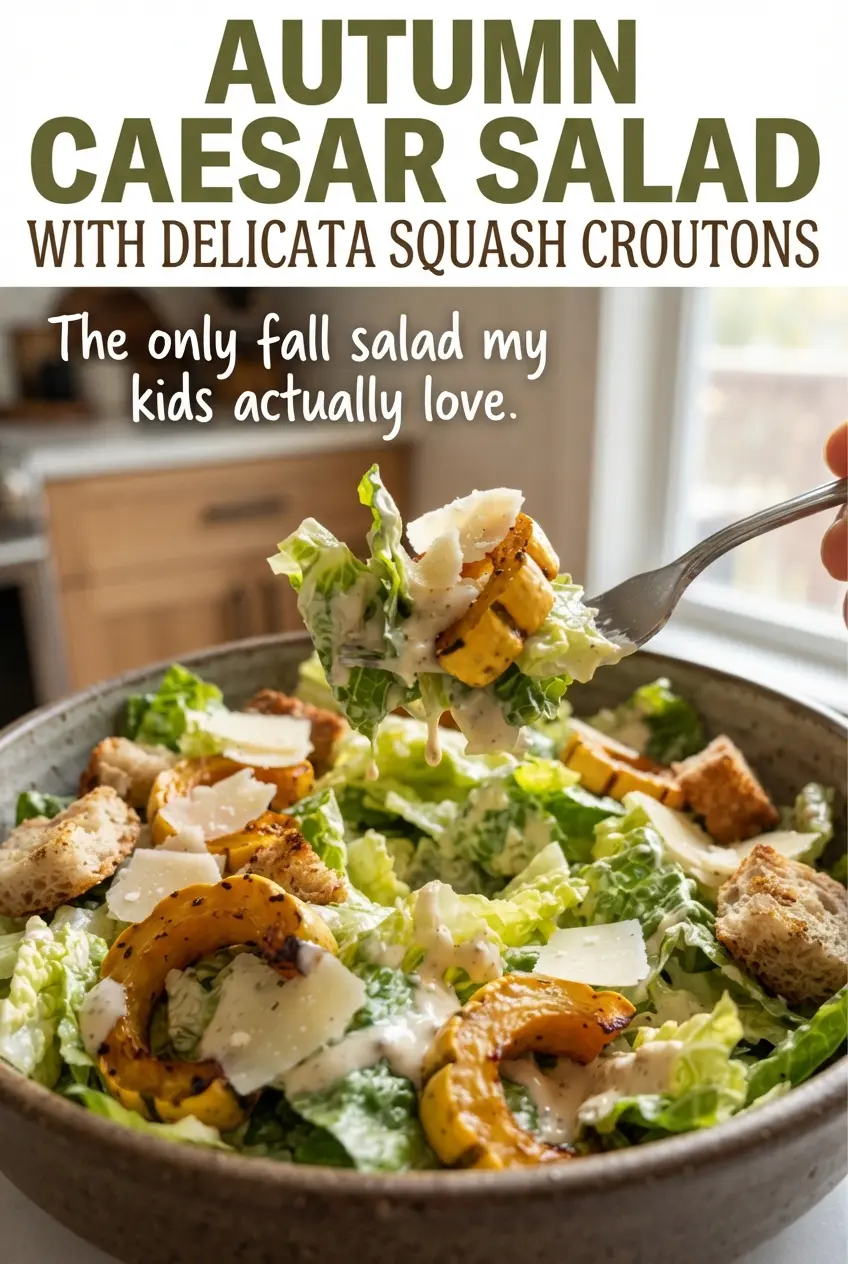
Autumn Caesar Salad with Delicata Squash Croutons
Ingredients
Equipment
Method
- Preheat oven to 425F. In a bowl, toss delicata squash with olive oil, maple syrup, smoked paprika, and salt until evenly coated.
- Spread squash in a single layer on a sheet pan. Roast 22-25 minutes, flipping halfway, until golden and crisp at the edges (visual cue: browned rims and slightly caramelized edges).
- Add lacinato kale to a bowl and massage with 1 tablespoon of caesar dressing for 1 minute to soften. Visual cue: kale looks darker green and slightly glossy.
- In a large bowl, toss chopped romaine and massaged kale with the remaining caesar dressing until evenly coated. Visual cue: greens look lightly slicked, not dry.
- Top the salad with roasted delicata squash croutons, shaved Parmesan, and roasted pepitas. Visual cue: squash rings sit on top so the crisp edges stay visible.
- Serve immediately with lemon wedges on the side. Visual cue: squeeze lemon over the salad just before eating.