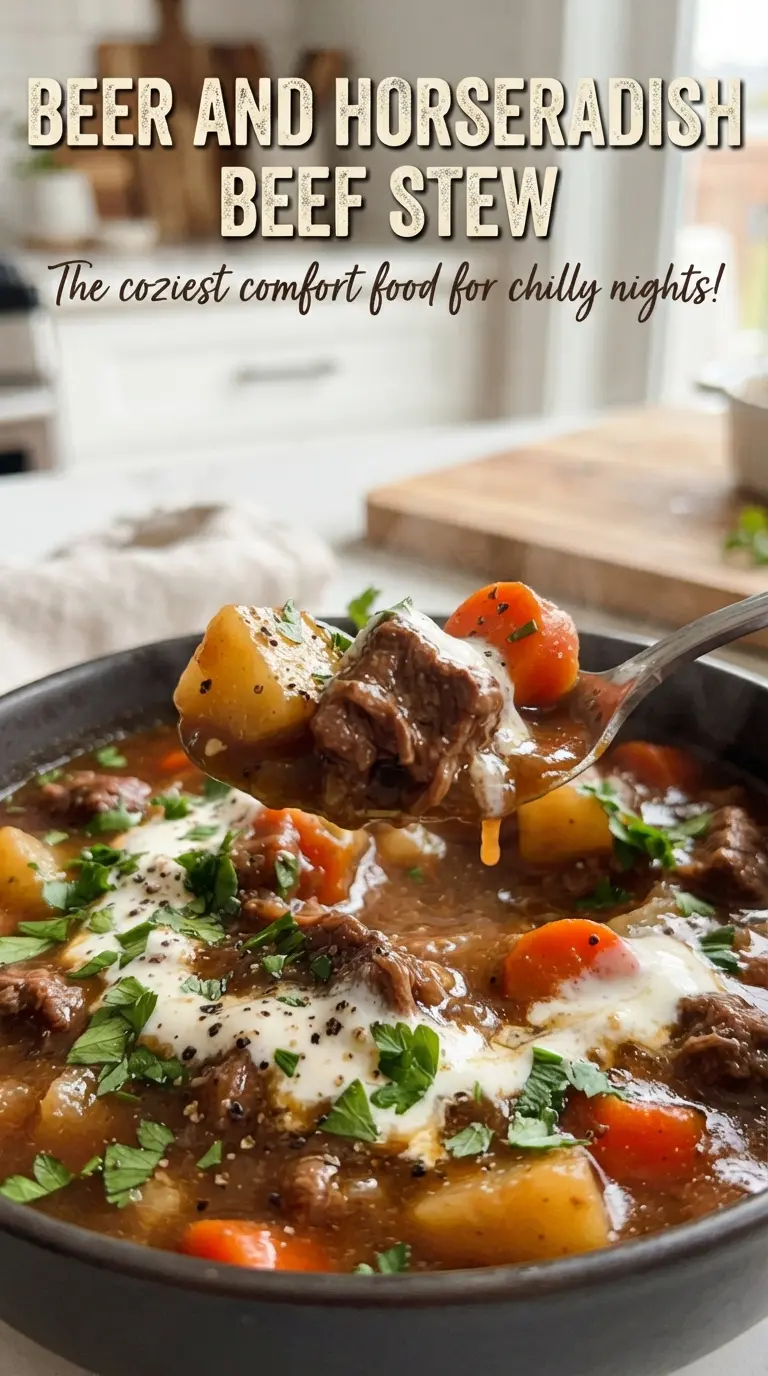
Dark beer, tender beef, and a sharp finish of horseradish make this stew taste like it simmered all day in the best possible way. The beef turns spoon-tender, the broth picks up deep, malty flavor from the beer, and the horseradish keeps the whole pot from tasting heavy. It lands rich, savory, and just bright enough to keep you going back for another bowl.
What makes this version work is the layering. The beef gets coated in flour before browning, which helps build body in the broth later. The beer goes in after the onions and tomato paste have had a chance to cook, so it picks up the browned bits from the pot instead of tasting flat. Horseradish is split between the stew and the sour cream topping, which gives you a clean, peppery heat without letting it disappear during the long simmer.
If you’ve ever had stew turn muddy or one-note, the fix is usually in the early steps. Brown the beef properly, let the tomato paste darken for a minute, and don’t rush the final hour when the potatoes and carrots finish softening. That’s where the texture and flavor really come together.
The stew came out so rich and the horseradish sour cream on top was the best part. I liked that the beef stayed tender and the broth wasn’t too thick or gluey after the long simmer.
Save this beer-braised beef stew for the nights when you want deep flavor, tender beef, and a horseradish finish that cuts through the richness.
The Reason the Horseradish Goes in Twice
Horseradish can disappear fast in a long-simmered stew if you add all of it at the beginning. That first amount seasons the broth and gives the beef a subtle heat while it cooks, but the final spoonful mixed into sour cream gives you the sharp, fresh kick right at the table. That contrast is what keeps the stew from tasting flat after nearly three hours on the stove.
The other thing worth paying attention to is the beer. Brown ale or amber beer adds malt and depth, not bitterness, so pick something you’d actually drink. A harsh beer can take over the pot, while a smooth one folds into the beef and vegetables and leaves you with a rounder, richer broth.
- Beef chuck — Chuck is the cut you want here because it has enough connective tissue to turn tender during the long simmer. Leaner stew meat will dry out before the vegetables are done.
- Prepared horseradish — Use prepared horseradish, not horseradish sauce. The sauce is usually softened with cream or sugar and won’t give the same clean heat. If yours is very strong, start with a little less in the stew and keep the full amount for the topping.
- Brown ale or amber beer — This is a place where beer matters. Something malty and balanced gives the stew a deeper flavor, while a very hoppy beer can turn the broth sharp. If you don’t want to cook with alcohol, use extra beef broth plus 1 tablespoon balsamic vinegar for some of the same depth.
- Tomato paste — Let it cook with the onions for a full minute until it darkens slightly. That step removes the raw tomato taste and gives the stew a richer base.
- Sour cream — The sour cream topping softens the horseradish and gives each bowl a cool, creamy finish. Full-fat sour cream holds up best; lower-fat versions can look thin once stirred.
What Each Ingredient Is Actually Doing in This Recipe
- Primary ingredient (the star) — Quality matters most. Choose the best you can find.
- Cooking medium (oil, butter, or broth) — This carries flavors and prevents dryness.
- Seasonings (salt, pepper, spices, herbs) — Layer flavors so nothing overpowers. Build depth gradually.
- Aromatics (garlic, onion, herbs) — Cook with fat to bloom flavors. Become the foundation.
- Supporting ingredients — Complement the main ingredient without overpowering it.
- Sauce or liquid (if applicable) — Brings flavors together. Balance richness with acid.
- Acid (lemon, vinegar, wine, or other) — Brightens and prevents flat-tasting results.
- Final finish (garnish, glaze, or sauce) — Prevents one-dimensional taste and adds visual appeal.
How to Build the Stew So the Beef Stays Tender
Brown the beef in batches
Tossing the beef with flour before browning does two jobs at once: it helps the meat sear and it gives the broth a little body later. Brown it in a hot pan without crowding, or the meat will steam and turn gray instead of picking up a crust. You want deep brown edges and browned bits stuck to the bottom of the pot. Those bits are the start of the sauce.
Cook the onion and tomato paste before the liquid goes in
Once the onion softens, add the garlic and tomato paste and cook them for a minute. The tomato paste should darken and smell sweet, not raw. If you dump the beer in too soon, the base stays thin and one-dimensional. Cooking the paste first gives the stew a deeper, more rounded flavor.
Use the beer to lift the fond
Pour in the beer and scrape the bottom of the pot while it sizzles. That scraping is not cleanup work; it’s flavor. Stir in the broth, horseradish, Worcestershire, brown sugar, thyme, and beef, then cover and let it simmer gently. Keep the heat low enough that the surface barely blips. A hard boil can tighten the beef instead of tenderizing it.
Add the vegetables at the end
Potatoes and carrots go in after the beef has had time to get tender. If they cook from the beginning, they’ll collapse before the meat is ready. Once they’re in, simmer until a fork slides through the potatoes and the carrots have lost their raw crunch. At that point the broth should taste full and the beef should break apart with light pressure.
How to Adapt This for Different Kitchens
Dairy-Free Finish
Skip the sour cream topping and finish each bowl with extra chopped chives or a spoonful of plain dairy-free yogurt. The stew itself is already dairy-free, so this swap mainly changes the final creamy contrast. You’ll lose a little tang, but the horseradish still gives the broth plenty of bite.
Gluten-Free Version
Replace the all-purpose flour with a gluten-free flour blend that’s meant for 1:1 baking or use cornstarch at the end to thicken the broth. The flavor stays the same, but cornstarch gives a glossier finish and should be stirred in as a slurry near the end of cooking, not at the start.
No Beer in the Pot
Use an extra cup of beef broth plus 1 tablespoon balsamic vinegar or red wine vinegar. You’ll lose the malty note from the beer, but the vinegar helps recreate the little bit of lift that keeps the stew from tasting heavy.
Make It Ahead for Better Flavor
This stew tastes even deeper on day two because the broth settles into the beef and vegetables overnight. Cook it completely, cool it, and reheat it gently before serving. Add the sour cream topping fresh so it stays cool and clean-tasting against the hot stew.
Storage and Reheating
- Refrigerator: Store covered for up to 4 days. The broth will thicken as it chills.
- Freezer: Freeze the stew without the sour cream topping for up to 3 months. Potatoes soften a little after thawing, but the flavor holds up well.
- Reheating: Reheat gently on the stove over medium-low heat with a splash of broth if needed. Don’t boil it hard, or the beef can tighten and the potatoes can break apart.
Answers to the Questions Worth Asking
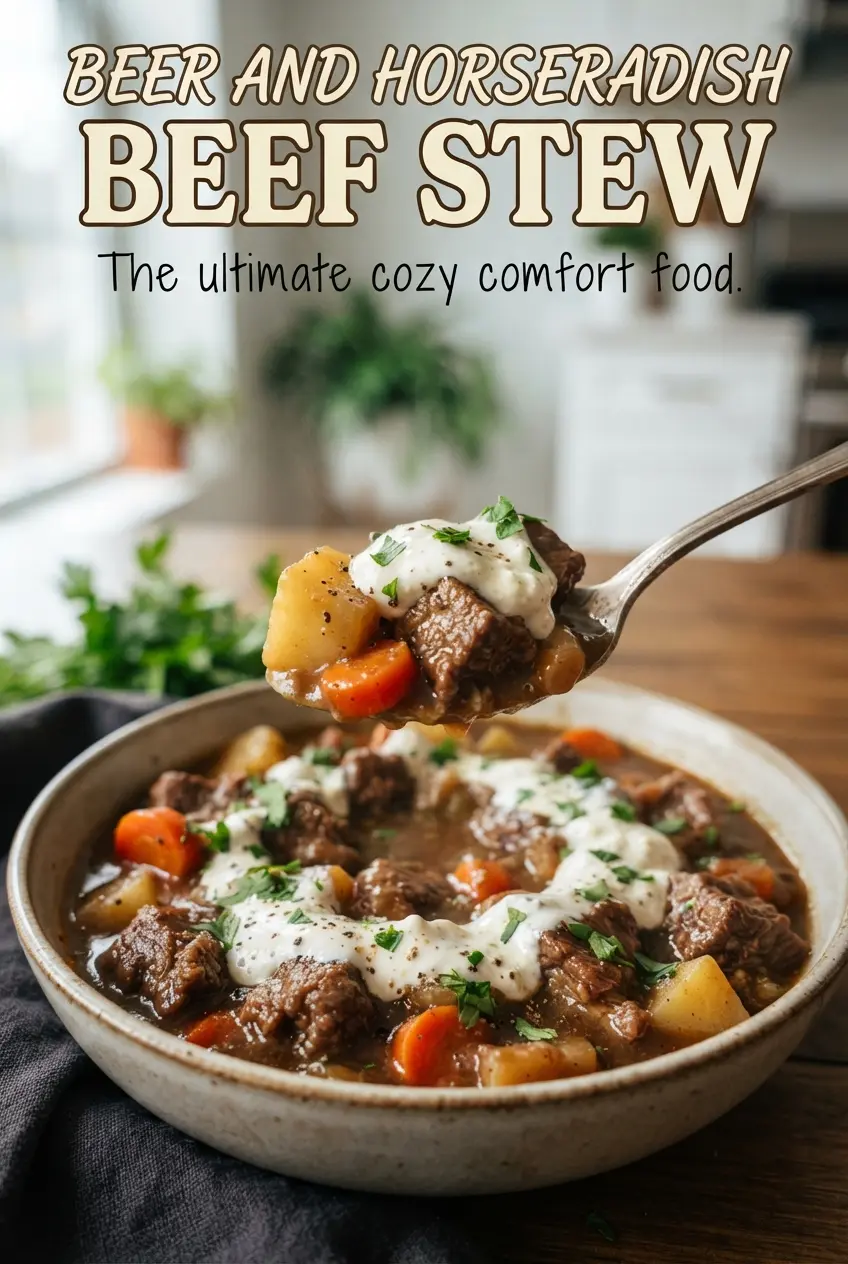
Beer and Horseradish Beef Stew
Ingredients
Equipment
Method
- Season the beef with salt and black pepper, then toss it with the all-purpose flour until lightly coated. Brown the beef in batches in hot vegetable oil in a Dutch oven.
- Cook the beef without crowding, turning as needed until browned on the outside. Transfer browned pieces to a plate while you brown the next batch.
- Add the chopped onion to the Dutch oven and cook for 5 minutes, stirring, until softened. Add the minced garlic and tomato paste and cook for 1 minute until fragrant.
- Pour in the brown ale or amber beer, scraping the bottom to loosen the browned bits. Stir in the beef broth, 2 tablespoons prepared horseradish, Worcestershire sauce, brown sugar, and dried thyme.
- Return the browned beef to the pot, bring to a gentle simmer, then cover. Simmer for 1 3/4 hours, keeping the heat steady and bubbling lightly.
- Uncover the Dutch oven and add the cubed potatoes and sliced carrots. Simmer for 45-60 minutes, until the potatoes are tender and the carrots are cooked through.
- Mix the sour cream with the remaining 1 tablespoon prepared horseradish until smooth and creamy. Serve the stew hot with a dollop of horseradish sour cream in each bowl and sprinkle with chopped fresh chives.