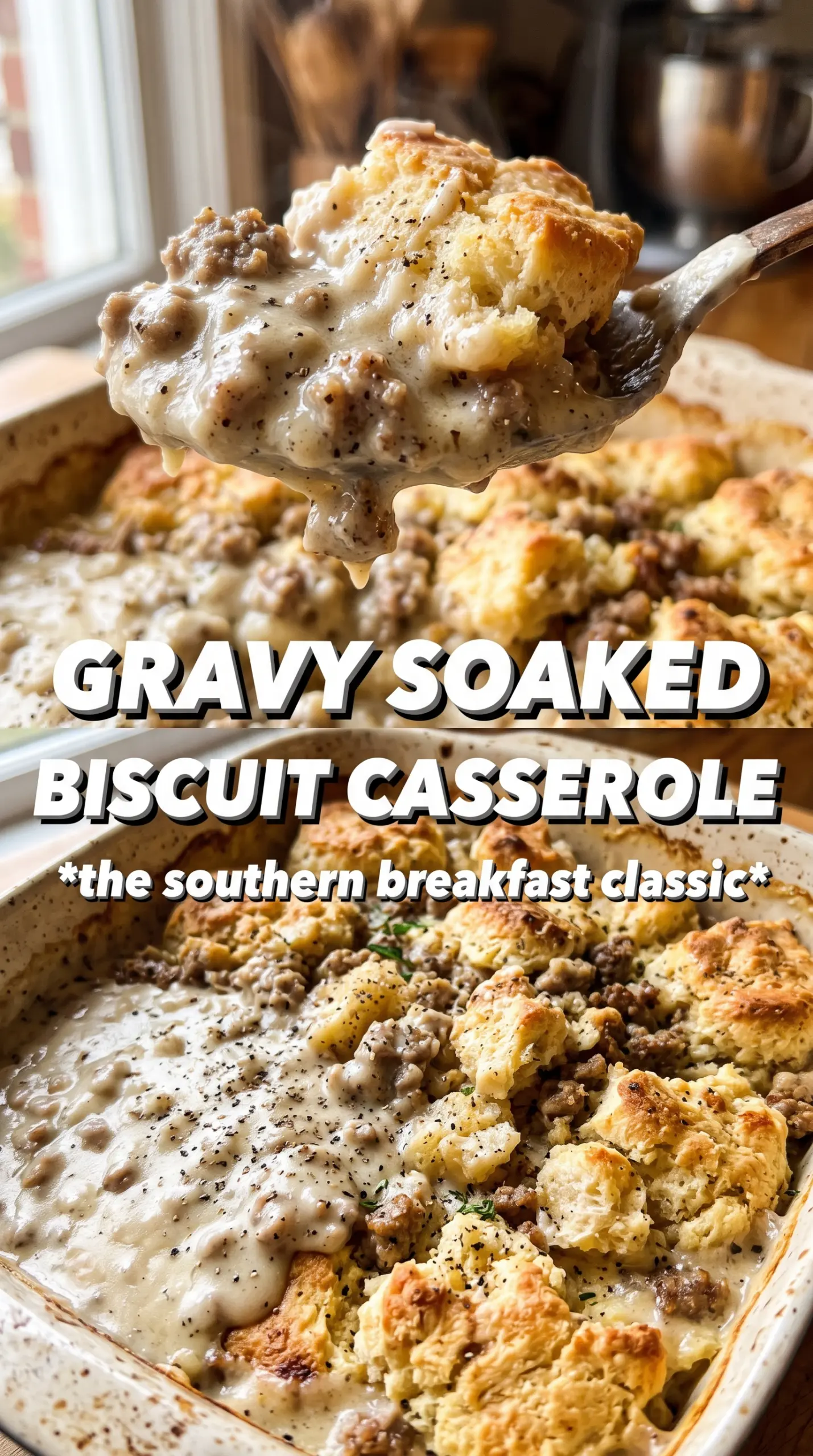
Fluffy biscuit pieces, thick peppery sausage gravy, and a golden cheddar top bake into the kind of breakfast casserole that disappears fast at the table. The best bites are the ones where the biscuits soak up the gravy underneath but still keep a little structure on top, so you get creamy, savory, and tender all at once.
What makes this version work is the order. The sausage stays in the pan so the flour can grab onto those drippings, which gives the gravy more depth than a plain milk sauce ever will. The eggs go on top instead of getting stirred in, so they set into a soft layer rather than turning the whole casserole into a dense loaf. That balance is what keeps it from eating heavy.
Below, I’m walking through the part that matters most: how to keep the gravy thick, how to keep the biscuits from disappearing into it, and how to make this ahead without losing that fresh-baked texture.
The gravy thickened up perfectly and the biscuit pieces stayed fluffy instead of getting soggy. I made it for a Saturday brunch and everyone went back for seconds before I even sat down.
Save this biscuits and gravy casserole for a make-ahead breakfast that bakes up with fluffy biscuits, peppery sausage gravy, and a cheesy golden top.
The Reason the Biscuits Stay Fluffy Under All That Gravy
The most common mistake with a biscuits and gravy casserole is treating the biscuit layer like it can soak forever. It can’t. Biscuit dough wants enough moisture to bake through, but not so much that it dissolves into the gravy. Quartering the biscuits gives you more edges and more structure, which helps them hold their shape in the oven instead of turning gummy.
The other thing that matters is gravy thickness. If the gravy is loose on the stove, it will loosen even more as the casserole bakes and the biscuits release a little starch. Cook it until it clings to the spoon and leaves a clear trail when you stir the pan. That’s the point where it will settle into the dish instead of flooding it.
The eggs also keep this from feeling like plain sausage gravy over bread. They add body without taking over, but only if you pour them over the gravy after whisking them with a splash of milk so they bake into soft curds instead of scrambled pockets.
What Each Ingredient Is Actually Doing in This Casserole
- Refrigerated biscuit dough — This gives you the right tender, layered texture fast. Cut the biscuits into quarters so they bake through under the gravy instead of staying doughy in the center. Homemade biscuit dough works too, but keep the pieces small and don’t pack them tightly into the dish.
- Breakfast sausage — This is the backbone of the gravy, so use one with good seasoning. Mild sausage keeps the pepper from getting harsh, while hot sausage gives the casserole more kick. If you use turkey sausage, add a little extra butter because it gives less fat for the roux.
- Butter and flour — These build the gravy base right in the sausage pan. The flour needs that full minute of cooking so the casserole doesn’t taste raw or chalky. If you rush this step, the gravy can taste pasty instead of rich.
- Whole milk — Whole milk gives the gravy the body it needs to bake into the casserole without turning watery. Lower-fat milk works in a pinch, but the sauce will be thinner and slightly less silky. Warm milk blends in more smoothly, though cold milk still works if you whisk steadily.
- Eggs — These turn it from sausage gravy with biscuits into a true breakfast casserole. They should be whisked with a splash of milk so they bake into a tender layer. Don’t skip them unless you want a looser, messier dish.
- Sharp cheddar — Sharp cheddar brings enough punch to stand up to the gravy. Mild cheese disappears in the sauce, while extra-sharp cheddar gives you a little more bite on top. Shred it yourself if you can; pre-shredded cheese doesn’t melt quite as cleanly.
Building the Gravy Before the Casserole Goes In
Brown the sausage until the pan looks glossy, not dry
Cook the sausage in a skillet over medium heat and break it up well with a spoon. You want browned bits and rendered fat in the pan, not pale crumbles sitting in a puddle of grease. If there’s a huge amount of grease, spoon off a little, but leave enough behind to cook the flour. Those drippings are what give the gravy its deep, savory taste.
Cook the flour long enough to lose the raw edge
Add the butter, then whisk in the flour and let it cook for about a minute. The mixture should look like a thick paste coating the sausage. If it still smells like raw flour, keep stirring for a few more seconds before adding the milk. This step matters because undercooked flour gives the whole casserole a starchy finish.
Whisk in the milk until the gravy coats a spoon
Add the milk gradually and keep stirring so the gravy stays smooth. At first it will look thin, then suddenly it will thicken and bubble in heavier plops. Keep cooking until it’s thick enough to mound slightly on a spoon. That thickness protects the biscuit layer and keeps the casserole from turning soupy.
Layer it in the right order
Spread the biscuit pieces across the bottom of the dish first, then pour the sausage gravy evenly over them. Whisk the eggs with a splash of milk and pour that over the top, then finish with cheddar. The order matters because the biscuits need direct contact with the heat from the dish, while the gravy and eggs settle around them as they bake. A quick bake at 375°F gives the biscuits enough lift without drying out the eggs.
Make It Spicier With Hot Sausage and Extra Pepper
Use hot breakfast sausage and add a few extra turns of black pepper to the gravy. That keeps the casserole bold without changing the method. This version tastes sharper and a little more Southern-style, and it stands up well if you’re serving it with fruit or something sweet on the side.
Make It Gluten-Free With One Smart Swap
Use a gluten-free biscuit dough and swap the flour for a 1:1 gluten-free baking blend. The gravy will still thicken, though it may take an extra minute or two to come together. The texture stays close to the original, but the biscuits are usually a little more delicate, so let the casserole rest before serving.
Make It Lighter With Turkey Sausage
Turkey sausage works well if you want less richness, but it needs the extra butter to carry the roux. The flavor is cleaner and a little leaner, though not as deep as pork sausage. Add a pinch more salt and pepper because turkey sausage usually starts out milder.
Storage and Reheating
- Refrigerator: Store leftovers in an airtight container for up to 4 days. The biscuits soften as they sit, but the flavor stays good.
- Freezer: This freezes okay, though the eggs and biscuits both soften a bit after thawing. Wrap portions tightly and freeze for up to 2 months for the best result.
- Reheating: Warm individual portions in the oven at 325°F until heated through, or use the microwave at medium power so the eggs don’t turn rubbery. Add a tiny splash of milk if the gravy looks tight after chilling.
Answers to the Questions Worth Asking

Biscuits and Gravy Casserole
Ingredients
Equipment
Method
- Preheat the oven to 375°F and grease a 9x13 dish so the biscuit pieces don’t stick.
- Brown the breakfast sausage in a skillet, crumbling well, and leave it in the pan; add the butter.
- Whisk the all-purpose flour into the sausage drippings and cook for 1 minute to remove the raw flour taste.
- Gradually add the whole milk, stirring constantly until a thick gravy forms, then season heavily with salt and lots of cracked black pepper.
- Spread the quartered biscuit pieces across the bottom of the greased 9x13 dish in an even layer.
- Pour the sausage gravy evenly over the biscuits so everything is coated.
- Whisk the eggs with a splash of milk, pour over the gravy, then top with the shredded sharp cheddar.
- Bake at 375°F for 30–35 minutes, until the eggs are set and the biscuits are golden, with a bubbling surface and biscuit crowns peeking through.