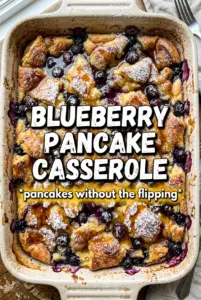
Golden on top, tender in the middle, and dotted with blueberries in every bite, this blueberry buttermilk pancake casserole gives you all the comfort of a stack of pancakes without standing at the stove flipping batch after batch. The edges bake up a little more deeply than the center, which means each square has that mix of crisp, custardy, and fluffy that makes people reach for seconds before they’ve finished the first piece.
Buttermilk does the heavy lifting here. It brings tang, tenderness, and enough acidity to react with the baking soda so the casserole rises with a lighter crumb instead of turning dense. The batter also stays intentionally a little loose, which is what keeps the finished texture more like baked pancakes and less like a cake trying to pretend it’s breakfast.
Below, I’ll walk through the small things that matter most: how to mix the batter without toughening it, why the berries go on top instead of getting stirred in, and how to know when the center is set without overbaking the whole pan.
The blueberries stayed right on top where I could see them, and the casserole baked up fluffy instead of gummy. I loved being able to cut it into neat squares and drizzle maple syrup over everyone’s plate at once.
Save this blueberry buttermilk pancake casserole for the mornings when you want fluffy pancakes, browned edges, and an easy pan-to-table brunch.
The Reason This Bakes Like Pancakes Instead of Breakfast Cake
The difference comes down to batter thickness, oven heat, and when the fruit gets added. A pancake casserole should rise into soft, airy squares with a tender crumb, not bake into something tight and sweet like coffee cake. That means you stop mixing as soon as the dry spots disappear, because extra stirring builds gluten and tightens the texture.
It also helps to scatter the blueberries over the top instead of folding them in. When berries get mixed through a loose batter, they sink, burst, and streak the whole pan purple. On top, they stay visible, roast gently, and give you those little pops of juicy fruit against the buttery crumb.
- Buttermilk — This is what gives the casserole its tang and helps activate the baking soda. Regular milk works in a pinch, but the crumb won’t be quite as tender or lively. If you need a substitute, use milk mixed with a tablespoon of lemon juice or vinegar and let it sit for 5 minutes before adding it.
- Baking powder and baking soda — The two-leavening approach matters. Baking powder gives lift during baking, while baking soda reacts with the buttermilk for extra rise and a softer texture. If your casserole ever turns flat, stale baking powder is usually the culprit.
- Butter — Melted butter brings flavor and helps the top bake up with that lightly crisp, browned finish. You can swap in neutral oil, but you’ll lose some of the richness that makes this taste like real pancakes. Let the butter cool slightly before whisking it into the eggs so you don’t scramble them.
- Blueberries — Fresh or frozen both work. Frozen berries go in straight from the freezer; don’t thaw them or they’ll bleed too much color into the batter. If the berries are very large, a quick rinse and dry helps them sit better on top instead of rolling into one corner.
How to Mix the Batter So the Casserole Stays Tender
Whisk the dry ingredients first
Start with the flour, sugar, baking powder, baking soda, and salt in one bowl so the leavening gets evenly distributed. A quick whisk now saves you from pockets of baking soda later, which can leave an odd bitter bite in one square. The mixture should look uniform and a little fluffy, not packed down.
Bring the wet ingredients together gently
Whisk the buttermilk, eggs, melted butter, and vanilla in a second bowl until smooth. The butter should be warm but not hot, or it can leave streaks and make the eggs look curdled. Once the wet ingredients are combined, pour them into the dry and stir only until the flour disappears; a few small lumps are fine and expected.
Bake until the center springs back
Spread the batter in a greased 9×13 dish and scatter the blueberries evenly across the top. The casserole is done when the top is golden, the edges pull slightly from the pan, and the center feels set with a light spring when touched. If you insert a tester, it should come out without wet batter, though a few moist crumbs are fine. Overbaking is what turns this from fluffy to dry, so pull it as soon as the center stops wobbling.
Three Ways to Adjust This for Different Tables
Make-Ahead Brunch Brighter and Easier
Mix the dry ingredients the night before and whisk the wet ingredients separately in the fridge. In the morning, combine them, pour into the pan, and bake. That keeps the batter from sitting too long once the leaveners are hydrated, which helps the casserole rise better.
Dairy-Free Version
Use a dairy-free milk mixed with 1 tablespoon lemon juice or vinegar in place of the buttermilk, and swap the butter for melted neutral oil or plant-based butter. The texture will stay soft, though you’ll lose some of the tang that buttermilk gives the finished casserole.
Using Frozen Blueberries Without a Mess
Add frozen blueberries straight from the freezer and distribute them quickly over the batter. If you toss them in the flour first, they’re less likely to sink, but the bigger win is not thawing them. Thawed berries leak juice fast and can leave the center muddy.
Swap the Fruit for Something Different
Raspberries, chopped strawberries, or a mix of berries all work here, though raspberries break down a little more and strawberries add extra moisture. If you switch to strawberries, chop them small so the casserole still bakes through evenly.
Storage and Reheating
- Refrigerator: Store leftovers covered for up to 4 days. The top softens as it sits, but the texture stays pleasant.
- Freezer: It freezes well in individual squares. Wrap tightly and freeze for up to 2 months, then thaw in the fridge before reheating.
- Reheating: Warm squares in a 325°F oven or toaster oven until heated through. The biggest mistake is microwaving too long, which makes the crumb rubbery before the center is warm.
Answers to the Questions Worth Asking
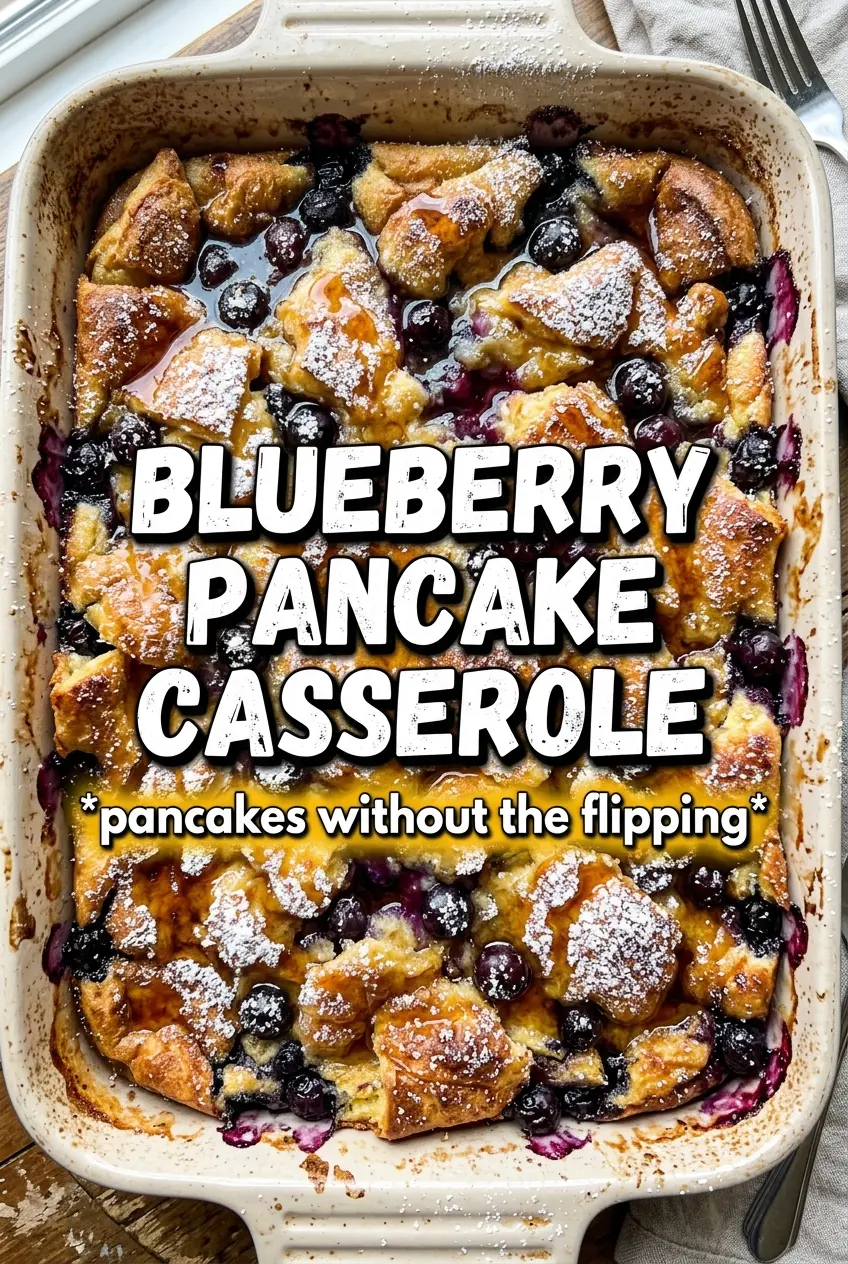
Blueberry Buttermilk Pancake Casserole
Ingredients
Equipment
Method
- Preheat oven to 375°F and grease a 9x13 baking dish so the casserole releases cleanly after baking.
- Whisk all-purpose flour, sugar, baking powder, baking soda, and salt together until evenly combined and no lumps of leaveners remain.
- Whisk buttermilk, eggs, melted butter, and vanilla extract together until smooth, then stir into the dry ingredients until just combined.
- Pour the batter into the prepared dish and scatter blueberries evenly across the top so they bake into the golden surface.
- Bake at 375°F for 35–40 minutes until the center is set and the top is golden and lightly springy.
- Dust with powdered sugar for a light finish, then slice into squares to serve.
- Serve with warm maple syrup drizzled across the top so each square gets glossy, syrupy coverage.