Sticky, glossy Bourbon Maple BBQ Chicken Skewers bring the kind of sweet-smoky bite that disappears fast from a platter. The glaze clings to the chicken instead of running off, and the edges caramelize just enough on the grill to give you those dark, lacquered spots that taste like summer cookout food done right. Serve them with anything crisp and fresh, or pile them high and let the skewers do the talking.
The balance here matters. Bourbon gives the sauce a warm backbone, maple syrup adds shine and roundness, and the vinegar keeps the sweetness from turning flat. I use chicken breast because it cooks quickly and stays tender when it’s cut evenly, but the real trick is reserving part of the sauce before the raw chicken ever touches it. That gives you a clean basting glaze that turns sticky on the grill instead of asking you to mop raw marinade onto cooked meat.
Below, I’ve included the small details that keep the chicken juicy and the glaze from burning before the meat is done. If you’ve ever had skewers char on the outside while the center stayed pale, this version gives you a better path.
The marinade gave the chicken a deep caramelized glaze, and the reserved sauce thickened up perfectly on the grill without burning. My husband kept sneaking pieces straight off the skewer.
Bourbon Maple BBQ Chicken Skewers turn sticky and caramelized on the grill, so save this one for the nights when you want big cookout flavor with almost no fuss.
The Part That Keeps the Glaze from Burning Too Soon
The biggest mistake with a sweet grill glaze is putting all of it on too early. Maple syrup and BBQ sauce both brown fast, which is great for flavor and terrible if the chicken still needs time over the heat. Reserving part of the sauce before the raw chicken goes in gives you a clean basting sauce that can caramelize on the grill without carrying raw-meat contamination.
Cut the chicken into even pieces so it cooks at the same pace. If some chunks are much larger than others, the smaller pieces dry out while you wait for the bigger ones to reach 165°F. Medium heat matters here too. A hot flame will scorch the glaze before the chicken cooks through, and then you’re stuck chasing burnt edges instead of building a sticky finish.
What Each Ingredient Is Actually Doing in These Skewers
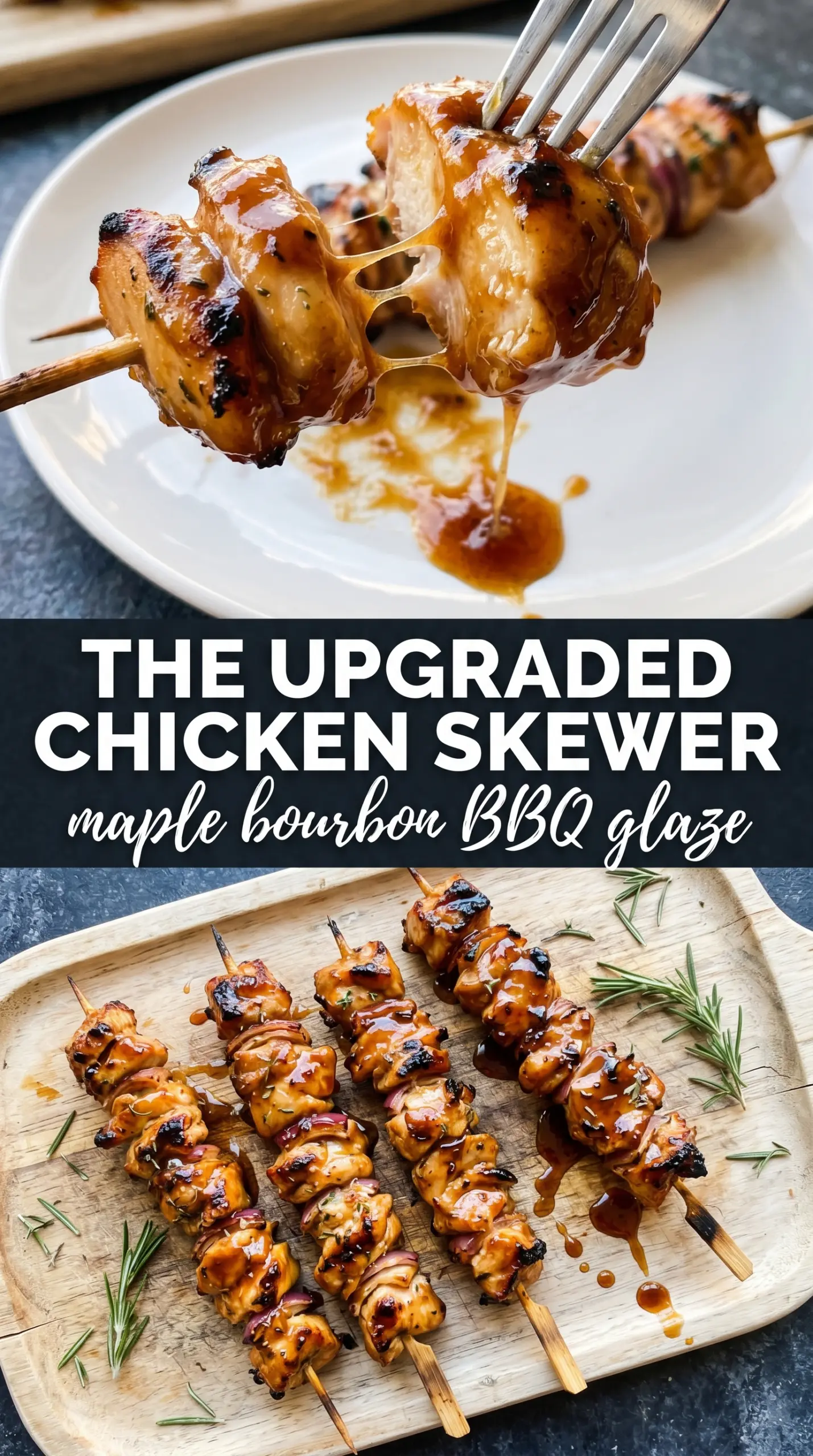
- Chicken breasts — They cook quickly and take on the glaze without much fat getting in the way. Cut them into even cubes, about the same size all around, so the skewers finish at the same time. Thighs work too if you want a juicier, slightly richer bite, but they’ll need a little more time on the grill.
- BBQ sauce — This is the base of the glaze, so use one you’d actually eat on its own. A thicker sauce clings better to the chicken and helps the coating set on the grill. If your sauce is very sweet already, the maple may need to be reduced a little.
- Bourbon — It adds warmth and a little edge that keeps the glaze from tasting flat. The alcohol cooks off, leaving behind depth rather than a boozy finish. If you want to skip it, use apple juice plus a splash more vinegar, though you’ll lose some of the round, smoky backbone.
- Maple syrup — This is what gives the skewers that glossy, sticky finish. Real maple syrup behaves better than pancake syrup here because it’s less artificial and tastes cleaner once it reduces. Don’t overdo it or the glaze can tip from caramelized to candy-sweet.
- Apple cider vinegar and Dijon mustard — These keep the sauce balanced and help the glaze feel sharper and more layered. Dijon also helps the sauce emulsify a bit, which means it coats the chicken more evenly. If you only have yellow mustard, use a little less because it’s louder and less nuanced.
- Wooden skewers — Soaking them helps them survive the grill long enough to get good color on the chicken instead of turning brittle and singed. Metal skewers work too and skip the soaking step entirely.
Getting the Chicken Glossy Without Drying It Out
Building the Marinade
Whisk the BBQ sauce, bourbon, maple syrup, vinegar, and Dijon until the mixture looks smooth and glossy. Then pull out about a quarter cup before the raw chicken goes anywhere near it. That reserved portion is your basting sauce, and separating it now keeps the final glaze clean and safe.
Letting the Chicken Absorb the Flavor
Coat the cubed chicken in the remaining marinade and let it sit for at least an hour, or up to four. Less time still gives you surface flavor, but the chicken won’t taste as integrated. If you push the marinating time much past four hours, the vinegar starts to work too hard on the meat and the texture can turn a little mealy.
Threading and Grilling
Drain off the excess marinade and thread the chicken onto soaked skewers without packing the pieces too tightly. Give each chunk a little breathing room so the heat can reach the sides and the glaze can caramelize instead of steaming. Grill over medium heat for 5 to 6 minutes per side, basting with the reserved sauce during the last few minutes. If the glaze starts to darken too fast, move the skewers to a cooler part of the grill and let the chicken finish more gently.
Knowing When They’re Done
Pull the skewers when the chicken reaches 165°F and the glaze looks sticky and lacquered, not wet. The surface should have darkened in spots, and the pieces should release from the grill with just a little nudge. If the outside looks perfect before the inside is done, the heat was too high. Back it off next time and let the sugar work slower.
How to Adapt These Skewers for Different Grills and Diets
Dairy-Free and Naturally Gluten-Free
As written, these skewers are already dairy-free, and they can be gluten-free if your BBQ sauce is certified gluten-free. That label matters because BBQ sauce is often where hidden wheat sneaks in. Check the bottle before you start, because the rest of the ingredients are already in good shape.
Boneless Chicken Thigh Swap
Chicken thighs give you a juicier, slightly richer skewer and hold up well to the sweet glaze. They can take a minute or two longer than breast meat, so cook by temperature, not by the clock. The flavor gets a little deeper and the texture stays forgiving if your grill runs hot.
No-Bourbon Version
If you don’t want to cook with bourbon, replace it with apple juice or water plus an extra teaspoon of vinegar. The glaze will still caramelize, but you’ll lose some of the warm depth that bourbon adds. It’s a good swap for a lighter, sweeter version, especially if you’re serving kids or avoiding alcohol.
Oven or Broiler Shortcut
When grilling isn’t an option, bake the skewers on a lined sheet pan at 425°F or broil them close to the heat source, turning once and basting near the end. Broiling gives you the best caramelized edges, but it moves fast, so watch carefully once the glaze starts to bubble. The difference is less smoky, but the sticky finish still works.
Storage and Reheating
- Refrigerator: Store leftovers in an airtight container for up to 4 days. The glaze will thicken and look a little darker after chilling.
- Freezer: The cooked chicken freezes well for up to 2 months, but the glaze won’t stay quite as glossy after thawing. Freeze the skewers off the stick if you want them to pack better.
- Reheating: Reheat gently in a covered skillet over low heat or in a 300°F oven until warmed through. High heat will dry out the chicken and turn the sugar in the glaze bitter before the center is hot.
Answers to the Questions Worth Asking
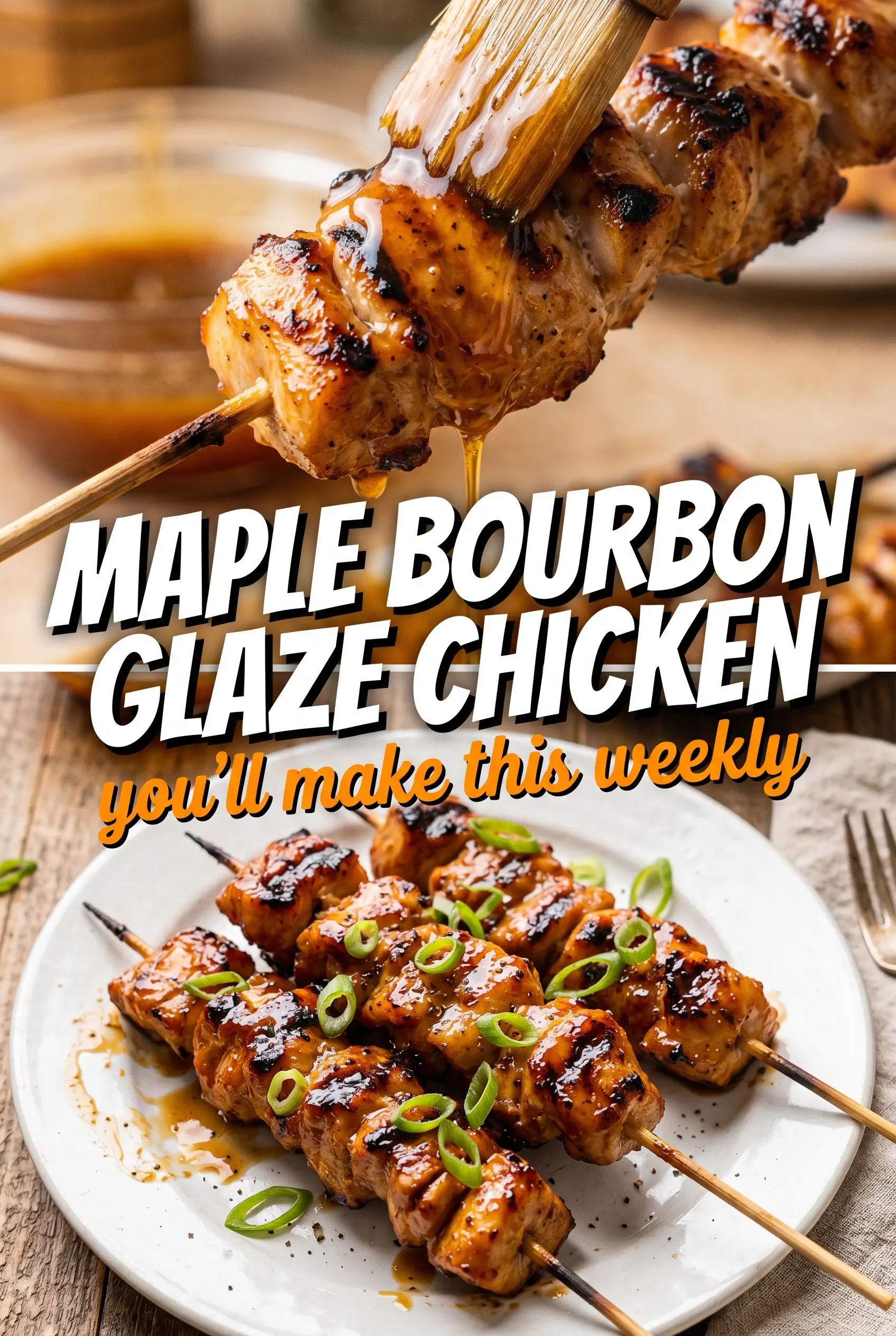
Bourbon Maple BBQ Chicken Skewers
Ingredients
Equipment
Method
- In a bowl, mix BBQ sauce, bourbon, maple syrup, apple cider vinegar, and Dijon mustard until smooth.
- Reserve 1/4 cup of the sauce for basting so you have glaze to brush on during grilling.
- Thread chicken into a nonreactive container and pour in the remaining sauce, coating all cubes.
- Marinate for 1-4 hours in the refrigerator.
- Thread the marinated chicken onto soaked wooden skewers.
- Preheat the grill to medium heat, then grill skewers for 5-6 minutes per side, basting frequently with the reserved sauce.
- Continue grilling until the chicken reaches 165°F and the glaze is sticky with a glossy caramelized look.