California Roll Crab Deviled Eggs hit that sweet spot between party food and something people hover around the platter for. The filling is creamy and tangy like a classic deviled egg, but the crab, avocado, cucumber, sesame, and nori give it the familiar California roll vibe in a two-bite package. They look polished on the tray, but they’re straightforward to put together if you keep the textures separate until the last minute.
What makes this version work is the balance. Japanese mayonnaise gives the yolk mixture a silkier, richer texture than standard mayo, rice vinegar keeps it bright, and soy sauce adds the savory edge that keeps the filling from tasting flat. The crab goes partly into the filling and partly on top, which gives you both flavor in every bite and a better presentation. The cucumber and avocado stay diced small so they don’t slide off the eggs or turn the top into a messy pile.
Below, I’ll show you the easiest way to boil eggs that peel cleanly, plus the small finishing details that make these taste like a real California roll instead of just deviled eggs with seafood on top.
The filling was super smooth and the little cucumber and avocado cubes made every bite taste like a California roll. I used the full 12-minute egg method and they peeled cleanly for once.
These California Roll Crab Deviled Eggs are the appetizer to save for your next party platter — creamy yolks, crab, avocado, and that spicy mayo finish in every bite.
The trick is keeping the California roll flavors crisp, not muddy
Deviled eggs can turn heavy fast when the filling gets overloaded with add-ins. Here, the fix is to treat the egg yolk mixture like the creamy base and the crab salad like the topping, not one big mash. That keeps the texture lighter and gives each bite the contrast you expect from a sushi roll: soft, creamy, cool, and a little briny all at once.
The other place people go wrong is moisture. Crab, cucumber, and avocado all bring something different, but they can also make the tops slide around if they’re cut too large or piled on too early. Finely diced cucumber and avocado stay where you place them, and the eggs hold up better if you wait to garnish with sesame seeds and nori until just before serving.
If your filling tastes flat, it usually needs either more salt from the soy sauce or more acidity from the rice vinegar. Don’t chase that flavor with extra mayo. Mayo makes it richer; vinegar and soy make it taste finished.
What each ingredient is doing in these deviled eggs
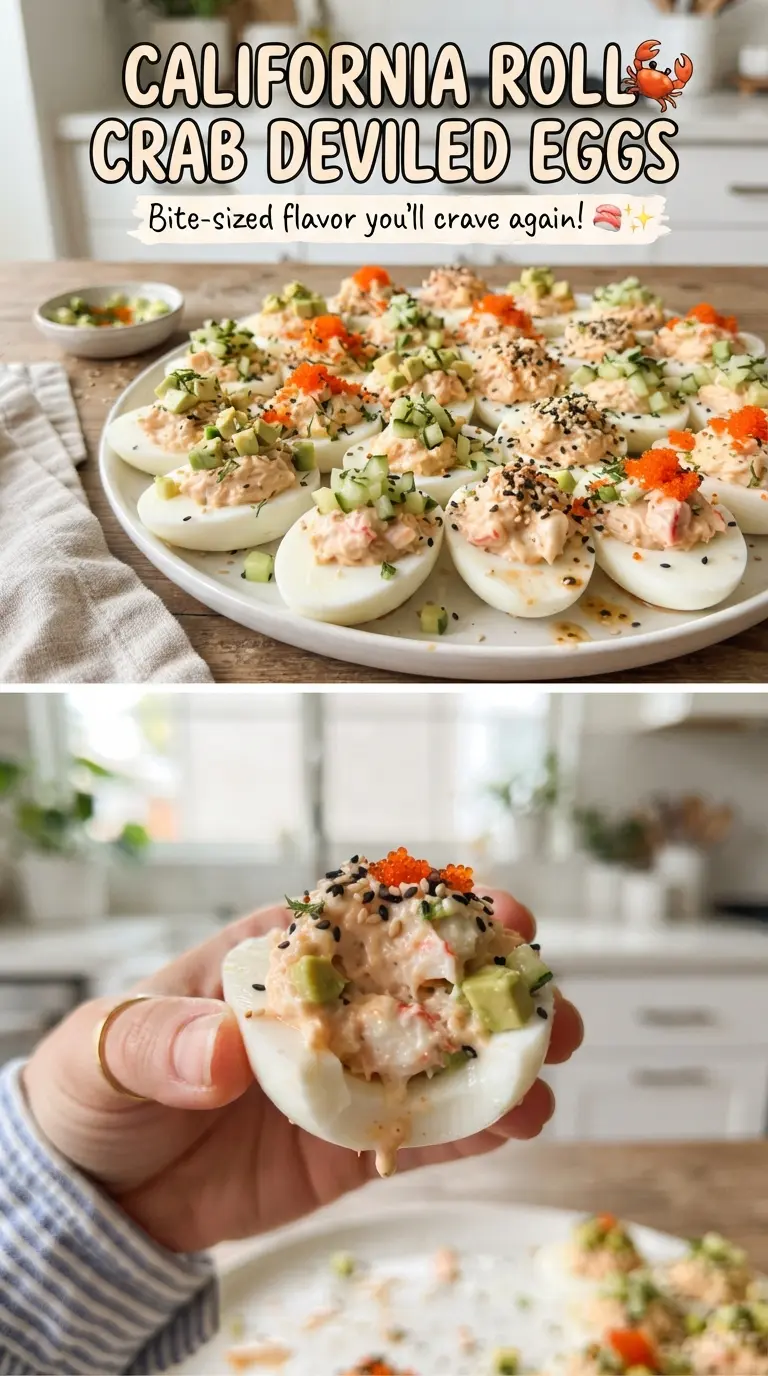
- Japanese mayonnaise — This is what gives the filling its silkier, more custardy texture. Regular mayo works in a pinch, but Japanese mayo brings a richer egg-yolk flavor and a softer tang that fits the sushi-inspired profile better.
- Rice vinegar — It keeps the yolk mixture bright and cuts through the richness. Lemon juice can stand in if that’s what you have, but it tastes sharper and less like the clean acidity you want here.
- Soy sauce — A small amount adds the savory backbone that makes the filling taste like more than mayo and yolk. Use a light hand; too much will darken the filling and make it taste salty instead of balanced.
- Wasabi paste — Optional, but worth using if you want a little heat that reads like sushi rather than hot sauce. Even half a teaspoon disappears into the background, so it wakes up the filling without making it aggressive.
- Crab meat or imitation crab — Real crab gives you sweeter, cleaner flavor, while imitation crab makes the recipe more budget-friendly and still keeps the California roll feel. Chop it finely so it spreads through the filling and sits neatly on top.
- Cucumber and avocado — These are your freshness and creaminess. Dice them small so they hold shape; big chunks make the eggs hard to eat and easier to smear.
- Sriracha mayo — This is the finishing line. It gives you the familiar spicy roll drizzle and a little color contrast, but it should stay a garnish, not take over the whole egg.
- Sesame seeds and nori — Sesame adds nuttiness and nori brings that unmistakable sushi note. Use them at the end so they stay fragrant and crisp.
Build the filling first, then finish the top like a sushi roll
Boil the eggs so they peel cleanly
Start the eggs in cold water, bring them up to a boil, then cover the pot and pull it off the heat for the full 12 minutes. That steady method gives you set whites without chalky yolks. The ice bath matters just as much as the cooking time because it stops the eggs fast and helps the shells release. If your eggs are hard to peel, they were either too fresh or not chilled long enough.
Turn the yolks into a smooth, seasoned base
Mash the yolks with Japanese mayonnaise, rice vinegar, soy sauce, and wasabi until the mixture looks creamy and light, not dry or grainy. If you see little stubborn bits, keep mashing before you add anything else. A smooth base matters here because once the crab goes in, you want the texture to stay spreadable and neat. The filling should mound on a spoon without running.
Layer the crab and toppings in two passes
Fold half the crab into the yolk mixture, then spoon that into the egg whites. That gives you crab flavor inside the filling without making it bulky or hard to pipe. Use the rest of the crab on top with the cucumber and avocado, keeping the pieces small and even. Finish with a thin drizzle of spicy mayo, then sesame seeds and nori strips right before serving so the garnish stays sharp and fresh.
How to adapt them without losing the California roll feel
Use imitation crab for a budget-friendly tray
Imitation crab works well here because it already has that sweet, mild seafood flavor people recognize from California rolls. Chop it finely so it blends into the filling instead of sitting in stringy chunks. The texture is a little softer than real crab, but it still tastes right once the sesame, nori, and spicy mayo go on top.
Make them gluten-free with tamari
Swap the soy sauce for tamari if you need to keep the recipe gluten-free. You’ll get the same salty, savory backbone without changing the balance of the filling. Check the imitation crab label too, since some brands use starches or seasonings that contain gluten.
Leave out the avocado if you’re making them ahead
Avocado tastes best fresh, and it can dull and soften if it sits too long. If you’re preparing these more than a few hours ahead, skip the avocado until just before serving or replace it with extra cucumber for a cleaner make-ahead appetizer. The eggs still taste complete because the crab and spicy mayo carry the flavor.
Storage and Reheating
- Refrigerator: Store covered for up to 2 days. The avocado will soften and darken a bit, so these are best the day they’re made.
- Freezer: Don’t freeze them. The egg whites turn rubbery and the avocado separates when thawed.
- Reheating: These are served cold, so don’t reheat them. If they’ve been in the fridge, let them sit out for 10 to 15 minutes before serving so the filling isn’t too firm and the flavors come through.
The things that trip people up with this dish
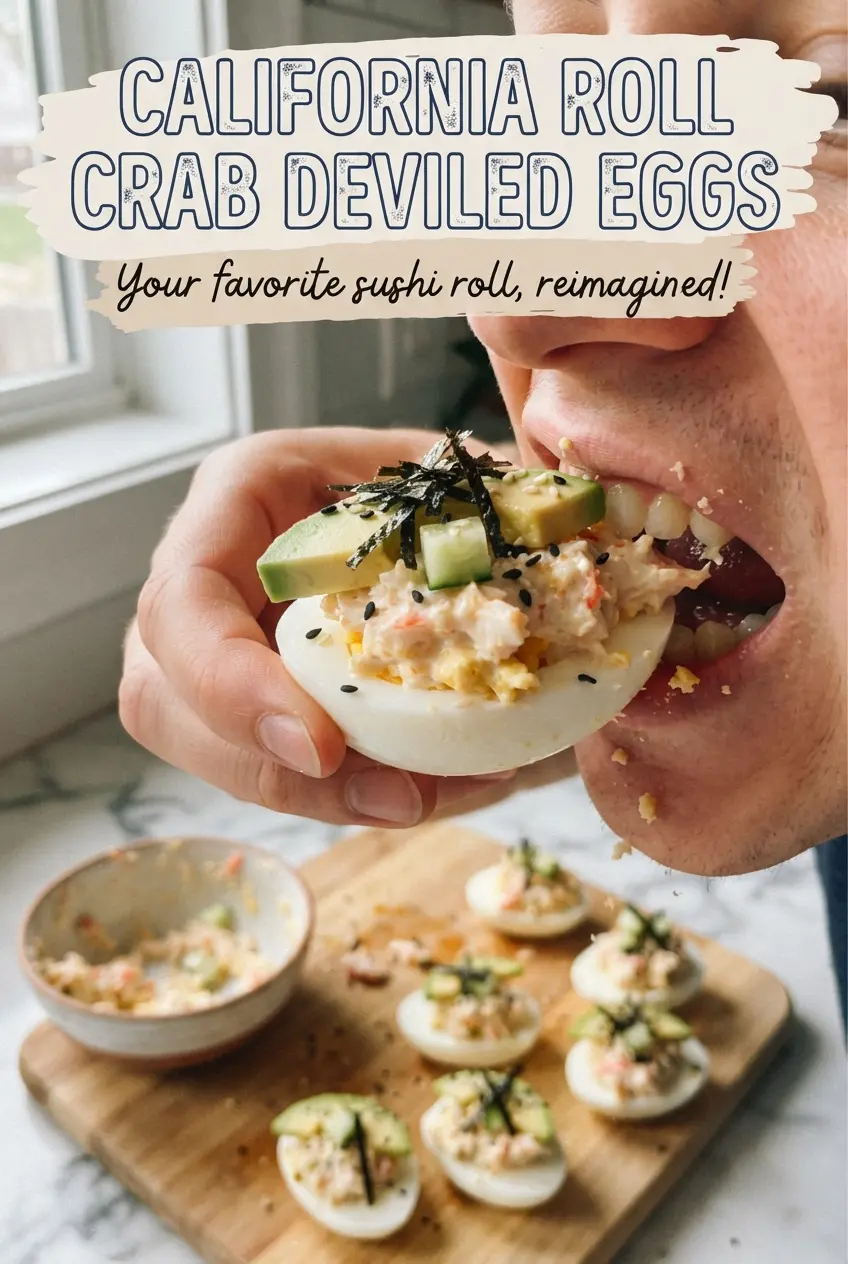
California Roll Crab Deviled Eggs
Ingredients
Equipment
Method
- Place large eggs in a pot, cover with cold water, and bring to a boil over high heat. Cover, remove from heat, and let stand for exactly 12 minutes, then keep the pot ready for the next step.
- Chill the eggs in an ice bath for 10 minutes, then peel them. Halve lengthwise and set the yolk and whites aside for filling.
- Mash the egg yolks with Japanese mayonnaise, rice vinegar, soy sauce, and optional wasabi paste until smooth. Stop when the mixture looks creamy with no yolk lumps.
- Fold in half of the crab and spoon the filling into the egg whites. Fill each egg white generously and keep the surface level.
- Top the filled eggs with the remaining crab, cucumber, and diced avocado. Add the toppings right after filling so they stay bright and crisp.
- Drizzle with spicy mayo and sprinkle with toasted sesame seeds and thin nori strips. Use a thin ribbon of sriracha-mayo for the look of a California roll.