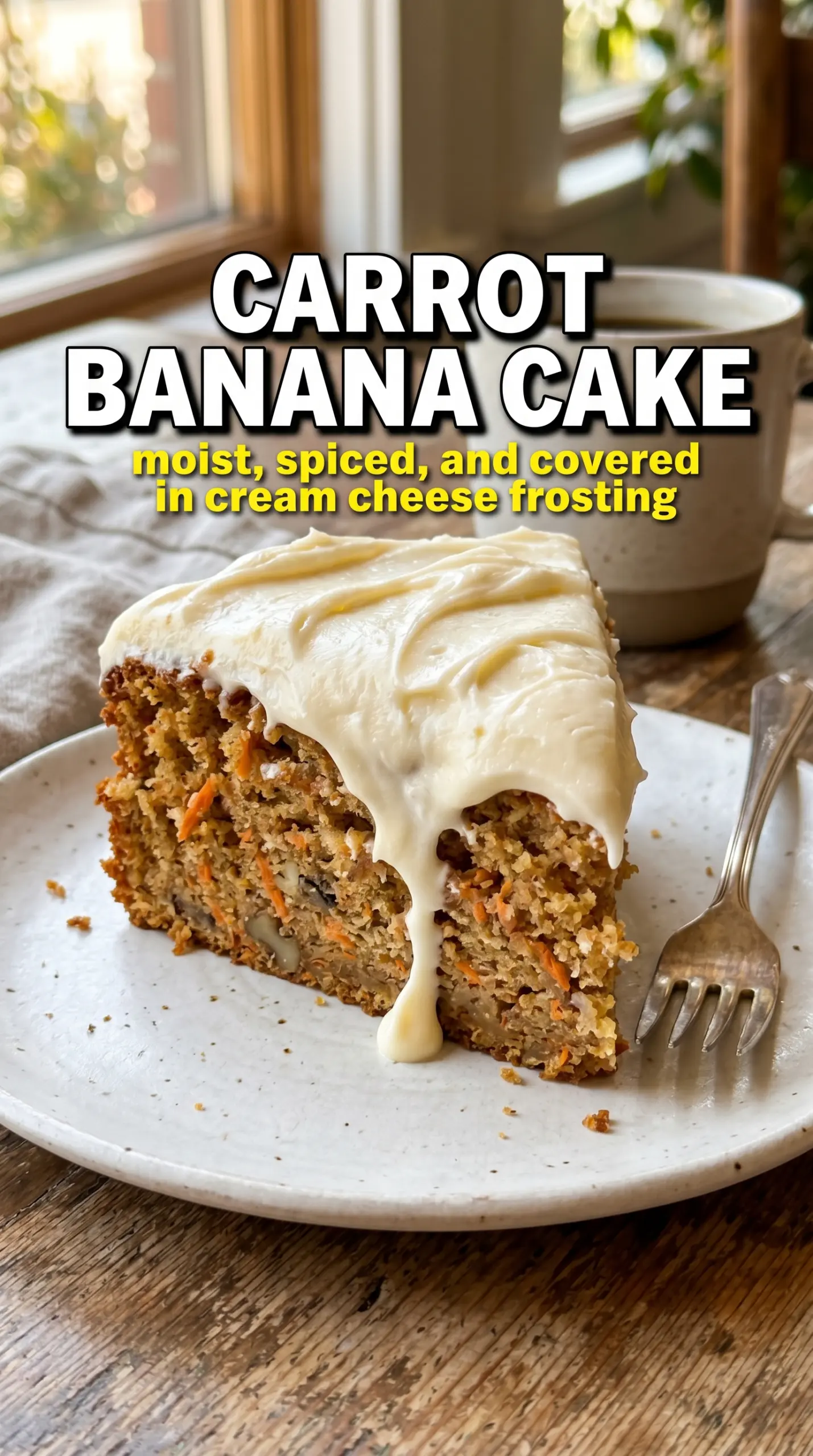
Moist carrot banana cake has that rare combination of sturdy crumb and soft, tender bite that makes people go back for a second slice before the first one is even finished. The bananas keep the cake plush for days, while the carrots bring sweetness and a little texture without making it heavy. With cream cheese frosting on top, it lands somewhere between snack cake and celebration cake, which is exactly why it disappears so fast.
The trick here is balancing moisture without turning the batter dense. Ripe bananas do a lot of the work, but they also add weight, so the flour and leaveners need to be measured carefully and mixed just until the dry spots disappear. The carrots should be finely shredded so they soften as the cake bakes instead of staying fibrous. That gives you a smooth, even crumb instead of a chunky one that falls apart.
Below, I’ve included the one thing that keeps the frosting from turning loose, plus a few smart swaps if you want to change the nuts, the pan, or the way you serve it.
The cake stayed unbelievably moist for three days, and the cream cheese frosting set up thick instead of sliding off. I loved that the banana flavor came through without making it gummy.
Save this carrot banana cake for the times you want a soft, spiced cake with thick cream cheese frosting and no dry crumbs.
The Banana Keeps the Crumb Soft, But the Carrots Keep It from Turning Heavy
Banana cake can go wrong fast when the batter gets overmixed or overloaded with fruit. The bananas already bring a lot of moisture, so once the dry ingredients go in, the batter needs the lightest possible hand. Stir just until the flour disappears. If you keep mixing after that point, the cake tightens up and bakes up gummy in the middle.
The carrots matter for texture, not just sweetness. Grating them finely gives the cake a softer bite and helps them blend into the crumb instead of standing out like shreds. That’s what makes this cake feel even and plush all the way through. If your carrots are wet from washing, pat them dry first so they don’t loosen the batter more than necessary.
- Bananas — Use ripe bananas with plenty of brown spots. They mash smoothly and bring natural sweetness, moisture, and the flavor that makes this cake distinct. Under-ripe bananas taste flat and won’t soften the crumb the same way.
- Shredded carrots — Finely shredded carrots melt into the cake as it bakes. A box grater works fine, but the fine side gives the best texture. Thick shreds stay too firm and make the cake feel less cohesive.
- Brown sugar — Brown sugar deepens the flavor and helps the cake stay soft. You can swap in half granulated sugar in a pinch, but the result will be less moist and slightly less rich.
- Vegetable oil — Oil keeps the cake tender longer than butter would. Melted butter adds flavor, but it firms up more once the cake cools. If you use butter, expect a slightly denser crumb.
- Cream cheese frosting — Softened cream cheese and butter whip into a thick frosting that holds its shape if the cake is fully cool. If the cake is even a little warm, the frosting loosens and slides. Wait until the layers feel cool to the center before you spread it on.
What Each Ingredient Is Actually Doing in This Banana Bread or Baked Good
- Bananas (the moisture and sweetness) — Use very ripe bananas for maximum sweetness. Overripe is actually better here.
- Flour (the structure base) — Don’t overmix or the baked good becomes tough. Mix just until dry ingredients are incorporated.
- Sugar (the sweetness) — Ripe bananas are already sweet, so adjust sugar slightly if desired. Don’t reduce too much or it becomes dry.
- Butter or oil (the richness) — This creates tender crumb. Oil makes moister baked goods; butter adds richness.
- Eggs (the binder and lift) — These hold everything together and help the baked good rise. Use room temperature eggs.
- Leavening (baking soda or powder) — This creates rise and light texture. Too much makes it taste bitter.
- Vanilla extract (the flavor enhancer) — This brings out banana flavor. Use quality vanilla extract.
- Optional mix-ins (nuts, chocolate, or dried fruit) — These add texture and prevent one-dimensional flavor.
The Mixing Stage That Decides Whether This Cake Stays Tender
Building the Wet Base
Whisk the oil, brown sugar, eggs, and vanilla until the mixture looks glossy and smooth, then stir in the mashed bananas and shredded carrots. This step gives the batter its moisture and structure before any flour is added. If the bananas are still lumpy, that’s fine, but the batter should look evenly combined before you move on. Any streaks of unmixed egg can bake into odd pockets, so take a minute here.
Adding the Dry Ingredients Without Overworking the Batter
Fold in the flour, baking soda, baking powder, cinnamon, nutmeg, ginger, and salt just until no dry streaks remain. The batter should look thick and slightly rough, not silky. Overmixing at this stage develops too much gluten and turns a soft cake into one with a tight, bready crumb. If you’re using walnuts, fold them in at the very end so they stay evenly distributed.
Baking Until the Center Springs Back
Divide the batter between the prepared pans or spread it in a 9×13 dish, then bake at 350°F until a toothpick comes out clean and the center springs back when pressed lightly. The top should be set and lightly golden, with a few small cracks near the center. If the cake starts to darken too fast before the middle is done, tent it loosely with foil. Pull it early only if you want a sunken center; this cake needs the full bake to hold the frosting.
Cooling Before the Frosting Goes On
Let the cake cool completely before you beat on the frosting. Even warm cake will soften the cream cheese frosting enough to make it slide and soak in. Once cool, the frosting spreads in thick swirls and stays put. That’s when the cake looks finished instead of messy.
How to Adapt This Carrot Banana Cake Without Losing the Soft Crumb
Make it nut-free
Leave out the walnuts completely and the cake still bakes up with a soft, even crumb. If you want a little texture on top, add toasted coconut or a few extra carrot shreds after frosting. The cake itself doesn’t depend on the nuts for structure.
Turn it into a 9×13 snack cake
Bake the batter in a greased 9×13 dish for easier slicing and serving. The bake time may land closer to the full 35 minutes, sometimes a few minutes more depending on your pan. The result is slightly less dramatic than a layer cake, but it’s easier to transport and frost.
Dairy-free frosting swap
Use a dairy-free cream cheese and plant-based butter that are designed for baking. The frosting will taste a little softer and less tangy than the original, but it still spreads well once chilled briefly. Keep the cake fully cool before frosting, because dairy-free versions can loosen even faster.
Storage and Reheating
- Refrigerator: Store covered for up to 5 days. The crumb stays moist, and the frosting firms up slightly.
- Freezer: Freeze unfrosted cake layers tightly wrapped for up to 2 months. Cream cheese frosting doesn’t freeze as cleanly, so frost after thawing for the best texture.
- Reheating: Bring slices to room temperature before serving. If you chill the cake, don’t microwave it to warm it up or the frosting will turn soft and greasy.
Answers to the Questions Worth Asking
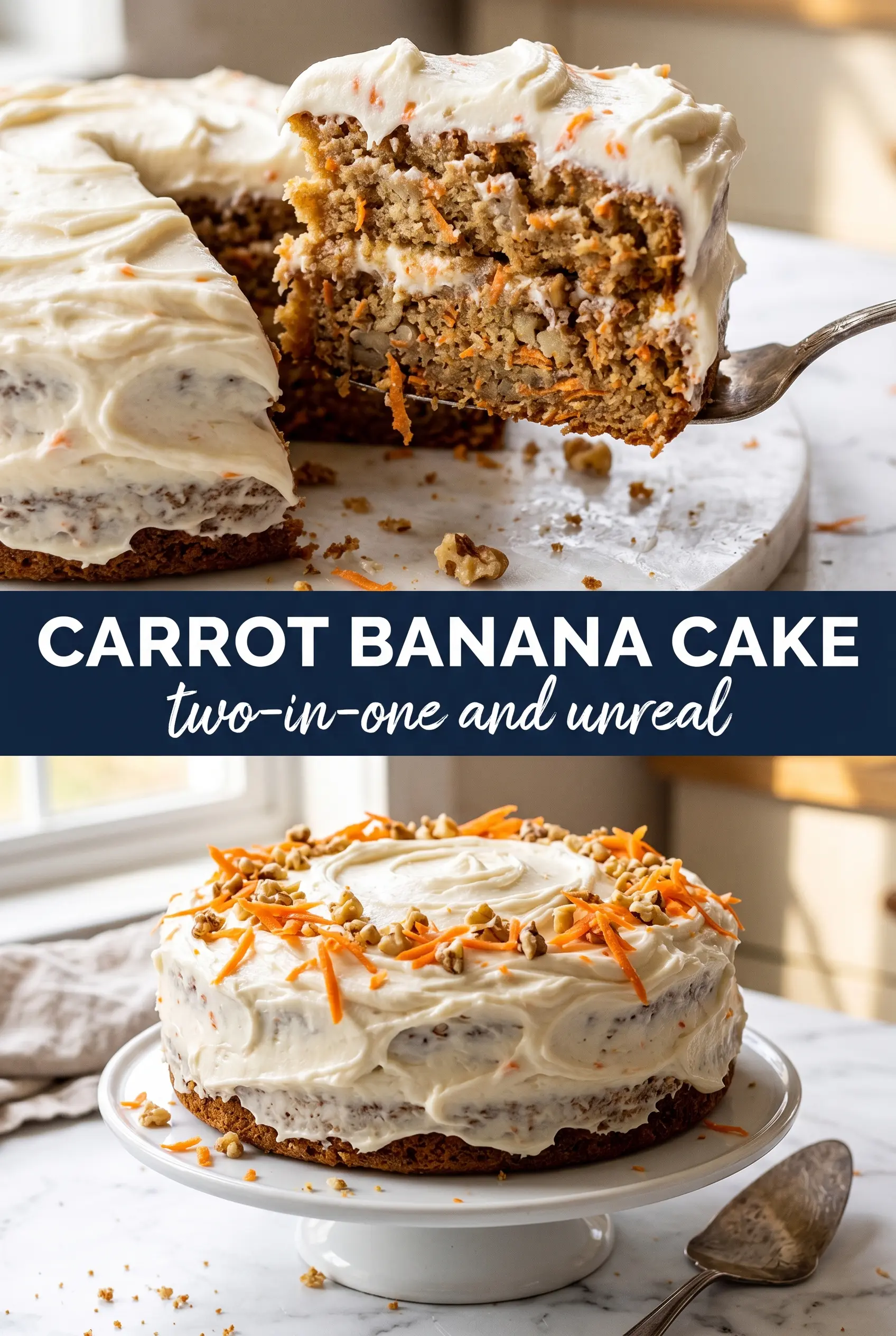
Carrot Banana Cake
Ingredients
Equipment
Method
- Preheat the oven to 350°F and grease two 8-inch round pans (or a 9x13 dish) so the cake releases cleanly after baking.
- Whisk vegetable oil, brown sugar, eggs, and vanilla extract together until smooth, then stir in mashed bananas and shredded carrots.
- Fold in all-purpose flour, baking soda, baking powder, cinnamon, nutmeg, ginger, and salt until just combined—stop mixing as soon as no dry flour remains.
- Fold in walnuts and divide the batter evenly between the pans.
- Bake at 350°F for 30–35 minutes until the center springs back and a toothpick inserted in the middle comes out clean.
- Beat cream cheese, butter, powdered sugar, and vanilla extract until smooth and fluffy, scraping the bowl as needed for an even texture.
- Cool the cakes completely before frosting generously, so the frosting stays thick and doesn’t melt or slide off the layers.