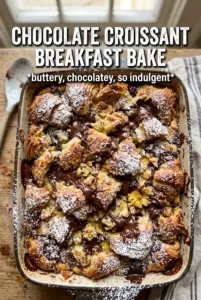
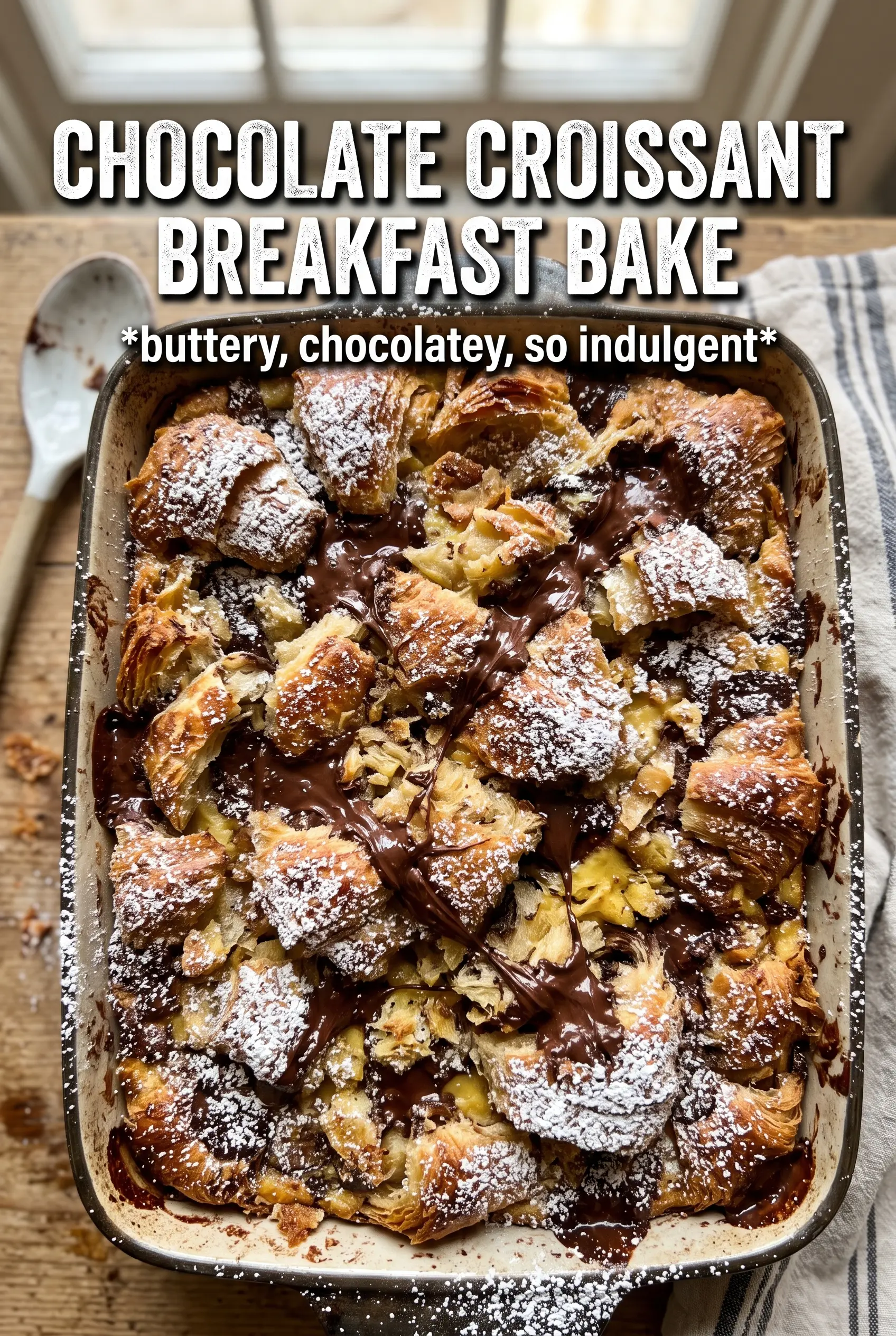
Flaky croissants turn into something even better when they soak up a silky chocolate custard and bake into a glossy, golden breakfast casserole. The tops crisp and caramelize while the middle stays soft, rich, and just set enough to slice cleanly. Every bite gives you buttery pastry, melted chocolate, and that custard-soaked texture that lands somewhere between bread pudding and an indulgent brunch bake.
The key here is starting with torn croissants instead of neat slices. The jagged edges catch more custard and give you those browned, craggy bits on top that taste toasted and almost caramel-like. A little cocoa powder deepens the chocolate without making the whole dish heavy, and the short ingredient list matters because croissants already bring plenty of richness on their own.
Below, I’ve included the rest time that makes the difference between a dry center and a custard that bakes through evenly, plus a few smart swaps if you need to work with what’s in the kitchen. This one is worth letting sit for a while before it goes in the oven.
The croissants soaked up the custard overnight and baked up with a soft, pudding-like center and crisp edges. The chocolate stayed melted in pockets instead of disappearing, and it was gone by the time we sat down for seconds.
Love the crackly tops and chocolate custard center? Save this Chocolate Croissant Breakfast Bake for your next brunch.
The Reason the Custard Soaks In Without Turning Soggy
What ruins a croissant bake is the wrong balance of soak time and oven time. Too little rest, and the center stays dry while the top bakes first. Too much liquid, or too much pressure when you press the croissants down, and you end up with a dense, soggy bottom that never regains its structure.
The croissants need to sit long enough to absorb the custard all the way through the layers, but they still need enough air pockets to puff in the oven. That’s why torn pieces work better than tightly packed cubes. You’re building a casserole with craggy edges, not a compressed bread pudding brick.
- Croissants — Day-old croissants hold their shape best, but fresh ones work if you give them the full rest time. If yours are very soft, tear them and let the pieces sit out for 20 to 30 minutes first so they dry slightly.
- Dark chocolate — Chips are convenient, but chopped chocolate melts into better pockets and gives you a more dramatic finish. Use a bar with around 60 to 70 percent cacao if you want a richer, less sweet result.
- Cocoa powder — This deepens the custard so the chocolate flavor runs through every bite. Dutch-process cocoa gives a smoother, darker taste, while natural cocoa is fine if that’s what you keep in the pantry.
- Heavy cream and whole milk — This combination gives the custard enough richness to bake up velvety without turning greasy. You can swap in half-and-half for both, but the finished texture will be a little lighter and less lush.
What Each Ingredient Is Actually Doing in This Recipe

- Primary ingredient (the star) — Quality matters most. Choose the best you can find.
- Cooking medium (oil, butter, or broth) — This carries flavors and prevents dryness.
- Seasonings (salt, pepper, spices, herbs) — Layer flavors so nothing overpowers. Build depth gradually.
- Aromatics (garlic, onion, herbs) — Cook with fat to bloom flavors. Become the foundation.
- Supporting ingredients — Complement the main ingredient without overpowering it.
- Sauce or liquid (if applicable) — Brings flavors together. Balance richness with acid.
- Acid (lemon, vinegar, wine, or other) — Brightens and prevents flat-tasting results.
- Final finish (garnish, glaze, or sauce) — Prevents one-dimensional taste and adds visual appeal.
Getting the Soak, Bake, and Finish Just Right
Building the Base
Grease the baking dish well and spread the croissant pieces into an even layer before adding anything else. Scatter the chocolate between the layers so it doesn’t all melt into one heavy pocket on top. If the croissants are packed down tightly, the custard can’t move through the casserole evenly, and the center will bake up uneven while the edges dry out.
Whisking the Custard Smooth
Whisk the eggs, milk, cream, sugar, cocoa powder, vanilla, and salt until the mixture looks completely smooth and the cocoa has disappeared into the liquid. If you see little clumps of cocoa, keep whisking before you pour because those clumps stay behind as dry bits in the finished bake. The custard should look thin and glossy, not frothy.
Pressing and Resting
Pour the custard evenly over the croissants, then press down gently so every piece gets some contact with the liquid. Don’t flatten the layers completely. You want the top pieces to stay exposed so they caramelize in the oven while the bottom and middle soak up enough custard to stay soft. An hour on the counter works well, and overnight in the fridge gives you an even deeper soak.
Baking to a Puffed, Set Center
Bake at 350°F until the casserole is puffed, the edges are set, and the top has turned a deep golden brown with glossy chocolate spots peeking through. If the center still sloshes when you shake the pan, it needs more time. Pull it when the middle has just a slight wobble; it will keep setting as it rests, and that’s what keeps the texture creamy instead of curdled.
Finishing Warm from the Oven
Dust with powdered sugar and add extra chocolate while the bake is still warm so it softens on contact. Serve it while the edges are crisp and the center is plush. If it sits too long before serving, the crust loses some of that contrast, which is half the reason this dish works so well.
Three Ways to Adapt the Bake Without Losing What Makes It Good
Dairy-Free Chocolate Croissant Bake
Use a rich unsweetened oat milk plus full-fat coconut milk in place of the milk and cream. The coconut milk brings back some of the body you’d otherwise lose, though the flavor will lean a little more dessert-like and less classic. Choose dairy-free croissants if needed, and expect a softer custard set.
Extra-Chocolate Brunch Version
Add an extra half cup of chopped chocolate and use dark chocolate croissants if you can find them. That gives you a more dramatic, bakery-style result, but it also makes the bake sweeter and denser. If you go this route, keep the powdered sugar light so the top doesn’t taste cloying.
Make-Ahead Overnight Brunch Casserole
Assemble the dish the night before, cover it, and refrigerate it overnight. The longer soak gives the croissants a fuller custard flavor and a creamier center, but bring the dish close to room temperature while the oven preheats so the middle doesn’t lag behind the edges. Straight from the fridge, it usually needs a few extra minutes in the oven.
Gluten-Free Version
Use sturdy gluten-free croissants or a gluten-free butter bread with enough structure to hold the custard. Softer gluten-free breads can collapse into mush, so the bread itself matters more than in the original version. The flavor stays close, but the texture will be a little less airy.
Storage and Reheating
- Refrigerator: Store leftovers covered for up to 3 days. The top softens a little, but the custard stays pleasantly rich.
- Freezer: It freezes better than you might expect if you wrap individual portions tightly. Thaw overnight in the refrigerator before reheating for the best texture.
- Reheating: Warm in a 300°F oven until heated through, which helps the edges crisp back up. The microwave works in a pinch, but it makes the croissants soft and the chocolate lose its texture.
Answers to the Questions Worth Asking
Chocolate Croissant Breakfast Bake
Ingredients
Equipment
Method
- Grease a 9x13 dish, then arrange the torn croissant pieces evenly across the bottom.
- Scatter the dark chocolate chips among the croissant pieces so they’re visible throughout the bake.
- Whisk the eggs, whole milk, heavy cream, sugar, cocoa powder, vanilla extract, and salt until smooth and fully combined.
- Pour the custard over the croissants and press gently to help the bread absorb the liquid.
- Rest the casserole for 1 hour at room temperature, or cover and refrigerate overnight so the custard soaks in before baking.
- Preheat the oven to 350°F, then bake until puffed and golden, about 35–40 minutes.
- Remove from the oven and let it cool for 5 minutes so the custard sets slightly.
- Dust with powdered sugar and scatter extra chocolate over the top, then serve warm.