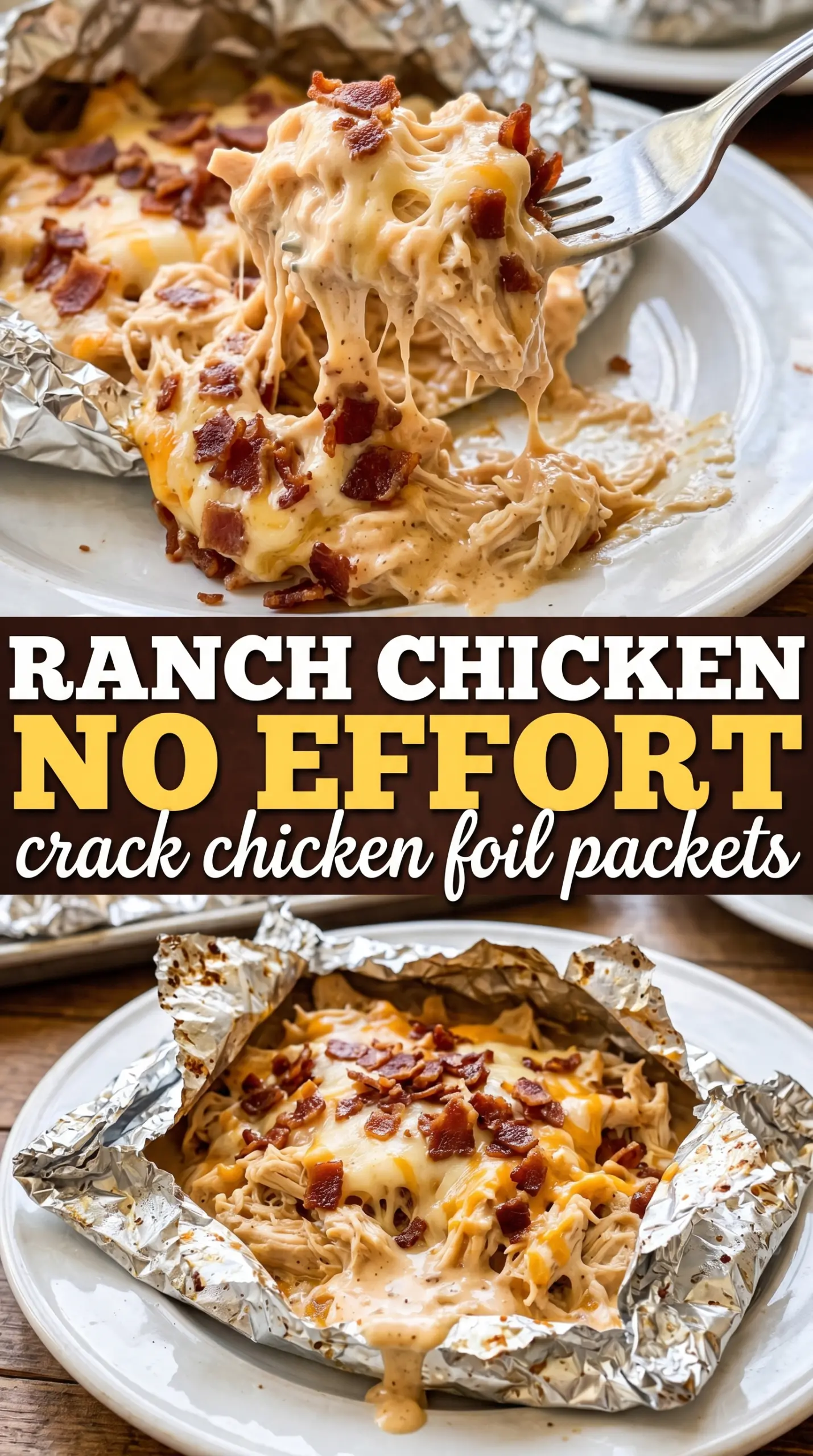
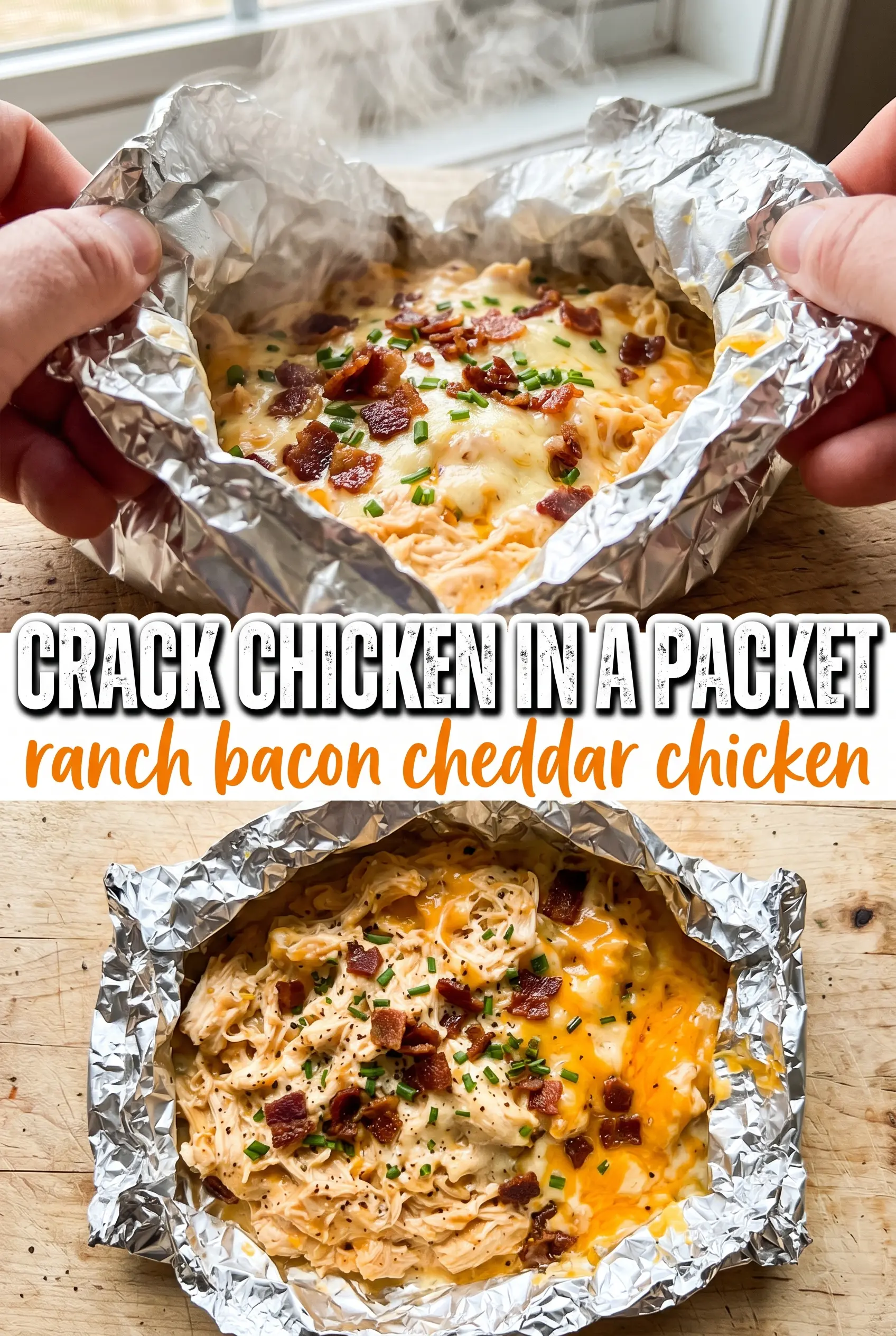
Crack Chicken Foil Packets come out creamy, smoky, and loaded with melted cheese in a way that feels far bigger than the short ingredient list. The chicken stays juicy inside the packet while the bacon seasons everything around it, and the ranch pulls the whole thing together without needing a separate sauce. When you open the foil, the steam hits first, then the smell of bacon and cheddar, and that’s usually the moment everyone starts hovering near the grill.
This version works because the cream cheese melts slowly over the chicken instead of getting stirred into a pan and overworked. The foil traps heat and moisture, which keeps the chicken from drying out while the toppings turn into a rich, spoonable layer. Heavy-duty foil matters here; thin foil can tear or leak once the cheese starts softening and the packets get moved around.
Below you’ll find the small details that keep the chicken tender, how to seal the packets so they actually cook evenly, and a few smart swaps if you want to make this on the grill, at camp, or straight in the oven.
The chicken stayed unbelievably juicy in the foil, and the cream cheese melted into the bacon and ranch just enough to coat everything without turning greasy.
Save these Crack Chicken Foil Packets for easy ranch chicken with bacon, melted cheddar, and barely any cleanup.
The Mistake That Makes Foil Packet Chicken Dry Out
The biggest problem with foil packet chicken is usually not flavor. It’s heat. If the chicken is cooked over a hot fire or packed into a tight little bundle with no room for steam, the outside can race ahead while the inside still needs time. These packets work because the foil traps moisture, the cheese melts slowly, and the chicken finishes gently instead of getting blasted.
Ranch seasoning is doing more than adding a familiar taste. It seasons the chicken all the way through, and the salt in the mix helps the meat hold onto moisture. Bacon adds fat and smoke, but it should be cooked first; raw bacon won’t render properly in the same amount of time the chicken needs, and you’ll end up with chewy bits instead of crisp, salty pieces.
- Heavy-duty foil — Regular foil tears too easily once the cheese softens. Heavy-duty sheets hold the juices in and make the packets easier to move.
- Chicken breasts — Use evenly sized pieces so everything finishes at the same time. If one breast is much thicker, pound it lightly for a more even cook.
- Cooked bacon — Pre-cooked bacon gives you the right texture and flavor. If you start with raw bacon, it won’t crisp before the chicken is done.
- Cream cheese — Cubes of cream cheese melt into pockets of richness. Full-fat cream cheese gives the best texture; reduced-fat versions can turn a little loose when heated.
What Each Topping Is Actually Doing Here
- Ranch seasoning — This brings the salt, garlic, onion, and herb backbone in one step. A homemade blend works too, but the packet keeps the flavor consistent and makes the dish taste like the version people expect.
- Cheddar cheese — Sharp cheddar cuts through the richness and melts into the bacon without disappearing. Pre-shredded cheese is fine, though freshly shredded melts a little smoother.
- Green onions — They add a fresh, sharp finish that keeps the packet from tasting heavy. Slice them thin so they soften just enough in the heat.
Building the Packets So Everything Finishes at the Same Time
Start with an Even Base
Lay each chicken breast flat on its own sheet of foil so the packets cook evenly and don’t crowd each other. If the chicken is very thick on one end, press it down slightly or pound it to a more even shape. That keeps the thinner edge from drying out while the thicker part catches up.
Layer the Toppings Without Packing Them Down
Sprinkle the ranch over the chicken first, then scatter the bacon, cheddar, cream cheese, and green onions on top. Don’t press everything into the meat; the toppings need room to melt and slide into the crevices as the packet heats. The cream cheese should be in cubes, not one solid block, so it softens all the way through instead of staying cold in the center.
Seal for Steam, Not for Air
Fold the foil into a tight packet with the seam sealed well, but leave a little room above the chicken so steam can circulate. A flat, smashed packet can stick and cook unevenly, while one that’s loosely sealed can leak juices onto the grill. Put the seam on top if you’re cooking over a grate, since that helps keep the packet from opening as the cheese melts.
Cook Until the Center Reaches 165°F
Set the packets over medium heat and cook for 20 to 25 minutes, depending on the thickness of the chicken. The safest cue is internal temperature: 165°F in the thickest part. If you open the packet too early, the steam escapes and the cheese won’t settle into that creamy layer, so let it rest just long enough to open carefully without burning yourself.
How to Adapt These Packets for the Grill, Oven, or a Lighter Dinner
Oven-Baked Version
Bake the sealed packets on a sheet pan at 400°F for about 25 to 30 minutes. The oven gives you steadier heat than a campfire, so the chicken cooks a little more evenly and the cheese melts into a smoother layer.
Lower-Carb, Same Comfort
This recipe is already naturally low in carbs, so the easiest adjustment is serving it with vegetables instead of bread or potatoes. Spoon the chicken and melted toppings over cauliflower rice, roasted broccoli, or sautéed zucchini for a full meal that still feels hearty.
Dairy-Free Swap
Use a dairy-free cream cheese and a good melting plant-based cheddar-style shreds. The texture won’t be as rich as the original, but the packet still gets creamy enough to cling to the chicken and bacon.
What to Do If You Want More Smoke
Use smoked cheddar or add a pinch of smoked paprika to the ranch seasoning. That gives the packets a deeper campfire-style note without changing the method.
Storage and Reheating
- Refrigerator: Store leftovers in an airtight container for up to 3 days. The cheese will firm up as it cools, but the flavor holds well.
- Freezer: Freeze cooked chicken and toppings for up to 2 months, though the texture of the cream cheese changes a bit after thawing. It’s best frozen only if you don’t mind a softer, less polished sauce.
- Reheating: Warm gently in the oven at 325°F or in a covered skillet over low heat until hot. High heat can make the cheese separate and dry out the chicken before the center warms through.
Answers to the Questions Worth Asking
Crack Chicken Foil Packets
Ingredients
Equipment
Method
- Place each chicken breast on a sheet of heavy-duty aluminum foil.
- Sprinkle each chicken breast with the ranch seasoning mix.
- Top each chicken breast with crumbled bacon, shredded cheddar cheese, cream cheese cubes, and sliced green onions.
- Fold the foil into sealed packets so the filling stays contained.
- Place packets on a campfire grate over medium heat for 20-25 minutes until the chicken reaches 165°F, with a visible bubbling cheese melt inside the packet.
- Carefully open packets and serve hot, letting the melted ranch-cheese sauce fall over the chicken.