Crispy flautas earn their place on the table the second you hear that first bite crackle. The tortilla goes deep golden and shatters at the edges, while the filling stays savory and a little steamy inside. When they’re rolled tightly and fried at the right temperature, they come out light instead of greasy, with just enough cheese to hold everything together.
The part that makes this version work is the balance between the filling and the tortilla. Too much filling and the roll bursts open in the oil. Too little cheese and the flautas turn dry instead of rich. A quick fry at 350°F gives the tortilla time to crisp before it absorbs too much oil, and using cooked shredded chicken or beef means the interior just needs heating through, not cooking from scratch.
Below, I’ll walk through the small choices that keep these from unrolling or soaking up oil, plus a few variations if you want to make them ahead or change up the filling without losing that crisp finish.
The tortillas stayed sealed and crisp, and the jalapeños gave just enough heat without taking over. I fried them in batches and they came out evenly golden in about 4 minutes total.
These chicken flautas stay crunchy, and the jalapeño-cilantro filling keeps every bite bright and balanced.
The Trick to Flautas That Stay Rolled and Crisp in the Oil
The biggest failure point with flautas is the roll itself. If the tortilla is overloaded, it opens in the fryer. If the oil is too cool, the tortilla drinks it up before the outside sets. And if the tortilla cracks when you roll it, you’ll lose filling before the first batch is even done.
Use cooked tortillas that bend easily. If yours are stiff, warm them for a few seconds so they stop fighting you. Roll them snugly around a small amount of filling, then place the seam-side down while you work on the next batch. That little pause helps them hold shape long enough to hit the oil.
- Keep the filling modest. Two tablespoons is enough here. More filling looks generous, but it pushes the tortilla open and makes the center steam instead of staying tidy.
- Don’t skip the toothpick if the tortilla is springy. It’s a practical insurance policy, especially if you’re using flour tortillas that don’t naturally cling shut.
- Fry in batches. Crowding drops the oil temperature fast, and that’s when flautas turn pale and greasy instead of crisp and blistered.
What the Tortilla, Cheese, and Herbs Are Doing Here
- Shredded cooked chicken or beef — This is the backbone of the filling. Chicken keeps the flautas lighter, while beef brings a deeper, meatier flavor. Either way, the meat needs to be fully cooked and shredded fine enough to roll without poking through the tortilla.
- Flour tortillas — These are softer and easier to roll than corn tortillas, which makes them a good choice if you want a cleaner shape and fewer splits. If you use corn tortillas, warm them well so they’re flexible; cold corn tortillas crack fast.
- Cheddar cheese — The cheese melts into the filling and helps bind the roll from the inside. A sharp cheddar gives better flavor than mild, but pre-shredded works fine here if that’s what you have.
- Jalapeños and cilantro — These keep the filling from tasting flat. The jalapeños bring heat and moisture, while the cilantro adds freshness after frying. If you want less heat, remove the seeds and ribs before dicing.
Rolling, Frying, and Serving Them While They’re Still Snappy
Mixing the Filling Without Making It Wet
Combine the shredded meat with the jalapeños, cilantro, salt, and pepper first, then add the cheese. That order helps the seasoning spread evenly before the cheese starts clumping things together. If your meat is heavily sauced, drain it well before mixing or the tortillas will soften and slide open in the oil.
Rolling Tight Enough to Hold Shape
Lay each tortilla flat and keep the filling in a narrow line down the center. Roll it as snugly as you can without tearing the tortilla, then set the seam down on the counter if you’re not frying immediately. If the edges refuse to stay shut, a toothpick through the seam is better than overfilling and hoping for the best.
Frying at the Right Temperature
Heat the oil to 350°F and keep it there. At that temperature, the outside crisps quickly and the tortilla blisters instead of soaking. If the oil starts smoking, it’s too hot and the outside will brown before the inside has a chance to warm through. Two minutes per side is usually enough, but the real cue is color: deep golden with a firm shell that feels light when you lift it.
Draining and Serving Fast
Move the flautas to paper towels as soon as they come out of the oil. Don’t stack them while they’re hot or trapped steam will soften the crust you just worked for. Serve them right away with sour cream, salsa, and guacamole so the contrast between the hot shell and cool toppings stays sharp.
How to Adapt These Flautas Without Losing the Crunch
Bake Them Instead of Frying
Brush the rolled flautas lightly with oil and bake them on a rack so air can circulate underneath. They won’t be quite as shatter-crisp as fried flautas, but they’ll still brown well and stay a lot lighter. The rack matters because flat baking sheets trap steam underneath the tortilla.
Make Them Gluten-Free with Corn Tortillas
Corn tortillas work, but they crack more easily, so warm them until they’re pliable before rolling. The texture turns a little more rustic and the flavor gets more pronounced, which is a good trade if you need a gluten-free version. Handle them one at a time while they’re warm so they don’t split at the seam.
Swap the Filling for Shredded Turkey or Beans
Shredded turkey works almost exactly like chicken and is a smart use for leftovers. For a vegetarian version, use well-drained refried beans or mashed black beans with the same cheese and jalapeño mix. Beans give you a softer interior, so keep the filling thicker and don’t overpack the tortilla.
Storage and Reheating
- Refrigerator: Store cooked flautas in an airtight container for up to 3 days. The tortilla softens a bit, but they still re-crisp well.
- Freezer: Freeze after frying and cooling completely, then reheat from frozen. A single layer in a freezer bag works best so they don’t stick together.
- Reheating: Use a 375°F oven or air fryer until hot and crisp again. The mistake people make is microwaving them, which softens the shell and turns the filling rubbery.
Answers to the Questions Worth Asking
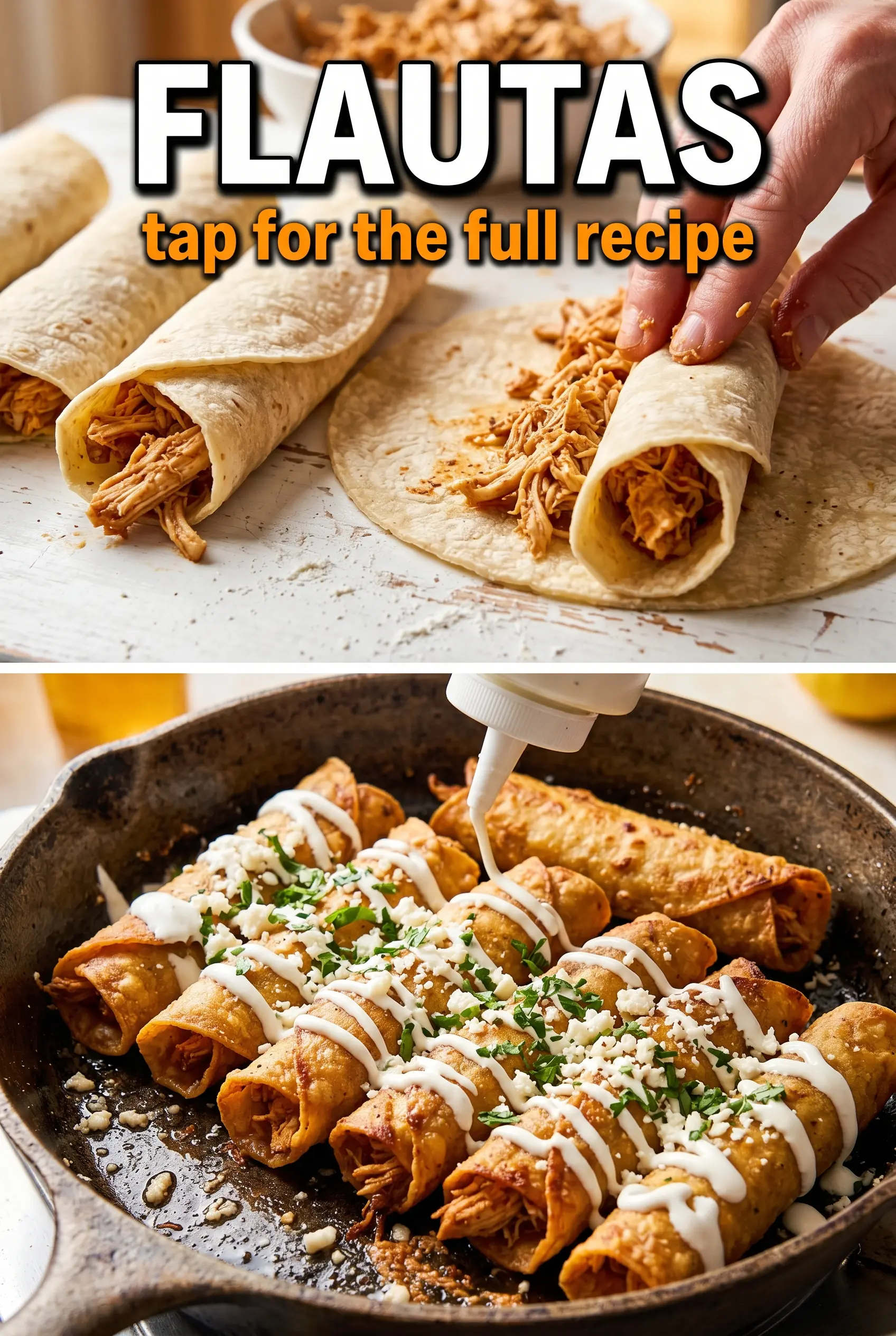
Flautas
Ingredients
Equipment
Method
- Stir the shredded chicken or beef with diced jalapeños, chopped cilantro, salt, and pepper until evenly combined.
- Taste and adjust with more salt and pepper as needed so the filling is well seasoned.
- Lay the flour tortillas out and place about 2 tablespoons of filling and 1 tablespoon shredded cheddar cheese in the center of each.
- Roll tightly, tucking in the sides, and secure with a toothpick if needed so the filling stays contained.
- Arrange the rolled flautas seam-side down so they hold their shape while the oil heats.
- Heat vegetable oil in a Dutch oven to 350°F.
- Fry the flautas in batches for about 2 minutes per side, until they are golden and crispy.
- Drain the flautas on paper towels to remove excess oil and keep them crisp.
- Serve immediately with sour cream, salsa, and guacamole on the side for dipping.