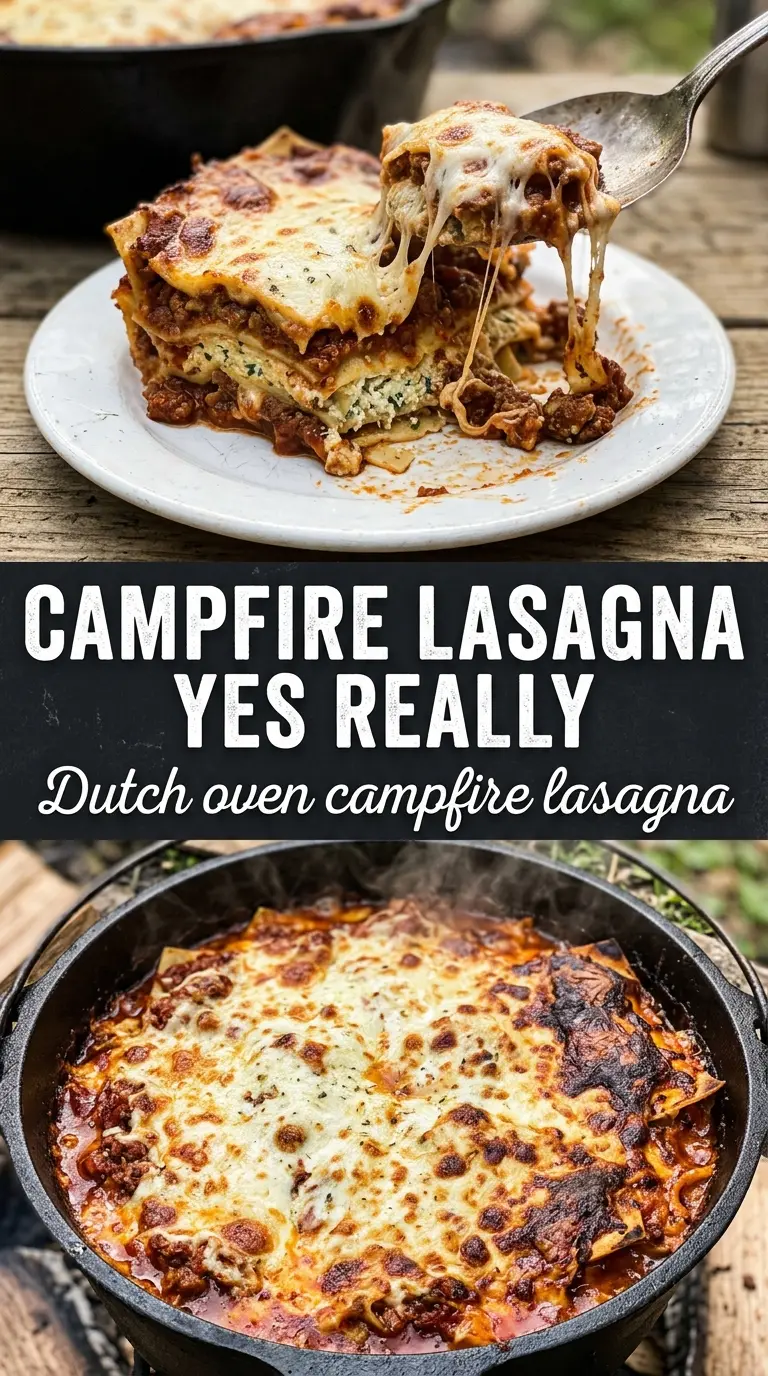
Layers of pasta, rich meat sauce, and a blanket of melted cheese turn out surprisingly structured in a Dutch oven, even over campfire coals. The noodles soften in the steam trapped under the lid, the ricotta layer stays creamy instead of disappearing, and the top comes out bubbling with those browned, lacy edges that make people reach for a second serving before they finish the first.
The key here is controlling moisture and heat. Uncooked noodles work because the sauce is loose enough to hydrate them, and the covered Dutch oven keeps that steam moving through the layers. The bottom layer of sauce matters too; it keeps the noodles from sticking and gives the whole pan a little buffer so the cheese doesn’t scorch before the pasta is tender.
Below you’ll find the small things that make this work outdoors: how to break the noodles without turning the layers into a mess, why the rest time matters more than it sounds, and a few easy swaps if you’re cooking for a bigger group or need a meatless version.
The noodles cooked through perfectly in the Dutch oven, and the top stayed bubbly without burning. I was nervous about uncooked pasta, but the 10-minute rest made it slice cleanly and hold together.
Love a bubbling campfire lasagna with crisp edges and a cheesy top? Save this Dutch oven version for your next outdoor dinner.
The Reason Dutch Oven Lasagna Keeps Its Shape Over the Coals
Campfire lasagna fails when the heat is too hot on the bottom and too weak on top. You get scorched noodles underneath and a pale, underdone lid. A Dutch oven solves that by trapping heat and steam, but only if the sauce has enough moisture to cook the pasta and the lid carries enough coals to finish the top layer. That balance is what gives you tender noodles, not a dry brick or a soupy pan.
Another thing that matters here is structure. Broken noodles are not a shortcut; they’re how you build a snug layer that doesn’t collapse when the filling melts. The ricotta mixture sets up from the egg and cheese, which helps each slice hold together once it rests. Skip the rest and the first scoop will slump before it reaches the plate.
What Each Ingredient Is Doing in This Dutch Oven
- Ground beef — This gives the lasagna its hearty base and enough fat to carry the sauce. A leaner beef works fine, but if it’s very lean, cook it gently so the filling doesn’t dry out. Drain only the excess grease; a little left in the pan helps the sauce taste fuller.
- Spaghetti sauce — Jarred sauce is the practical choice here because it already has the acidity and moisture the uncooked noodles need. Use one that tastes good on its own, because it will be the main seasoning in the finished dish. If it’s very thick, loosen it with a splash of water so the pasta can absorb it.
- Ricotta, mozzarella, Parmesan, and egg — Ricotta brings creaminess, mozzarella gives melt, Parmesan adds salt and depth, and the egg helps the cheese layer set instead of running. Cottage cheese can stand in for ricotta if you drain it well, but the texture will be looser and a little less rich. Stir the cheeses together until the mixture looks even; streaks of egg-white are a sign it needs another minute.
- Uncooked lasagna noodles — These are what make the recipe work outdoors without a pot of boiling water. They need moisture from the sauce, so break them to fit the Dutch oven and keep them covered by filling wherever possible. If you leave dry corners exposed, those pieces stay chalky.
Building the Layers So the Pasta Cooks Evenly
Start with a Thin Sauce Cushion
Coat the Dutch oven with cooking spray, then spread a thin layer of meat sauce across the bottom. That first layer keeps the noodles from welding themselves to the pot and gives the heat something gentler to travel through. If you pile sauce too thick on the bottom, the center can turn loose while the top is still catching up.
Stack the Noodles Close, Not Neatly
Lay in three broken noodles so they fit the shape of the pot without overhanging the sides. The edges can overlap a little; the goal is coverage, not perfect geometry. If there are big gaps, the cheese filling can sink down and the finished slices won’t hold together.
Spread the Ricotta Mixture Evenly
Spoon half the ricotta mixture over the noodles and smooth it gently with the back of the spoon. Don’t press hard, or you’ll drag the noodles out of place and create bare spots. The cheese layer should look thick but not mounded, because uneven patches cook at different speeds and can leave the center underdone.
Finish Under Covered Heat
Top with the final noodles, the remaining sauce, and the rest of the mozzarella. Cover the Dutch oven and place coals underneath and on the lid, then cook until the cheese is melted and the sauce is bubbling at the edges, about 45 to 50 minutes. If the heat is too hot, the bottom will darken before the noodles soften, so steady coals beat a roaring fire every time.
Make It Meatless
Swap the beef for sautéed mushrooms, zucchini, and spinach, then use the same sauce and cheese layers. You’ll lose the deeper savory richness from the meat, but the vegetables add enough body that the lasagna still slices well. Cook the vegetables first so they don’t dump extra water into the pan.
Use Ground Turkey Instead
Ground turkey works when you want a lighter filling, but it needs a little more seasoning because it doesn’t bring the same richness as beef. Add a drizzle of olive oil while browning if the pan looks dry. The finished lasagna will still be hearty, just a touch cleaner in flavor.
Gluten-Free Version
Use gluten-free lasagna noodles that are meant to be baked directly in sauce. They usually need the same covered-cooking method, but keep an eye on moisture because some brands drink up more liquid than regular noodles. If the sauce looks too tight before baking, loosen it slightly so the pasta has enough steam to soften.
Storage and Reheating
- Refrigerator: Keep leftovers covered for up to 4 days. The layers firm up as they chill, which makes them easier to slice the next day.
- Freezer: It freezes well in portions. Cool completely, wrap tightly, and freeze for up to 2 months for the best texture.
- Reheating: Reheat covered in a 350°F oven until hot in the center, or use the microwave in shorter bursts with a splash of sauce or water on top. The mistake people make is blasting it uncovered, which dries out the noodles before the middle warms through.
Questions I Get Asked About This Recipe

Dutch Oven Lasagna
Ingredients
Equipment
Method
- Brown the ground beef in a skillet until no longer pink. Stir in the spaghetti sauce and simmer briefly so the mixture clings to the beef.
- In a mixing bowl, combine ricotta cheese with 1 cup mozzarella, Parmesan, egg, and Italian seasoning. Mix until the filling looks smooth and evenly combined.
- Spray the Dutch oven with cooking spray and spread a thin layer of meat sauce on the bottom. This helps the noodles hydrate evenly.
- Layer 3 lasagna noodles (broken to fit) over the sauce. Arrange them so they cover the bottom as evenly as possible.
- Spread half the ricotta mixture over the noodles. Use gentle pressure so the filling creates a continuous layer.
- Spoon half the remaining meat sauce over the ricotta layer. Cover the filling to keep the noodles moist while baking.
- Repeat with 3 more lasagna noodles (broken to fit). Keep the layer level so the lasagna cooks uniformly.
- Add the remaining ricotta mixture and spread it out evenly. The layer should cover the noodles without big gaps.
- Top with the remaining meat sauce. Make sure the edges are sealed with sauce so no noodles dry out.
- Sprinkle the remaining shredded mozzarella over the top layer. You should see a full, even cheese blanket.
- Cover and place the Dutch oven on campfire coals with additional coals on the lid for even heat. Cook for 45-50 minutes, until bubbling and the cheese looks golden.
- Let the lasagna rest for 10 minutes before serving. This firms the layers so it scoops cleanly.