Deeply golden edges, a chewy center, and little pockets of melted toffee make these cookies the kind people reach for before they’ve even cooled. The brown butter gives them a toasted, nutty backbone, while the espresso powder sharpens the chocolate and keeps the sweetness from running away with the whole cookie. Every bite tastes warm and caramelized, with a finish that lingers in the best way.
What makes this version work is the brown butter texture. It gets browned first for flavor, then chilled until solid but still scoopable, which means you can cream it with the sugars just like regular butter. That step gives the cookies structure instead of spreading into flat, greasy rounds. The espresso powder doesn’t make them taste like coffee; it deepens the chocolate and toffee so the flavor reads richer and more complete.
Below, I’m walking through the browning and cooling step that matters most, plus a few smart swaps if you’re working with what you have in the pantry. The flaky salt on top is worth keeping — it wakes up the toffee and makes each cookie taste finished.
The brown butter made these taste bakery-level, and chilling it first kept the cookies thick with crisp edges instead of spreading all over the pan. I also loved the little hit of espresso with the toffee — it made the chocolate taste deeper without turning the cookies into coffee cookies.
Save these espresso brown butter toffee cookies for the days when you want crisp edges, chewy centers, and that deep caramelized brown butter flavor.
The Brown Butter Has to Cool Before You Cream It
If the butter goes into the bowl while it’s still hot, the cookies spread too fast and lose that thick, chewy center. Brown butter is amazing for flavor, but it behaves differently than softened butter because it starts out liquid and needs time to reset. Once it cools to solid but still scoopable, it creams beautifully with the sugars and traps air the same way regular butter does.
That cooling step is the difference between cookies that bake up tall with craggy edges and cookies that turn thin and greasy. If you rush it, the dough will look smooth for a minute and still betray you in the oven. The butter should feel soft enough to press with a spoon, not melted at the edges.
What Each Ingredient Is Actually Doing in This Cookie

- Unsalted butter — Browning it is what gives these cookies their toasted, almost butterscotch depth. Salted butter can work in a pinch, but unsalted gives you better control over the final seasoning.
- Espresso powder — This deepens the chocolate and toffee without making the cookies taste like a cup of coffee. Instant espresso powder is the right choice here; brewed coffee won’t give you the same concentrated effect.
- Toffee bits — These melt just enough at the edges to create little caramelized pockets. Heath-style bits work best because they hold their shape and bring that crisp crackle against the soft dough.
- Dark chocolate chips — The bitterness balances the brown sugar and toffee. Semi-sweet chips also work, but the darker chocolate keeps the cookie from tipping too sweet.
- Flaky sea salt — This goes on at the end, not in the dough, so the crystals stay sharp and noticeable. It’s the last thing that keeps the sweetness in check.
Building the Dough Without Overmixing It
Browning the Butter Until It Smells Nutty
Cook the butter over medium heat and watch it closely as the milk solids turn golden brown and the aroma shifts from creamy to nutty. The second you see browned specks at the bottom and the foam starts to settle, pull it off the heat and pour it into a bowl so it doesn’t go from brown to burnt. Let it cool completely until it firms up again; that’s what gives the dough enough body to hold its shape.
Combining the Dry Ingredients First
Whisk the flour, baking soda, espresso powder, and salt before they go anywhere near the butter mixture. This spreads the espresso and leavening evenly through the dough so you don’t get bitter pockets or uneven rise. If the flour isn’t mixed well here, you’ll see streaks later, and those spots bake up dense.
Keeping the Mix Gentle Once the Flour Goes In
Beat the butter and sugars until creamy, then add the eggs one at a time so the dough stays smooth and emulsified. Once the flour mixture goes in, stop as soon as the last dry streak disappears. Overmixing at this point tightens the cookies and makes them tough instead of chewy.
Baking for Set Edges and Soft Centers
Scoop the dough into 2-tablespoon rounds and bake until the edges are golden and the centers still look a little underdone. That underbaked center is intentional; the cookies keep cooking on the pan after they come out of the oven. Sprinkle the flaky salt immediately so it sticks before the tops set, then let them rest on the baking sheet for five minutes before moving them.
Three Ways to Make These Cookies Work for Your Pantry
Gluten-Free Version
Use a 1:1 gluten-free baking flour blend that includes xanthan gum. The cookies will still spread and brown, though the centers may be a touch more delicate, so let them cool on the pan before moving them.
No Espresso Powder
Leave it out if you need to, but the cookies will taste a little flatter and sweeter. You can replace it with a teaspoon of instant coffee granules crushed fine, which gives a similar background note.
Dairy-Free Swap
Use a plant-based butter that browns well, but expect a slightly less nutty flavor and a softer set. Keep an eye on the skillet, since dairy-free butters can go from foamy to dark faster than regular butter.
Storage and Reheating
- Refrigerator: Store in an airtight container for up to 5 days. The toffee stays crisp for the first couple of days, then softens a bit as the cookies sit.
- Freezer: These freeze well both baked and as dough balls. Freeze the scooped dough on a tray, then bag it; bake from frozen and add 1 to 2 minutes.
- Reheating: Warm baked cookies in a 300F oven for 3 to 4 minutes. The common mistake is microwaving them until the toffee turns sticky and the edges go limp.
Answers to the Questions Worth Asking
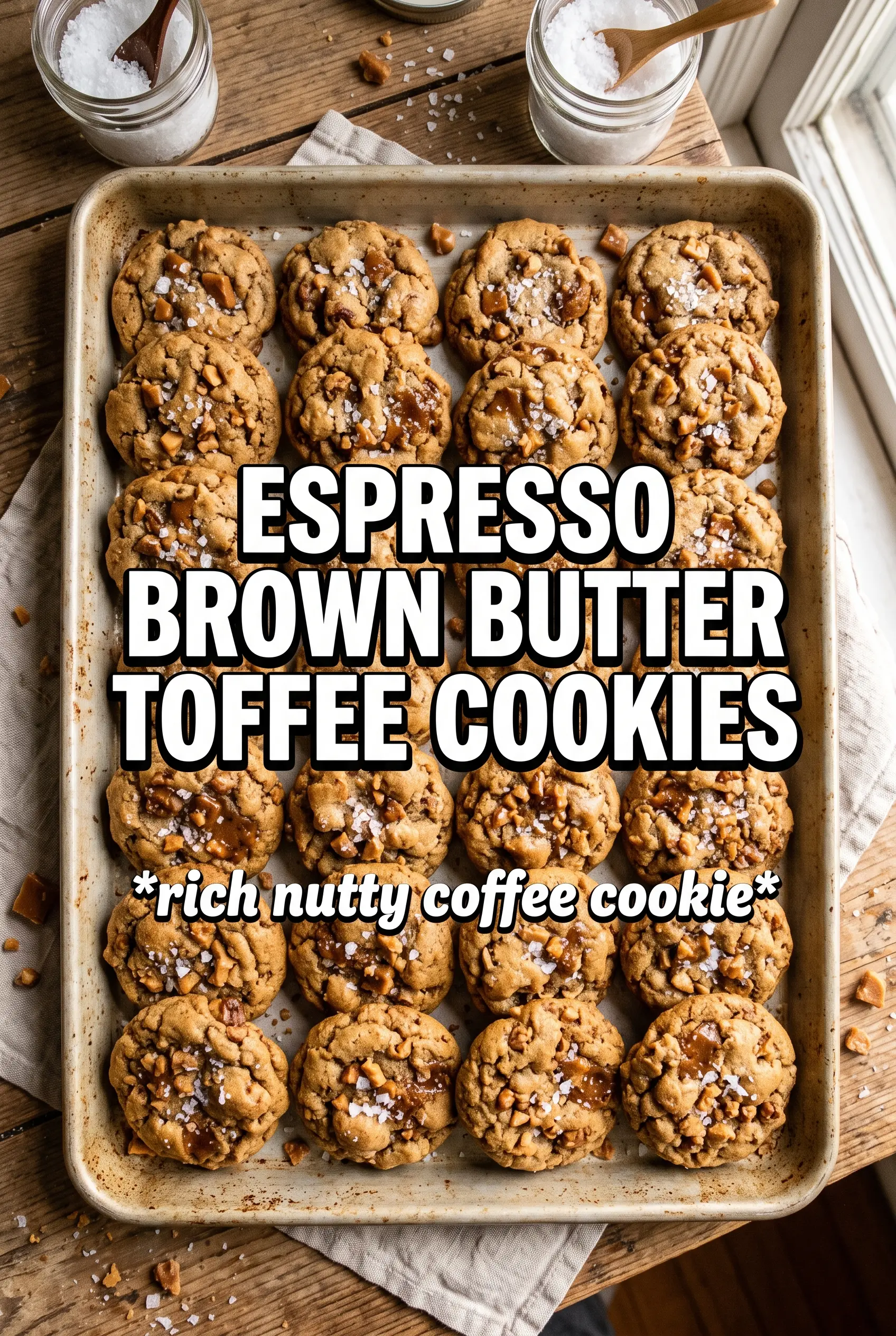
Espresso Brown Butter Toffee Cookies
Ingredients
Equipment
Method
- Brown the butter in a saucepan over medium heat until golden and nutty-smelling, then pour into a bowl.
- Refrigerate the butter until solid but scoopable, about 1 hour, and keep it ready for mixing.
- Preheat the oven to 375F and line baking sheets with parchment for easy release.
- Whisk the all-purpose flour, baking soda, espresso powder, and salt until evenly combined.
- Beat the solidified brown butter with the packed brown sugar and granulated sugar until creamy.
- Add the eggs one at a time, beating after each addition, then mix in the vanilla extract.
- Fold in the flour mixture until just combined, stopping as soon as no dry streaks remain.
- Fold in the toffee bits and dark chocolate chips so they are evenly distributed.
- Scoop the dough into 2-tablespoon rounds and place them on the lined baking sheets.
- Bake at 375F for 10-12 minutes until the edges are golden but the centers look slightly underdone.
- Sprinkle flaky sea salt immediately after baking for a visible, sparkling top.
- Cool the cookies on the pan for 5 minutes before moving them to finish cooling.