Bright, juicy mango salsa hits that sweet-savory balance that makes chips disappear fast and turns plain grilled chicken, fish, or tacos into something worth repeating. The mango stays front and center here, but it’s the sharp lime, red onion, and jalapeño that keep each bite lively instead of sugary. When it’s rested long enough, the juices settle into the bowl and the whole thing tastes sharper, cleaner, and more put together.
The trick is to dice the mango small enough that every spoonful catches a little onion and cilantro, but not so small that it turns mushy when you stir in the lime. A ripe mango should yield slightly when pressed and smell fragrant at the stem end. If it’s rock hard, the salsa will taste flat; if it’s overripe, it breaks down too quickly and the texture gets soft instead of crisp and juicy.
Below, I’m sharing the short rest that makes the flavors come together, the simplest way to dial the heat up or down, and a few swaps that still keep the salsa bright and fresh.
I let it sit the full 30 minutes and the lime pulled everything together without making the mango mushy. The jalapeño heat stayed balanced, and it was even better the next day on fish tacos.
Save this mango salsa for the nights when you want something bright, chunky, and fast for tacos, grilled fish, or tortilla chips.
The 30-Minute Rest That Keeps the Mango from Tasting Flat
Fresh mango salsa needs a little patience if you want it to taste balanced instead of just chopped fruit with lime on top. The salt draws out some juice, the lime sharpens the mango, and the onion softens just enough to lose that raw bite. That rest is what gives the salsa a cleaner, more integrated flavor without cooking anything.
The mistake most people make is serving it right away. At that point the lime tastes loud and the mango tastes separate. After 30 minutes in the refrigerator, the edges of the onion mellow, the cilantro settles in, and the whole bowl tastes brighter without being harsh. Stir it once more before serving so the juices get back under the diced fruit instead of sitting at the bottom.
What Each Ingredient Is Actually Doing in This Salsa
- Ripe mangoes — These are the base of the salsa, so ripeness matters more than brand or price. You want fruit that’s sweet and fragrant but still firm enough to hold its cubes. If your mangoes are soft and stringy, the salsa turns mushy fast.
- Red onion — This brings the sharp, savory edge that keeps the salsa from reading as dessert. Finely dicing matters here because large pieces overwhelm the mango. If raw onion feels too aggressive, soak it in cold water for 5 minutes, then drain well before mixing.
- Jalapeño — This adds gentle heat and a green, peppery note. Remove the seeds and ribs for a milder salsa, or leave some in if you want it punchier. The pepper should be minced small so the heat spreads evenly instead of landing in one bite.
- Fresh lime juice — Bottled lime juice tastes dull here and flattens the fresh fruit. The acidity wakes up the mango and helps the salsa taste clean instead of cloying. If you need a substitute, use fresh lemon juice, but expect a slightly different finish.
- Cilantro — Cilantro ties the fruit and heat together with a fresh, herbal note. Chop it right before mixing so it stays lively. If you’re one of the people who tastes soap, flat-leaf parsley will give you freshness without the same flavor.
Keeping the Dice Sharp and the Heat in Balance
Cutting the Mango the Right Size
Peel the mangoes and cut them into small, even dice that hold their shape when stirred. Large chunks can be pleasant, but they make the salsa awkward to scoop and harder to season evenly. If your mango is slippery, cut it over a bowl so you catch every bit of juice instead of losing it on the board.
Mixing Without Crushing the Fruit
Combine the mango, onion, jalapeño, and cilantro in a bowl, then drizzle the lime juice over the top with the salt and pepper. Stir with a light hand. The goal is to coat the fruit, not mash it. If the spoon is digging in and breaking the mango, switch to a spatula and fold from the bottom instead.
Letting the Flavor Settle
Cover the bowl and chill it for at least 30 minutes. That resting time is where the salsa goes from scattered ingredients to something cohesive. Right before serving, taste again and adjust the salt or lime. Cold dulls flavor a little, so the salsa should taste just a touch brighter than you want it at the table.
How to Adapt This Salsa When You Need a Different Balance
Milder Mango Salsa
Remove the jalapeño seeds and ribs, or use only half a pepper. You’ll still get that green pepper flavor without the sharper heat. This version works well if you’re serving it with kids or spooning it over delicate fish.
No-Cilantro Version
Use chopped flat-leaf parsley instead of cilantro if you want the salsa fresh without cilantro’s stronger herb note. It won’t taste exactly the same, but it keeps the texture and brightness intact. Add a little extra lime to help the flavor stay lively.
Low-FODMAP-Friendly Approach
Skip the red onion and use a small amount of the green tops of scallions instead. You lose some of the sharp bite, but the salsa stays fresh and easier on sensitive stomachs. Keep the lime and jalapeño, since they carry the flavor after the onion is gone.
Make It Sweeter and Softer for Chips
If your mango is tart, add a second ripe mango instead of sugar. That keeps the salsa clean and juicy without changing the texture. The result is less punchy and more snackable, which works well when the salsa is going straight onto tortilla chips.
Storage and Reheating
- Refrigerator: Store in an airtight container for up to 2 days. The mango softens a bit as it sits, and the bowl will release more liquid, so give it a stir before serving.
- Freezer: Don’t freeze this salsa. The mango loses its fresh texture and turns watery when thawed.
- Reheating: No reheating needed. Serve it cold, straight from the fridge, and drain off a little excess liquid only if the bowl looks soupy.
Questions I Get Asked About This Recipe
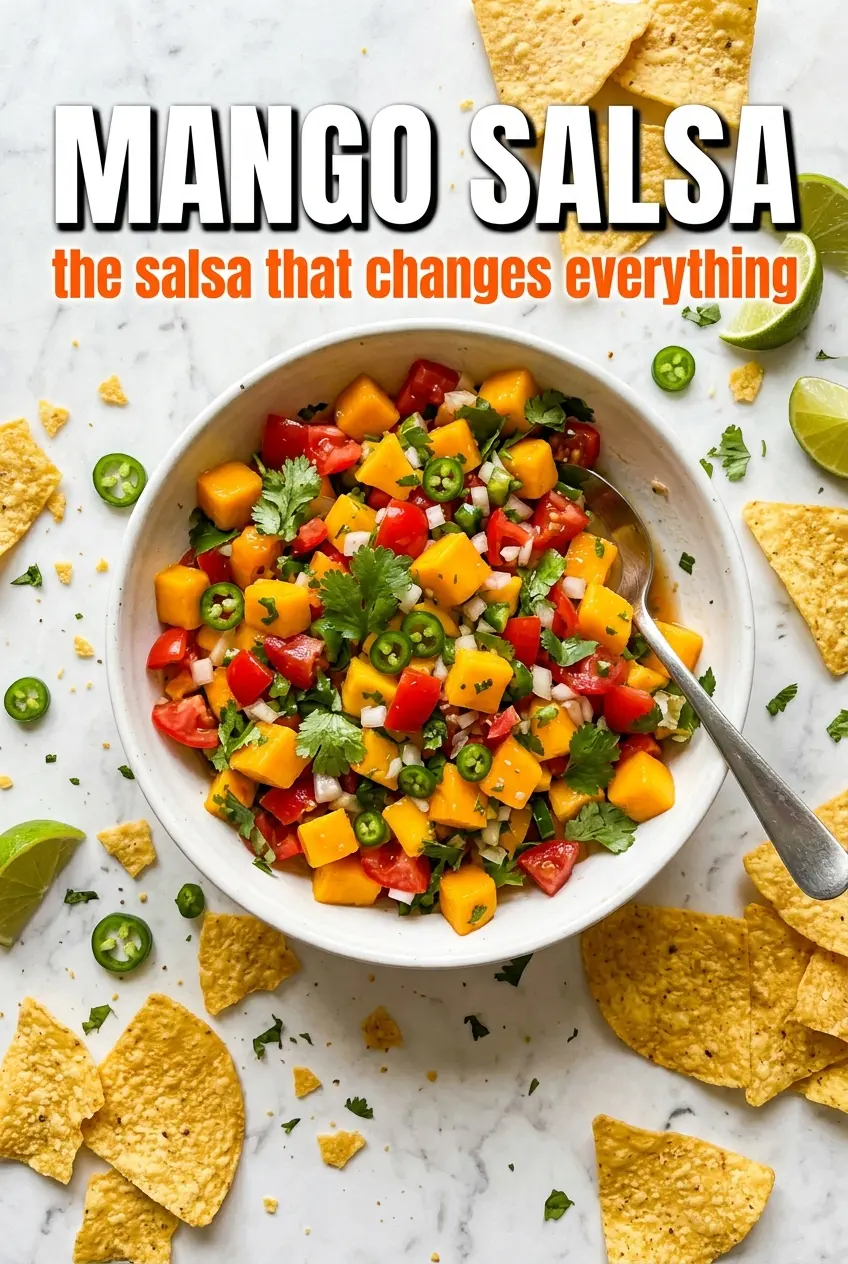
Mango Salsa
Ingredients
Method
- Combine the diced mango, red onion, minced jalapeño, and chopped cilantro in a medium bowl.
- Add the fresh lime juice, salt, and black pepper.
- Stir gently to combine, being careful not to crush the mango chunks, until the ingredients look evenly distributed with mango chunks still intact.
- Let the salsa rest for at least 30 minutes in the refrigerator so the colors look slightly more unified and the juices lightly coat the fruit.
- Stir again before serving and taste to adjust seasonings if needed.
- Serve chilled or at cool room temperature, with mango chunks still visible and glossy from the lime juice.
- Store in an airtight container in the refrigerator for up to two days, keeping the salsa cold and the mango texture fresh.