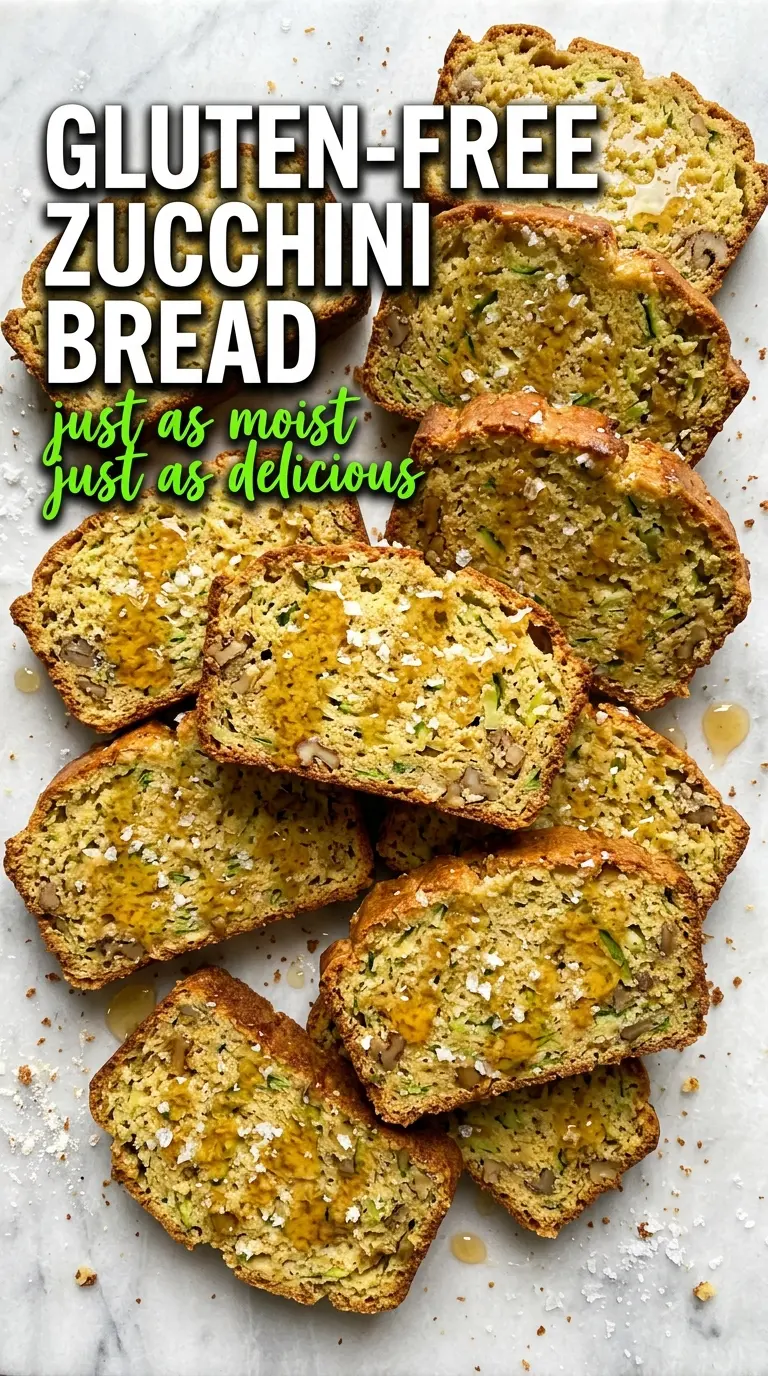
Golden on top, tender in the middle, and sturdy enough to slice cleanly, this gluten-free zucchini bread earns its place on repeat because it never gives you that sandy, crumbly gluten-free bite. The crumb stays moist without turning heavy, and the zucchini disappears into the loaf in the best possible way: enough to keep it soft, not so much that the bread turns wet.
The key is in the balance. Almond flour brings richness and a soft crumb, while tapioca starch gives the loaf a little structure so it doesn’t collapse when you cut into it. Squeezing the zucchini dry matters more than most people expect; too much water is the fastest way to end up with a gummy center, especially in a loaf that already has a lot of moisture from eggs, yogurt, and coconut oil.
Below, I’ve included the one cooling step you shouldn’t rush, plus a few swaps that actually work if you need to adjust for pantry ingredients or dietary needs. If you’ve had gluten-free quick breads fall apart before, this version is the one that changes that pattern.
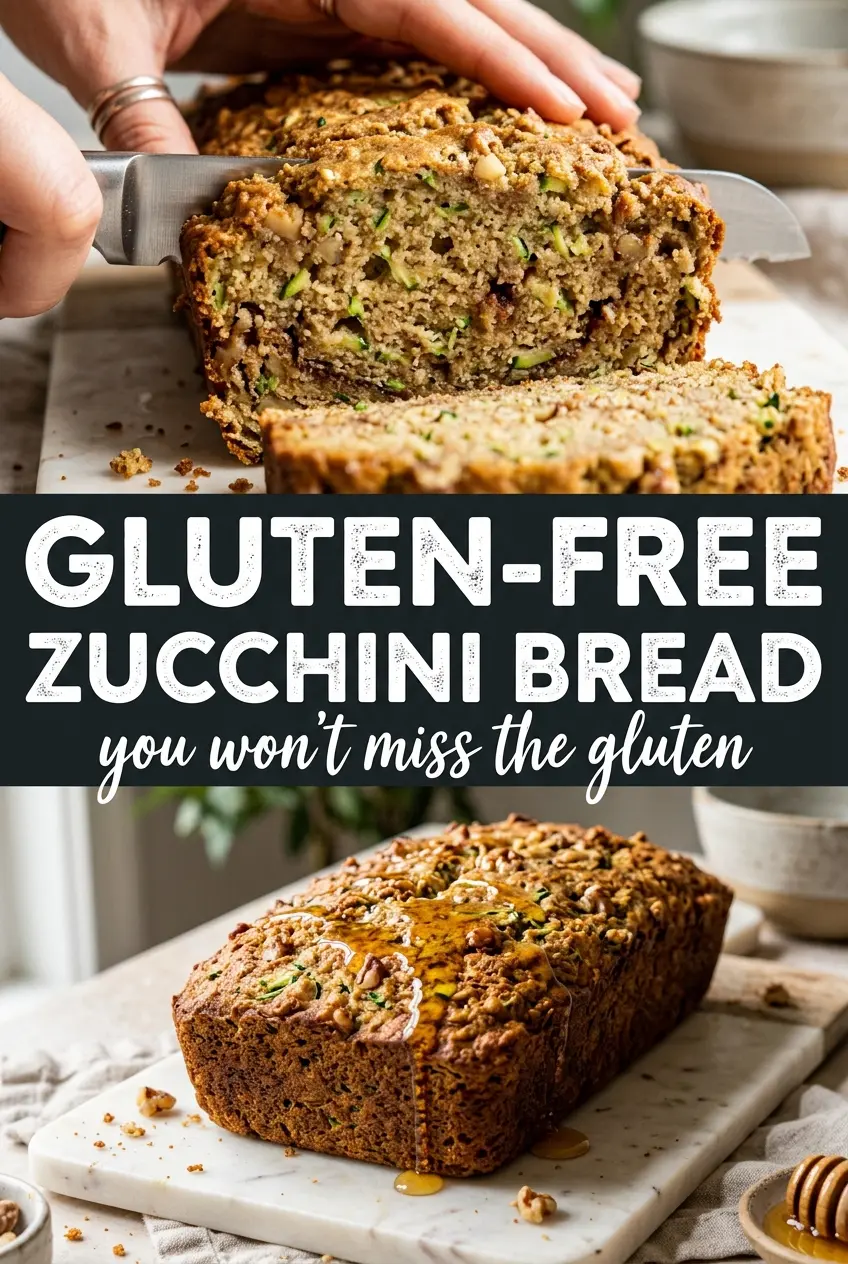
The loaf sliced cleanly after cooling and the center stayed soft without getting gummy. I used chocolate chips, and my kids ate half the pan before it even cooled completely.
Save this gluten-free zucchini bread for the loaf that bakes up moist, golden, and sliceable every time.
The Reason Gluten-Free Zucchini Bread Stays Tender Instead of Crumbly
Gluten-free quick breads fail for two reasons: they dry out too fast, or they fall apart because the structure never had a chance to set. This loaf avoids both problems by using almond flour for softness and tapioca starch for just enough binding to hold the slices together once cooled.
The other trap is moisture. Zucchini looks harmless, but it carries enough water to turn the middle of a loaf damp and dense if you skip the squeeze step. Grate it fine, then press it in a clean kitchen towel until it feels almost dry. That one step changes the texture more than any spice ever will.
Eggs also matter here. They aren’t just for richness; they’re part of the structure. If you cut them down or swap them loosely, the loaf won’t rise and set the same way.
What Each Ingredient Is Actually Doing in This Loaf
- Almond flour — This is the backbone of the loaf if you want that soft, rich crumb. It gives more tenderness than a starch-heavy gluten-free blend, but it also means the bread needs full cooling time before slicing. If you use a certified gluten-free all-purpose blend instead, expect a slightly lighter, less nutty loaf with a more traditional quick-bread feel.
- Tapioca starch — This helps the loaf hold together and adds a little bounce to the crumb. Almond flour alone can bake up too delicate and lead to crumbling at the knife. If you’re using a gluten-free all-purpose blend instead of almond flour, skip the tapioca starch unless the blend is especially heavy and you know it needs extra structure.
- Greek yogurt — This keeps the bread moist without making it greasy. It also gives the batter a little acidity, which helps the baking soda do its job. Plain regular yogurt works too, but thin yogurt can loosen the batter more than you want.
- Zucchini — The zucchini should be grated fine and squeezed dry. That’s non-negotiable if you want a loaf that bakes through instead of steaming in the center. You don’t need to peel it; the skin disappears once baked.
- Walnuts or chocolate chips — These are optional, but they add texture and keep each slice interesting. Walnuts make the loaf feel more classic and breakfast-ready, while chocolate chips turn it into something closer to a snack cake. Don’t overload the batter or it gets hard to slice cleanly.
How to Mix, Bake, and Cool It So the Middle Sets Properly
Build the dry base first
Whisk the almond flour, tapioca starch, baking soda, baking powder, salt, and cinnamon together until the mixture looks even and fluffy. Almond flour loves to clump, and if you skip the whisking, you can end up with pockets of baking soda or cinnamon in the finished loaf. That’s the kind of mistake that shows up as a bitter bite or a streaky crumb.
Bring the wet ingredients together until smooth
Beat the sugar, eggs, melted coconut oil, yogurt, and vanilla until the batter looks glossy and fully combined. You’re not trying to whip in a ton of air here; you just want the eggs emulsified so the loaf bakes evenly. If the coconut oil starts to firm up, the batter can look a little speckled, so keep the ingredients at a similar temperature before mixing.
Fold in the zucchini without thinning the batter
Stir in the squeezed zucchini, then add the dry ingredients and fold just until no dry streaks remain. The batter should be thick and spoonable, not pourable like cake batter. If it looks loose, the zucchini probably still held too much water. Fold in walnuts or chocolate chips at the end so they stay evenly distributed instead of sinking.
Let the loaf finish setting after the oven
Bake until the top is deep golden and a toothpick comes out clean from the center, usually 50 to 60 minutes. Then let it cool for a full 20 minutes before slicing. That cooling time is what lets the almond flour and eggs firm up into neat slices; if you cut too early, the middle can look underdone even when it’s baked through.
Three Smart Ways to Adjust This Gluten-Free Zucchini Bread
Use a certified gluten-free all-purpose blend instead of almond flour
Swap the almond flour for an equal amount of a 1:1 certified gluten-free flour blend, and keep the tapioca starch only if the blend feels especially starchy or dry. The loaf will be a little less rich and a bit more like classic quick bread. You may need an extra tablespoon or two of yogurt if the batter feels too thick.
Make it dairy-free without losing moisture
Use a thick plain dairy-free yogurt in place of the Greek yogurt. Coconut yogurt works well if it’s unsweetened and not watery. The loaf will still bake up tender, but it may have a slight coconut note, which fits nicely if you’re already using coconut oil.
Turn it into a nut-free loaf
Use the certified gluten-free all-purpose blend instead of almond flour and leave out the walnuts. This changes the texture from rich and dense to lighter and more bread-like, but it keeps the loaf safe for anyone avoiding nuts. If you want a little extra body, let the batter rest for 5 minutes before baking so the flour can hydrate.
Storage and Reheating
- Refrigerator: Store slices in an airtight container for up to 5 days. The crumb firms up a little in the fridge, but it stays moist.
- Freezer: This loaf freezes well. Wrap slices tightly, then store them in a freezer bag for up to 3 months so you can thaw only what you need.
- Reheating: Warm slices in a toaster oven or microwave for just a few seconds. Don’t overheat them, or the almond flour can dry out and the edges turn oily instead of soft.
Questions I Get Asked About This Recipe
Gluten-Free Zucchini Bread
Ingredients
Equipment
Method
- Preheat oven to 350°F and grease a 9x5 loaf pan.
- Whisk almond flour, tapioca starch, baking soda, baking powder, salt, and cinnamon together until evenly combined.
- Beat sugar, eggs, coconut oil, Greek yogurt, and vanilla extract until smooth.
- Stir in grated, squeezed-very-dry zucchini.
- Fold dry ingredients into wet until just combined; fold in walnuts or chocolate chips if using.
- Pour batter into the prepared loaf pan.
- Bake at 350°F for 50–60 minutes, until a toothpick comes out clean and the top is golden.
- Cool for 20 minutes before slicing so the loaf firms as it cools.