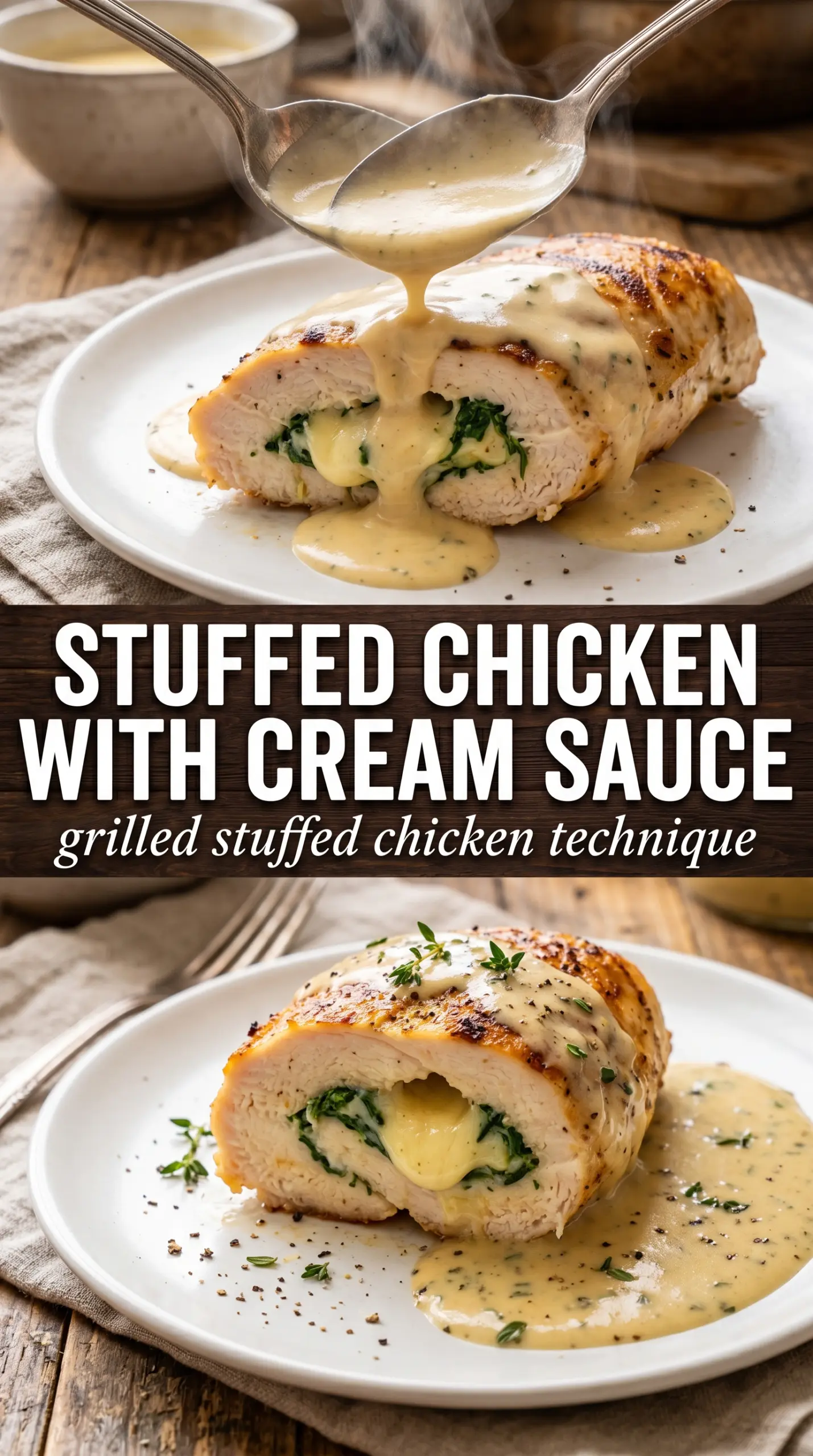
Grilled stuffed chicken with cream sauce lands on the plate with a deep sear, a juicy middle, and a filling that stays tucked inside instead of spilling out the second it hits the grill. The smoky chicken and rich sauce balance each other in a way that feels a little restaurant-worthy, but the whole dish still comes together with everyday ingredients.
The trick is in the setup: butterflying the chicken gives you a thinner, even piece that cooks without drying out, and the filling needs to be tight and not overstuffed so it stays put. I also like to keep the sauce simple and added at the end, because heavy cream and Parmesan can turn grainy if they’re rushed over high heat.
Below, I’ll walk through the small details that keep the chicken from leaking, the sauce from splitting, and the final dish looking as good as it tastes. There’s also a few useful swaps if you need to adjust for what’s in your fridge.
The filling stayed inside the chicken, and the cream sauce thickened up beautifully without getting clumpy. I served it with roasted potatoes and my husband asked if we could have it again the next night.
Love the look of grilled stuffed chicken with cream sauce? Save it for the night you want smoky chicken, a cheesy spinach filling, and a silky Parmesan sauce on one plate.
The Part Most People Get Wrong: Keeping the Filling Inside the Chicken
Stuffed chicken fails when the breast is too thick in one spot, too thin in another, or packed so full that the seam opens as soon as it heats up. Butterflying and pounding the chicken to an even thickness gives you a wide, flexible canvas that cooks at the same pace from edge to edge. That means less splitting, less raw meat in the middle, and a cleaner slice at the table.
The other mistake is chasing a huge stuffing pile. A modest layer of spinach, mozzarella, and sun-dried tomato gives you flavor in every bite without turning the chicken into a folding challenge. Toothpicks help, but the real insurance is leaving a little border around the filling so the seam can seal as it cooks.
- Even thickness — This matters more than people think. If one side of the breast is much thicker, the thinner end dries out before the center is done.
- Sun-dried tomatoes — They bring concentrated acidity and sweetness that cut through the cream sauce. Chop them finely so they distribute instead of tearing through the filling.
- Mozzarella — It melts smoothly and binds the filling. Shredded mozzarella works better than fresh mozzarella here, which can release too much moisture.
What Each Ingredient Is Actually Doing in This Dish
- Chicken breasts — Large breasts give you enough surface area to stuff and fold. If yours are extra thick, split them carefully and pound after butterflying so they cook evenly on the grill.
- Spinach — Fresh spinach wilts down fast and keeps the filling from feeling heavy. Frozen spinach can work in a pinch, but squeeze it dry until it feels almost crumbly or the filling turns watery.
- Mozzarella — This gives the filling that stretchy, melty center. A low-moisture shredded mozzarella is the best choice because it helps the filling hold together.
- Sun-dried tomatoes — These are the bright, tangy part of the filling. Oil-packed tomatoes are fine; just blot them before chopping so the filling doesn’t get greasy.
- Parmesan — In the sauce, Parmesan thickens and seasons at the same time. Use finely grated cheese so it melts smoothly instead of turning sandy.
- Heavy cream — This is what gives the sauce body. Half-and-half will work, but the sauce will be thinner and needs a gentler simmer.
Grilling the Chicken Before the Sauce Has a Chance to Break
Building the Stuffed Breasts
Lay the butterflied chicken open like a book and pound it until the thickest parts are level with the thinner edges. Spoon the filling onto one side, then fold it over without stretching the meat. If the seam looks overloaded, pull a little filling back; that small restraint keeps the chicken from bursting open on the grill. Secure with toothpicks and season the outside only after it’s closed, so the salt doesn’t draw moisture from the filling.
Getting a Clean Grill Mark
Cook over medium heat, not high heat. High heat scorches the outside before the center gets close to 165°F, which leaves you with tough chicken and a leaky seam. Put the chicken on a clean, oiled grate and let it sit until it releases naturally; if it sticks, it usually means the crust hasn’t set yet. Turn once, then keep the lid closed if your grill has one so the heat can move through the thicker middle.
Making the Cream Sauce at the End
Melt the butter and cook the garlic just until fragrant, not browned. Add the cream and Parmesan over low heat and let it simmer gently until it coats a spoon. If the sauce looks grainy, the heat was too high or the cheese was added too fast, so pull it off the burner and whisk in a splash of cream. Add the Italian seasoning at the end so the herbs stay bright instead of tasting flat.
Three Ways to Make This Work for the Way You Cook
Dairy-Free Version
Use a dairy-free shredded mozzarella for the filling and swap the cream sauce for full-fat coconut milk with a little extra garlic and nutritional yeast. The sauce won’t taste exactly the same, but it will still be rich and spoonable. Keep the heat low so the coconut milk doesn’t separate.
Oven-Baked Instead of Grilled
Bake the stuffed chicken at 400°F until it reaches 165°F in the thickest part, usually about 20 to 25 minutes depending on size. You won’t get the same smoky edge from the grill, but you’ll get more even browning and a little less risk of leaking filling. Finish under the broiler for a minute if you want extra color.
Low-Carb Plate
This recipe already fits naturally into a lower-carb dinner as written. Serve it with grilled asparagus, cauliflower mash, or a simple salad instead of pasta or bread, and the cream sauce will carry the whole plate. The filling stays satisfying without needing a starch on the side.
Storage and Reheating
- Refrigerator: Store leftovers in an airtight container for up to 3 days. The chicken stays juicy, though the filling firms up a bit once chilled.
- Freezer: The stuffed chicken freezes better without the sauce. Wrap tightly and freeze for up to 2 months, then make the cream sauce fresh when you reheat.
- Reheating: Warm the chicken covered in a 300°F oven until heated through. Reheat the sauce separately over low heat with a splash of cream, because microwaving it too hard can make the dairy separate.
Answers to the Questions Worth Asking
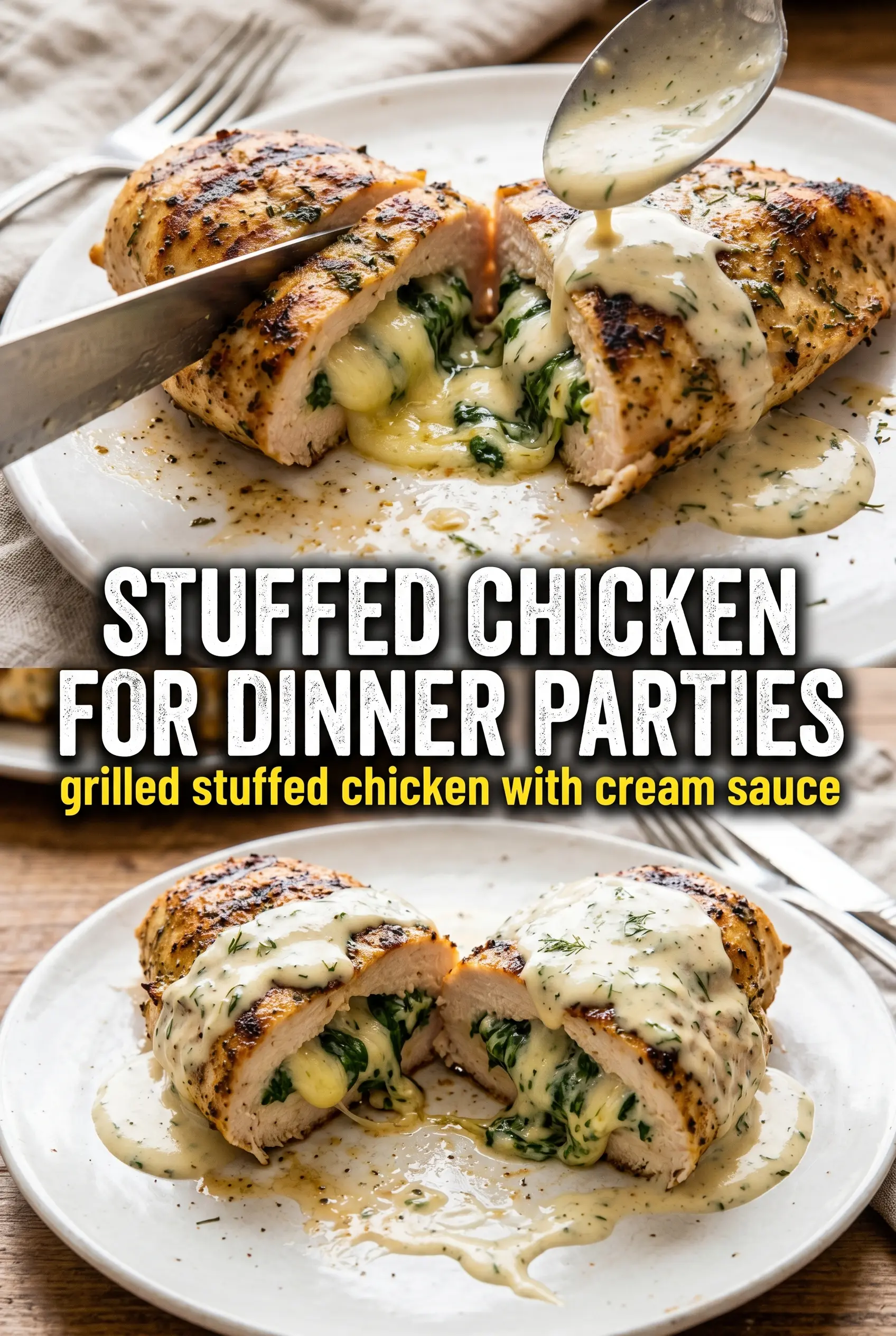
Grilled Stuffed Chicken with Cream Sauce
Ingredients
Equipment
Method
- Butterfly the chicken breasts and pound them to an even thickness so they cook uniformly on the grill, aiming for consistent thickness from edge to center.
- Mix the spinach, mozzarella, and sun-dried tomatoes together for the filling until evenly combined with no dry pockets.
- Place filling on one side of each chicken breast, fold over, and secure with toothpicks to hold the stuffed shape during grilling.
- Season the outside of the chicken with salt and pepper so the surface is evenly seasoned before it hits the grill.
- Grill the chicken over medium heat for 8-10 minutes per side, cooking until the internal temperature reaches 165°F, and look for clear juices and browned grill marks.
- Remove the toothpicks after grilling and rest the chicken for 5 minutes so the juices settle before slicing.
- For the sauce, melt the butter, then sauté the minced garlic for about 30 seconds until fragrant, keeping it from browning.
- Add the heavy cream, Parmesan, and Italian seasoning and simmer until thickened, watching for a smooth, spoon-coating consistency.
- Slice the stuffed chicken and serve drizzled with the thickened cream sauce, finishing with an extra spoonful over the colorful filling.